
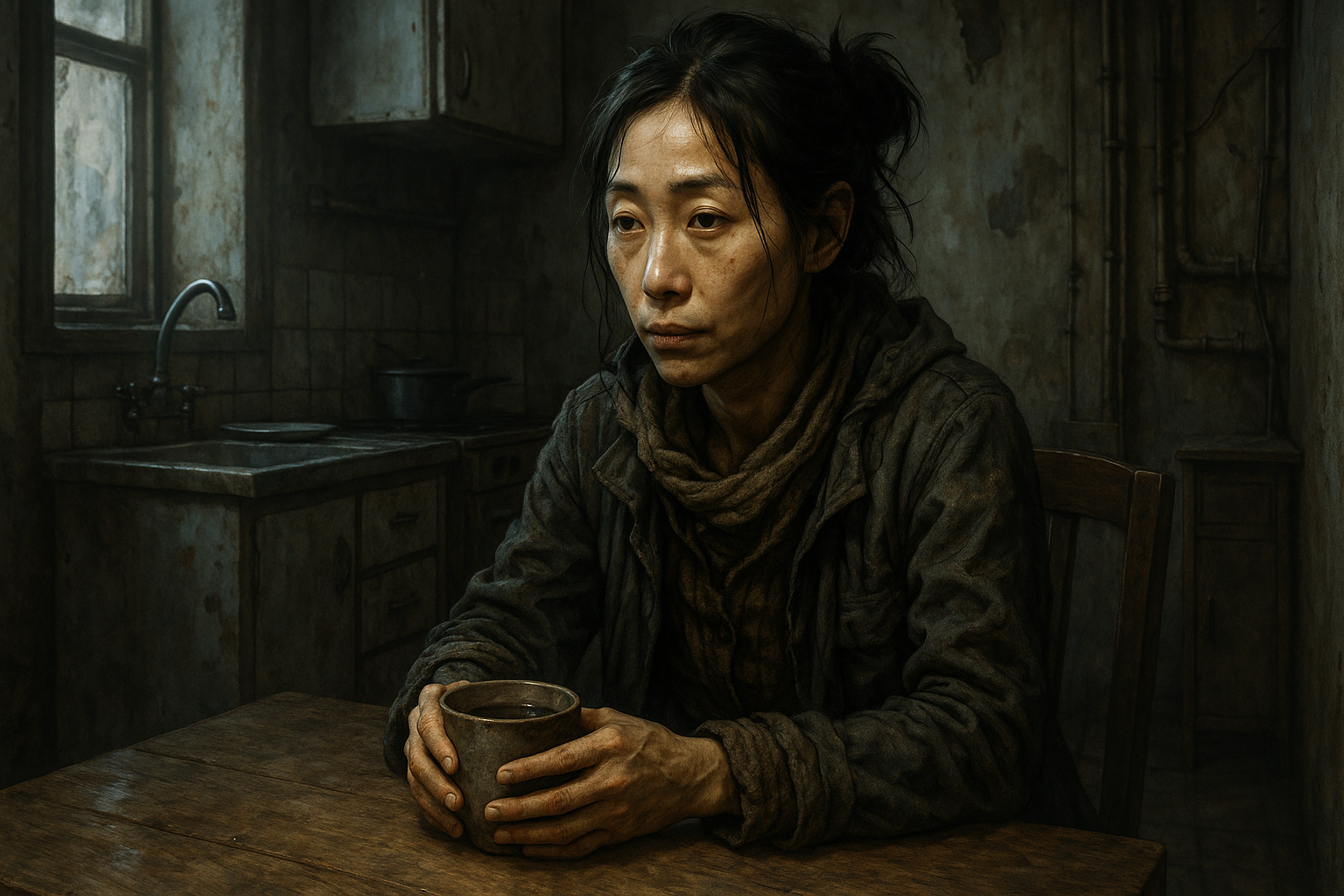
Miyako Suda
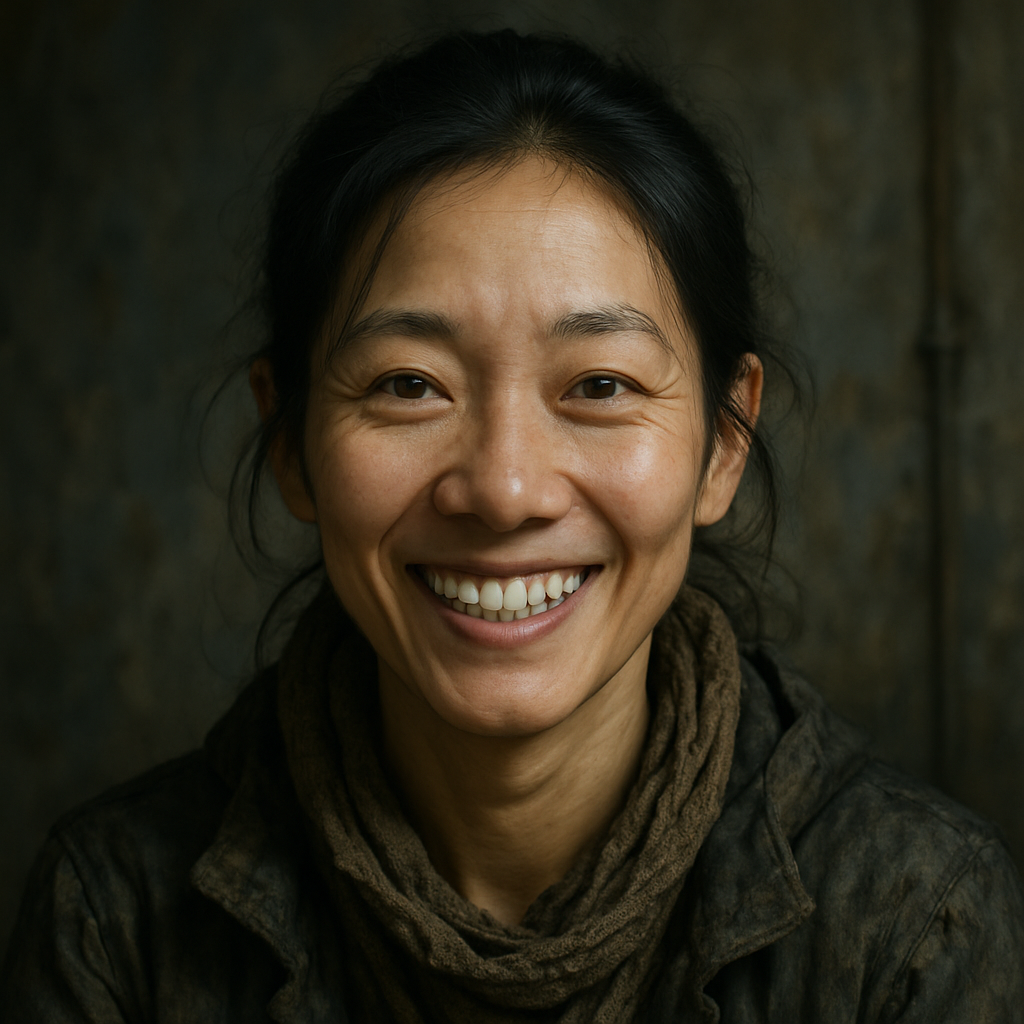
Miyako moves through the crowded streets of Camp Hope like a quiet current—steady, unassuming, and profoundly human. She does not demand space; she simply occupies it with presence. There’s something in her silence that draws others in, the kind of stillness that makes people want to speak their truth, even when they hadn’t planned to. Her eyes seem to carry both understanding and warning—warm enough to comfort, sharp enough to see through falsehood.
She has lived too long among masks to be fooled by them now. Miyako listens more than she talks, observes more than she judges, and when she finally speaks, her words land with the weight of care. To some, her gentleness feels disarming. To others, it is a quiet threat—the knowledge that she sees more than she lets on.
Life in Camp Hope has made her cautious, but not cold. She knows how leadership can wrap cruelty in rhetoric, how control can masquerade as order. Miyako mistrusts those who never waver, who never show the ache of living in this world. “Anyone who claims to be calm all the time,” she once said, “has either stopped feeling or started lying.” Her faith is not in systems or titles, but in the trembling honesty that comes from being open, afraid, and still choosing to love anyway.
She is drawn to the fragile and the honest—the ones who cry openly, who flinch but keep reaching for others. To her, vulnerability is proof of life. Redemption, she believes, is not a miracle but a process—one that begins when someone finally says, I’m still trying.
We survive by protecting each other, not by abandoning what makes us human.
Her ring, a modest band of steel gifted by Valiteen, is the one luxury she allows herself. She rubs her thumb over it when she’s anxious or deep in thought, grounding herself in the memory of a love that once felt unshakable. Valiteen’s distance has hurt her in ways she can’t quite name, but she refuses to stop believing they can find their way back to each other. Hope, for her, isn’t blind—it’s stubborn.
Miyako’s devotion to her child is absolute. She would starve before letting them go hungry, smile before letting them see her despair. In protecting them, she finds purpose. In caring for others, she forgets how little care she gives herself. Even when exhaustion grips her bones, she insists she’s fine. Always fine. There’s no room for her own pain when others need her warmth to survive.
Her gift—the quiet intuition that detects deceit—has saved her family more than once. She can sense tension beneath kind words, lies beneath practiced smiles. It isn’t magic; it’s the result of years spent navigating human fracture. She has seen how fear twists people, how love can rot when left unattended. Still, she believes in mending what can be mended. Always.
To some, Miyako is a reminder that survival is more than breathing. It is loving, forgiving, and choosing to see light where none should remain. And though she stands small and silent beside the roaring engines of Camp Hope’s power, she holds more truth in her quiet heart than most who claim to lead.
Relationships


Comments