
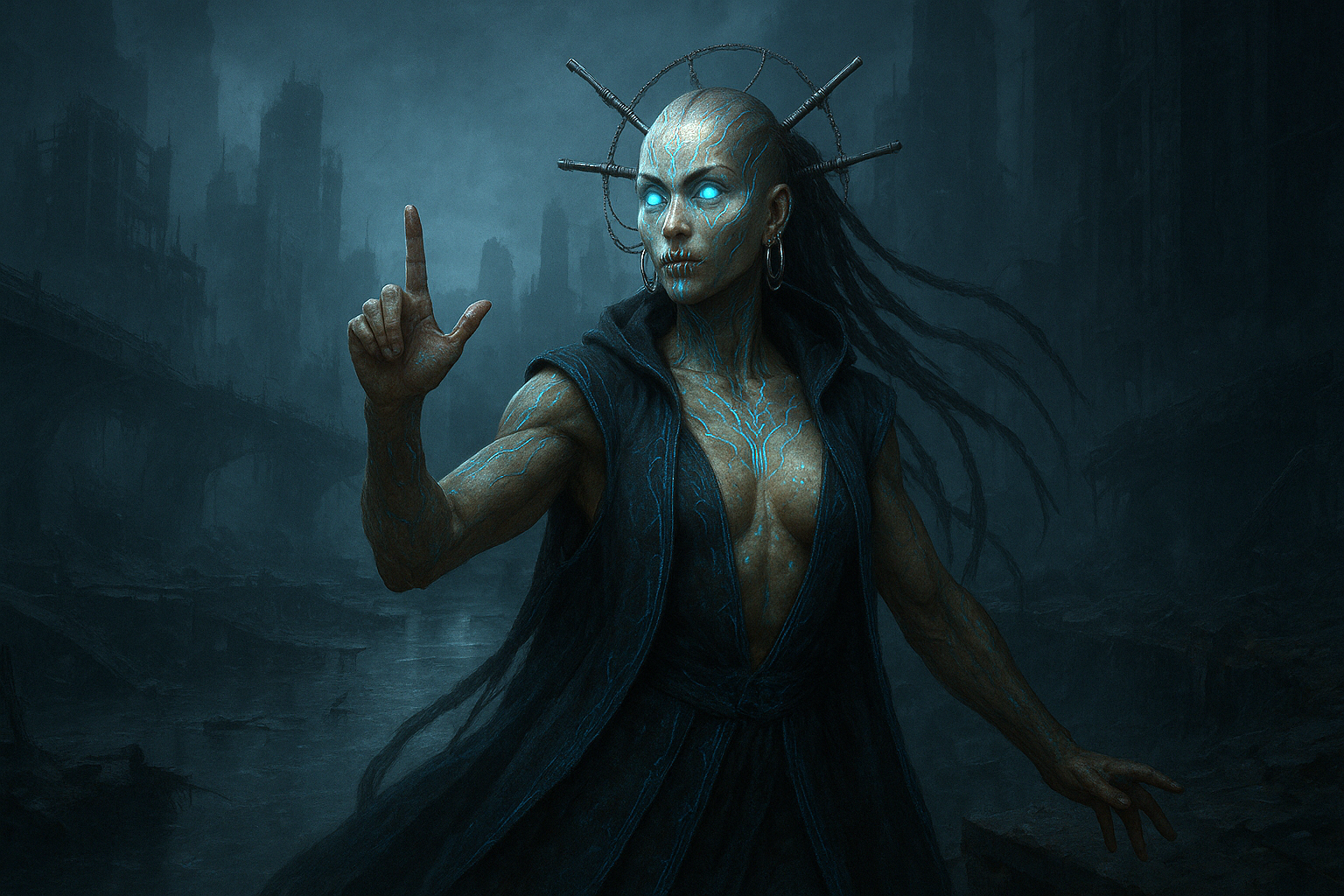
Lira:Vant
Quiet Master Lira May Vant (a.k.a. Lira:Vant)
Lira grew up listening to the wasteland hum. While other children ran through dust storms or hunted for scrap, Lira sat for hours with their ear pressed to battered receiver housings, following the rise and fall of static storms as if they were lullabies. Patterns lived in that noise: fluttering, shifting, repeating in ways no one else seemed to notice. It was during one of those storms that a passing Stillwalker saw them tilt their head moments before a massive signal fluctuation rolled across the wastes. At thirteen, Lira was invited to join the Reverent Static, and they accepted without hesitation, already sensing a life they had been tuning themselves toward since birth.
Decades of wandering followed; slow, patient years of recording, salvaging, archiving, and listening. They walked caravan routes with the Quiet Children, lived among relic caches, and endured the deep, echoing silence of forgotten sites. Their near-fatal pilgrimage into the Drowned Trenches became legend among the sect: the place where Lira’s senses expanded, sharpened, and, unbeknownst to others, fractured. They emerged alive but changed, carrying with them intermittent “signal intrusions,” brief flickers of memories not their own that sometimes bled across their vision. They hid this carefully, fearing what it might mean for the sect’s stability.
When the previous Quiet Master died suddenly, leaving only a rapid, intricate sequence of gestures as their final directive. The message named Lira successor. Stillness closed around them like a mantle, and they stepped into leadership with the same slow precision as their movements. Their reign has been marked by expanded archives, unified caravans, and a growing network of long-range listening posts stretching toward the Wastelands of Albany, where a persistent low-frequency signal has whispered to them for decades. Lira believes it may be the echo of a Pre-Fall intelligence buried deep beneath the earth.
They are analytical, patient, and exquisitely attuned to long-term patterns, though emotional nuance slips through their fingers like static. Asexual and aromantic, they find intimacy in synchronized stillness, shared listening sessions, and the steady comfort of collaborative transcription. To them, truth is not spoken but received, and preservation is an act of devotion. Their moral compass tolerates interference only when knowledge faces corruption.
Lira keeps their life clean but minimalist; dust and dirt mean little unless they threaten sensitive equipment. They live surrounded by antique radios, corrupted drives, and half-repaired transmitters. A small mechanical bird made of scrap perches on their shoulder or travels in their pocket; it clicks quietly when electromagnetic anomalies draw near. They maintain a respectful, if cautious, relationship with certain Engineers, an uneasy alliance with a few Scribes, and a pragmatic information exchange with select Solstice Syndicate operatives.
Their silence is not symbolic: years ago, in an act of devotion that set the physical standard for their entire sect, Lira cut their own vocal cords. Now physically mute, they speak only in slow, deliberate gestures and long, unbroken eye contact. Their presence feels like stepping into a library that is also watching you: calm, soft, and quietly intimidating. Even their pauses feel intentional, as though they are forever listening to voices just beyond the edge of perception.
Lira’s philosophy surfaces in the rare written lines they share with novices and elders alike: “Noise conceals nothing. It merely waits to be understood.” And, on a recovered scrap of data-paper displayed reverently in the archives: “Listen long enough, and the world remembers how to speak.”
Still they wander, still they archive, still they listen; patiently tuning themselves toward the signal that has guided them all their life, hoping one day to understand the voice beneath the noise.
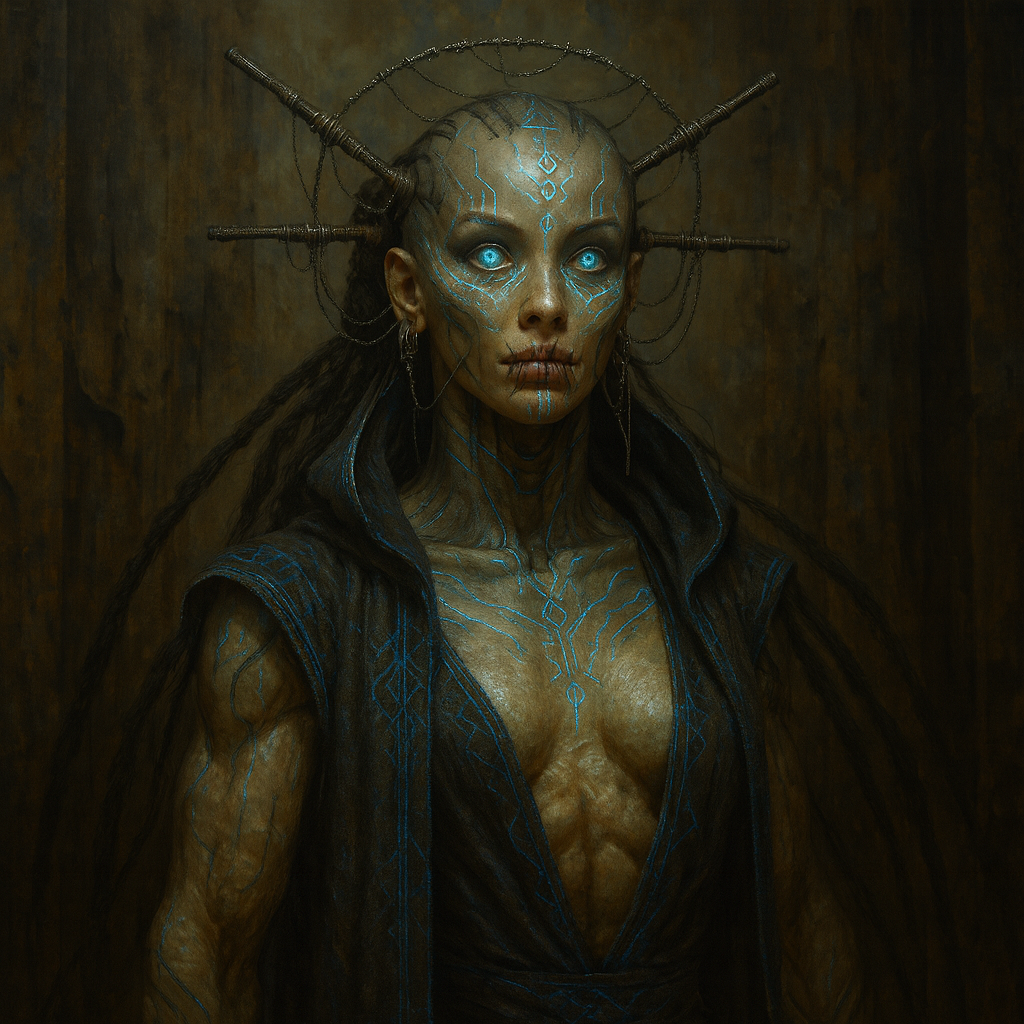
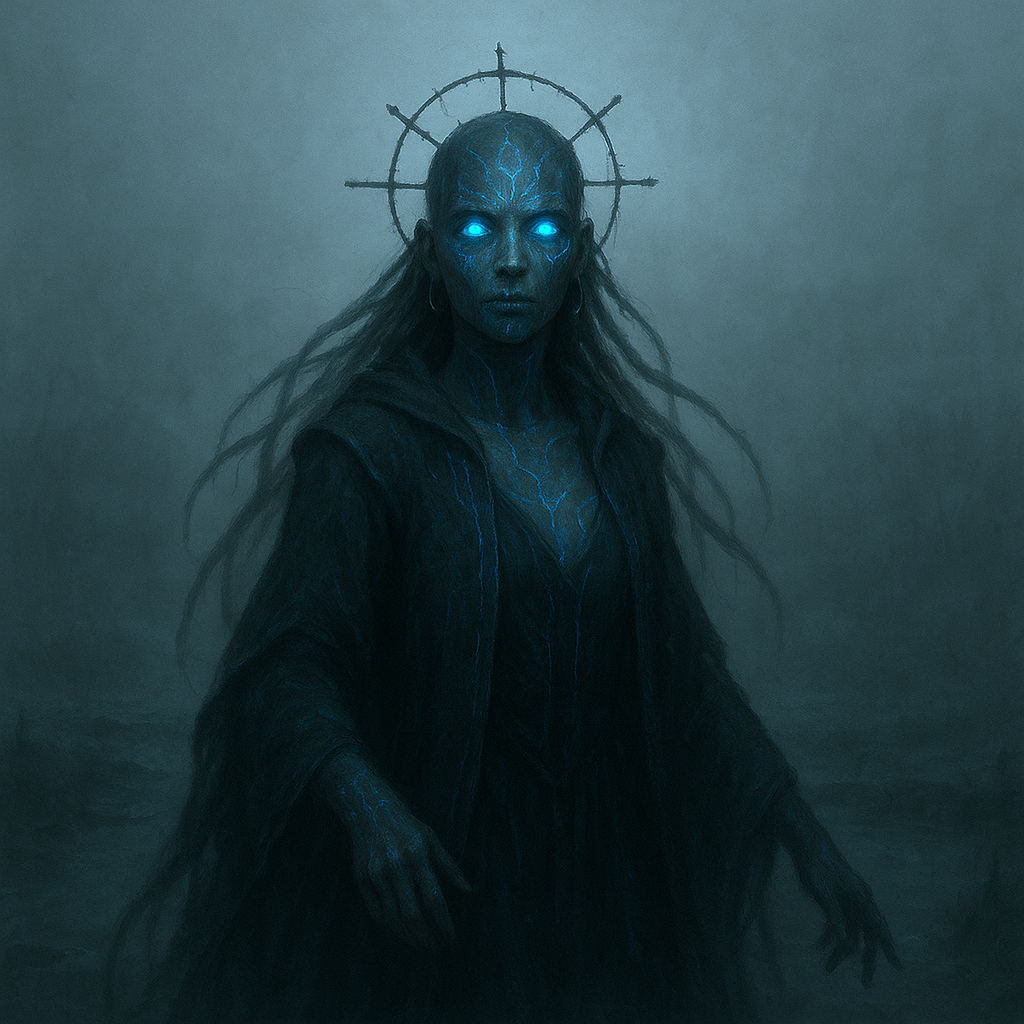
They emerge from the fog like a whispered warning, their silhouette sharpening as the gray veil thins near the lip of the Drowned Trenches. At first you think the blue glimmer is some trick of the marsh-light; until their eyes ignite fully, cold and electric, tracing the same glowing patterns that pulse along their skin like living circuitry. They move with an impossible stillness, each step soundless, each breath measured, their long cables of hair swaying as though stirred by currents you cannot feel. The strange halo of rods and looping wires encircling their skull catches droplets of mist and makes them shimmer like stars trapped underwater. They do not speak but the weight of their gaze lands on you with deliberate precision, as if reading signals from the tremor of your pulse or the twitch of your thoughts. In that moment, standing on the drowned edge of the world, you understand: you are looking upon one of the Children of the Signal, and nothing you have encountered has prepared you for them.


Comments