
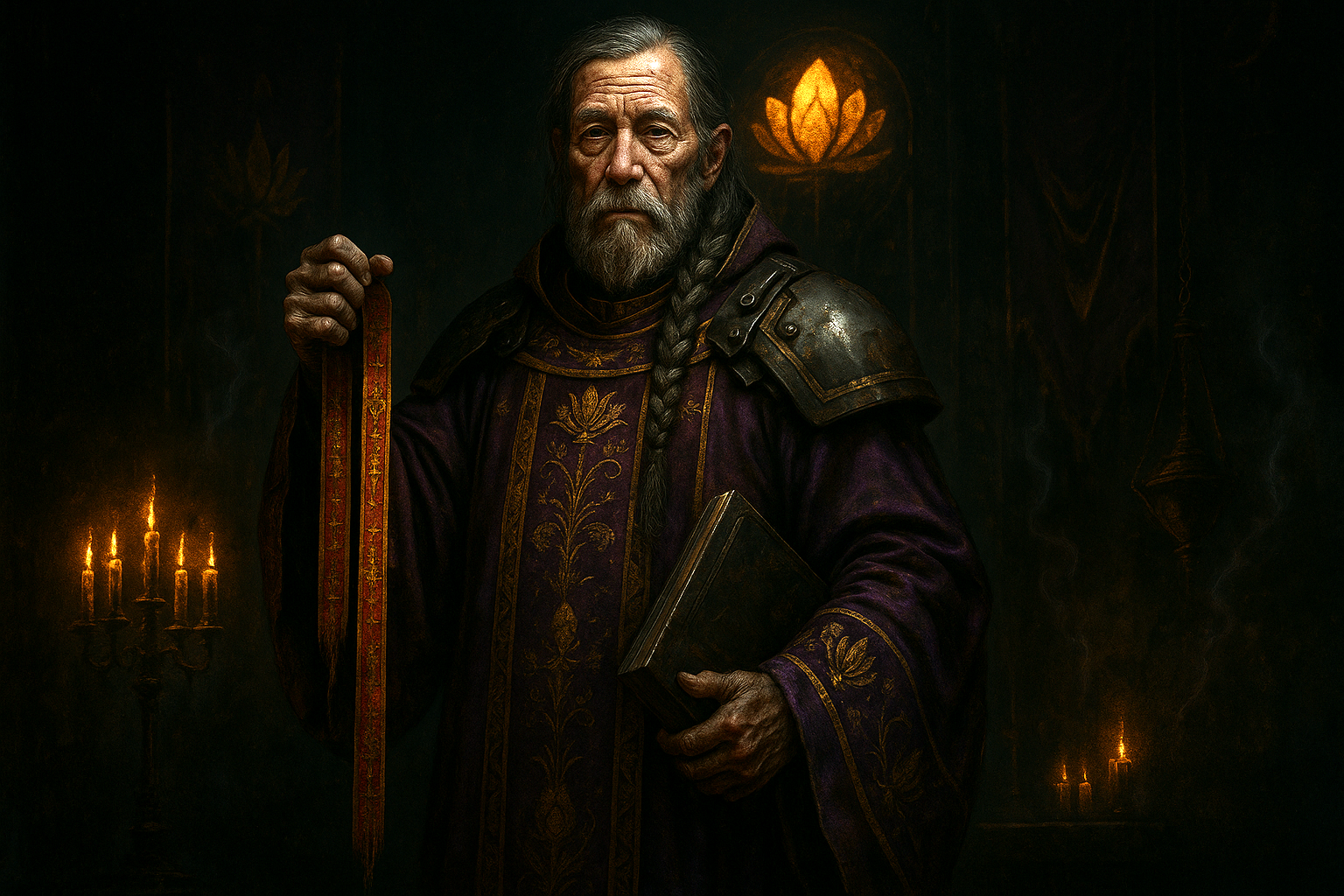
Crosby Harvey
Priest Crosby Crew Harvey
Crosby moves through Camp Hope like a calm tide—steady, deliberate, and impossible to shake from his course. His voice is low and measured, a kind of living balm that soothes the unrest of those around him. When the nights grow long and the winds drag the cries of the infected through the wire, people gather near his presence simply to breathe easier. There’s something in the way he speaks—each word chosen, each silence intentional—that makes despair pause to listen.
He carries himself with quiet composure, his hands often folded in front of him whether he’s at the pulpit, standing in a food line, or listening to a broken soul confess their fears. He listens far more than he speaks, yet when he finally does, his words settle with the weight of conviction. To some, his gaze feels like sunlight through stained glass—warm but too revealing. Others find it unsettling, as though he sees through their defenses to something deeper, unspoken.
Crosby has built his life around the Church of Hope, not merely as a structure of faith, but as the last sanctuary of human spirit. He believes its survival ensures humanity’s own, for if the heart surrenders to despair, then all the fences and guns in the world are meaningless. “Hope is a duty, not a luxury,” he often says, the words carrying the cadence of a prayer. “In maintaining it, we uplift not only ourselves, but the soul of the world.” To him, faith is not comfort—it is labor, vigilance, and sacrifice.
The Church endures because it must. When we lose the will to believe, we lose the will to live.
His admiration lies with those who continue to fight despite having every reason to give up: the farmer who keeps planting after famine, the medic who works without sleep, the mother who smiles though her child is gone. These are the saints of the new age, he says, the ones who keep the flame alive when the world has gone cold. He favors humankind for this quality of endurance—believing that among all beings, only humans bear the divine spark of redemption.
Yet his compassion has edges. Crosby distrusts those who question the Church’s purpose or mock the faithful; to him, disbelief is a contagion more dangerous than infection. He sees the Awakened and the Others as tragic distortions of creation—lesser races whose suffering reflects humanity’s fall from grace. He does not hate them, but he cannot help seeing them as lost souls, their condition both a warning and a lesson.
Still, even his certainty is not without cracks. Crosby’s faith, unyielding as it is, blinds him at times. He trusts too easily in those who speak the language of piety, mistaking clever words for conviction. In his quest to preserve spiritual unity, he overlooks deceit until it festers into danger. For all his insight into the human heart, he remains vulnerable to the simple cruelty of those who would exploit his faith for power.
And yet, Camp Hope needs him. When fear spreads like infection, Crosby’s voice becomes the medicine. When mourning threatens to drown the living, he reminds them to stand. He is not merely a preacher—he is a living reminder that belief itself is a kind of survival.
Relationships




Comments