
Arthur's Rest
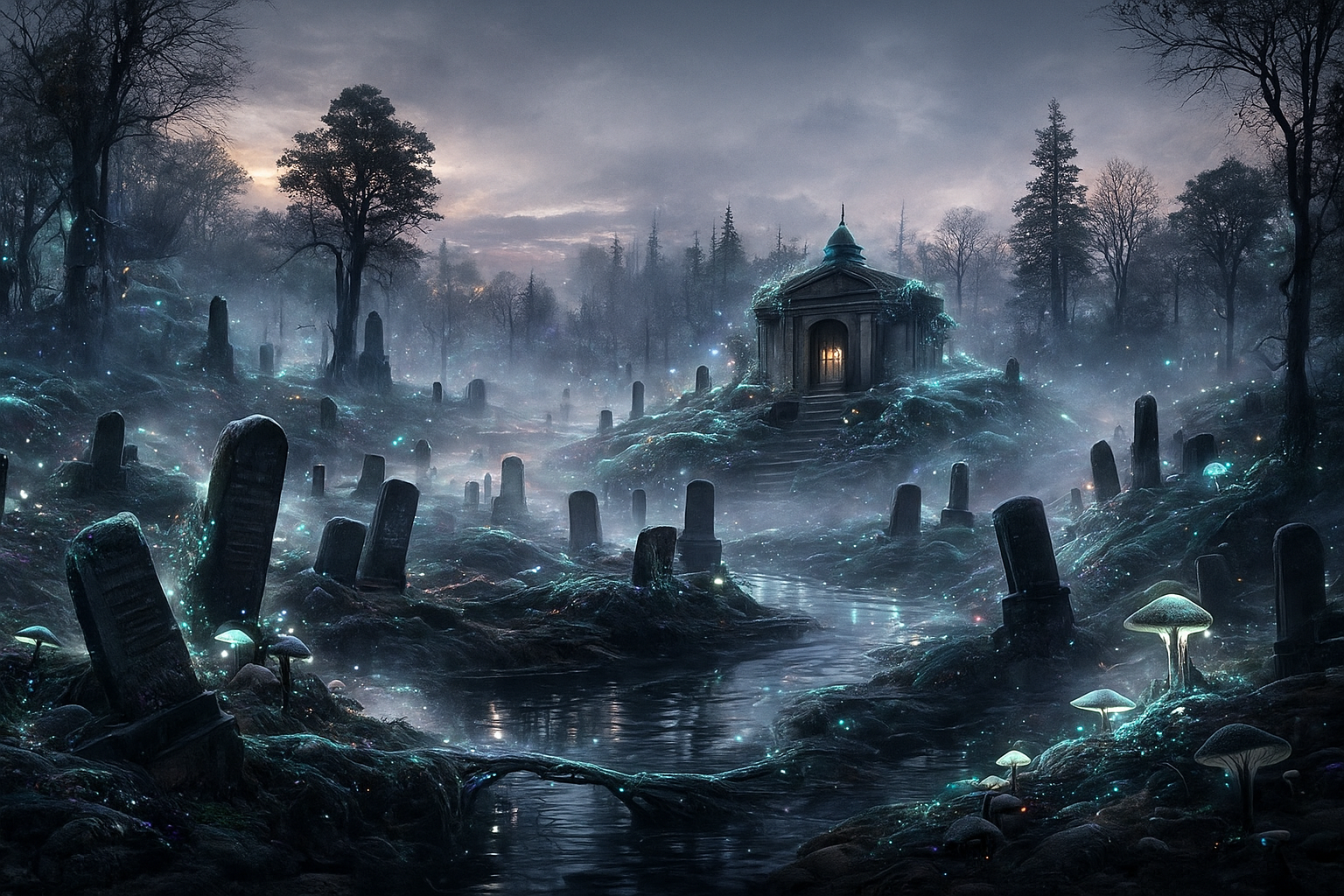
Arthur’s Rest is a once-ordinary cemetery outside Loudonville, New York that has been utterly transformed by a supernatural fungal bloom, turning the resting place of President Chester A. Arthur into one of the most hauntingly beautiful and dangerously alive landscapes in the region. Soft hills now pulse with bioluminescent mycelium, gravestones lean like ancient teeth through spore-rich soil, and drifting fungal mists lace the air with an eerie, dreamlike glow. What was once a quiet historical site has become a living organism, a Dark ecosystem that breathes, grows, and remembers. Travelers who approach the bloom’s shimmering borders speak of whispering winds, strange lights under the earth, and the unsettling sensation that the land itself is watching. Arthur’s Rest is no longer a graveyard—it is a place reborn, a wild and sentient sanctuary where nature, magic, and memory intertwine.
Geography
Arthur’s Rest lies on a gentle rise of terrain at the site of the Chester A. Arthur Tomb in Loudonville, New York. Before the Fall, this was a curated cemetery in a patch of mixed hardwood forest dotted with family plots, crypts, and manicured lawns.
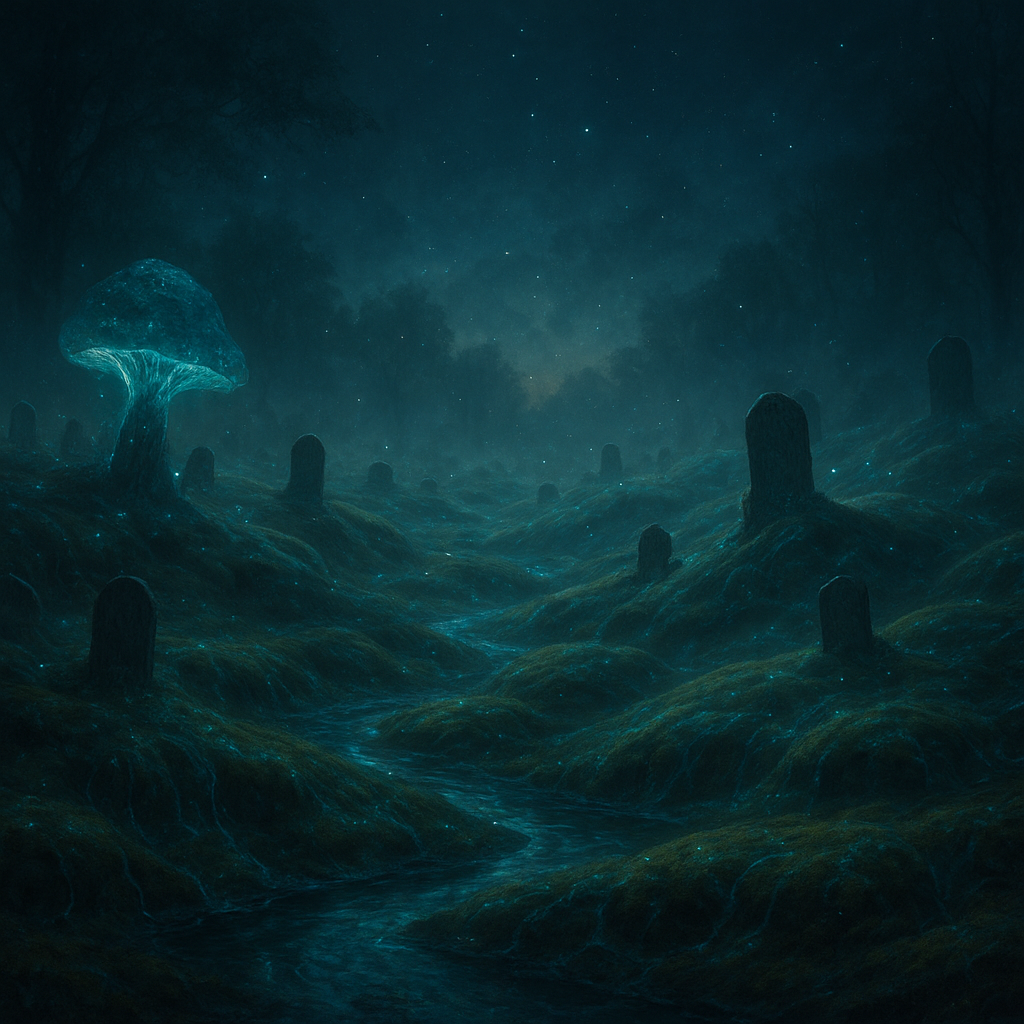
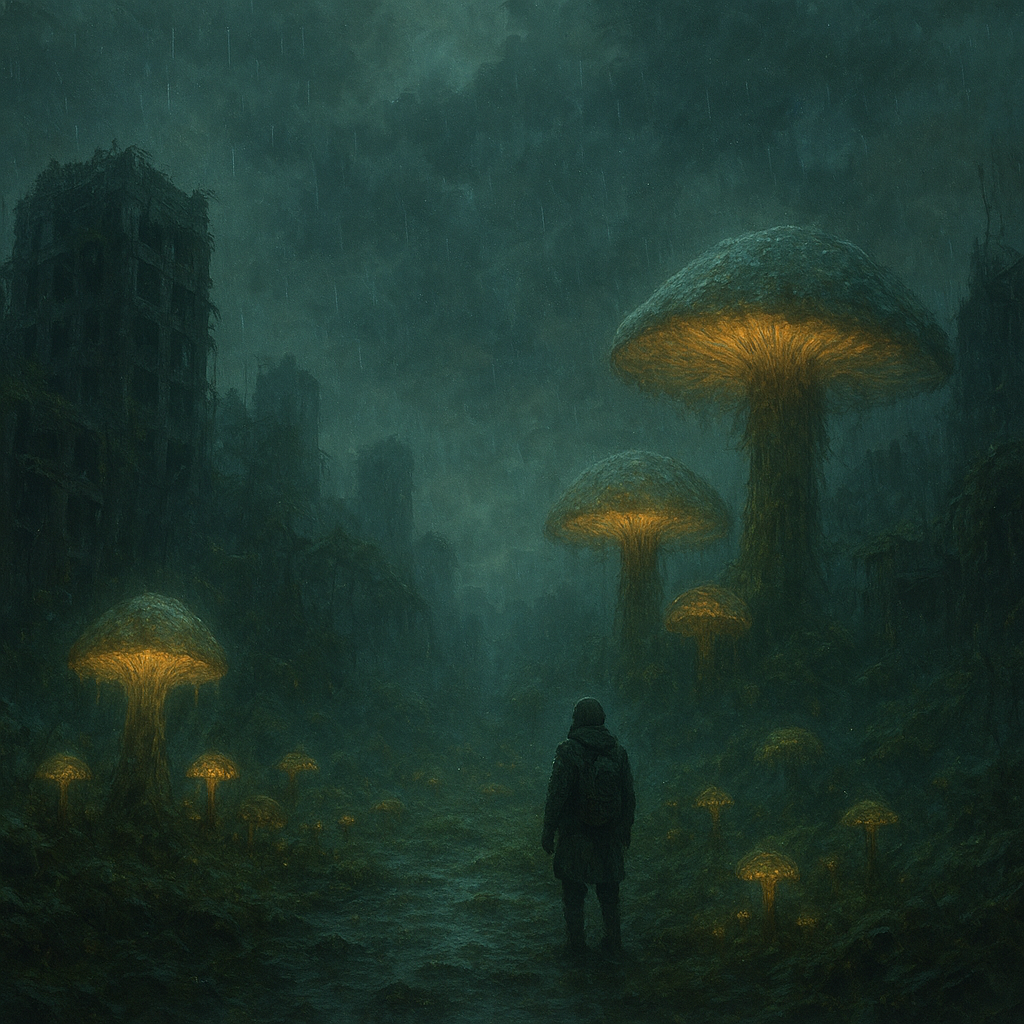
After the Mycelial Bloom, the region transformed into a soft, rolling fungal landscape. Gravestones tilt at strange angles where the earth has swollen into pillowy mounds of spore-infused loam. Small ridges, once glacial drumlins, now glow faintly at night with bioluminescent hyphae weaving under the soil like veins.
A shallow creek, Old Loudon Run, cuts through the area, fed by underground springs. Its waters remain drinkable but shimmer with iridescent spores and sometimes form temporary bridges of hardened mycelium. The creek splits the bloom into two halves: the Western Shelf, more forested and humid, and the Eastern Rise, where the fungal layer has overtaken most vegetation.
Views are strange and beautiful. In the mornings, golden sunlight filters through spore mists that drift like slow-moving fog. At night, the glow of bioluminescent caps, tendrils, and spore columns gives the landscape a soft, pulsating radiance reminiscent of a star field turned inside out.
Ecosystem
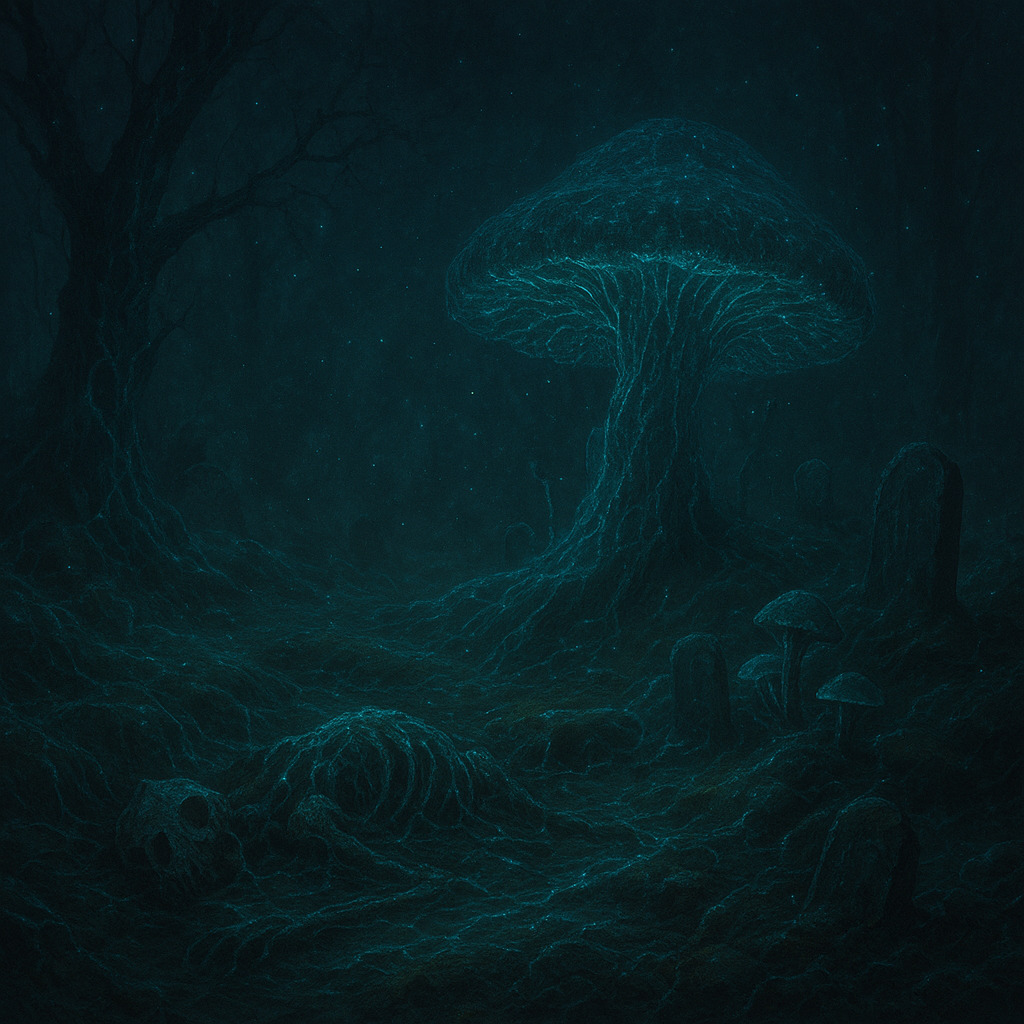
The ecosystem of Arthur’s Rest is governed by the Mycelial Bloom, a Dark fungal organism believed to be connected to the same Dark forces that have driven all the other changes across the landscape. The Bloom reshapes everything it touches, absorbing organic matter and restructuring it into part of the vast underground network.
Key ecological features:
- Interconnected Mycelium Web: The entire zone functions as a single distributed organism. Trees, roots, carcasses, soil minerals, even stone markers are gradually infused with fungal tissue.
- Spore Mists: Light, shimmering spore clouds drift close to the ground, altering the respiratory systems of animals that breathe them. Over generations, this has created unique fungal-mutated fauna.
- Symbiotic Absorbers: Some plants and small animals have adapted to live with the Bloom, relying on it for nutrients instead of normal soil processes.
- Territorial Fungal Growths: The Bloom “reacts” to large disturbances—fire, loud machinery, magical outbursts—by producing hardened fruiting bodies or defensive stinging spores.
Predation, decomposition, and growth happen almost simultaneously. In Arthur’s Rest, death and life share the same mechanism: absorption into the mycelial network.
Ecosystem Cycles
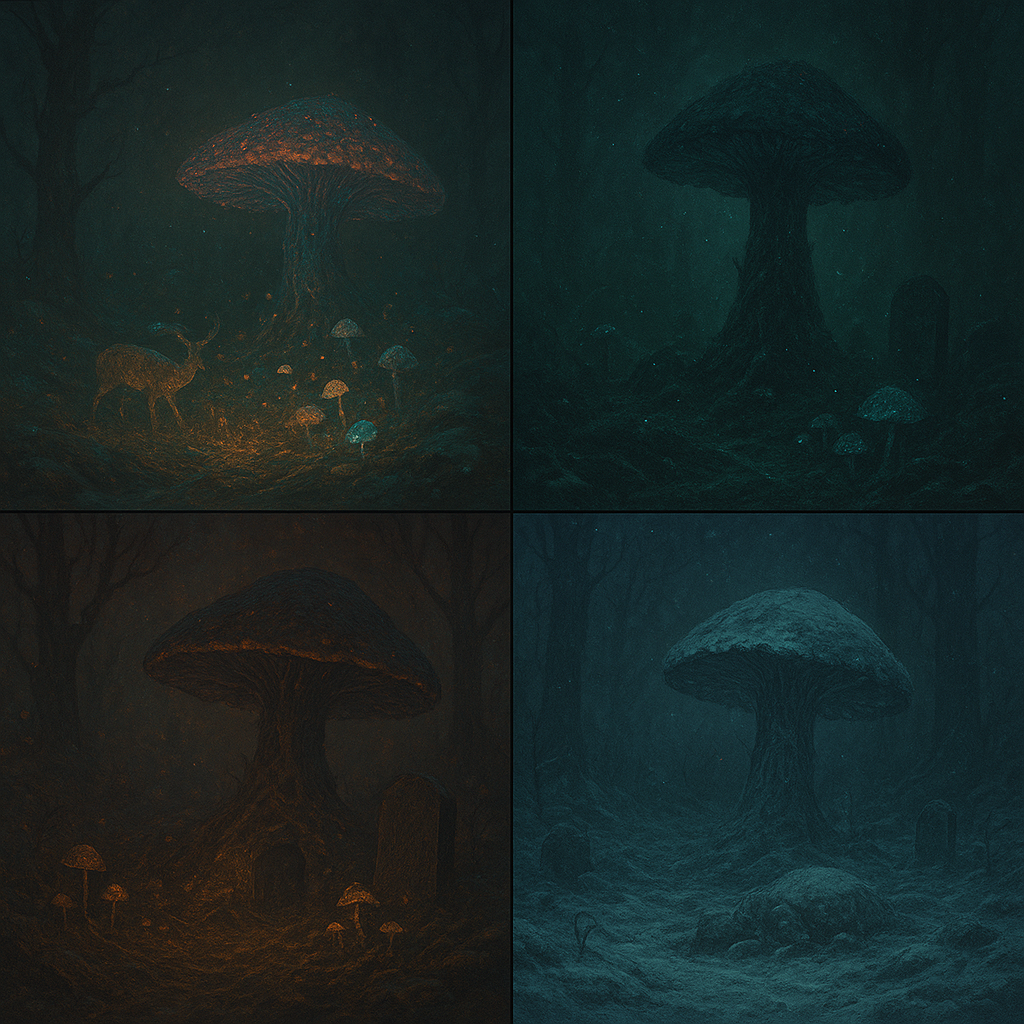
Despite being spawned of the Dark, the Bloom still responds to seasonal cycles:
Spring
- Rapid expansion of hyphal tendrils.
- Fungal “flowers” erupt from the soil in pastel blues, pinks, and yellows.
- Herbivores gather to feed on nutrient-rich caps.
Summer
- Thick spore mists hover through the heat of the day.
- Predatory fungi awaken stalk-like structures that release paralytic spores when disturbed.
- Migratory birds avoid the area entirely.
Autumn
- The Bloom retracts slightly, focusing on deepening root structures.
- Massive, umbrella-sized fruiting bodies grow around crypt entrances.
- Local fauna enter a feeding frenzy to store energy for winter.
Winter
- The surface layer appears dormant.
- Beneath the ground, the Bloom metabolizes stored biomass, sending internal “heat pulses” that melt small pockets in the snow.
- Certain creatures burrow into the mycelium, entering fungal-assisted hibernation.
Localized Phenomena
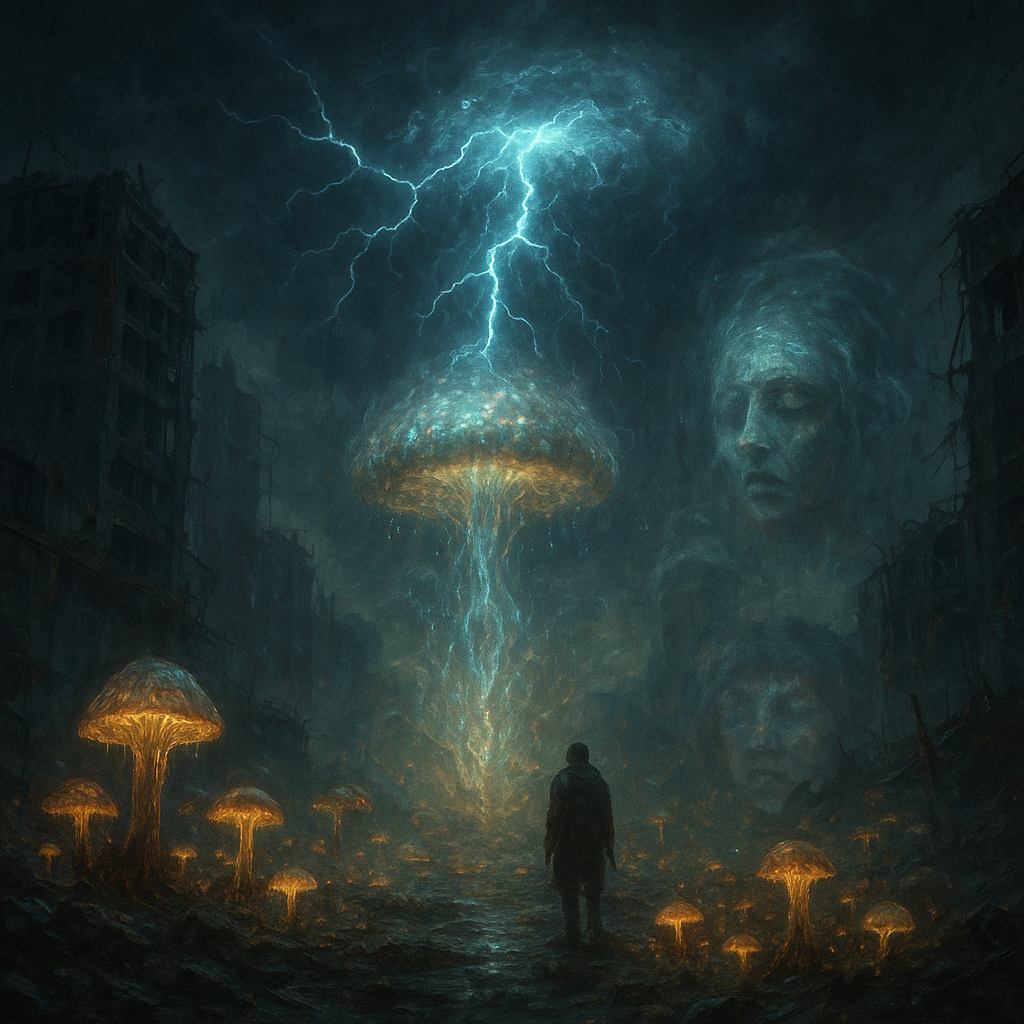
Spore Lightning
During thunderstorms, spore clouds rise into the air and attract lightning. Instead of igniting, the spores channel energy into the ground, causing brief, spectacular bursts of luminous fungal growth.
Memory Echoes
The fungal network seems capable of absorbing emotional or psychic residue from living beings. Travelers often experience déjà vu, hearing fragments of past conversations or sensing nonexistent presences.
Fungal Mirages
Heat shimmer over spore fields sometimes creates illusions: faces, animals, or even shifting corridors. Some believe these are the consciousness of absorbed organisms trying to break through.
Climate
Before the Fall, the local climate was humid continental. After the Bloom took root, subtle shifts emerged:
- Temperature: Moderately cool, with the Bloom insulating the ground. Winters are milder within the bloom than surrounding forests.
- Humidity: Extremely high year-round.
- Rainfall: Slightly above average due to aerosolized spores affecting cloud formation.
- Wind: Often low; spore density suppresses strong currents.
- Seasonal Stability: Spring and autumn are exceptionally stable; summer storms can become explosive due to spore lightning.
Overall, the climate is damp, cool, and strangely comfortable, until the spore density becomes overwhelming.
Fauna & Flora
Flora
Most natural vegetation has been partially or wholly assimilated:
- Fungusweft Trees: Oaks and maples whose trunks have become latticed with fungal cords, making them flexible and resistant to rot.
- Lampcaps: Fist-sized mushrooms emitting soft white light at night.
- Gravebloom Vines: Trailing plants that grow exclusively around tombstones and crypts, feeding on the stone minerals.
Fauna
Animals here show varying degrees of fungal adaptation:
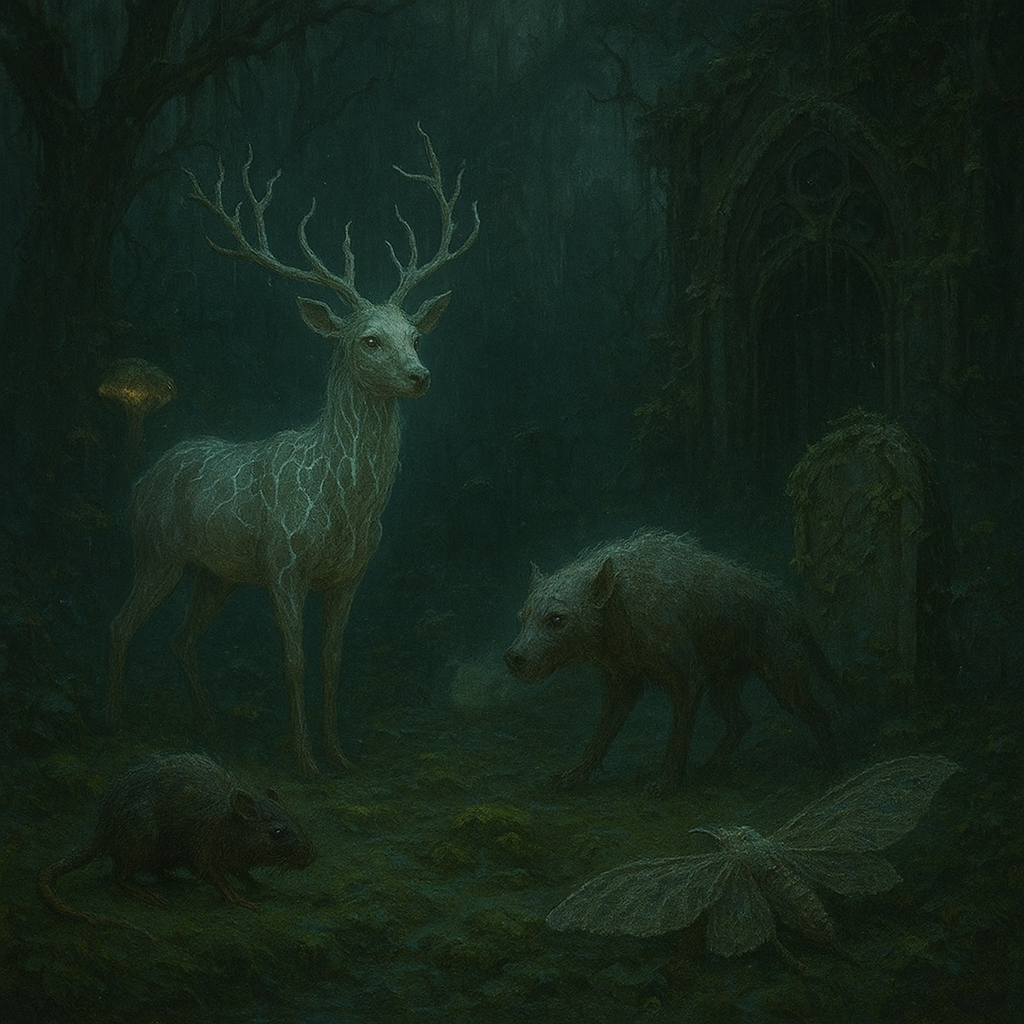
- Mycelial Deer: Pale, bioluminescent-veined deer with heightened hearing and docile temperament.
- Sporerats: Rodents whose fur traps and disperses spores; they serve as the Bloom’s primary distribution vector.
- Gravemoths: Large nocturnal insects with wings that appear dusty but are actually coated in living spores.
- Crypt Hounds: Rare, semi-feral dogs partially symbiotic with the Bloom—they exhale faint spore clouds and track prey via fungal resonance.
Natural Resources
Arthur’s Rest is a hazardous but valuable resource zone:
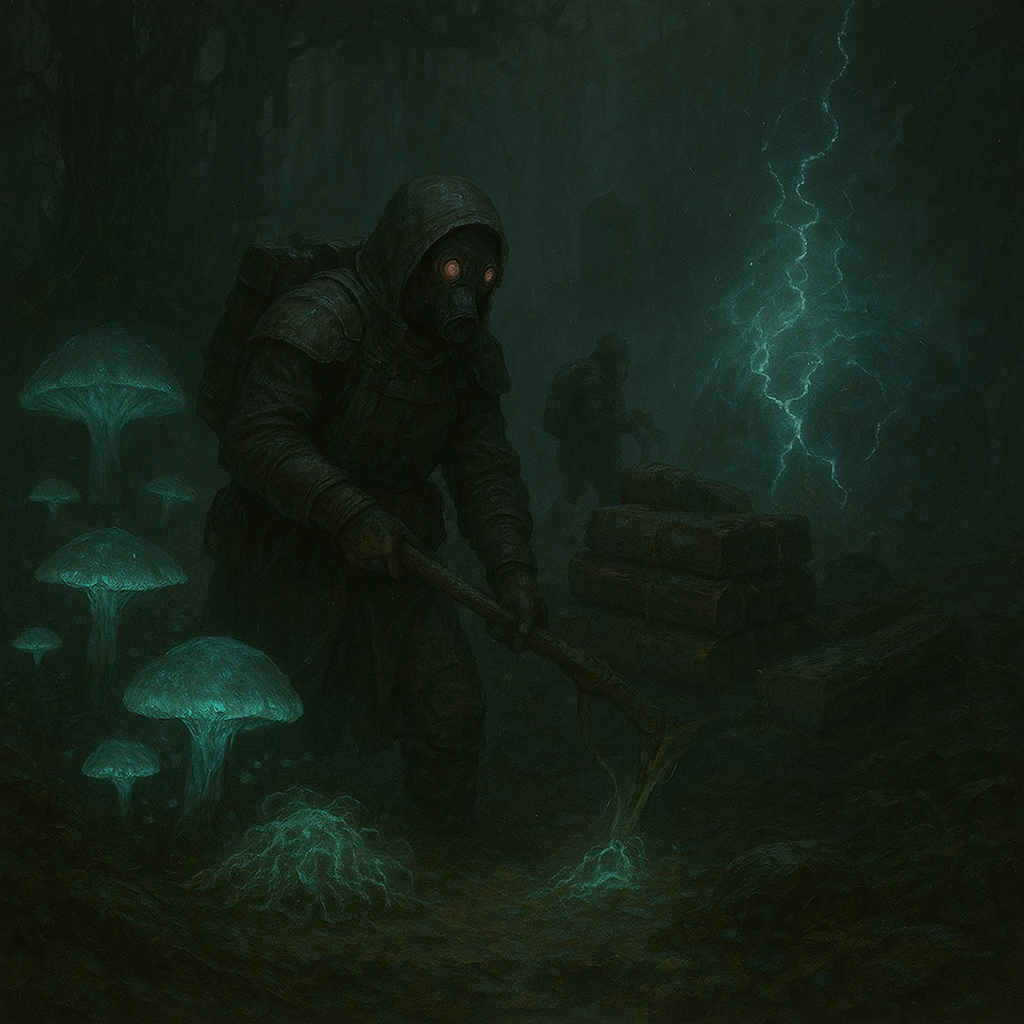
- Bioluminescent fungal tissues used in alchemy and low-tech illumination.
- Medicinal hyphae strands with potent antiseptic and regenerative properties.
- Dense, flexible wood from fungusweft trees, prized by Engineers for experimental crafting.
- Spore-infused soil that accelerates plant growth (but must be handled carefully).
- Rare arcane reagents created during spore lightning events.
However, harvesting anything too aggressively risks triggering a defensive reaction from the Bloom.


Comments