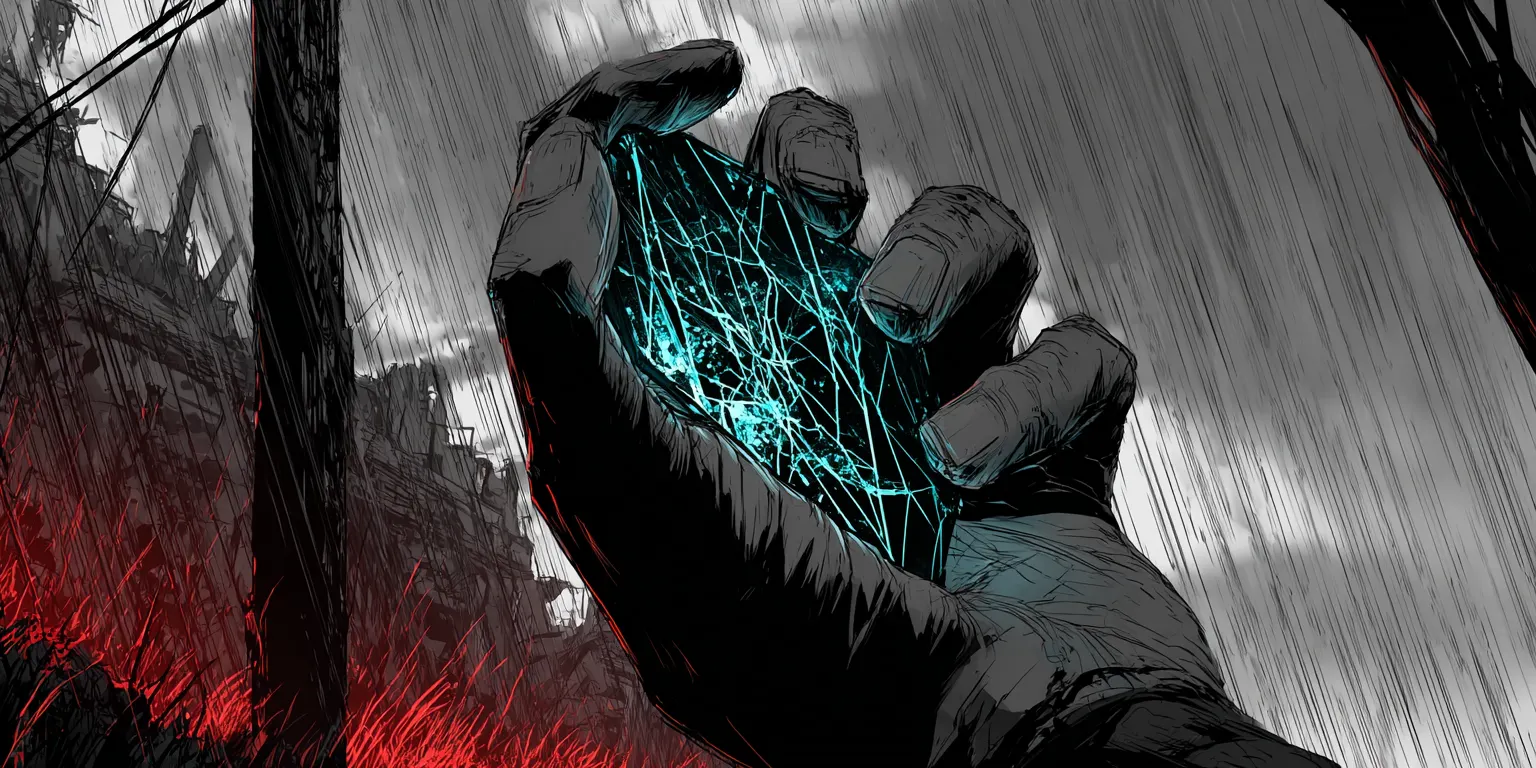
Veilglass
Intoduction
"Veilglass is the product of an argument the world lost."Veilglass is not a mineral, though it pretends to be one in its unsettling stillness. It is not glass either, though it fractures with the brittle iciness of something that remembers being untouchable. It is not stone, though it presses on the mind with the weight of centuries no one lived to witness.
Veilglass is a paradox given form: a solid fragment of the Veil - the boundary that once held the world apart from everything hungry beyond it. It is the scab reality formed in its attempt to mend; a fragment of the wound that fell away before the healing was done.
The Shape of a Wound
The first thing Veilglass teaches you is not to trust your eyes. It looks brittle, thin enough to snap between two fingers, yet the moment you try, the shard holds like forged steel. Its surface is dark and smooth, drinking in light the way dry earth drinks blood. Under most skies it stays dull and black, but catch the light at the right angle and the veins show through: indigo, teal, orange. Bruised echoes of color.
Put a shard to your ear and you’ll hear it. Everyone does, though nobody agrees on the sound. Some call it a hum. Others swear it’s a heartbeat slowed to the edge of dying. Whatever it is, it’s steady. Patient. Old.
Look into it long enough and the world starts bending. Your reflection stretches like it’s trying to crawl out; your shadow lags half a beat behind you, as if unsure it still belongs. Every shard has its own temperament, its own little wrongness. You never know which one you’re holding until - and if - it decides to show you.
Where it comes from
Veilglass is scattered across the world in small, stubborn fragments; a handful of slivers here, a pocket-sized shard there. Most pieces are tiny things, no larger than a fingernail, lying half-buried in ash: cold to the touch and harmless until handled. But the closer one gets to a Veil Tear, those places where the boundary between worlds hangs ragged and thin, the more common the shards become. Sometimes they cling to the air near the edges of the tear like frost made of glistening, dark light. Sometimes they rest in neat little crescents on the ground, as if they fell from something too large to comprehend.
"I don't know what it is. I only know it feels like picking up a piece of someone else’s nightmare."

No one truly knows what Veilglass is. Theories drift through the world like ash, changing shape depending on who’s whispering them. Ask ten people, you’ll get ten answers. Ask a mage, you’ll get a warning. Ask an Immortal, and you’ll get something that sounds uncomfortably like hope.
Some say Veilglass is the Veil’s skin, hardened after being torn. Others claim it is formed of soul fragments: pieces of counteless afterlives caught mid-passing, frozen before they found its rest. A few insist it is something older than both life and death, something the world tried to cast out once but failed to bury.
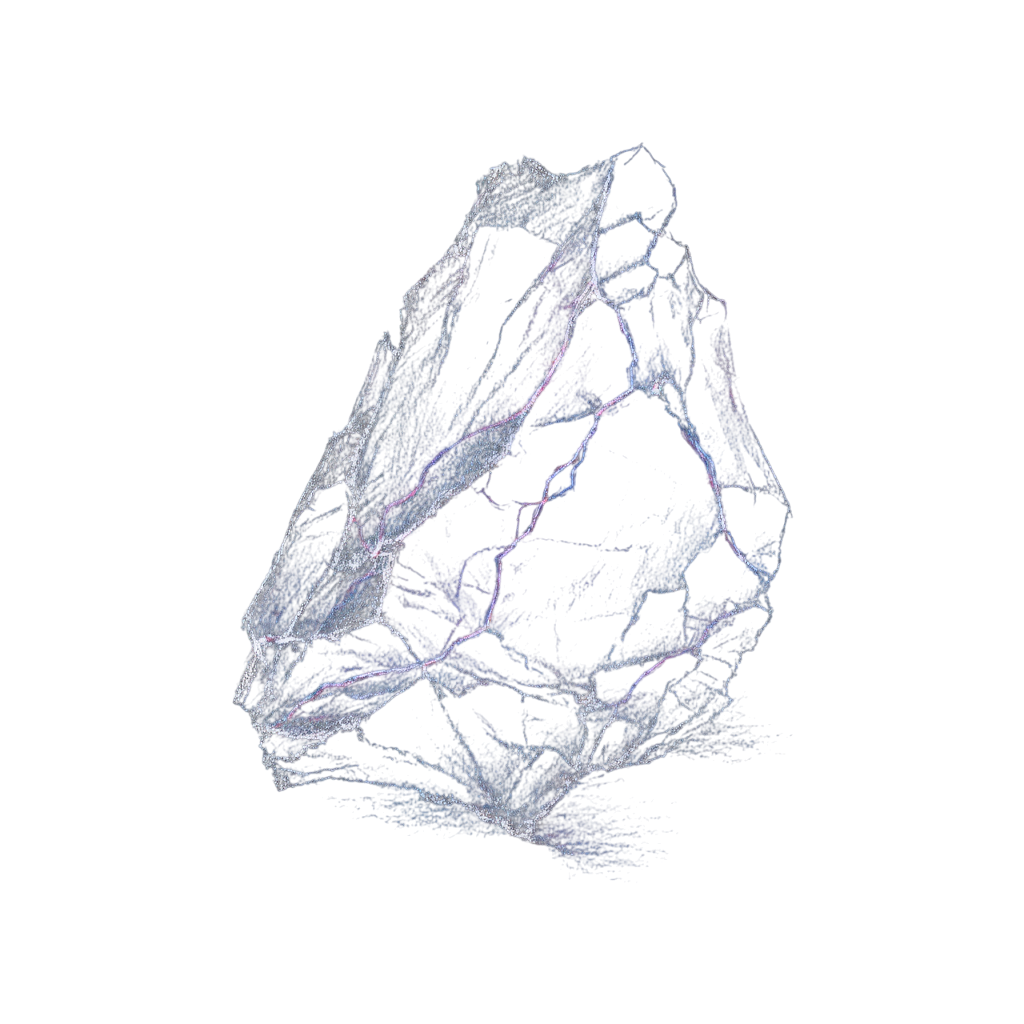
VEILGLASS (Vg)
Won’t kill you on sight, but it’ll try if you get cocky.
Hazard Level: Volatile
Smell
- Sulfur + rotten roses. I heard someone say this "means the sample is alive.”
Taste
– Supposed to taste like apples. Idiots confirmed it. Don’t join them.
Stability
- If it starts vibrating? Walk away. Doesn’t matter why.
- Fragments occasionally crack on their own. Nobody agrees whether this is normal or not.
Observed Phenomena
- Gets heavier near undead or dying folk. Creepy, but handy if you’re tracking trouble.
- Glows faintly in the dark. Good for seeing, bad for staying alive.
Handling
- Wrap it in cloth.
- Keep it dry.
- Don’t mix with spellwork unless you’re prepared to pray or run.
Trade Value
High. Always high. Worth food, ammo, shelter, favors - anything.
What is known is where it forms.
Near collapsed ritual sites like Salem, where magic screamed. In places where surges burned a mage from the inside out. At the edges of eldritch footprints; impossible impressions where reality buckled under a weight that didn’t belong on mortal soil. Around torn Veil edges that ripple faintly under moonlight, like pools of echoes from voices long forgotten. On the graves of all those who gambled high and lost everything.
It is shed upon the land - a residue of catastrophe. A hardened memory of something forced into existence and now left to wonder why. Scattered across the world like reality’s own scar tissue, it waits. For what, no one knows. But everyone can feel the same quiet truth: Veilglass does not simply lie in the dirt.
It observes.
Why Everyone wants it
Nobody wants Veilglass for the same reason. Nobody really trusts it. And nobody walks away from it unchanged. Yet, it keeps passing from hand to trembling hand because, in a world where everything else has failed, Veilglass still does something.
In a place where the sun feels tired and magic limps like a wounded animal, Veilglass is the closest thing left to certainty.
And the desperate - the broken - rarely refuse a miracle, even when it cuts their fingers.
The Survivors
For most wanderers and settlement folk, Veilglass is not mystical.
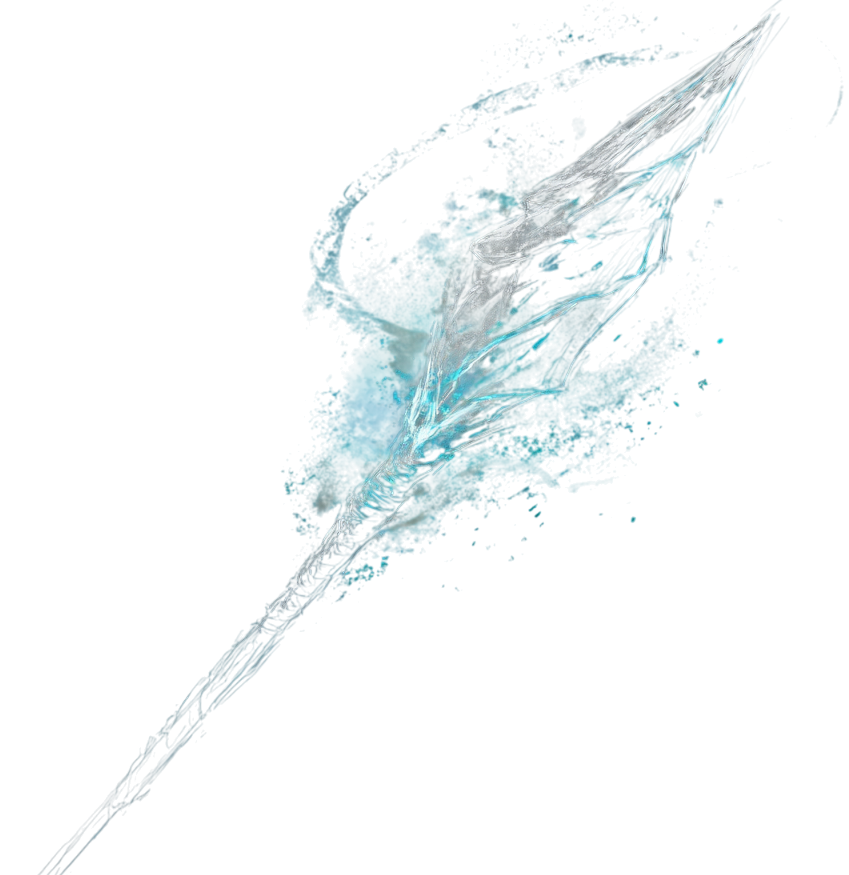
It’s useful.
Even a sliver of it can be fitted into cracked generators, making old-world machinery cough back to life for a few precious hours. Lamps burn once more with a shard embedded in their core. Signal towers pulse clearer. Rail switches respond. And, in the darkest places, a Veilglass spark is the only reason a settlement wakes up with something like warmth.
Survivors learned how to use it to make weapons too; crude but effective. Spears tipped with Veilglass can pierce spectres like flesh. Arrows fletched with Veilglass slivers scatter ghosts like smoke caught in a strong wind. In a world where the dead don’t stay quiet, that alone makes Veilglass worth killing for.
To the simple mortals, Veilglass means heat, light, barter, and maybe - if they’re lucky - one more day alive.
The Immortals
The Immortals, have the strangest relationship with Veilglass of all.
For reason unknown even to them, the strange material seems to resonate with their unbeating hearts; a soft thrum that matches a rhythm they have lost in the wake of the Cataclysm: their magic, Sanguinis. Some Immortals claim the shards "recognize” in them their lost identity. A few call it prophecy.
The rare Blood alchemists that still exist, experiment with Veilglass in hopes of reclaiming their vampiric magic. They were the first to discover that grinding Veilglass into dust and consuming it could stir echoes of their lost arts.
Sometimes it works - a flicker of old power, a hint of what they once commanded. Yet the cost is always steep: shaken control, fractured memory plagued with nightmares, hunger sharpened into something feral and uncontrollable.
Still, they hoard it, because one day it might restore them to their former glory. One day. Under the right blood moon. In the right ritual.
Veilglass is the only thing in the world the Immortals cannot fully exploit or dominate. So their crumbling courts try to control the next best thing: its supply. The settlements that mine it. The caravans that trade it. And the people who depend on it.
To them, Veilglass is a relic of the past and a promise to the future: the possibility of becoming whole again, no matter the cost to everyone else.
The Mages
Mages know more than they ever confess.
They approach Veilglass the way a person freezing approaches fire: knowing it can save them, knowing it can devour them, pretending they’re the ones in control. They use it as a focal point, a stabilizer, a shard of structure in a world where the very laws of nature have grown unpredictable and thin. A Veilglass fragment can calm a Wyld Surge long enough to finish a spell, or it can amplify it into something catastrophic. The veins of the shards tell the truth, if you know how to read them, but the danger? It's never zero.
Veilglass left idle but nearby has a way of seeping into a caster’s mind, filling it with a strange, numbing calm that feels out of place. Thoughts slow. Instincts soften. It is not peace; it is absence masquerading as quiet.
But when the shard is active, when it becomes the spine of a spell, everything sharpens. Every emotion is dragged to the surface and split open. Fear, joy, fury; all stripped raw, all magnified. Some spells consume the shard entirely, burning it down to nothing while hurling the caster into a state so heightened it’s hard to tell where the magic ends and the mage begins.
There are mages who love that feeling.
There are mages who break from it.
But none of them walk away unchanged. Mages want Veilglass because it extends their reach andsteadies their craft. They need it because, in a world that stole magic from their hands, Veilglass is the one thing that gives some of it back.
Even if the price is too high.
Faces of the Veilglass
- Indigo Veins: Spirit Attuned
Found near graves or sites heavy with death-memory. Spirit mages say these shards carry after images: whispers, memories, flickers of past lives. Stable for carrying. Dangerous in ritual work.
- Teal Veins: Continuum Attuned
Usually found near Veil Tears and ruins. These shards hum unpredictably and out of sync. Continuum mages hoard them anyway.
- Orange Veins: Matter Attuned
Warm to the touch, even when buried in frost. Said to steady unstable structures or neutralize small surges. They amplify anger to a dangerous degree, even when used by non-casters.
- Pale Gold Veins: Resonant
Extremely rare. Found only at the epicenter of major catastrophes (most known sight: Salem). Very stable and resistant against wyld Surges. Rumored to bring a voice from the beyond to your ear when exposed to magic. Most who heard it say they wished they hadn’t. High value. Low sanity.
- No Veins: Chaos Attuned
Perfectly black. Perfectly wrong. These shards swallow light and thought alike. Chaos mages seek them in secret, but will not speak of them. Survivors sell them fast, even at a loss.
- Pulsing Colorful Veins: Newly Created Veilglass
Recently shed pieces that still glow faintly. Haven't decided their attunement yet. Humming, alive, dangerous. Worth a fortune.
Relics made of Veilglass
Most Veilglass ends up as currency, tool, or fuel. But some shards - the rarest ones, the undying ones, the ones that feel like they still remember their birth - get shaped into relics. Every Veilglass relic carries a story.
Most of them end badly.
The Lighthouse of Alexandria
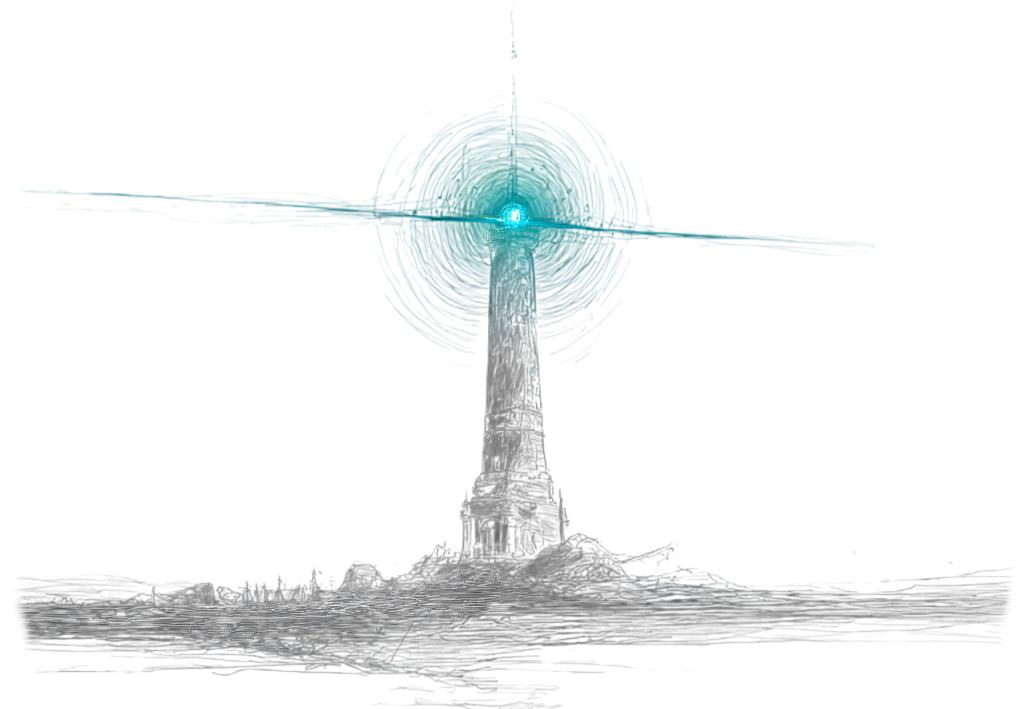
The lighthouse that stands in Alexandria today was raised in the first trembling years after the Cataclysm, built atop the place where the old tower had long since collapsed; shattered by centuries of storms and swallowed by the sea.
Built by the surviving mage orders, the Lighthouse was meant to watch the Veil the way astronomers once watched the stars. A single massive Veilglass lens crowns its peak, carved from a shard so large the workers refused to touch it bare-handed. When light passes through the lens, it reveals what the eye cannot: thin places, shifting boundaries, silhouettes pressing against the skin of the world from the other side.
For a time, it was the safest place on the coast; a beacon not for ships, but for the living. Then the Hollowed came. Or worse still, they grew from within.
No one knows which ritual was performed inside the tower, or which of the guardian mages first broke under its weight. But eventually the lens began to pulse in strange, uneven rhythms. The beam now sweeps across the sea like a searching eye, and those who meet it sometimes collapse into quiet, wordless terror.
Sailors and mages agree that the Lighthouse still watches through the Veil.
It just isn’t watching from our side anymore.
The Oracle Mask
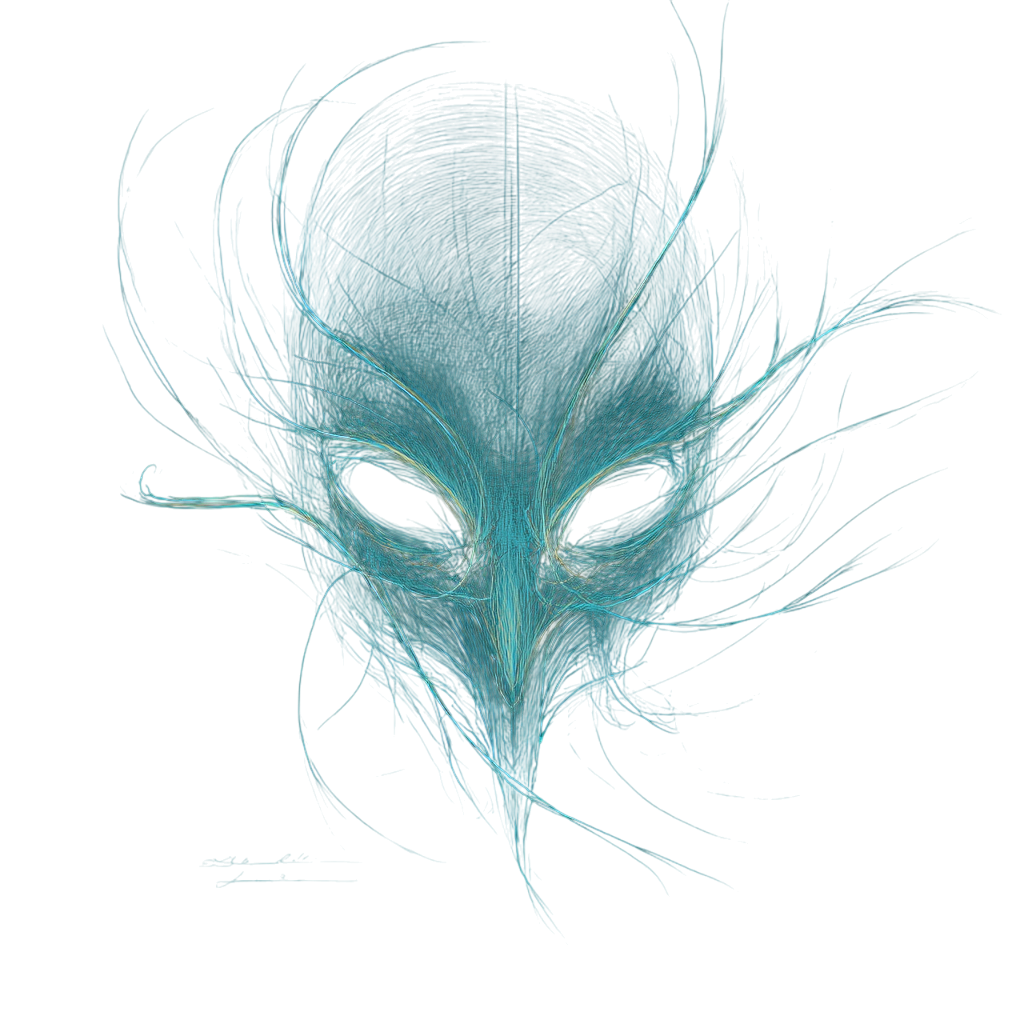
The Oracle Mask was crafted to see the pressure of the Veil - the way its invisible hand presses against the world, bruising it, thinning it, pushing through where it shouldn’t. Spirit mages designed the mask, when no one understood exactly how close the other side had come. They carved the frame from bone and set narrow slivers of Veilglass along the inside rim. Each shard floats a hair’s breadth from the wearer’s skin, suspended by delicate enchantments so resonance can pass through without direct contact.
The mask responds to distortion When worn, it shows the world as overlaid with faint, trembling contours. Most people look ordinary through the mask. But anyone carrying an outside influence - a lingering presence, a grief-shadow, a cursed whisper, a tether to something not of this side - appears haloed, as if the Veil has left fingerprints on them.
The longer someone wears the mask, the more the Veil’s residue bleeds into their senses. Emotion and influence mix. A stranger’s despair can feel like one’s own. A silent room can seem full. An approaching tear can be mistaken for a heartbeat. Some oracles tore the mask away, trembling, unable to decide whether the fear was theirs or borrowed from somewhere else.
The Silent Order keeps it locked in a lead-lined reliquary now. Even through the metal, some swear they hear the faintest tremor: a soft tap, like someone on the other side asking to be let in.
What the future holds
In the end, no one agrees on what the existence Veilglass means.
The hopeful believe it was left behind on purpose; a quiet mercy of a dying benevolent god, scattered across a dying world as a final sacrifice. A trail of fragments, each humming with the faint promise that something greater than the ruin wanted humanity to have a second chance.
Others see only the opposite: evidence that the wound never closed, that the world is still splitting along invisible seams. To them, every shard is a warning sign, a piece of the boundary sloughed off as reality thins. Not a gift, but a symptom of a terminal illness bound to claim what's left of the world.
In the end, whatever it is - be it a gift, a symptom or a curse - Veilglass endures in ways nothing else does. And in a world built from ruins, anything that survives this long is worth following.


It's a really cool idea with these shaky pictures. Since they're in blue and red, could you view them with 3D glasses like the ones in children's magazines?
Here are my Entries for the water continent Ulűri̋qi̋
Ha! That's how I got the idea for them XD I was thinking how I can make the images have that strange effect I had in mind, and remembered an old Science Illustrated magazine that had these glasses and images of the Titanic printed to see with them. I have no idea if it works though, no way to test it at hand. It would be very cool if it did :)