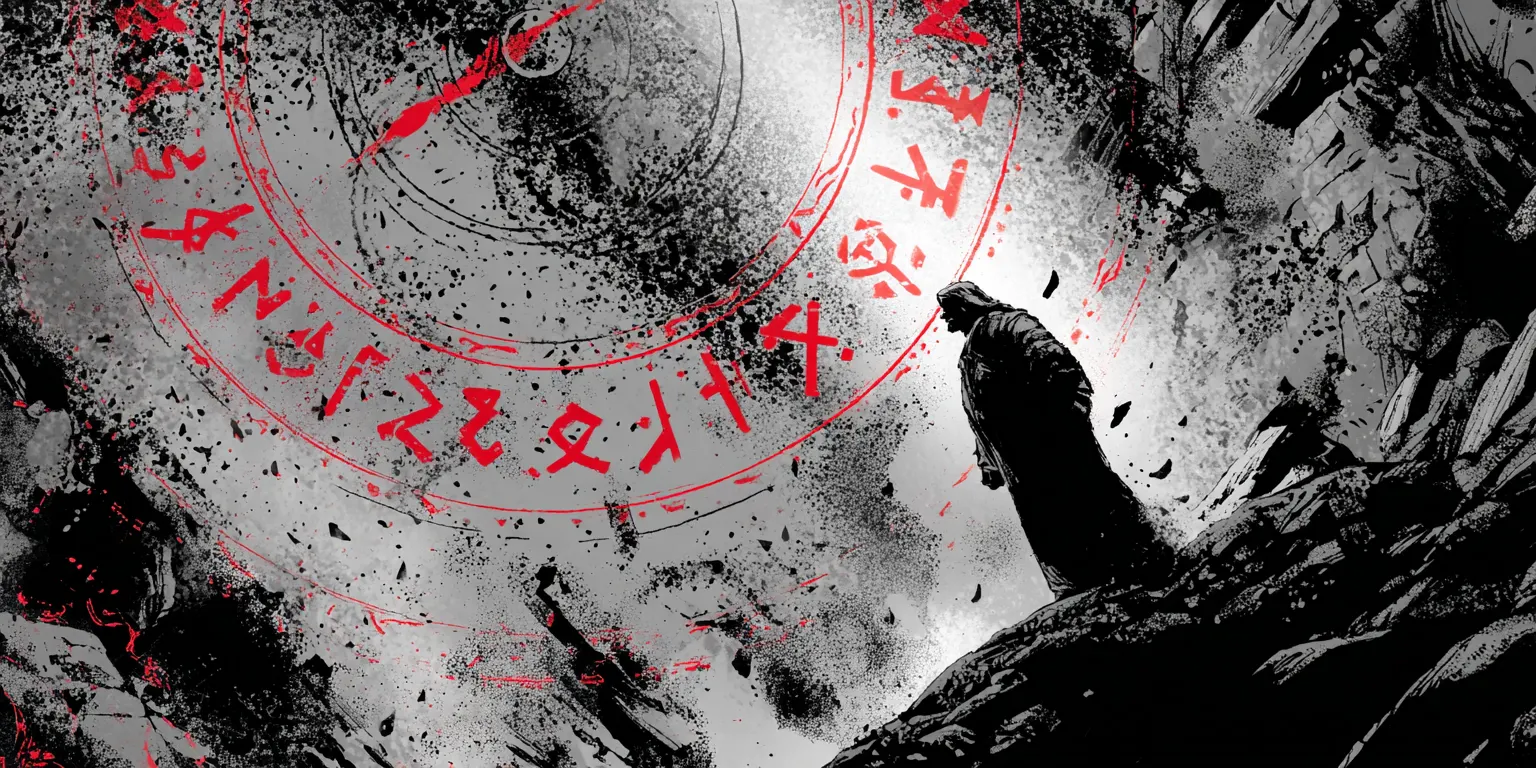
The Umbral Tongue
Introduction
"Magic has a voice. To hear it is privilege. To understand it, peril.”
The Umbral Tongue is not a mortal language.
It was never meant to share meaning, to carry stories, or to gather a people beneath a single name. Its purpose lies deeper, buried in the marrow of the world. It existed before the first coven cast a circle, before the first mage realized the Veil could be touched, and it will outlast even the eldest of the Immortals when their ashes finally settle.
To those who study it, the Tongue is the closest thing to Truth: the breath of the essence that grants shape and measure to all things, the echo of creation made audible. Its symbols hum like distant constellations shifting in their courses; sound given gravity, meaning given orbit.
To vampires, it is the cradle-song of their rebirth, the whisper that threads through the silence when the pulse of life goes still. To mages, it is the forbidden lexicon of understanding, the living script through which the Aether Paths reveal their shape. To mortals, it is poison; a resonance their bones cannot bear, a comprehension too sharp for the soul to safely hold.
The Umbral Tongue is not meant to be spoken.
It is meant to bind, to heed, to remember.
And those who dare brush against its sound learn the truth quickly:
Some languages are taught.
This one teaches back.
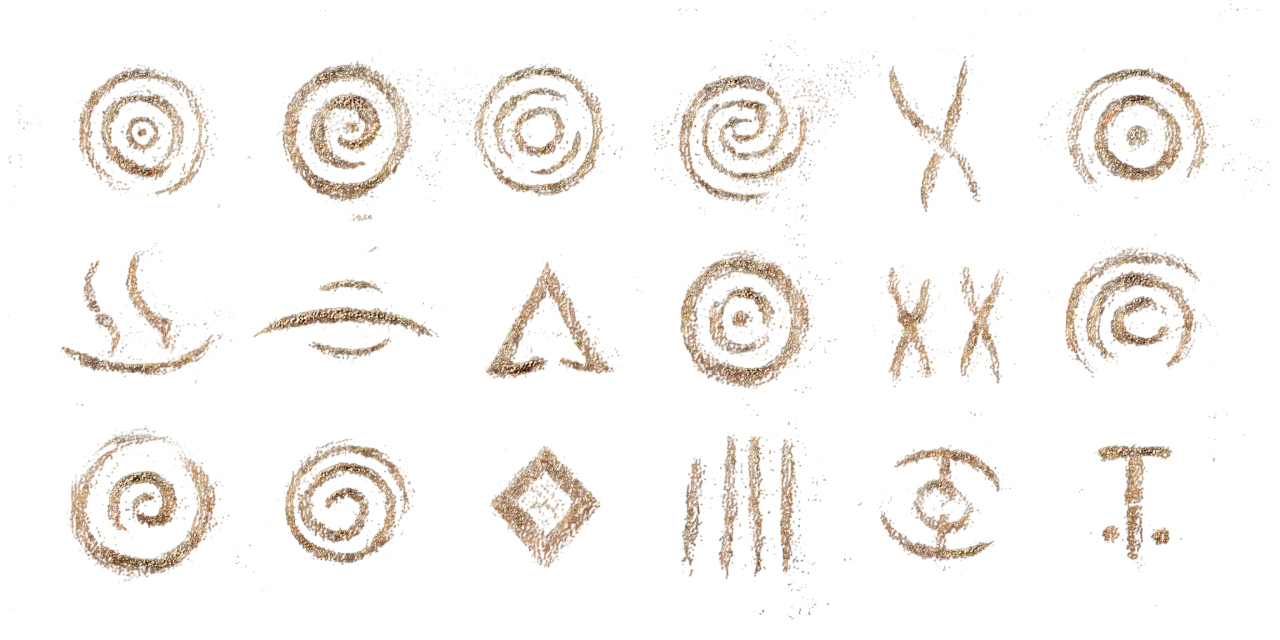
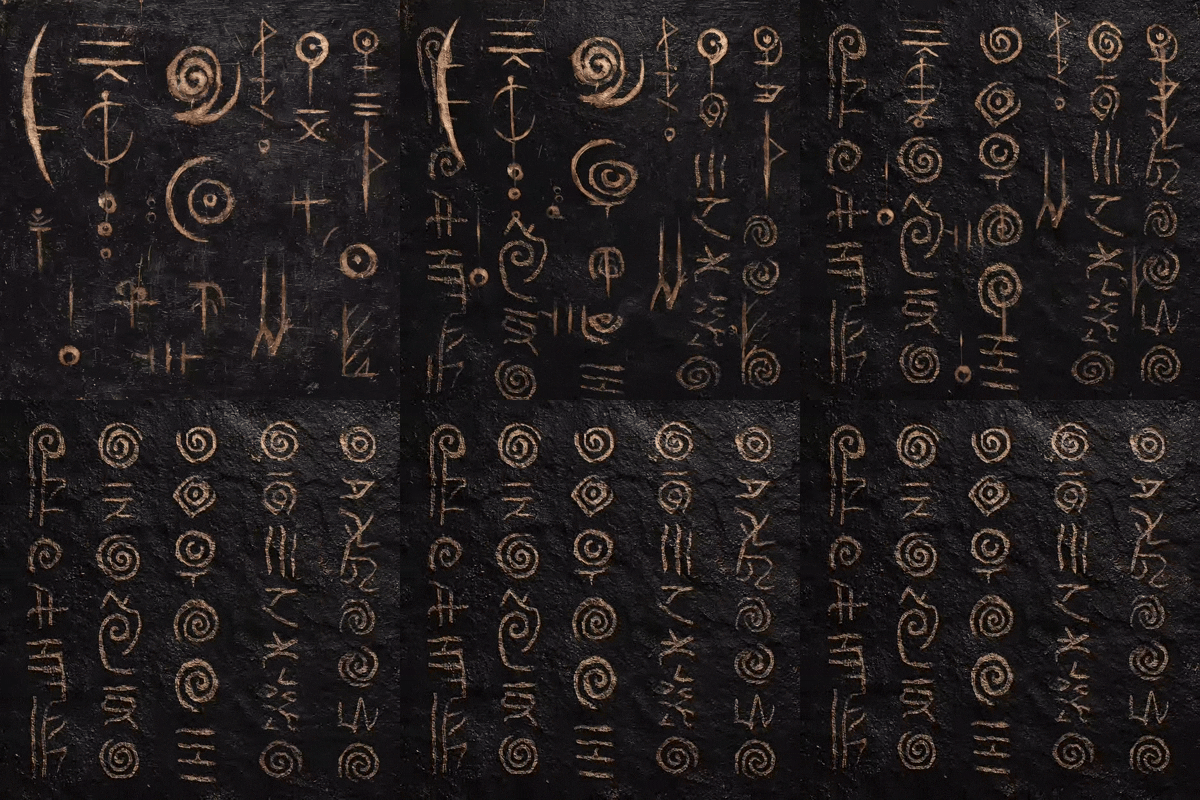
The following words are fragments of a greater lexicon, drifting remnants of a language that reshapes itself with every breath. No scholar agrees on their true meanings; perhaps there are none. After all, the Umbral Tongue does not hold definitions; only consequences.
- Kaelthir (KAI-ell-theer) Often described as a binding oath, a word used to seal commitment or subjugation.
- Vorynth (VOHR-inth) Carries no literal translation; it is the sensation of resonance and the moment when magic aligns with meaning.
- Azriel (AZ-ree-ell) A term for pathways hidden from ordinary sight, referring equally to literal routes and metaphysical crossings.
- Sangul (SAHN-gool) A word that touches upon forbidden knowledge; not simply the knowing, but the warning that comes with pursuing it.
- D’reloth (DREH-loath) Speaks of dominion, not as an action taken, but as a presence that settles over everything around it.
- Ilmura (ILL-moo-rah) The threshold between waking and dream, the moment where one reality leaks quietly into another.
Nature of the Tongue
The Umbral Tongue does not sound like speech at all, though some still call it True Speech. Its sound moves like a pressure in the bones, a vibration of meaning that settles between soul and sinew. Its consonants grind like stone dragged across sanctified floors. Its vowels drift, weightless and wandering, stretching around the listener like smoke curling from a dying ember.
Every syllable spoken feels saturated, heavy with meaning beyond the throat that shapes it. The Tongue resonates even in a whisper; it does not pass through the ear so much as slip behind it, settling at the base of the skull. From there, it hums along the spine; a quiet invitation, or a warning, depending on who speaks… and who listens.
Meaning in the Umbral Tongue is shaped not merely by structure, but by tone, by intent, by the unspoken weight the speaker carries. A change in will reshapes the word. A change in emotion rewrites it entirely. Fear turns a command into a plea. Authority turns a plea into obedience. Spoken within ritual, it may become an anchor, a beacon, or a blade.
The Umbral Tongue carries its own gravity, its own pressure, its own purpose.
It does not ask to be understood.
It demands to be felt.
What I heard in the alley
I wasn’t hiding. I wasn’t spying. I was only passing through the back street behind the old mill; the shortcut I’d walked a hundred times without thinking. Two figures stood at the far end, half-shadowed where the wall leaned inward. I meant to give them a wide berth, but before I could turn away, one of them spoke.
The sound hit me like a hand to the chest. Not loud - not even sharp - but heavy, sinking straight into me. It felt like someone pressing a thumb into the soft part of my mind. Not pain. Just pressure, as if my skull had become too small to hold whatever I had just heard. My vision swam. For a moment I thought the ground tilted, though the cobblestones remained still. Something inside my skull tightened, as if my thoughts were being pushed aside to make room for… something else.
Another word followed. My nose began to bleed, hot at first, then cold. Tears sprang to my eyes, unbidden. The shadows behind the figures stretched and bent, but the moonlight didn’t move. My legs shook. I couldn’t breathe right; every inhale felt borrowed, every exhale too thin. I didn’t understand a single sound they made. I didn’t even know if what I heard was a language at all. It felt more like a vibration beneath my ribs, like a weight settling along my spine.
They never turned. Never saw me. Never raised their voices.
But since that day, something changed. I can’t explain how I know this, but I am sure that whatever they were saying somehow… heard me.
Structure & Expression
The Umbral Tongue does not obey the tyranny of fixed meaning.
Every word is shaped by intent, by hunger, by authority, by the emotional weight carried behind it. Intent is not an influence on the language: it is the language. Change the will, change the meaning. Change the emotion, change the purpose. Change the speaker, and you change the entire structure of the sentence.
This is why translations shatter. To translate a word in Umbral is to attempt to capture not only the sound, but the will that shaped it; a task no mortal ink or mind can fully hold. The reason for this, no matter how hard it is to grasp, is that the Tongue is not a vessel for meaning, but the act of shaping it.
Spoken Umbral
The Umbral Tongue possesses structure, but not the kind mortals recognize. Its grammar coils inward, looping upon itself like a serpent tightening around its own body. Words do not follow one another; they lean, pull, or bend into alignment depending on the will of the speaker. Each syllable behaves as though it orbits a hidden center of gravity.
Even silence has syntax. A pause of the wrong length can twist reverence into defiance, or obedience into unintended challenge. In Umbral, even breath becomes part of the sentence. Spoken aloud, the language is less a system than a tide; shifting, deliberate, impossible to anchor.
Glyphic Umbral
When the Tongue is written, it abandons the logic of sound entirely. The script becomes a lattice of curved lines, spirals, roots, and scars. Glyphic Umbral feels carved rather than inked. Even when laid with a quill, the marks resemble something scratched into stone, as if written by a hand guided by memory rather than choice.
Certain glyphs are never drawn fully. Vampires leave them half-open. Mages obscure them. Revenants avoid them entirely. Every scholar claims a different reason, but all agree on one unspoken truth: some symbols are not meant to be completed. And some are not meant to be read at all.
Cultural Weight & Forbidden Knowledge
The Immortals

For the Immortals, the Umbral Tongue is the foundation upon which their entire sovereignty rests. Their courts speak it with pride; their ceremonies revolve around its cadence. Every oath of allegiance is shaped in Umbral, for no other sound carries the permanence they require. A pledge spoken in this Tongue is not a promise: it is a chain.
Contracts written in Umbral bind deeply. The act of signing such a document is an offering, for the words do not lie inert on the page; they coil around the name inscribed, holding it in place. Every decision of consequence, every pact between elders, every alliance struck in the long shadow of immortality is written in this script.
Even the rite of creating a new vampire is steeped in its syllables. A mortal’s last breath and first hunger are framed by quiet utterances of Umbral, guiding the transformation as surely as fang and blood. A fledgling rarely remembers the sounds, yet their body responds to them instinctively, as if the Tongue had etched itself into their rebirth. Even Revenants, bound servants granted a fragment of immortality, carry its mark. Their loyalties are shaped through Umbral phrasing that settles in the marrow and lingers long after the voice that spoke it has fallen silent.
Among the Immortals, mastery of the Tongue is a privilege, a birthright, and a weapon. Through it, power is granted, challenged, and made absolute.
The Mages

Mages do not inherit the Umbral Tongue. They pursue it. To them, it is not a cultural banner or a badge of lineage, but the closest thing the world has to the original language of creation. They call it the translation of magic: a lexicon that reveals the scaffolding beneath all arcane forces.
Through its patterns, they craft rituals of immaculate precision and glimpse truths usually hidden behind the veil of perception. Many describe studying the Tongue as brushing against something divine: the realization that reality has its own vocabulary, and that each Umbral syllable is a fragment of that vast, indifferent grammar.
But revelation seldom arrives gently. Comprehending the Tongue requires the mind to stretch into shapes it was never meant to hold. Some mages emerge sharpened and exhilarated, convinced they have touched the architecture of existence. Others return hollowed, their thoughts frayed at the edges, unable to reconcile what they have learned with the world as they once understood it.
For mages, the Tongue is illumination; the kind that burns as often as it enlightens.
The Mortals
Mortals were not made to hear the truth of how the universe speaks. To them, the Umbral Tongue is not language at all, but an intrusion, a sound that presses into the mind with unbearable clarity. Even a single phrase can leave a mortal reeling. Listeners speak of a tightening behind the eyes, or a sudden metallic thrum at the back of the tongue
A mortal's essence is too fragile, too anchored in the ordinary, to withstand such unfiltered meaning. Some faint; others collapse into shuddering silence. A rare few simply die, because their bodies cannot hold the weight of a sound that reveals more than they were ever meant to perceive. Most who survive remember nothing of the words themselves. What lingers is the certainty that they witnessed something sacred, alien, and deeply wrong; a truth that slipped briefly into their world and, in doing so, reminded them how small a mortal life truly is.
The New Umbral Tongue
Despite its dreaded nature, the Umbral Tongue was once a coherent thing.
Its fluid meanings bent with intention, and its shifting tones followed unseen currents that matched the quiet logic of a world still whole. The language lived, breathed, reshaped itself, but it did so in harmony with the reality that birthed it.
Then the Cataclysm came, and the Veil cracked like old glass.
What had once been fluid became unstable. Words that once leaned gracefully toward meaning now shimmer with contradiction. Phrases lurch in directions no speaker intended. The Tongue still bends to will, to hunger, to authority - but the world it answers to is no longer complete. Intent splinters. Meaning misfires. The language responds, but not along any path mortals or immortals fully understand.

Beyond the Veil, in the places where form dissolves and thought becomes hunger, the Amorphus speak the Tongue again. But what they speak is no longer the Tongue that was. Their voices bleed through the rents in existence, warping syllables into distortions of desire, memory, or something older still. They whisper to their chosen, filling dreams with broken fragments of instruction or purpose or command; messages altered by the wound in reality and interpreted by minds too small to bear them.
In recent years, a growing number of mortals have begun to claim that the Tongue speaks through them. Their pronunciations are imperfect, their glyphs childish, yet the broken nature of the Veil has given room for echoes to mimic legitimacy. Some call themselves prophets. Others call themselves interpreters. A few are merely vessels for something speaking through them.
The Tongue continues to bind.
It continues to shape.
But now it shapes a world made of ruin and fractured memory; a world its original grammar no longer recognizes. If once it spoke across the cosmos, now it speaks across a wound.
And so the question that remains, quiet and heavy, is not what the Tongue once meant…


This is honestly quite terrifying. It was scary enough before the Cataclysm, but after... I really like how it escapes understanding, like grains of sand running through your fingers.
Explore Etrea | WorldEmber 2025
I am happy to know the vagueness of the language makes it more interesting! Thank you <3