Ironstark Sickness
Introduction
"Through our blood, the Void is spreading."
At first, it masquerades as anemia. Exhaustion, pallor, the thin pulse of a body starved of iron. In a world already broken, such symptoms have a dozen mundane explanations.
Yet, all of them are irrelevant.
Ironstark sickness is a rare affliction born of this new world. To most it is a wasting malady: a slow unraveling of strength and blood, that turns the body brittle, before letting death claim it.
But to those who study the deeper horrors lurking in the shadows, Ironstark is no sickness at all.
It is an invasion.
Nature
Parasitic Presence
Onset
Slow, Irreversible
Known Cases
Few (confirmed), many (suspected)
Classification
Disputed
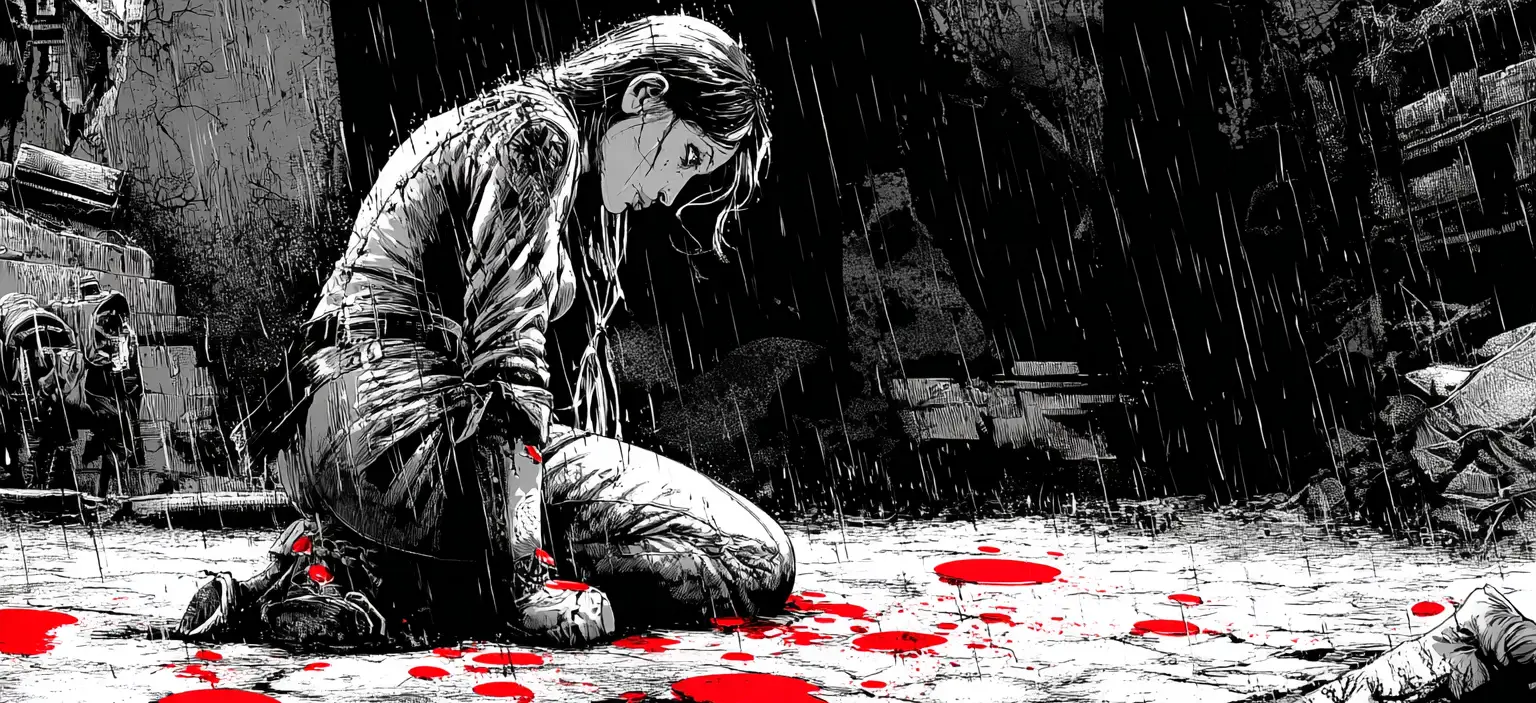
She first noticed it when she accidentaly cut her hand while scavenging in the ruins of an old plastics plant. The blood that dripped on the cold, rust-bitten machinery was too pale, too thin; shimmering under the moonlight like watered mercury stained red.
By the forth day, her veins turned grey; visible and shifting faintly under her shallow, almost translucent, skin.
By the seventh, she heard the humming: steady, resonant, unchanging. The pulse of a distant forge working somewhere inside her. She thought it madness. She hoped it was madness.
A month passed. On its final night, a vampire tore into her camp. She was too weak to run; her limbs felt carved from lead. It pinned her easily, tore through her defenses, and sank its fangs into her neck. She was certain she would die there, emptied like so many others.
She was wrong.
The beast recoiled the instant her blood touched its tongue. It spasmed violently; retching, gasping, collapsing as if poisoned. It fled into the dark shrieking.
She lay shaking on the ground, shaking uncontrollably.
The humming grew louder. It was then that she realized: she had not been losing her mind.
The sound was real and it was coming from her blood.
Nature of the Disease
Ironstark appears so rarely that some believe it chooses its victims rather than finding them by chance.
It is a malady that does not spread through air or touch. Instead, it begins only when flesh breaks against metal carrying a faint, anomalous resonance: a vibration so subtle it cannot be heard, measured, or replicated. It lingers only in the ruins of the fallen world: twisted beams, broken machinery, rusted railings, shattered tools that glitter with a wrongness no instrument can confirm.
"The resonance seeks cracks: first in metal, then in flesh, then in the self. It finds what is already failing and finishes the work. And take heed: its rarity will not last."
Once the resonance enters the bloodstream, iron levels plummet. Circulation slows. Blood thins, then shifts. Veins adopt patterns no anatomy recognizes, as if the body is relearning how to exist. What marks the affliction as truly alien is this: the resonance adds nothing. Instead, it teaches the blood to reorganize around what is missing. Cells align toward absence. Structures fold inward, forming hollows where flow should be.
Metal remains the only known vector. Steel, iron, copper - each carries a memory of form, and the resonance uses that memory not to build, but to undo, mirroring the void where structure should be. Some scavengers whisper that infected blood makes nearby metal tremble once, as if in recognition, but no test has ever reproduced the effect. Attempts to study the resonance fail without exception. It refuses to appear in controlled conditions, manifesting only in wounded places: collapsed factories, abandoned rail lines, husks of old machines. As if it recognizes only brokenness.
Once inside the body, it behaves with unsettling purpose; not like a parasite, but like a quiet instructor, guiding the flesh into erasure.
The Void's Call
Symptoms
Ironstark announces itself quietly; so quietly it slips past suspicion. A moment of dizziness while climbing rubble. A trembling hand over a firestarter. A fatigue that sleep refuses to touch.
Harmless, if the world weren’t already killing everyone slowly.
Then, the skin betrays the horror.
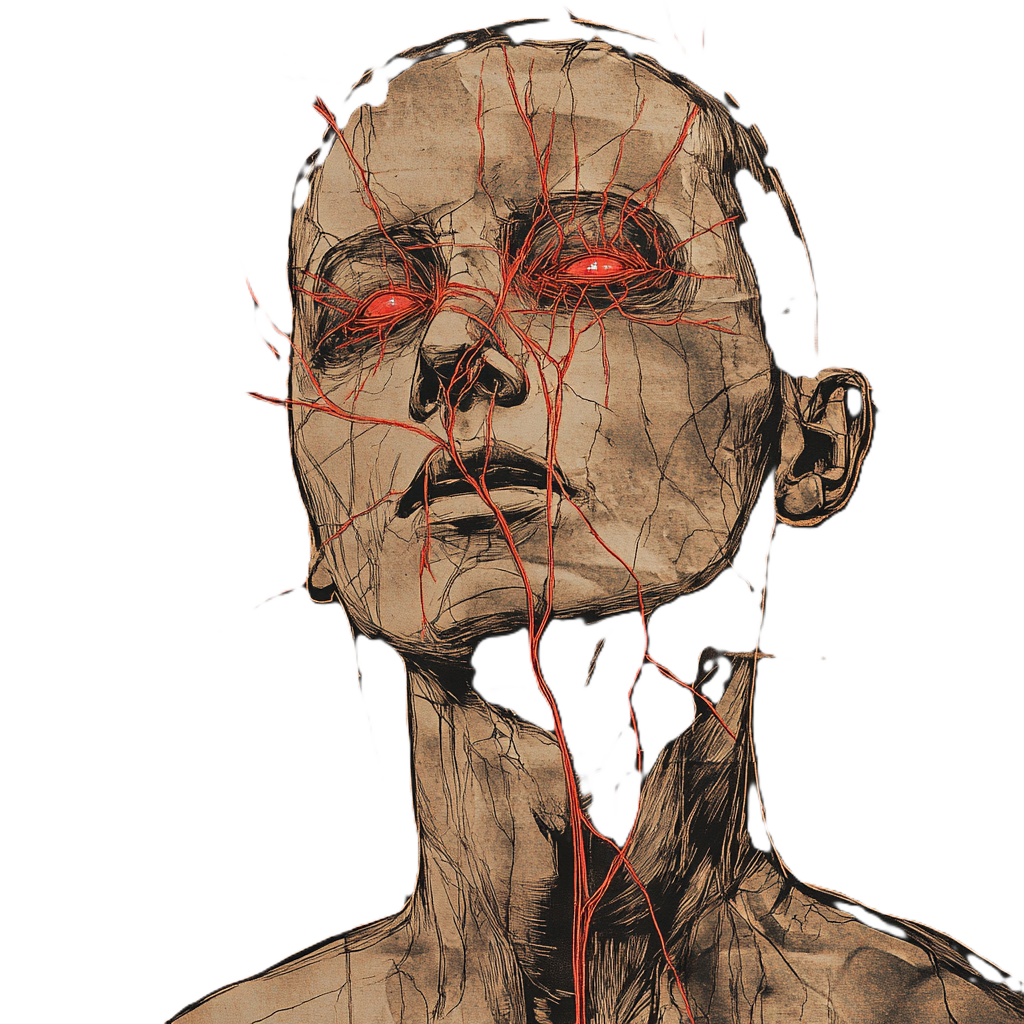
Within days, the veins dim to muted grey or bluish-black. They aren’t swollen or inflamed; they look subtracted, as if the blood inside them is missing something essential. Touching them feels wrong: cooler than living flesh, faintly rigid, as though the flow beneath is meeting resistance. Many describe a pressure beneath the sternum: not pain, but a slow, inward drawing. A quiet tightening of something unraveling them.
The senses distort next. Food tastes muted. Water turns metallic. Blood smells unfamiliar. Animals refuse to approach. Dogs pace at a distance, whining at an absence they cannot name; scavengers swear birds veer away overhead, avoiding the space around the afflicted entirely.
And then come the intrusions. Not hallucinations, but subtler, quieter incursions:
A faint vibration under the ribs.
A whispered humming near the ear, coming from inside.
A fleeting sensation of being hollowed out, piece by piece.
None of these symptoms scream danger. They do something far worse. They accumulate, until the afflicted finally realizes that whatever is happening inside them is no longer just a sickness.
It has become a presence; one that feeds on absence.
Stages of Ironstark
Stage I: The First Week
Fatigue, dizziness, pallor. The pulse grows quiet, no longer matching the rhythm of the heartbeat. Veins darken to grey. A metallic tang lingers under the tongue. Blood begins to "empty” - forming tiny, vacant pockets where healthy cells should exist.
Stage II: Days 7–14
Veins shift into unnatural, almost luminous patterns. Movements feel weighted, anchored. Dogs refuse to approach. A faint internal vibration begins, subtle but constant. Hollow structures form in the bloodstream, altering circulation in ways that defy medicine.
Stage III: Weeks 3–5
The humming begins: steady, resonant, impossible to ignore. Breath grows shallow. Muscles tire rapidly. The blood turns thin and faintly reflective, light catching on the micro-hollows threading through it. Vampires that attempt to feed recoil violently, as the blood has begun taking the shape of absence, and their instincts recognize it as poison.
Stage IV: Months 2–3
Skin grows translucent along major veins, not from thinning, but from the space beneath them collapsing. Sudden nosebleeds appear without cause. Iron-rich food induces nausea. The resonance accelerates, reshaping larger hollows that disrupt circulation entirely.
Stage V: Month 4 and beyond
The resonance overtakes the bloodstream. Blood thickens, slows, then barely circulates at all. Veins harden into metallic-like ridges: calcified absence forming structures the body never possessed. Movement becomes agony. Color drains from vision, fading into greyscale. Organs starve.
Stage VI: The End State
The heart stills. The blood cools into dull, metallic threads. The body becomes a fragile vessel filled with quiet resonance. Corpses hum softly for days, sometimes weeks. Some swear the tone shifts when someone approaches, but no one stays long enough to learn the truth.
Attempts of Treatment
Ironstark is a chronic malady once conducted. There is no permanent cure; only ways to control it. Once the resonance takes firm hold, no treatment can reverse it. Every method is simply an attempt to keep the blood remembering what it used to be. Most treatments function only through Stage III.
After that, the body no longer behaves like blood and flesh at all.
Early Treatment
These measures feel crude, but they sometimes work - so long as the sickness has not yet found its rhythm.
- Iron-Rich Diet
In early stages, high iron intake can slow the slide. Meat, scavenged supplements, even improvised mineral infusions; anything that coaxes the body to replenish what the sickness strips away. It doesn’t cure, but it keeps the affliction at bay.
- Heat & Rest
Keeping the body warm prevents the early stagnation that accelerates resonance. Survivors wrap heated stones against the ribs or sleep under thick layers to keep the blood moving.
The Desperate Phase
By Stage III, the body fights back with every beat of the heart. Ordinary remedies collapse.
- Blood Transfusions
Performed rarely, and only when there is no alternative. Survivors cannot test for compatibility; they simply gamble. Sometimes the new blood grants a surge of clarity or strength. Other times it triggers shock, fever, or organ failure. It is a coin toss between a temporary reprieve and a quicker death.
- Alchemical Brews
Rumored, not trusted and often feared more than the sickness itself. Mages boil these brews from veil-touched salts and reactive herbs so volatile they must be handled like explosives. When swallowed, the concoction tears through the veins, attempting to bind and expel the resonance.
The process is agony. Patients scream, shake, vomit metal-flecked blood, and often come away with permanent scars: veins that never quite return to normal color, skin warped in branching patterns, trembling hands that never fully steady.
Stories claim some survive with the sickness nearly erased.
Others die within hours.
Whether these brews cure, wound, or simply postpone the inevitable depends on the mage, the patient, and perhaps the whim of whatever watches from beyond.
Point of no return
After Stage III, the sickness no longer responds to iron, heat, rest, or transfusions.
The alien resonance has taken hold. Metallic undertones color every heartbeat and blood has begun to forget its purpose; and so does the self.
At this point, treatments become little more than compassion: keeping the patient comfortable, reducing pain, ensuring the sickness does not spread to tools, clothing, or anyone who handles them. Some sufferers choose isolation. Some chooses a swift ending.
Some wait, listening to the humming beneath their ribs, until it finally falls silent.
Perception Among Factions
Survivors
Most settlements go years without seeing a single case, yet the fear of it never fades. Survivors do not speak of resonance. They speak of bad metal. Communities dread the sickness because it moves without warning. One careless scrape against a rust-bitten railing is all it takes. And by the time the veins dim, the damage is already written beneath the skin.
Nobody agrees on what Ironstark is. A few whisper it isn’t poison or decay at all, but something trying to see through you, as if the wound becomes a window, and something on the other side is learning how to look back. Scavengers tap metal three times before touching it. Children are warned never to touch railings that "hum in the cold.”
In the wastes, fear is often the closest thing to wisdom.

Immortals
Immortals loathe Ironstark - not because mortals die from it, but because the sickness rejects them. To them, blood is certainty: predictable, obedient, sustaining. Ironstark shatters that certainty. Afflicted blood burns the tongue, cracks fangs, or sends even ancient vampires vomiting in the dust. It ruins the predator’s rightful claim to the prey.
It is blasphemy.
Some vampire lords, reckless or desperate, experiment on the afflicted, draining them drop by drop, trying to chart the resonance’s patterns, hoping to distill a weapon capable of poisoning rivals. The results are inconsistent, violent, and often fatal.
Still, they continue. Pride has little sense of self-preservation.
Mages
Mages are divided. Some insist Ironstark is merely a post-Cataclysm contaminant, a magical echo trapped in metal when the Veil shattered. Others argue it behaves like a probe: a pattern that studies, adapts, and answers. For them, the resonance is not infection, but attention. A pressure. A presence.
Privately, a few mages believe Ironstark is not killing people. They believe it is observing, testing how much of a person can be removed before the self collapses.
A truth whispered by the Hollowed
Every living thing is swollen with noise -
memory, blood, desire, fear.
Through the smallest wound -
the truth of the Nameless seeps in.
It does not kill. It reveals.
When the veins grey, rejoice.
When the humming begins, listen.
Something patient has found you.
Let it make room.
Let it unmake what never mattered.
For the void is not absence.
It is correction.


God, you are so good at the terrifying, chilling articles. I'm glad I read this whilst sipping a strong cup of tea. My favourite part is that dogs refuse to go near the afflicted. Not sure why, there's just something about that that speaks to me.
Explore Etrea | WorldEmber 2025
Well, the instict of a dog never fails! Thank you!! Horror is one of my favorite genres, so I am happy you think I deliver it through this world :)