
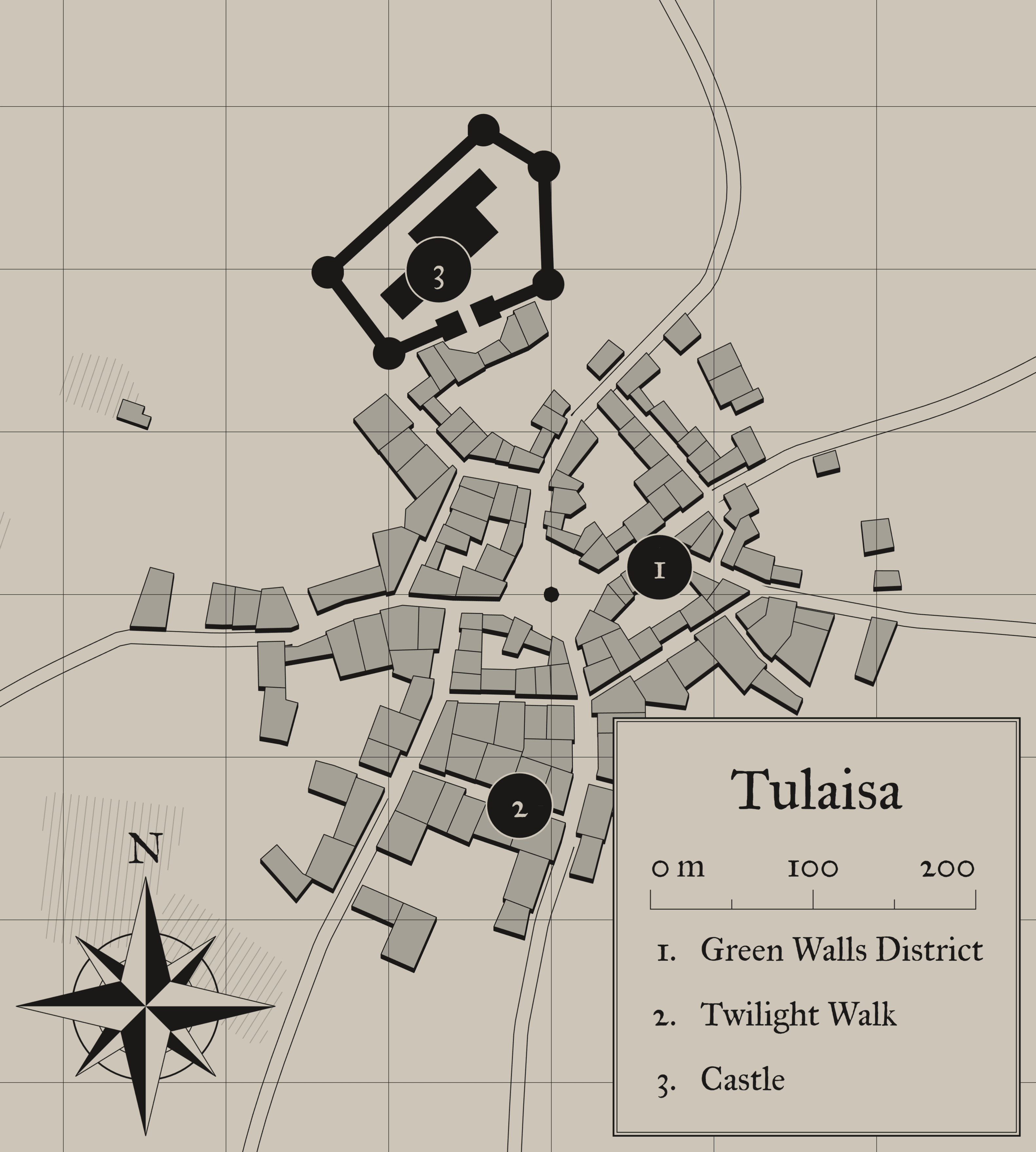
Tulaisa
Demographics
Tulaisa is small but intellectually vibrant:
- Majority Qurdahi (about 78%)
- Mountain clans from the western ridges (15%)
- River-folk and itinerant traders (7%)
Government
Tulaisa operates as a local municipal democracy within the broader parliamentary system:
- Mayor elected every four years
- Community Council representing districts and guilds
- Local Forum Sessions where citizens debate and propose municipal regulations
Industry & Trade
Primary industries:
- Terrace farming (root vegetables, climbing beans, flower herbs)
- Clay pottery with distinctive mountain-glaze
- River-ferry transport
- Lantern-making and reflective-copper smithing
Infrastructure
- Stone-span bridges crossing the Hemen
- Three aqueduct-fed wells
- Terraced hillside paths reinforced with lime-plaster retaining walls
- Wind lanterns lining most public walkways
- A small archive hall containing early Qurdaha parliamentary letters
- Ferry crossings for river trade
Electricity is limited; most illumination depends on oil and reflective copper lantern arrays.
Districts
Green Walls District
Tulaisa’s largest and oldest district, named for the thick living walls of ivy, moss, and vine-grown trellises that cover its homes and walkways. Features include:
- vertical gardens irrigated by diverted river channels
- communal drying yards for herbs
- small workshops for basketry, weaving, and dye-making
- student hostels for seasonal scholars from Madizibab
Twilight Walk
A riverside terraced district famous for its evening lantern processions and its scenic overlook where the sun dips behind the mountains. The district is known for:
- night markets selling teas, pottery, and lantern-goods
- balcony performances by musicians and poets
- reflection plazas where citizens gather to discuss politics
- cafés built on suspended platforms over the river
Castle
Named for the old stone outpost built during Al Qurdaha’s monarchical era. Though the fortress no longer operates militarily, its foundations house:
- the Mayor’s Hall
- a council chamber
- a record-keeping archival vault
- a public speaking courtyard
- a small barracks for visiting parliamentary escorts
Assets
- Strong agricultural terraces
- River access for trade
- Historic fortress foundations repurposed for government
- A respected community debate forum
- Copper and clay deposits in nearby hills
History
Founded early in Al Qurdaha’s shift toward parliamentary rule, Tulaisa began as a frontier forum-settlement where reformists met to draft early civic codes. Over time it grew into a stable town centered on agriculture, debate traditions, and riverside commerce. Tulaisa survived two significant events:
- The Hemen Overflow of 287 AE, flooding the lower terraces.
- The Lantern Mandate Dispute, when the town demanded representation regarding taxation of copper use.
Points of interest
The Old Outpost (in Castle district): preserved battlements with plaques detailing early democratic reforms
Lantern Row (Twilight Walk): famous path of mirrored copper tiles
The Green Arches: massive living trellises marking district boundaries
The Open Forum Square: where traveling philosophers hold public debates
Architecture
Structures use riverstone, light clay brick, and vine-wrapped timber. Buildings often incorporate:
- green roofs
- terrace balconies
- embedded copper sheets to amplify lantern light
- curved stone doorframes inspired by early Qurdahi design
Geography
Tulaisa sits at the convergence of:
- the Hemen River (east)
- mountain foothills (west)
- fertile highland terraces
Climate
Mild, with warm summers and cool, crisp winters. Twilight fogs are common, giving the city a mystical glow in lamplight.
Natural Resources
- Abundant river water
- Fertile terrace soil
- Clay for pottery
- Small copper veins in hillside rock


Comments