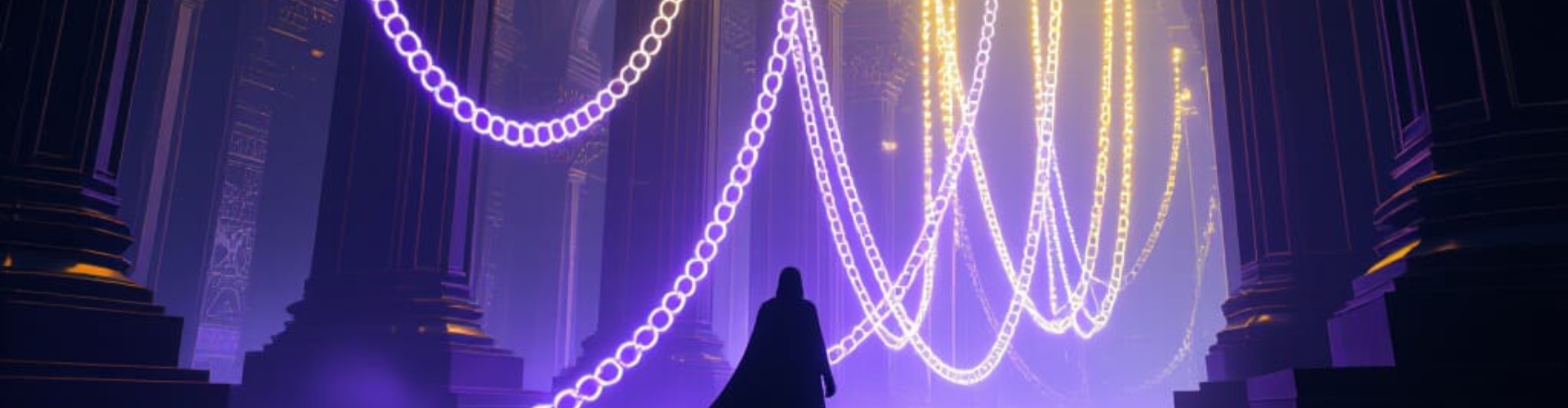
Torment Chains
Raw Materials & Components
Torment Chains are not made of traditional metal. They are said to be forged of “memory ash,” tears hardened into crystal, and voices of the dead. Ritual chants and binding of victims’ grief are required.
Tools
- Ritual furnaces tended not with fire, but with suffering
- Carvers of soulstone
- No modern substitute possible.
Related Myths
The Binding of Glernnsch: A Kiwta forefather who betrayed his kin was bound in Chains until his silence consumed him.
The Noisome Curse’s Root: Pecou say their phrase for grief comes from the very residue of the Chains.
Ta Miners’ Folktale: The mountains weep because Chains still coil beneath, rattling when storms strike.
Related Materials
Soulstone, mourning ash, grave-metal (blackened alloys pulled from battlefields).
Mechanics & Inner Workings
The Chains were said to bind not the body, but the spirit. Each link locked onto a sorrow in the victim’s heart, magnifying it until motion became impossible. To bear the Chains was to drown in one’s own grief, unable to act.
In some versions, they leached memories of loved ones, chaining those as phantoms to torment the captive.
Knowledge Required
Only priests and war-smiths were said to know their full invocation rituals. To an outsider, they would appear inert.
Manufacturing Process
- Collect grief — rituals performed at funerals, executions, or war sites
- Distill the grief into a resonant medium (ashes, tears, stones)
- Forge links in ritual circles, chanting in all three tongues (Ta, Kiwta, Pecou)
- Bind the chains with a loss-sacrifice (often the death of a kin-blood)
- The chains are then consecrated by silence — no word spoken for three nights
Significance
Historical: The Torment Chains were not weapons in the traditional sense but instruments of absolute submission — forged to end the last great rebellions when even grief had become a weapon. Their use marked the final collapse of mercy during the Triad Wars. Entire cities are said to have fallen silent when their leaders were bound — their voices stripped, their wills dissolved.
Religious: In the centuries that followed, all three species came to see the Chains as the ultimate blasphemy — a perversion of unity. The Kiwta saw them as grief crystallized into sin; the Pecou taught that to forge sorrow into bondage was to defy the dead; the Ta refused even to speak the word for them, calling them only the Unforgiven Links.
Cultural/Memorial: Among later generations, the Torment Chains became a symbol of the price of victory — unity corrupted into control. They appear in late-era carvings as serpents made of metal, coiling around empty thrones. Survivors of their bindings, if the stories are true, never spoke again — their silence becoming a living warning.
If the Chains were ever truly destroyed, some believed the weight of grief in the world would ease, that mourning itself might lose its teeth. But if they were ever rediscovered, others feared old wounds — and the capacity to wound again — would awaken.
In the age after extinction, when only ruins and echoes remain, their myth endures among human scholars as both a caution and a temptation: that perhaps sorrow could again be shaped into power.
History
Forging: The Torment Chains were born in the darkest years of the Triad Wars, when exhaustion outweighed strategy and vengeance had become language. Legends claim that the three warring species — Kiwta, Pecou, and Ta — convened a desperate council beneath a blooded moon. Each offered a fragment of their grief to the forge: molten obsidian from the Kiwta furnaces, the Pecou’s ash-metal, and the Ta’s sorrowsteel mined from their subterranean caverns. From this impossible fusion, the Chains were born — unity made poison.
Use and Consequence: In legend, those ensnared the chains could not remember who they were, only what they had lost. Armies routed without a drop of blood spilled. Kingdoms surrendered simply to end the silence. Yet their power devoured even their wielders, for each use deepened the despair that had created them.
Suppression and Renunciation: When the wars finally ceased, the victors could not bear their own weapon. The Graven Pact, signed near the war’s end, forbade the forging of any tool born of grief. The surviving Chains were entombed in vaults beneath the Northern Isle — some say they were cast into the sea when the land fractured. By then, their very name had become taboo.
Post-Extinction Echoes: Millennia later, when humans uncovered the buried cities of the extinct species, they found carvings and fragments of legends. Among archaeologists, the Chains symbolize the unknowable intersection of technology and trauma — a relic of unity destroyed by its own sorrow.
Table of Contents
Rot Lash (Pecou)
Silent Shackles(Ta)
Pecou
Ta
All three claim and deny responsibility.


Comments