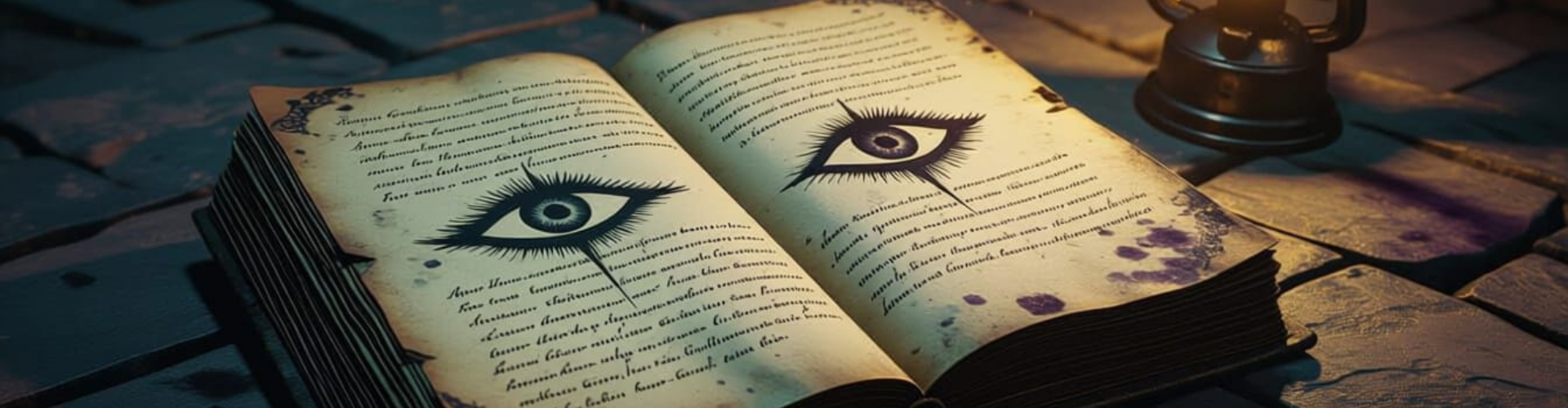
The Torment Diary
Purpose
It began as a private outlet for stress, mourning, and artistic frustration. Over time became a frantic record of paranoia: the writer tried to “prove” the Bloom was conscious, seeing and judging them.
Clauses
Opening entries: mundane observations about daily work, artistic failures, and grief for unnamed losses.
Middle entries: increasingly vivid “observations” — petals turning toward windows, whispers in pollen, “eyes in the dust.”
Final entries: fragmented pleas to unseen forces to stop looking, to forgive, to “close its gaze.”
Caveats
By the final pages, handwriting becomes jagged and smeared. Several sentences end mid-word with heavy ink blots, as if the writer dropped the stylus in panic.
References
Mentions Kiwta Barrow-Scrolls for comfort, but twists them into dread: “What if the scrolls are not for us, but for it, so it can read us?”
Publication Status
Human archaeologists restrict access due to its decayed state and disturbing content. Only select scholars hold full transcripts.
Legal Status
No formal prohibition but human historians and archaeologist treat it as both artifact and warning.
Background
Composed at the close of the Second Era when the Bloom’s spread reached the heart of Kiwta civilization. Personal journals were exceedingly rare among the Kiwta, who favored communal record-stones. This diary, written in ink and paper, suggests isolation — perhaps physical quarantine or cultural exile.
History
Discovered in the ruins of Moonmore by Human archaeologists who used fragments from the diary to cross-verify other Bloom-era inscriptions, giving the diary unexpected historical weight. Many wonder if others chronicled the same descent before all fell silent.
Public Reaction
Early rediscovery brought fascination and horror. The diary’s tone — neither prayer nor madness, but something between — unsettled even hardened archivists. Today it stands as one of the most intimate surviving documents from one of the extinct Triad species. It’s invoked as both art and omen: the “voice that knew extinction before it came.”
Legacy
The Torment Diary remains a cornerstone of post-Triad philosophy and literature — a study in how grief transforms perception. It serves as a cornerstone of horror literature and art among humans.
Term
The diary’s material form has long perished, but its transcriptions endure — carried across generations of human archivists as both record and elegy. As the old saying goes among collectors:
Only the Bloom remembers what was written last.
Translated Sections
Early: “The garden sings when I work, though no others hear it.”
Middle: “At night the petals turn. They face my window. I feel their gaze.”
Final: “If it is beauty it seeks, I will blind myself—” (sentence ends abruptly).


Comments