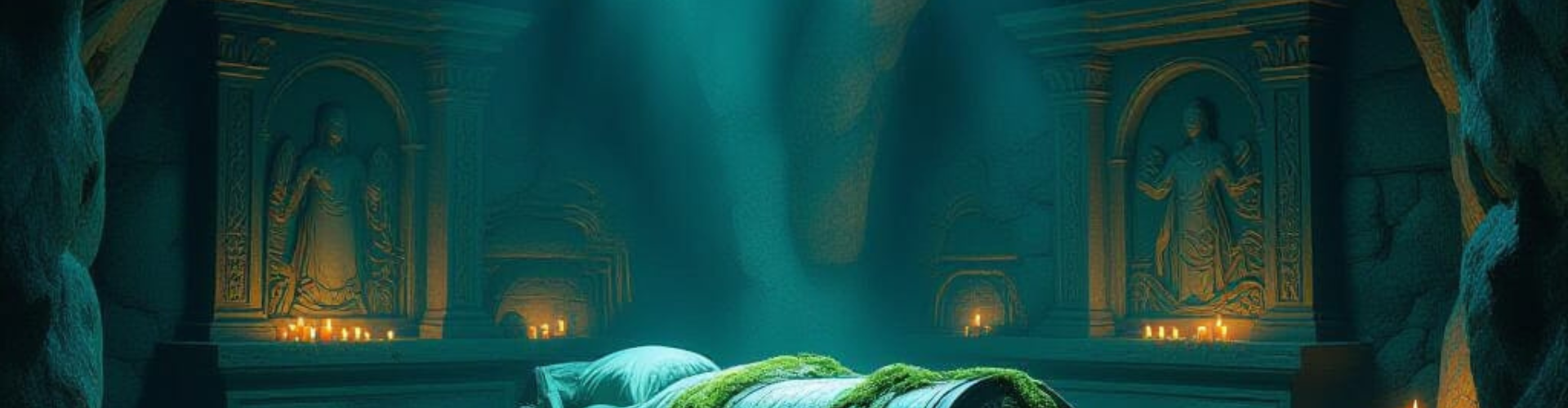
Kiwta Barrow-Scrolls
Purpose
To honor the dead by ensuring they would not enter eternity empty-handed.
To fuse memory, beauty, and legacy, leaving a tangible story behind both for the ancestors and for posterity.
Clauses
Carving Section: Scenes from the deceased’s life, carved in relief.
Story Section: A poetic narrative or parable written by a family-selected poet.
Blessing Section: A closing inscription, often a wish for their luminescent patterns to “shine in eternity.”
Caveats
Improperly inscribed scrolls (errors, breaks in symmetry, or unblessed art) were believed to risk angering ancestral spirits.
Only works approved by guild-trained artisans were considered valid.
Publication Status
Semi-private. Intended for the dead, though families and mourners could view them before the scrolls were sealed away.
Legal Status
Not mandated by Kiwta law but became so widely practiced it was seen as dishonorable to omit.
Background
Originated during a period of flourishing peace and artistry among the Kiwta, when death was reframed as a continuation of creative expression.
History
First created in the Third Sun of the Second Era, long after The Triad Wars had ended, when the Kiwta turned from survival toward reflection. With peace and stability restored, funerary customs shifted from simple burials to artistic memorials — the dead were no longer hidden, but honored through carved stories meant to endure as long as the stone itself.
Early Barrow-Scrolls celebrated craft and kinship, blending sculpture, poetry, and relief engraving. Over generations, the practice deepened into a sacred artform: each burial mound became both a tomb and a gallery, preserving the essence of a life through texture and line. The act of carving was viewed as a final collaboration between the living and the dead.
In the late Second Era, as the Shadow Star Bloom began to darken the world, the tone of the scrolls shifted once again. Their carvings grew somber — less celebration, more plea — as if the Kiwta sought to remind the earth itself of beauty before it vanished beneath it.
Public Reaction
Universally embraced by Kiwta society; considered a beautiful and necessary part of burial.
Pecou respected the practice but considered it excessive; Ta- admired the craftsmanship but thought it distracted from spiritual duties.
Legacy
Today, archaeologists consider barrow-scrolls invaluable. They provide the clearest insight into Kiwta cultural life. Scroll fragments are treasured relics.
Term
Eternal; scrolls were created to last forever within barrows. Efforts to preserve them in modern times continue.
Excerpt
A typical barrow-scroll might include:
- A relief of the deceased sowing seeds or playing an instrument
- A poetic stanza about the “luminescence of their skin dancing in twilight”
- A final blessing: “May your pattern shine unbroken in the halls beyond.”


Comments