Salt Marsh
Geography
The Salt Marsh stretches along Kursk's north eastern edge, where the coastline meets remnants of ancient bogland. Narrow channels cut through thick beds of reeds, and the ground alternates between firm peat patches and deep, waterlogged mud. The marsh feeds into the lower canals that run beneath Kursk and borders the Six Mires district, from a natural extension of the city's long struggle with the wetlands.
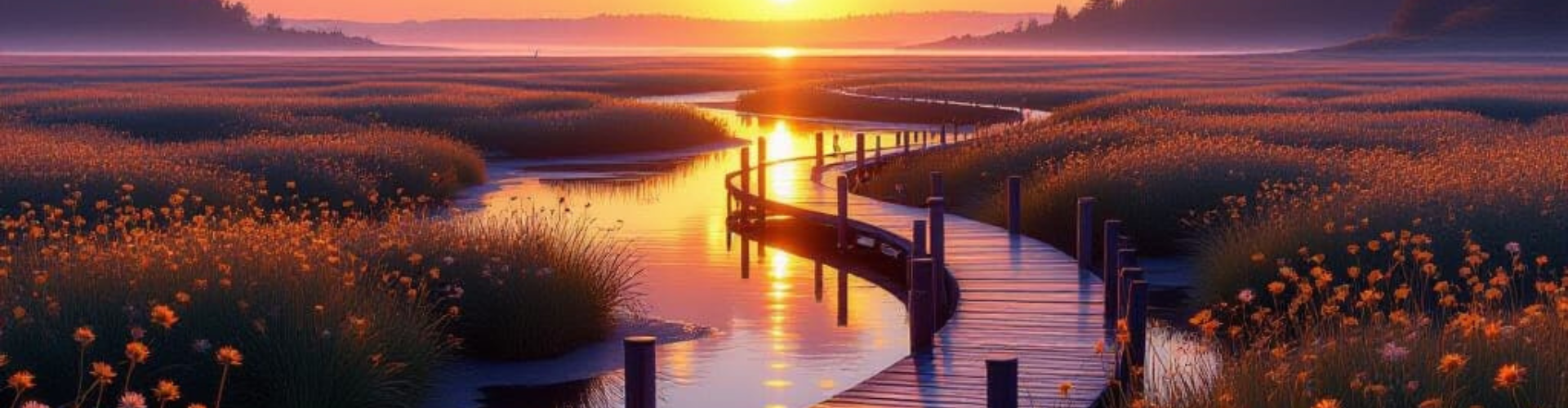
Raised walkways and stilt platforms skirt safer edges of the Silver Fen, used by foragers and spice-harvesters. Beyond these, the marsh is becomes unpredictable, tide-shifted, unstable and haunted by shifting pools of brackish water.
Ecosystem
The Salt Marsh is a brine-influenced wetland where freshwater streams mingle with coastal seawater. The mix creates a unique habitat:
- Salt-tolerant herbs thrive in shallow pools.
- Sea fennel clusters cling to the firmer ridges.
- Dense reedwalls shelter insects, nesting birds, and amphibians.
- Crabs, marsh eels, and small silverfish dart through muddy channels.
The marsh is tightly connected to Kursk's water systems. Its natural filtration influences the quality of the city's lower canals, and its shifting ground requires constant maintenance from nearby districts.
Ecosystem Cycles
- High Tide Cycle: Saltwater pushes deeper into the marsh, flooding herb beds and altering the salinity. Foragers must wait until the ebb, when the most potent herbs are accessible.
- Dry Heat Cycle: Late summer lowers water levels. Dense mats of plant life bloom across exposed mudflats, attracting traders seeking fresh sea fennel and rare salt-root.
- Storm Cycle: Autumn storms wash new minerals into the marsh. Channels shift. Some years, whole harvesting platforms must be rebuilt.
- Fog Cycle: During certain lunar phases, dense fogs roll in from the bay and linger for days. These fogs fuel ghost stories, and locals swear the marsh "breathes" during them.
Localized Phenomena
The Silver Glow
On nights after heavy rain, the marsh gives off a faint shimmer. This effect comes from bioluminescent algae that cling to the waterline. The glow is beautiful but disorienting, making the marsh seem to expand in every direction.
Lantern Drift
Small, floating lights flicker between reeds—sometimes insects, sometimes marsh gas, and sometimes something much harder to explain. Sailors insist the lights mimic voices and footsteps. Nightstair smugglers use them as signs or warnings.
The Whisper Pools
Certain shallow pools create echo-like sounds when disturbed, making it seem as though whispers travel over the water. Locals avoid them.
Climate
Mild, damp, and consistently humid. Fog is common in the early morning and after sunset. Winters bring cold rain rather than ice. Summers are warm and sticky, with breezy afternoons across the salt flats. Sudden storms are frequent, pushing seawater deep inland.
Fauna & Flora
Flora
Sea Fennel: A prized herb with bright green stems, used for medicinal tinctures and high-end jams.
Saltmint: A marsh herb with a sharp, cleansing aroma used by healers.
Fen Reed: Tall, flexible reeds used for baskets, traps, and musical instruments.
Bogwood Saplings: These trees produce dark, water-resistant timber valued by shipwrights.
Fauna
Silver Marsh Trout: Small fish used in local cuisine.
Blue Claw Crabs: Delicacy exported by The Port.
Fen Eels: Slippery but edible, often smoked.
Crescent Herons: Birds with white crescent markings, believed to bring good weather.
Marsh Frogs: Their croaks signal shifting tides.
Some animals are endemic; others arrived through trade routes and adapted.
Natural Resources
Salt-tolerant herbs harvested by Applegate workers.
Sea fennel exported for culinary and medicinal use.
Peat used as fuel in poorer districts.
Bogwood extremely valuable for crafts and ship repair.
Marsh clays used by artisans in Honey Song.
Exploitation is regulated—at least on paper. Nightstair runs a parallel harvesting network, often poaching herbs by moonlight.
History
The Salt Marsh formed where ancient bogs met the rising coastline. Before Kursk drained and stabilized the land, the marsh once stretched much farther inland. Generations of engineering, canal carving, and aqueduct control pushed it back.
Historical events include:
- The Sinking Feast: Part of the marsh collapsed unexpectedly, dragging a stilted banquet hall into the mud.
- The Silver Fen Riots: A dispute over harvesting rights that turned violent.
- Construction of the Drainage Tunnels: Built to protect lower Kursk and now doubling as smuggling routes.
Despite the dangers, the marsh remains central to Kursk’s identity and economy.
Tourism
The Salt Marsh attracts:
- Botanists and herbalists seeking rare plants
- Artists drawn by the silver glow and fog
- Adventurous travelers exploring the boardwalk trails
- Food tourists interested in fresh seafood and salt herbs
- Occult enthusiasts fascinated by the Lantern Drift
Guided marsh tours begin at Six Mires, but only approved routes are considered safe.
Table of Contents
The Salt Widow


Comments