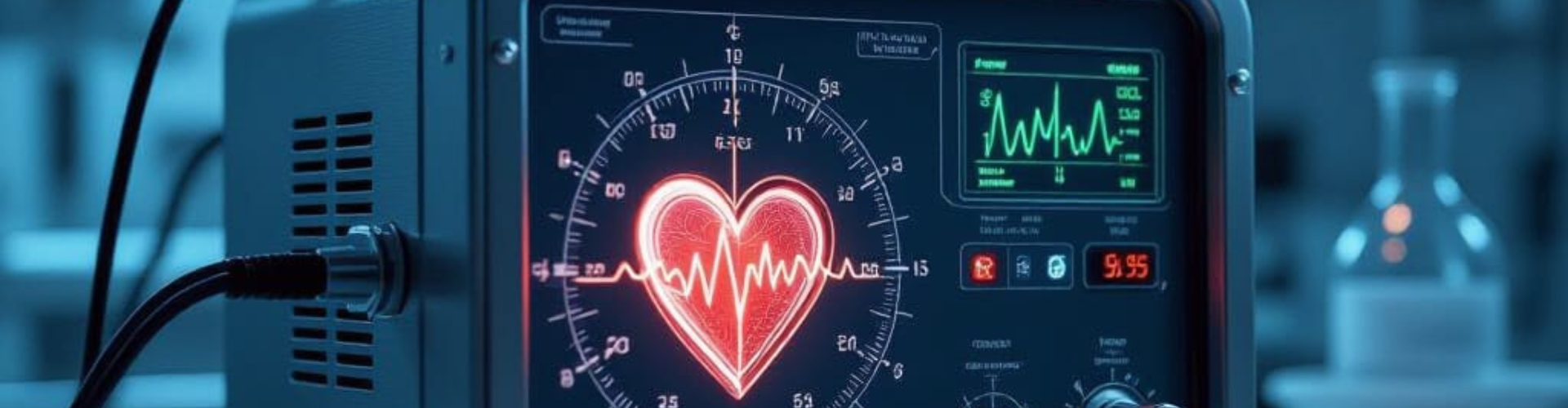
Pulse Regulator Mk. I
Utility
The Pulse Regulator Mk. I was designed to:
- suppress dangerous arrhythmias
- stabilize autonomic cardiac pulses during Flickering Pulse episodes
- serve as a proto-pacemaker that interacted with the nervous system, not just the heart
However:
- Its interference susceptibility meant patients were warned to avoid lightning storms, heavy machinery, and even certain household appliances.
- Voltage spikes could cause sudden overstimulation of the heart, making it as feared as it was revered.
Manufacturing
Production was delicate and required three tightly integrated steps:
- Circuit Lattice Construction: Assembly of micro-conductive pathways woven through a flexible biopolymer mesh.
- Neural Pad Encoding: Each device needed to be coded with a “baseline” neuro-patterning profile, which was never individualized, a major flaw later solved by the ARC.
- Crystal Array Mounting: Non-enchanted crystal wafers were added for electrical dampening, though in practice they amplified interference instead of reducing it.
Social Impact
The Pulse Regulator Mk. I had a quiet but profound social impact, not because it saved lives (though it did), but because it changed how society understood frailty, duty, and survivorship.
Redefinition of “Unfit”
Before the Pulse Regulator Mk. I, those afflicted with Flickering Pulse were often viewed as temporarily living, people expected to die young, collapse under stress, or be excluded from demanding roles. The Mk. I disrupted this assumption. For the first time, individuals with unstable neurocardiac rhythms could:
- Hold long-term employment
- Serve in non-frontline military or civic roles
- Travel without constant supervision
- Survive into middle and old age
This forced institutions to confront an uncomfortable truth: Many exclusions had never been medical necessities, only cultural habits.
Emergence of the “Regulated Class”
Despite its benefits, the Mk. I unintentionally created a new social category. Those who relied on the device were often labeled, officially or unofficially, as regulated, augmented, or supported. This led to:
- Mandatory disclosures in certain professions
- Insurance and inheritance complications
- Subtle social distance, especially in noble or martial cultures
Labor and Productivity Shifts
- Skilled artisans, scholars, and administrators with Flickering Pulse returned to work
- Apprenticeships lengthened as mentors survived longer
- Guilds quietly adjusted health standards
However, this also led to exploitation in some regions:
- Employers expecting absolute endurance because “the device will keep you alive”
- Reduced tolerance for rest or recovery
Cultural Anxiety About “Artificial Continuance”
The earliest regulators were crude, visible, and occasionally audible. The faint hum or rhythmic click became a symbol. Among the public, this sparked unease:
- Was the person alive because of their will or because of the machine?
- If it failed, would death be instantaneous?
- Did prolonged survival interfere with fate, inheritance, or divine order?
In conservative cultures, Mk. I users were sometimes viewed as:
- “Borrowing time”
- “Outliving their allotted breath”
- “Anchored to the world unnaturally”
Medical Authority and Trust
The Mk. I elevated neurocardiac engineers and clinicians to positions of unprecedented authority. Decisions about calibration, replacement, and eligibility became life-or-death judgments. This resulted in:
- Near-religious trust in certified technicians
- Black-market repairs and illicit tuning
- Families deferring moral choices to doctors
Legacy
In retrospect, the Pulse Regulator Mk. I is remembered less as a device and more as a threshold moment:
- The point where survival became conditional on technology
- Where illness no longer meant inevitability
- Where society had to ask whether being alive was the same as being whole
Table of Contents
Originally conceptualized by Dr. Veyra Halden, a neurocardiac engineer attempting to regulate arrhythmias stemming from Flickering Pulse.
Her early prototypes were refined and later commercialized by Banshee Corporation’s Bioelectrical Division, who standardized the modern Arc Rune Cadence layout and introduced individualized neural-phase mapping.
When first released, the Pulse Regulator Mk. I was restricted medical technology, available only to:
- hospital cardiology units
- military medical corps
- affluent private patients with advanced arrhythmia
Because of its instability and tendency to malfunction near strong electromagnetic fields, it was never mass-marketed. Insurance systems also hesitated to cover it, making it financially inaccessible to most.
Once the ARC replaced it, the Mk. I was phased out, surviving only in research archives and a handful of legacy patients who cannot safely undergo surgical upgrades.
Moderately complex by today's standards but considered groundbreaking at its inception. It relied on:
- bioelectric modulation circuits
- primitive neural synchronization pads
- electro-crystal arrays (the precursor to enchanted crystal interfaces)
- external calibration devices required weekly
Developed in 1620s AR, shortly after Flickering Pulse became widely recognized as a neurological/cardiac hybrid condition. Dr. Halden’s breakthrough occurred while studying the erratic neural signaling patterns in afflicted patients, discovering that the heart was responding to misfiring autonomic pulses. Her laboratory notes reveal she believed the heart could be “retrained” through:
- rhythmic electrical microbursts
- synthetic neuro-pattern smoothing
- an externally anchored cadence cycle


Comments