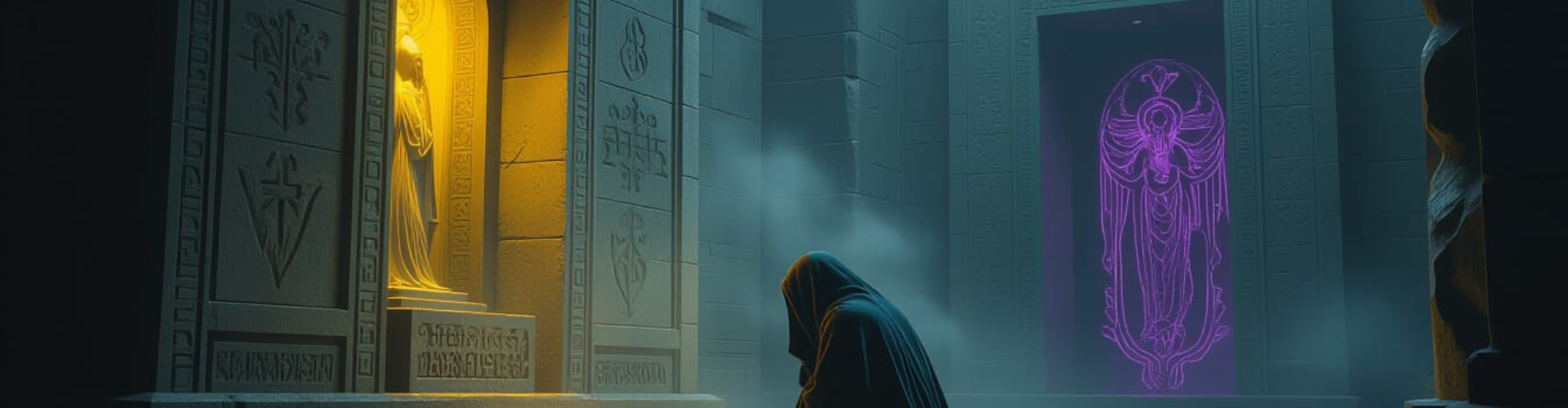
Noise Kept
Phrase
Buap curse /bwap kyʁs/
Lit. “Noise Kept.”
Literal Meaning
A grief that clings because it is not released.
Cultural Context
Pecou: Used at funerals and memorials, often whispered. Suggests grief that lingers too long and “rots” the mourner.
Kiwta: Borrowed as Unoké and carved into Lost Brood Records.
Ta: Became Unollash, also used literally for bad air in mines.
Humans: Misunderstood as a supernatural curse; archaeologists transliterated it as Tharéss Unol, shifting meaning toward haunting or bad luck.
Origins/History
First carved into early Pecou funerary stones, Buap curse described mourning that could not quiet — the grief of survivors who kept the “noise” of loss within. Over time, it became a poetic warning against unspoken sorrow.
Modern Usage
Among humans, the phrase survived in fragments — archaeologists first noted it carved beside funerary niches. Early translations often misinterpreted it as meaning “haunting” or “bad luck.”
Variants
Pecou (original):
- Buap curse /bwap kyʁs/: “Noise kept.” The root phrase, short and heavy, spoken in funerals.
- Buap nerde gla /bwap neʁd gla/: “Cursed noise of the homeland,” used for collective mourning.
- Buap ge /bwap ge/: “Pure noise,” denoting sacred grief that must be carried rather than healed.
Kiwta (borrowed): Unoké: Carved onto memorial stones; means “unquiet silence,” blending Pecouian imagery with their obsession with record-keeping.
Ta (adapted): Unollash: Literally “foul air in the mine,” which shifted metaphorically to mean lingering grief or misfortune underground. Among miners, it is used both literally (bad ventilation) and figuratively (bad luck/death in the shafts).
Human (misinterpreted): Tharéss Unol: An early transliteration by human archaeologists. They misread the phrase as a supernatural hex, translating as “The Noisome Curse.” This reshaped its meaning into something darker, associated with haunting and misfortune, rather than grief.


Comments