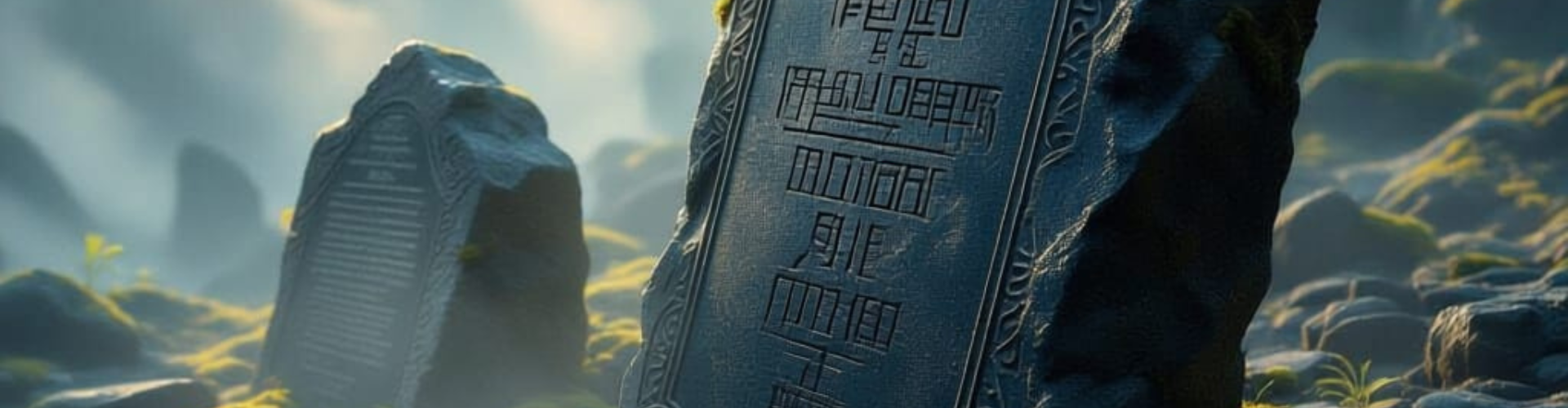
Lost Brood Records
Purpose
- To preserve the names of bloodlines erased by the Bloom.
- To act as memorials where no heirs survived to speak for the dead.
- To remind future generations of fragility even in times of peace.
Structure of inscriptions:
Ancestral Line: Genealogical tracings stretching back before the Bloom.
Final Names: The last members, inscribed with a fissure or star-bloom motif.
Witness Carvings: Neighboring families or guild officials etched their marks to swear truth.
Caveats
Erasing or altering a name was sacrilege; such acts were punished by exile or death.
Carving a false death-mark is believed to draw the Bloom to one’s own line.
References
Seen by many Kiwta as a tragic counterpoint to the Graven Pact: where one carved the survival of the Triad, the other carved the loss of whole branches of it.
Publication Status
Public to the Kiwta, but sacred. Outsiders were rarely permitted to see these halls.
Legal Status
Not legal, but binding as ancestral record. To dispute a Lost Brood Record is to deny history itself.
Background
The Shadow Star Bloom appeared centuries after The Triad Wars had ended and peace had been secured. It struck silently, first in scattered enclaves, then spreading through whole regions. The Kiwta, bound by their deep cultural ties to ancestry, rushed to carve the final genealogies of doomed lines.
History
In their final centuries, as the Bloom and its aftermath swept across the Triad’s lands, the Kiwta inscribed their genealogies into stone halls — desperate to preserve the memory of lives and lineages soon to be erased. When the Pecou cities fell silent and the Ta mines collapsed, the surviving Kiwta chroniclers turned their grief outward, carving not only their own bloodlines but those of their allies, etching the Triad’s collective extinction into rock.
Now, the Lost Brood Records stand as the last intact remnants of that world. The once-living caverns have become tombs of silence — dust-choked, water-worn, and still faintly resonant with the tap-marks of vanished hands. Many records end mid-line, the carver’s final chisel stroke trailing into empty stone.
Human archaeologists have recovered fragments in buried caverns and faulted strata, suggesting that these memorials were widespread. Each rediscovery redefines human understanding of the Triad era, not through their triumphs, but through the precision with which they recorded their own extinction.
Public Reaction
In the centuries following their rediscovery, the Lost Brood Records have become a focal point of human fascination and unease.
Scholars regard them as the purest surviving testimony of the Triad — untainted by myth or political retelling. Yet many who have entered the vaults report a sense of overwhelming grief, claiming that even in translation, the language of loss still carries weight.
These fragments have sparked both reverence and controversy among humans. One thing they agree on is this can be seen as a warning:To Forget is to Vanish.
Legacy
Though the Triad races are gone, their memory endures through the Lost Brood Records. Together, these inscriptions have become the spiritual foundation of post-Triad archaeology — studied not merely as data, but as an act of remembrance.
To the Kiwta’s vanished creed, memory was survival; to the Pecou, knowledge was sanctity; to the Ta, endurance was sacred craft. The Lost Brood Records embody all three: stone turned elegy.
Among modern historians, the phrase “to carve the brood” has entered human speech on Nisa, meaning to bear witness even when all else is lost.
Term
Eternal. As long as the records stand, so too do the names of the fallen.
Excerpt
“This was the brood of Es’hir. Stone-carvers of the southern ridge. With them ends a line that traced to the Graven Pact. May their craft endure where their blood cannot.”


Comments