

Sitha
The Leaf Elves, the Sun Elves

Naming Traditions
Feminine names
Sitha female names always contain a Q consonant and a vocal a.
Sometimes, to enhance the name, the parents also extend it by one, or maximally up to two, additional adjectives or comparisons (-ra,-re,-ri,-ma,-me,-mi). In case the name root does not contain Q or a, the missing letter is added in the extension, where the female forms are: -ra, -raq , -rae, -rea, -ria, -reqa, -riqa). sitha female names almost never contain a vocal U.
The full female name is the given name, followed by urqa ( daughter of ) and then the name of the father or mother (see: Family names).
Example Names:
Ae(-rak, -riqa), Ama(-rak, -riqa) , Akka(-ma, -ra,-re), Aqu(-ra, ri, -ma, -me), Anqa(-ma,-me,-ra,-re) , Anqe(-ra,-re,-ma), Asqa(-ra,-re), Asqe (-ra,-re), Esqa(-ra,-re), Qara(-ma,-me,-mi) , Qata(-ma,-me,-ra,-re,-ri), Qama(-ra, re, -ri), Qamma(-re, -ri), Qo(-ra,-rae,-riqa), Qorra (-ma,-me), O(-raq, -riqa),Tasqa(-ra, -ma), Isqa(-ra,-ri), Raqa(-ra, -re, -ri).Full female name examples:
Qorima, daughter of Tonraq (father), of the Otuquaheli people (tribe): Quorima urqa Tonraq Otuquaheli-uru or tonguetwisters like: Raqari, daughter of Qatari (mother), of the Qarutaq people (tribe): Raqari urqa Qatari Qarutaq-uruMasculine names
Just like Sitha female names, Sitha male names have to contain a q somewhere, yet usually it is found at the end, giving norn male names a somewhat harder sound. The mandatory vocal A in female names may be replaced by the vocal O or E. Norn male names only (if ever) have one extension at most.
Common male name Extensions are: -raq, -taq, -riq, -tiq, -req, -teq, -roq, -toq, -roaq, (speak: row-ak), -toaq (speak: tow-ak) -roqa, -toqa, -ruq, -tuq, - ruaq (speak: roo-ak), -tuaq (speak: too-ak), -ruqa and -tuqa.
The full male name is the given name, followed by urqu ( son of ) and then the name of the father or mother (see: Family names).
Example Names:
Aqqo, Annaq, An (-raq, -req, -roq, -raaq, -roaq, -ruaq), Cua(-raq, -roq), Hanaq, Hardaq, Haro (-taq), Ka(-roq, -ruq, -taq, -toq, -roaq), Ma(-roq, -ruq, -taq, -toq, -roaq) , Ronqa, Razaq, Roa(-taq, -toq, -raq, -roq), Ro(q)qa (speak Rokqa), Taq,Tarq,Tareq, Tonraq, Torraq, Tarroq, RotaqFull male name examples:
Konraq, son of Anriqa (mother), of the Anduaq people (tribe): Konraq urqu Anriqa Anduaq-uru Ronqa son of Ruatoq (father), of the Karutaq people (tribe): Ronqa urqu Ruatoq Karutaq-uruFamily names
Sitha names just like Norn Names are threefold. There is no concept of family names as in many human civilizations, where human citizens are named according to the day jobs they perform, the day jobs their ancestors once performed, or other features.
Sitha are named according to a trait wished upon them by their parents, then followed by urqu ( son of ) or urqa ( daughter of ) and then the first name of the respective father or mother. There is no preference about which parent is chosen, so Sitha actually have two full names, by which they can be addressed, leaving it up to the one addressing them to chose.
When formally addressed, the construct is always followed by the name of the tribe and then -uru, which in the language of the Sitha means tribe, or people.
Culture
Culture and cultural heritage
"... no.. thats not what i mean... have you ever seen an animal freeze or flee once you approached through the underbrush?"Sitha (speak: Shee-A) are the most elusive of all Elves and also the one elven ethinicity which displays the least diversity in culture compared to the other two. Where the Eadun come from a plethora of different lifestyles and cultures, not less diversified than the Humans with whom they have arranged, and where there are visible differences between a Norn of the West and one of the Empire Empire, being a Sitha basically means you either live in one of the two huge worldtree jungles (the Eternal Forests or the Evergreen Peninsula, or you are part of a solitary Sitha clan hidden in the wilderness, which are not less elusive than the Uppergelf.
"Yeah, but you wanted to talk about elves, not deers...."
"Trust me... i am getting there. See.. in the animal kingdom... there are basically three answers animals have to being hunted: Some fight, some flee.. some fawn. Now look at the elves. There are the Eadun, they have adapted to us humans, mixed among us. Many Norn even call them human pets. Clearly the ones who fawn. Then there are the Norn. They fight. Tooth and nail. I heard far in the east they have an empire solely founded to hold firm against us. And at last... there are the Sitha, whom you rarely ever see outside of their goddamn jungle. They... fled. Chose to distance themselves and get as far away from us as they possibly could. And what could be further away than the treetops of the worldtrees which make up the most deadly jungle in the world?."
"Nice Theory... but if you seriously think they are so afraid of us, why don't you hop over into their World tree jungle then eh? I am pretty sure you will rethink your little theory. Maybe, since you seem suicidal, tell the Innkeeper about your theory in regard to her Eadun ancestors on the way out. If you are lucky she kills you, before you even set foot into Sitha territory. That would be way less painful "
Sitha Lifestyle
Living in the eternal Forests
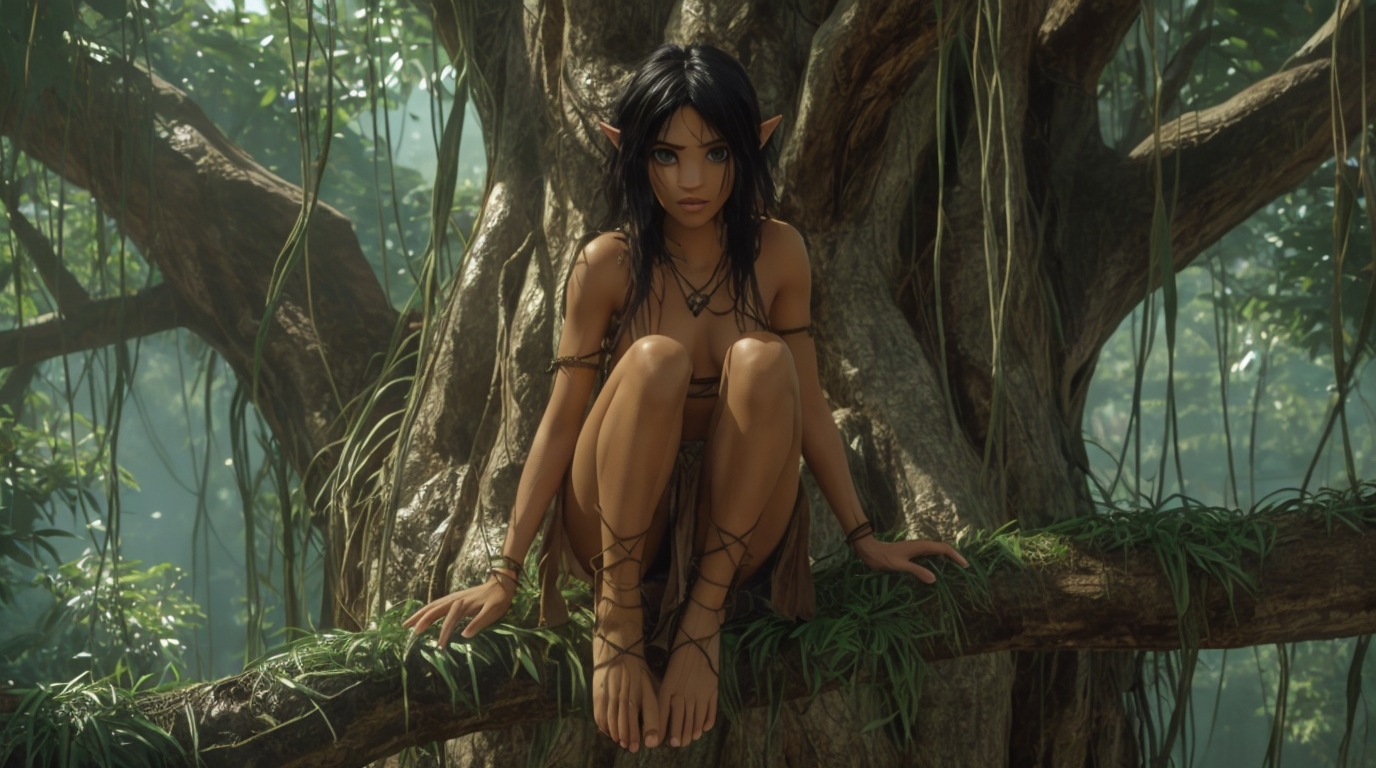
Tribal Structure of the Sitha
Sitha tribes, regardless if they are living in a worldtree jungle still or not, are organized into a caste system quite similar to the system of the Norn, with the Castes even having similar structure and and names. A notable exception here is the so called Norn Caste, which holds the undesirables, the traitors, criminals and slaves, much like the Tarn Caste does for the Norn.The Qaytan (the Chosen)
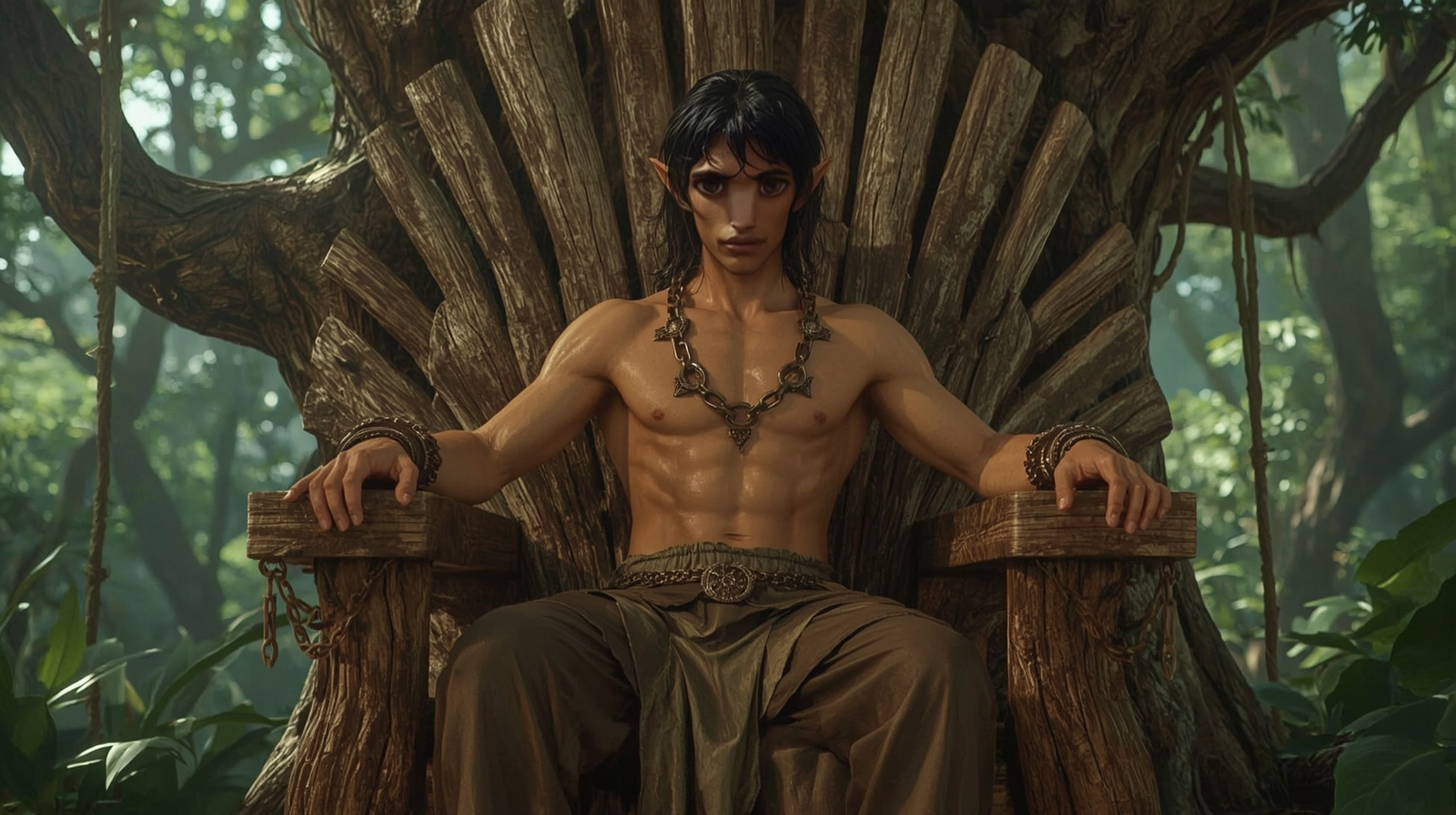
The Qaytan must speak justice and create law. He (or she) does so in council with four representatives, each sent by one of the four upper castes: the Provider, the Master Artisan, the Shaman and the Wisdomkeeper. It is up to the Qaytan to make decisions which affect the whole tribe, but each of the four castes has to be heard. A Qaytan here takes the role of a moderating hand, balancing the interests of the different castes. Therefore, should he been a representative of one of the four castes before being elected to become qaytanm he must abdicate that role and a new representative must be chosen.
The Caste System)
Just like Norn Tribes, Sitha tribes are separated into five castes, four upper ones and a lower one:- Quora, the Provider Caste: Hunters, Farmers and Herders
- Yora, the Artisan caste: Artisans, Craftsman and Architects
- Oloja, the Healer Caste: Healers and Morticians
- Hala, the Storyteller Caste: Storytellers and Teachers
- Norn, the Lower, or Outcast Caste: Warriors, Criminals, Traitors, but also Prisoners and Slaves
There is no difference in social standing among the four "upper" castes, however, for convenience, Sitha have begun to display their membership in a certain caste through sets of different tattoos, whose meaning and design can change from tribe to tribe. Members of the Norn caste are also marked with semi-permanent, usually red, Ironwood ink tattoos, whhc can only be removed with the help of an experienced shaman or other healer of the Oloja Caste.
Once these Norn have proven useful, apt and, most importantly, trustworthy enough to be taken in by any of the upper castes again, these markings will be removed in a ceremonious ritual, and the former Norn will be welcomed back as a "full member" of the tribe and the respective caste again.
This gives all Norn the chance to redeem themselves, and to work themselves out of their state of servitude, even though it rarely happens that they actually succeed. Especially the trust part becomes an issue in this regard.
Quora: The Providers
Where for elves of the Norn elves (the Ethnicity, not the caste) the provider caste consists mostly of hunters and warriors, the role of provider with the Sitha is much more akin to farmers and herders. This likely comes from the fact that Norn was, and still is, the word for the outcasts of a Sitha Tribe, which live on the lower, and thus much less sunfilled, levels of the world tree jungles. Meannhwile the rest of the Sitha tribe inhabits the three uppermost levels which also provide up to 70% of the harvestable fruits and resources.
This does not mean that Sitha do not have hunters in their midst, just that the relevance of hunters in the provider role is much diminished, thus they only make up a small percentage of the Quora caste, albeit the one who provides means of survival beyond the pure provision of food, like furs and leathers. The (depending on sex) Great Mother or Father is considered the first among the Quora. The bearer of this title is elected amongst all Quora for indefinite time, except the Quora deem it neccesary to replace him or her. Any Quora of age can theoretically challenge the Great Mother or Father to a test of skill, usually a hunting or foraging task. After this challenge it is tradition to repeat the election. It is a human misconception however, that a won challenge will guarantee the winner the seat of the great Mother or Father. It is a good start haowever, and it surely influences the result of the following election, but the election is based on the trust the Quora put into a candidate to defend their interests. A current great Mother or Father, if in good standing and respected by the remaining Quora, can reject a challenge without risking to lose the election which inevitably follows. If this respect among the Quora of the tribe has waned though, it might be advisable for him (or her) to better accept and win it.
Yora: The Artisan, Craftsman and Architect Caste
Members of the Yora Caste, which consists of all kinds of craftsmen, artisans, builders and architects, are the ones who will most likely accept a former member of the Norn Caste into their ranks, in order to learn from him. Depending on the ressources accessible to the tribe, one can find smiths, woodforming druids, stonemasons, leatherworkers or woodcrafters among them. Many members of this caste also have knowledge about nature magic, either to shape the living wood or control the elements. To accept an aspirant, the Yora usually demand of him to build a home (either build or form it it from the living wood) or create a weapon, jewelry or piece of art of a certain quality.
Members of the Yora caste are usually more interested in their ongoing projects rather than tribal politics, hence the Speaker in council with the Qaytan, the so called Master Artisan, is chosen from among a few volunteers who agree to give up some time for this matter. A new Master Artisan is chosen when the last one abdicates, which happens every few years, when the former one desires to return to his own projects.
Oloja: The Healer and Mortician Caste
The Healers care for the well being of the tribe and must keep the knowledge about all kinds of herbal drugs and medicine. They are also responsible for harvesting them, which can be a difficult and dangerous matter, hence the athleticism among the Aloy is no joke. Although purely mundane healers are among them, many a norn of the Aloy caste has mastered the arcane discipline of necromancy, meaning the magic which can redirect lifeforce from one place to another. These Aloy are also responsible to hold funerals and take the remaining lifefae from those which have passed away to redirect it to a better use (usually healing).
Aloy accept a rare herb which is difficult to come by, the witnessed healing of a tribemember or feats of necromantic magic as a token to declare a norn a valid aspirant to their caste.
The speaker of the Aloy is called the Shaman, usually a powerful necromancer and spiritseer, although purely mundane shamans have been known. The shaman is elected for life which means, only when the last shaman reaches the age of ailment, or dies prematurely of other causes, a new one will be elected from among the Aloy.
Hala: The Storyteller and Teacher Caste
Also called the Wisdomkeepers, it is the Hala who care for the chronicles and legends of the Tribe. They also often happen to be the ones caring for the Legendstones (if the tribe has one of those). They are oftentimes versed in occult magic resembling the magic of human bards and often employ illusions to support their storytelling. It is to them, to whom the Caytan comes, if he attempts to assess the wisdom of a course of action, and their word even has a bit of extra weight in the council with the Caytan because of this.
The term Wisdomkeeper is also the title of the one sent to the Caytan's council and he is elected by other Hala once every 20th Solstice, so every 10 years, except if something happens to the Wisdomkeeper in the meantime, which would prevent him from fulfilling that role. While the Artisans of the Yor see the role of the speaker more as a necessary duty, to the Hala it is an important role which carries much honor. Hala accept norn as aspirants, if they bring new stories, legends, facts or music as a token of aptitude
Norn: The Warrior caste, caste of the Outcasts of Sitha society
"The root (norn) defends, the leaf (sith) harvests"Also derogatory called the "Slave" caste by humans, which most norn find unfitting at best.
It is true that the tarn must perform dull and dangerous tasks, which the norn don't want to do themselves, but the word tarn, translated back into human tongue, would be best translated with "someone who pays off his debts", rather than slave. However even compared to human serfs there are some important differences.
First off, the singular norn has only "borrowed" his lifeforce, at least those parts which do not make up his conscient soul (see Religion and Afterlife below), and can thus never be "owned" by anyone. The same holds for the prisoners of the Tarn caste. Because norn of the tribe have paid with their lifeforce to capture the respective prisoners, these are then seen as new parts of the tribe. Thus they can't be "owned" by the singular norn. Instead they, and their workforce, with which they pay back the damage they caused the Norn before being captured, belong to the tribe.
Because Norn believe in personal strength and the indifference of Kaaeya, they wont go easy on the "involuntary newcomers" however and have hence acquired the reputation of being "cruel masters", while in their own understanding they just expect of their prisoners what they would do themselves. Which might be acceptable for other elves, due to their similar physiology, but which for humans and other ancestries can lead to dangerous tasks, for which they are just not cut out, especially in the climbing department.
Any one captured must fulfil the expectations however, and can't hope on Norn showing "mercy" or demanding "less". Even the request is met with disdain and lack of understanding. He may be prisoner, but he is also part of the tribe and has to do his part.
It is possible for a prisoner to leave the tarn caste by the way. If he proves valuable to the norn, be it by deeds or knowledge, and most importantly, also proves to be trustworthy, Norn prisoners can become aspirant to any of the other four castes and join them after performing the coming of Age ritual. It's not any less hard on them though.
Religion
Kaaeya, the indifferent Worldmother

Kaaeya by cyrgan
What use is it to call on her? Little she cares if an elf lives or dies. Better to be silent than to call her attention to you; She will send you dooms, not fortune! She is grim and loveless, but at birth she breathes power to strive and slay into an elf-soul. What else shall an elf ask of the gods?
The religion of the Norn is a harsh one, circling around the indifference of the creatordeity Kaeeya, the worldmother, towards the daily struggle of the norn. Kaaeya wants her creations to prevail by their own hands and their ability to adapt, an ability thus highly valued among the Norn. Kaaeya is also the Norn word for the Fae, as they believe that this is her body, that she creates all life (as Fae does, for example during Faebirth conception) and that she is created by life just as Fae is.
Because of her indifference Norn either do not pray to Kaaeya at all, as it serves no purpose, or, if they do, are never submissive, because Kaaeya hates that. This marks the major difference to the faith of the Sitha, who see Kaaeya as a much more benevolent goddess, whose will can be influenced by faith and praise. As it also was this faith however, by which the Sitha declared themself chosen, which then again helped to argue the "necessity" to abandon the (non-chosen) norn to the lower levels of the World Trees, norn now reject this interpretation. It is also the reason why Norn think religion should play no role in secular matters.
To the Norn, faith must be clearly separated from "government", turning it into a personal matter at best. The notion that Kaaeya also just doesn't care, that life is a test of aptitude which has to be passed, helps in this regard. Kaaeya would not interact with the world like this.
"Kaaeya, I have never prayed to you before. I have no tongue for it. No one will remember if we were good norn or bad, only our strength. No one will care why we fought, or why we died. No, all that matters is that few stood against many, that's what's important. Valor pleases you, Kaaeya, so grant me one request. Grant me REVENGE! And if you do not listen, then to hell with you!"
Afterlife
Norn belief that, upon death, if the Norn has passed the test of life that he was tasked with by Kaaeya at birth, then his consciousness passes from the former vessel, which was the personal Fae inide his former body, into the external Fae, which is Kaaeya. Like this, if he is worthy, he or she will become a living rememberance in her for all eternity.If unworthy however, the consciousness (aka soul) will remain stuck inside the body. For the respective Norn-elf this would be bad, because the Norn believe, that the personal fae must be returned to the tribe. A few days after passing away, after the soul of the norn had penty of time to pass on into Kaaeya (if it was allowed), his corpse will be drained for the remaining lifeforce, usually by the shaman or other Aloy. This Fae then is returned to the tribe for other tasks, like healing, or helping to grow food etc. Any unworthy soul probably stuck inside still will hence inevitably be destroyed, to create new life or new opportunities for the tribe, effectively ending the norns existence apart from Kaaeya, even if he didn't pass on.
Norn and Draugh, Footholds in the underdark
Of all elves, Norn are the most common ones to turn into draugh. Although Sitha are not exempt from turning into draugh, they explain this by the norn being more corrupted by human influence, in the sense of "if you stare too long into the Abyss, the Abyss stares back". As far as Sitha are concerned, the decision of the norn not to ignore the humans and instead interfere with them, and be it just to fight them, led to their downfall and susceptibility to the Plague.To counter this norn often point out the much more severe transformations eadun elves go through, with barely any of them turning into draugh, but rather human Plaguebeasts but as Eadun are even closer to the humans, the Sitha just take this as confirmation of their theory.
Draugh for Norn represent everything they hate: Duplicity, betrayal, strive for power without regard to cost. Basically everything they hate the in humans, with, admittedly, a very narrow and biased picture of humans. Norn take this "kinship" as proof that the plague came with the humans, and that draugh are nothing else but Norn who were infected with too much "humanity".
As an elf turns into a draugh there is a small fraction of time in which he can decide to leave his kin without causing any further harm. Norn who do this are highly regarded, and their loss is mourned greatly, as it implies a great strength of character to just leave and not come back. Elves who miss this window of opportunity begin to despise their kin, harbor hidden resentments and feel an ever stronger pull towards "the Dark Roads" underneath, a hidden feeling that the "draugh" are right, and that selfishness in face of the threats the elves are exposed to is the only answer. The afflicted future draugh can hide this from the caste and the tribe for a time, but knows that sooner or later he has to go, or be caught by his own brethren and executed, just for the crime of "seeing clearly". This creates even more resentment, until the Norn is a full draugh by all but his skin color.
Prospective draugh, which are able to form wood, and who happen to live on world trees, often form tunnels into the living wood of the tree to reach the underdark and, out of sheer spite and disregard for the culture the draugh once shared, scorch the wood with tainted fae to make sure the tunnels can't be closed anymore. This irrevocably hurts the world tree and opens it to future draugh invasions from the underdark, which is why norn try to recognize prospective draugh in their midst as soon as possible.
World Tree elf tribes then establish footholds in the Underdark, bridgeheads to hold off draugh. Most of these bridgeheads are manned with experienced warriors from the Croh caste, and can grow to the size of small subterranean forts and villages even.
Norn hold no grudge against the elves which went to the dark roads, it was not their fault, but treat them as having died and having been replaced by something else. They do not consider draugh as elves like humans do, just like humans don't consider plaguebeasts still as human.
Encompassed species
Related Organizations
Fantasy Age Stats
Sitha Elf Benefits
- Pick one of the following Ability focuses: Intelligence (Natural Lore) or Perception (Seeing)
- You have Darksight which allows you to see 20 m in Darkness without a light source
- Your basis speed is equal to 12 + Dexterity
- You have the Focus Strength (Climbing)
- Rooted in the Material World: You resist Mind Magic as if you had the Focus Willpower (Self Discipline)
- You can speak and read Common (Ring) and Onari + INT Number of languages of choice
| Benefit | Effect |
|---|---|
| Ability Bonus: | Strength +1 |
| Focus | Perception (Tracking) |
| Focus: | Perception (Hearing) |
| Weapon Group: | Spear |
| Ability Bonus: | Accuracy +1 |
| Focus: | Dexterity (Stealth) |
| Ancestry Stunt: | Favored Exploration Stunt -1SP |
| Ability Bonus: | Dexterity +1 |
| Ability Bonus: | Perception +1 |
D&D 5e Stats
Sitha Elf
Ability Score Increase +2 Dex, +1 Wis
Size Medium
Speed 30ft
Elf Traits:
- Darkvision: Accustomed to twilit forests and the night sky, you have superior vision in dark and dim conditions. You can see in dim light within 60 feet of you as if it were bright light, and in darkness as if it were dim light. You can't discern color in darkness, only shades of gray.
- Natural Climber: You have an advantage in athletics skills used for climbing. Your base climbing speed equals half your movement + 5 (rounded down)
- Keen Senses: You have proficiency in the Perception skill.
- Rooted in the material world: You have advantage on saving throws against being charmed, and magic can't put you to sleep.
- Trance: Elves do not sleep. Instead they meditate deeply, remaining semi-conscious, for 4 hours a day. The Common word for this meditation is "trance". While meditating, you dream after a fashion; such dreams are actually mental exercises that have become reflexive after years of practice. After resting in this way, you gain the same benefit a human would from 8 hours of sleep.
Sitha Traits:
- Sure Footed: Used to live in an environment in which each step can mean certain doom, and safe routes are hard to find, you get proficiency in Acrobatics
- Speech of Beast and Leaf: You have the ability to communicate in a limited manner with beasts and plants. They can understand the meaning of your words, though you have no special ability to understand them in return. You have advantage on all Charisma checks you make to influence them.
Languages. Sitha, Onari (Elvish), Common
Pathfinder 2e Stats
See also the Feats at the Bottom of the page

Comments