
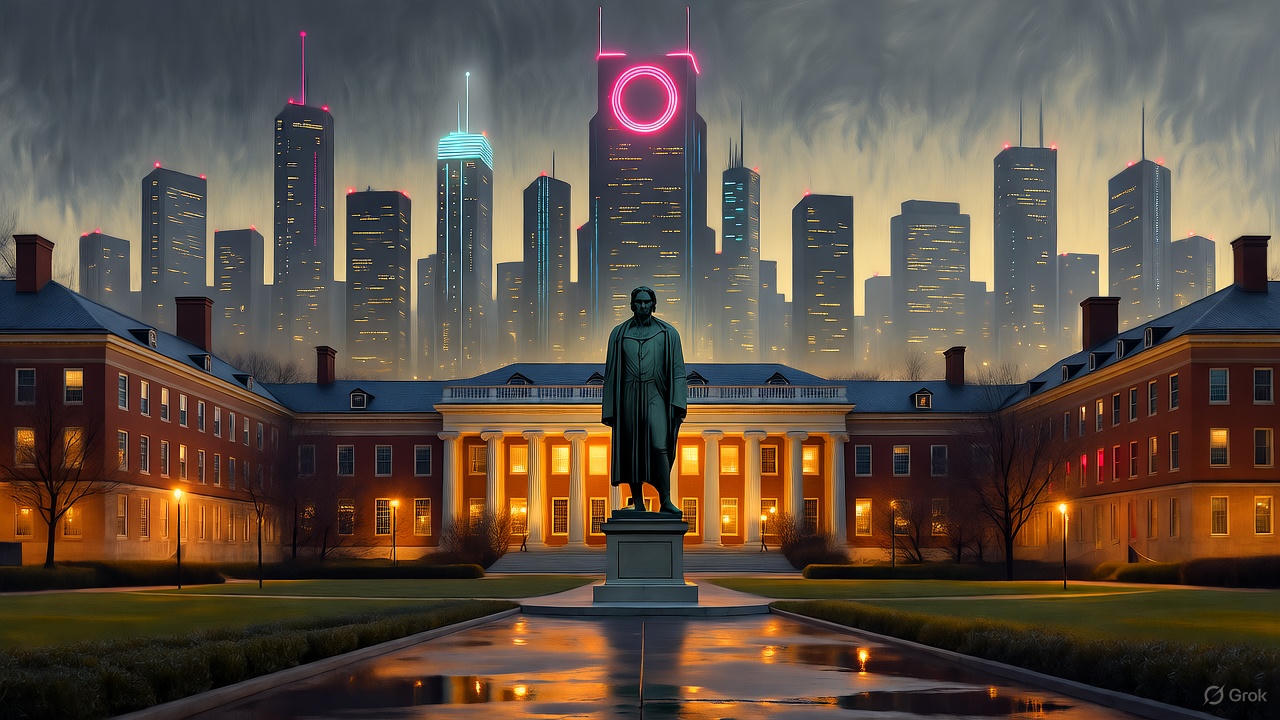
Harvard Square
In the cyberpunk sprawl of Neo-Boston, 2075, Harvard University reigns as a global pinnacle of academic excellence, its storied legacy shaping the intellectual and corporate landscape of the megacity. Renowned among Regulars as the world’s leading institution, Harvard produces visionary scholars, cutting-edge technologists, and strategic operatives who drive Neo-Boston’s megacorps and global networks. Its sprawling campus is a hub of innovation, fostering breakthroughs in artificial intelligence, quantum cybernetics, and socio-economic modeling that redefine power in the Afterlight setting. To the public, Harvard is a beacon of progress, its prestige drawing ambitious minds from across the globe. Yet, its influence extends beyond academia, with subtle ties to the city’s corporate and political factions, navigating the delicate balance of knowledge and power in a neon-lit world of ambition and intrigue. Harvard’s commitment to shaping the future ensures its dominance, even as faint, unexplained energies hum beneath its surface, unnoticed by most.
Architecture
Harvard's campus in 2075 stretches across Cambridge, blending historic elegance with cyberpunk sophistication, its architecture a testament to both tradition and innovation. The central Harvard Yard, a lush quadrangle, is framed by red-brick Georgian and Gothic Revival buildings, their facades augmented with adaptive holo-panels that display academic updates or corporate partnerships. Sleek plasteel walkways, illuminated by neon conduits, connect towering facilities of carbon-fiber and smart-glass, including the Cabot Science Complex, home to quantum computing labs; the Annenberg Social Engineering Hub, crafting AI-driven behavioral analytics; and the Sloan Corporate Academy, training elite operatives for megacorp leadership. Subterranean corridors, secured by AI sentinels, link key sites like the Widener Library, a vast repository of digital and physical archives pivotal to global research.
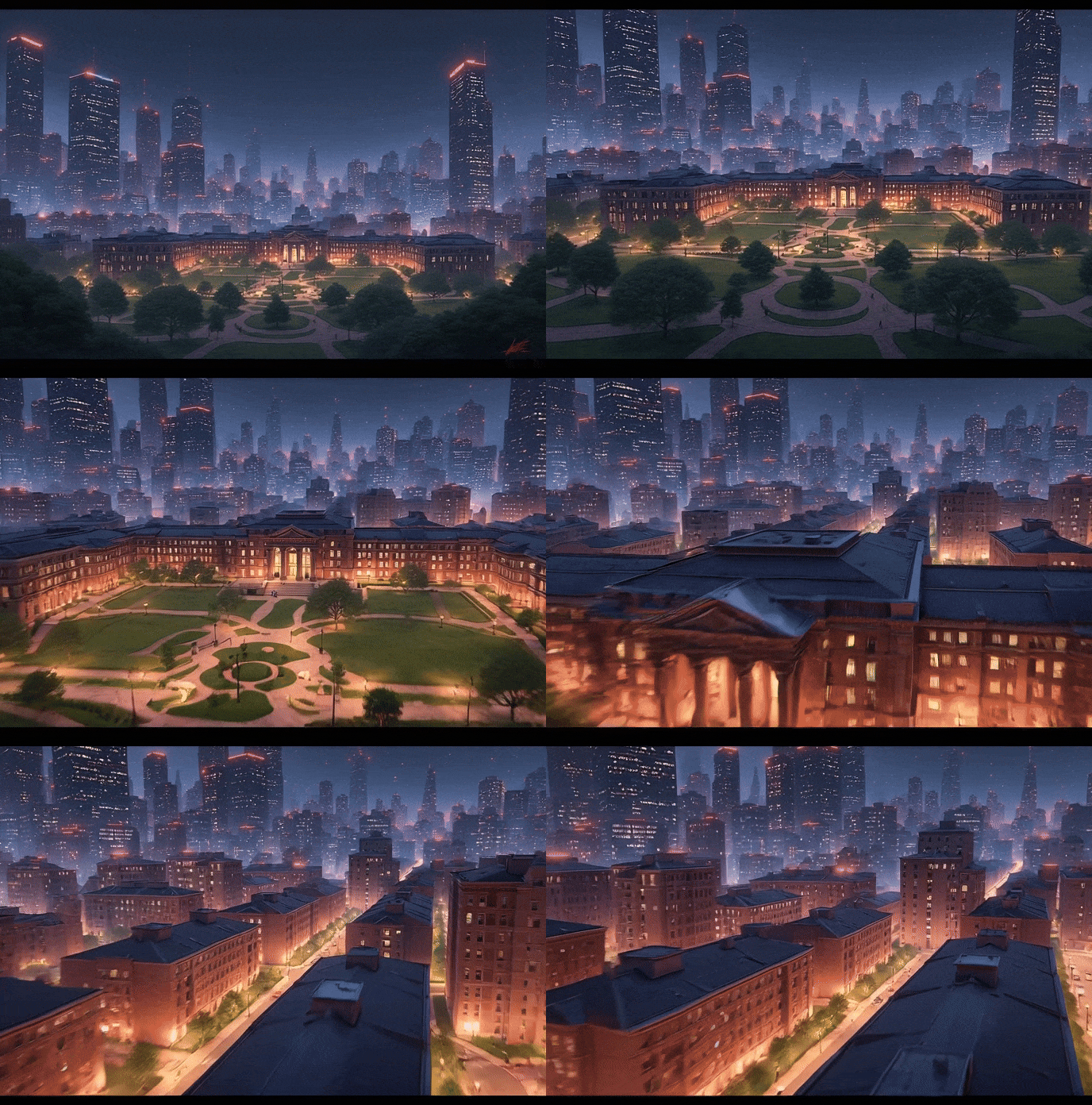
Among its quieter corners is Miskatonic College, a small, often-ignored annex behind Widener, its archaic gothic structures and cobblestone paths an odd contrast to the campus's modernity, dismissed by most as an administrative relic. Other facilities include the Radcliffe Innovation Labs, merging cybernetic design with creative arts, and the Divinity School's Holo-Temple, a multi-faith center projecting immersive sacred visuals. The campus integrates advanced tech seamlessly, with AR lenses issued to students for navigation and data access, while drone patrols maintain security. Subtle temporal anomalies, unexplained quirks in the campus's flow, add an occasional disorienting edge, but Harvard's cutting-edge infrastructure ensures it remains a fortress of progress in Neo-Boston's dynamic heart.

Comments