
Kobucks
The Mercy of the Horned Father
"I must confess, with a measure of scholarly shame, that for the longest time the kobucks remained a glaring lacuna in my chronicles. I had, in a fit of intellectual vanity, dismissed them as simple, uninspired creatures. How grievously mistaken I was. It was during their harvest rite that the scales fell from my eyes. There, under the pale lunar gaze, these supposedly harmless beings donned the guise of the dead, their forms swaying in a macabre ballet to a melody of rattling bones. And as their chant of gratitude to the Harvester rose into the night, I perceived Him—or something that wore His aspect—a skeletal silhouette cloaked in autumn’s decay, regarding his flock with a paternal grin. In that moment, I understood. These are not creatures to be overlooked; they may well be the inheritors of our world, for they are, unequivocally, the favored creation of Death."
Kobucks are a Secondborn Kin resembling upright, goatlike folk native to the most northern reaches of Vespero, particularly the Witchrealm of Morvathia and the Silverwild of Thaldrune. Long before humans, albs, and others resettled the land, the kobucks had already made it their home. According to their own creation myth, they were shaped by the Harvester, a god of life and death, to restore vitality to the world after it was left barren in the aftermath of the Age of Silence. True to that purpose, kobucks possess an innate bond with the soil, thriving as farmers and cultivators. Vast stretches of fertile farmland, orchards, and fields across Morvathia and Thaldrune owe their bounty to their tireless work. Approximately half of the agricultural community in both realms is composed of kobucks, despite their smaller numbers in comparison to the human population.
Deeply communal by nature, kobucks often live in close-knit, multi-generational villages, many older than the towns and cities that later sprang up around them. Historically they were often dismissed as simple pastoral folk and treated as part of the landscape, little more than common lifestock. Kobucks thus suffered long periods of marginalization under other kin, even displaced or expropriated during expansions. In modern times, they are recognized as equals throughout most of Vespero and are valued for for their hospitality, steady temperament, and steadfast devotion to the land they have long nurtured.
Biology of the Kobuck
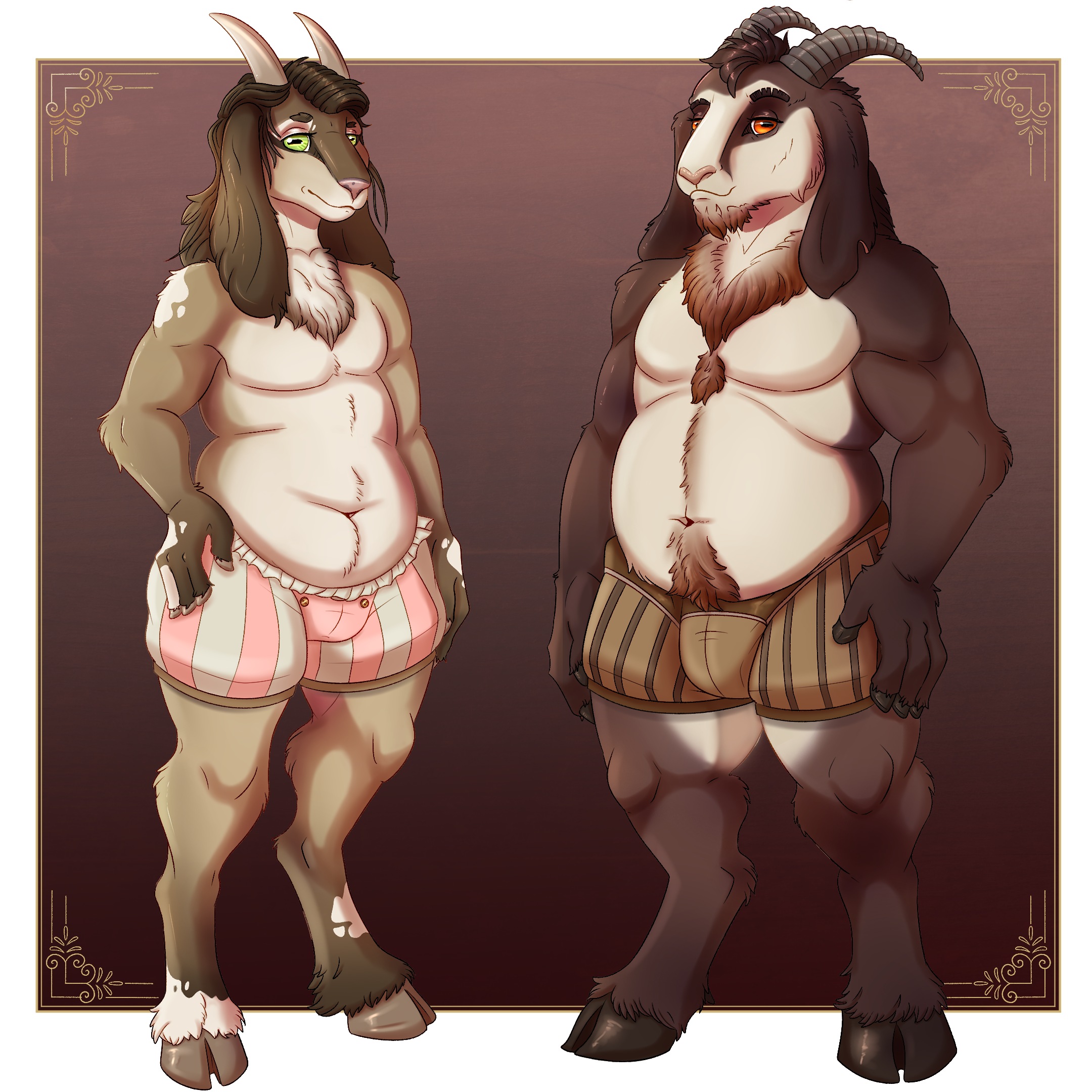
The Althorn Foundation for Ethnological and Genealogical Research classifies kobucks as beastkin, which is a broad term for kin that bear close resemblance to Netherdyn’s animal life. In their case, the likeness is obvious: short, sturdy bodies covered in coarse fur, cloven hooves, and the unmistakable horns of a goat. Standing no taller than three to four feet, kobucks are among the smallest of the sentient species, surpassed in diminutive stature only by the varlori and kobolds.
Their size, however, belies their durability. Built low and solid, kobucks are remarkably tough, capable of shrugging off impacts that would stagger larger kin. Both males and females grow prominent horns, which, together with their reinforced skulls, make their headbutts a natural weapon, said to strike with the force of a warhammer. Many a would-be brigand has learned the hard way that a charging kobuck is far more dangerous than it looks. Agile and sure-footed, they can also traverse steep slopes and rocky paths with effortless balance, their hooves finding purchase where others would slip.
Several of their traits remain distinctly animal in nature: their rectangular pupils grant them wide peripheral vision, and female kobucks possess udders set low between the forelegs rather than on the chest. They also live on a primary vegetarian diet. Their own creation myth explains these resemblances: the Harvester reshaped ordinary goats into living stewards of renewal. They were meant as a temporary species, a stopgap to restore the land’s fertility after the Age of Silence. Yet they endured. Kobucks outlasted divine intent, wars, and even the purges of the Galdoric Empire, proving themselves as resilient and unyielding as the land they call home.
Kobucks are broadly divided into two main subspecies: lowland kobucks and highland kobucks.
Lowland Kobucks
Lowland kobucks, common across Morvathia and southern Thaldrune, are the more familiar of the two. Their coats are shorter and finer, often in warm shades of cream, gold, or soft brown, with occasional mottled or patchy markings. Their horns are slender, sometimes spiraled, sometimes smooth, and typically swept back. As Morvathia formally recognized kobucks as equal kin generations ago, lowland kobucks have enjoyed greater mobility and access to the wider world.
Many have become merchants, travelers, or craftsmen, and their presence in markets and villages across Demenore and Valleterna is no longer unusual. In recent centuries, some have even risen to prominence within Morvathia’s own circles of politics, soldiery, and witchcraft, and thus integrating more deeply into the broader cultural landscape than their northern kin ever have.
Highland Kobucks
Highland kobucks, by contrast, are unmistakably shaped by the harsher climates of Thaldrune’s peaks and plateaus. They are shorter-muzzled and sturdier, their thick, woolly coats ranging from deep russet to soot black, and their horns are heavier and ridged, curving outward in broad arcs. Built for endurance, their fur alone provides enough warmth to withstand snow and mountain winds without added clothing.
Though just as numerous as their lowland cousins, highland kobucks rarely leave their homelands. Their communities value self-sufficiency, family ties, and tradition above all, and few feel any reason to stray from the valleys or slopes where they were born. This rootedness, often mistaken for stubbornness by outsiders, is considered a virtue in Thaldrune's many clans, where loyalty and endurance are as essential to survival as food or fire.
Mythology and Folklore
For most of Netherdyn, the Harvester is known simply as one of the Keeper Three, the triad of gods overseeing life, death, and rebirth. Kobucks, however, call him the Horned Father, a name that speaks of intimacy and reverence few would dare to claim for a god of death. To them, he is not a distant or fearsome deity, but a merciful protector, a bringer of harvest and community, and a guardian of life’s fragile cycles.
This unique relationship is rooted in the kobucks’ creation myth, "The Tale of Mercy", which recounts the arrival of the New Gods to Netherdyn after the Age of Silence. In the story, the Harvester restored life to the barren lands by shaping the kobucks to tend the soil and renew what had been lost. The oldest surviving version of this story is preserved in the Book of the Horned Father, which reads as follows:
The Tale of Mercy
When the Age of Silence had fallen, when all the world lay broken and bare, the land was not but ash and stone. The gods of old had turned their gaze away, left behind what they once created. From the Sea of Night came new gods, and among them walked the Horned Father. These gods did bestow gifts upon the ancient kin who yet lingered: a gentle end, a passage unlike the cruel deaths of old.
Yet the Horned Father saw that for death to hold meaning, there must first be life. So he spoke: "Here shall life take root once more, but it must be guided, it must be tended. So servants of my making shall touch, what I cannot." And so from his own essence he shaped us, the first kobucks. Small we were, humble, yet given a sacred charge: to coax the soil, to raise the green, to call forth the fruits and the blossoms where once there was naught but dust.
Our days were meant to be fleeting. We laboured under the Father’s watch, sowing and watering, pruning and tending, loving a land that would remember us not. Yet the earth responded. The rivers ran clear, the orchards grew heavy with fruit, and the forests stirred with life once more.
When the task drew to its end, we were ready to fold ourselves back into the soil, leaving the world richer than we had found it. But the Horned Father, beholding what we had wrought, saw not mere service, but devotion and care. In our toil he saw a spark unbidden: love, simple and steadfast, for the world itself.
And his heart, moved by that love, would not let us go.
In that moment, he spoke again: "Rise, and linger. Walk these lands. Bear young. Love and be loved. No longer servants, but children of my making." And thus he gave us mercy. From mere instruments we became his kin, bound to the earth yet free to live, to tend, and to remember.
So were we born, the kobucks, to nurture the world and to rejoice in its life, as the Horned Father first intended.
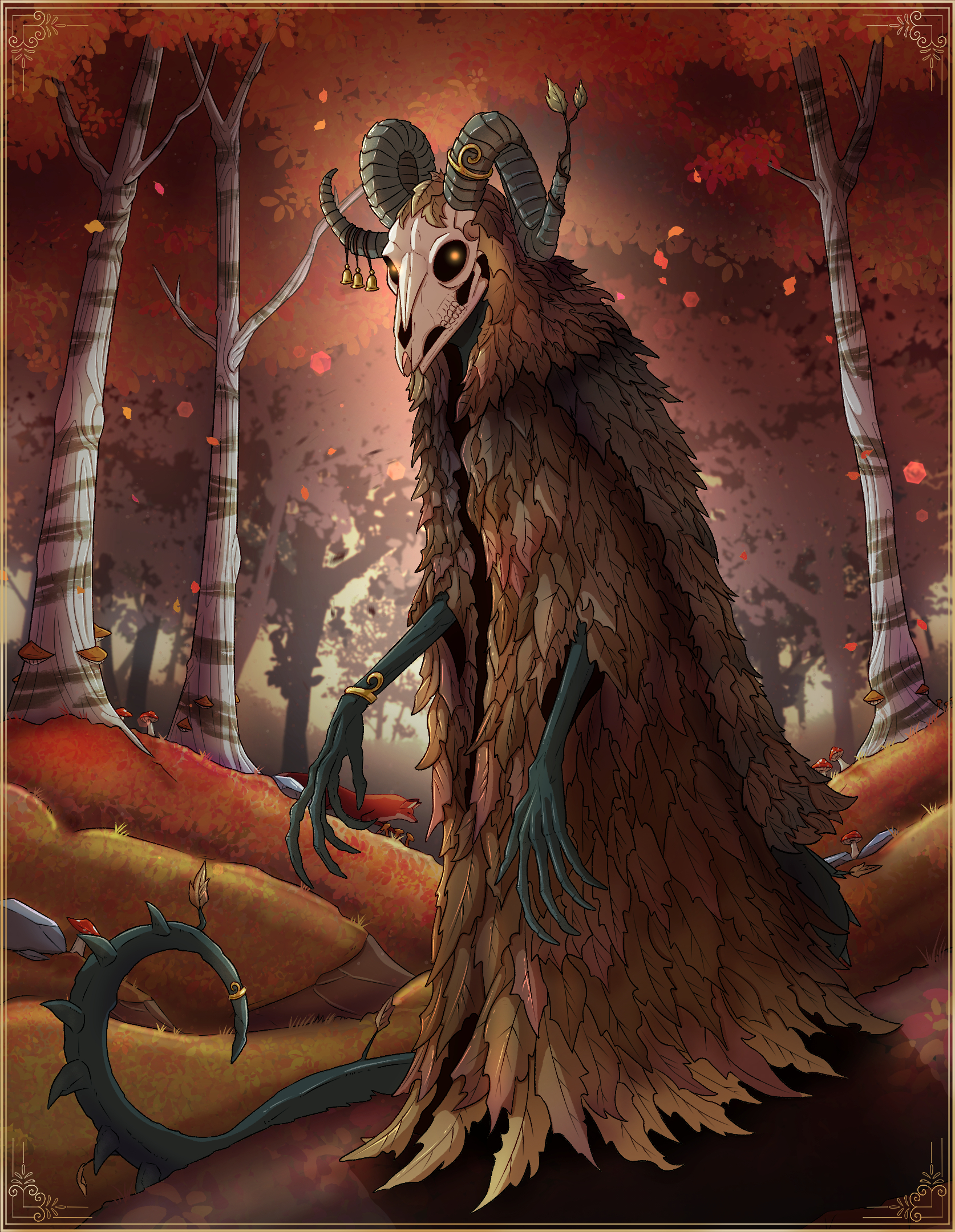
The tale further explains that kobucks were originally meant to be a temporary creation, their lives granted solely to fulfill the Harvester’s task of renewing the land, after which he would reclaim them. Yet, moved by their devotion and willingness to accept this fate without question, the Horned Father is said to have spared them, allowing them to endure beyond their intended purpose.
Scholars debate the story’s veracity. The consistency of its presence across kobuck societies, even those separated by great distances, lends it a measure of legitimacy. But doubts remain. It seems unlikely that the Harvester would speak directly to mortals, or that the kobucks alone restored life to a world entirely barren. Still, whatever the historical truth, the bond between the kobucks and their deity is undeniable.
Cultural Legacy
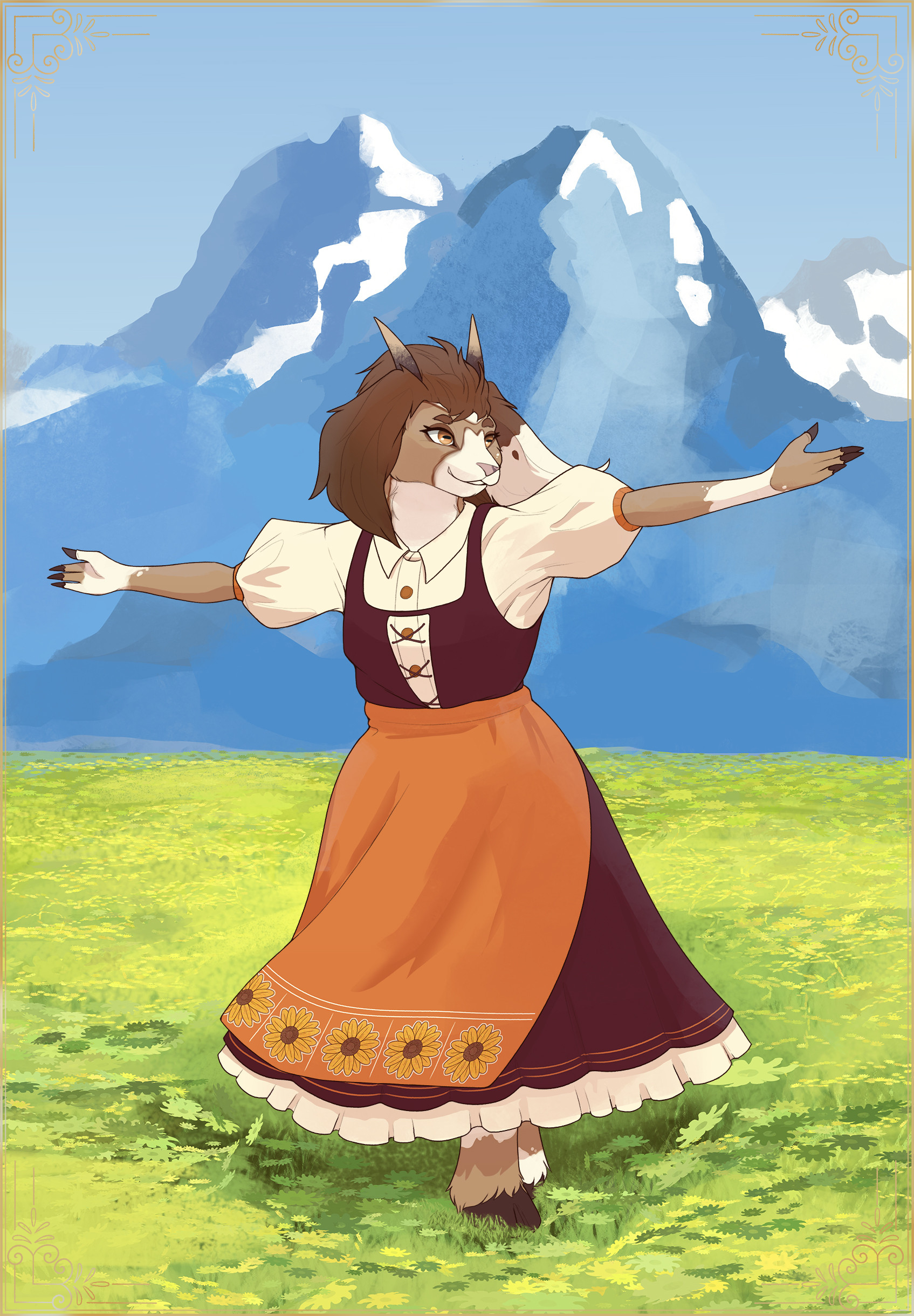
Most kin in Netherdyn are scattered across several regions and therefore tend to blend into the common cultures of their surroundings, making a truly distinct ethnic identity centred on a single kin rather rare. This holds mostly true for the kobucks as well: in Morvathia, they’ve long been woven into the fabric of witching society, while in Thaldrune, they are an inseparable part of the northern clan structures. Yet, unlike most Secondborn kin, kobucks predate both post-Silence human and alb settlements in these lands, and traces of their original culture have endured.
That old heritage is known as the Braanthar tradition, and their ancestral language is called Bleatongue. Though much of Braanthar custom has blended into Morvathia’s own, echoes of it remain everywhere, from local festivals to old songs still sung in rural taverns. The Bow to the Harvest Festival, now one of Morvathia’s most beloved celebrations, was once a Braanthar rite honoring the Harvester.
In towns with large kobuck populations—such as Mosswood Fall, Turniptat, or Haggebruck—Bleatongue is still taught and spoken. Many traditional songs in the language are communal, written with rhythm and movement in mind, complete with cues for clapping and the stamping of hooves. They are meant to be performed together, build for the sound of dozens of kobuck hooves striking the floor in unison. Today, most Morvathian kin celebrate rituals and customs that began with kobuck hands, though few realize how much of their culture traces back to the Braanthar.
In Thaldrune, things are different. The land’s sheer size and sparse population have allowed entire pockets of Braanthar culture to survive in isolation. While Thaldrune’s clans have adopted parts of kobuck tradition into their own, the reverse is also true: deep in the mountains and glens, there are old kobuck villages, some unmarked on any map, where ancient customs persist entirely unchanged.
These untouched Braanthar live apart from the outside world and are known to be wary, even hostile, toward outsiders, including other kobucks. Their dialects of Bleatongue are so archaic that modern kobucks struggle to understand them, and their festivals, songs, and rituals often defy all known records. Scholars from both Thaldrune and Morvathia have tried to study them, hoping to understand the roots of kobuck tradition, but the prevailing wisdom remains the same: the Braanthar of the highlands wish to be left alone. And the world is wise to grant them that.
Kobucks Across Netherdyn
Kobucks are a people deeply bound to the soil of their birth, and it is rare for one to stray far from their homeland. For this reason, only Morvathia and Thaldrune host truly significant kobuck populations, where their customs and craft have become inseparable from regional identity. Beyond those lands, kobucks are a rarity. Yet even so, small kobuck communities have begun to appear beyond their ancestral homelands, an uncommon but growing phenomenon for such a traditionally rooted people.
Kobucks in Demenore
After the Curse of the Beast shattered the old kingdom of Demenore, the realm rose again under a new Kral, who sought to tame the chaos left by warlords and rebuild a stable dominion. Much of this restoration focused on reclaiming ruined lands and reviving the long-lost farmlands of Belomoor, once the Breadbasket of Demenore, under the guidance of Voivode Gostislav Vedenin. To aid in this, laborers and specialists were invited from beyond Demenore’s borders, and several Morvathian kobucks answered the call, eager to rework the soil and restore grain, orchards, and livestock. Over time, smaller kobuck communities formed around settlements such as Sootmere, Drovorod, and Rudnitsa. Kobucks remain a rarity in Demenore, but today they are a welcome presence.
Kobucks in Valleterna
The Nine City Alliance of Valleterna has opened its gates to travelers since breaking free from Galdoric rule, and its thriving trade with Morvathia has brought with it a scattering of kobuck settlers. The greatest of these communities lies in the harbor city of Puerto Opalino, where a family of kobuck merchants founded Crispwood Exports — a trading house dealing in orchard resins, mountain herbs, and fine agricultural goods. They established a settlement quarter on the city’s outer docks, keeping small fold-yards of vines and orchard cages to tend their produce. As the operation grew and more laborers from Morvathia settled permanently, a small pocket around the harbor came to cater to Morvathian tastes and goods, taverns and stalls owned and run by kobucks serving the city’s dockside quarter.
Kobucks in Morvathia
Morvathia holds one of the strongest bonds to the kobuck kin, being the first realm to grant them the Rights of Kin, a status respected by every nation within Morvathia’s alliance. This longstanding recognition and integration of kobucks into witching society has led to several unusual developments, most notably the founding of the city Turniptat. As far as known records suggest, it remains the only major city established, governed, and officially recognized as kobuck-built. During the time of the Galdoric Empire, kobuck settlements were dismantled or relocated into restricted zones under the orders of the High Divine. After Morvathia’s liberation, Turniptat was rebuilt upon the emerald slopes where one of the oldest kobuck communities had once stood.
Today, Turniptat rises in winding tiers up toward a weathered hilltop castle. The city is known for two things: its perilously steep streets, exhausting to most travelers but effortless for the goatfolk, and for the Order of the Turnip Knights, an entirely kobuck-founded martial order. To this day, it stands as the only military force known to have been created and maintained solely by kobucks, without outside kin influence.
Kobucks in Thaldrune
Thaldrune’s relationship with its kobuck population runs equally deep, though expressed through a shared temperament rather than formal recognition. Thaldrune kobucks are renowned for the same headstrong pride and resilience that defines the northern spirit. The most storied example lies with Clan Hraefyn, whose lineage can be traced to a coastal kobuck settlement known for its fierce independence and striking traditions. The settlement was famous for its towering bonfires that lit the coast during festivals, for its horn-fights—ritual bouts where kobucks clashed heads and horns to push one another from a ring—and for its spirit singers, whose haunting voices echoed across the night sea.
Where most kobuck communities withdrew from conflict, the Hraefyn met it with aggression. When neighboring groups attempted to drive them from their coast, they answered with raids and defiant displays of strength until they earned recognition rather than exile. In time, outsiders came seeking to learn from their ways, to grow strong, to follow the Way of the Horn, and were, surprisingly, accepted. From this exchange emerged Clan Hraefyn, a mixed-kin brotherhood that still honors its kobuck roots. Non-kobuck members wear ornate horned headgear and swear their oaths to the Horned Father before the communal Winter Flame.

Comments