
Cloning
in BiowareCloning is by far the most complex example of applied genetic engineering and molecular biology in any futuristic settings. A sample of one subject’s DNA is used to make an exact physical duplicate of the subject. A clone is identical to the original creature in every genetic way—blood type, birth defects, fingerprints, and retinal pattern. However, the clone does not have any scars, tattoos, or other identifying marks gained during the course of the original creature’s life. If, for example, the original creature was born with only one kidney, the clone has only one kidney. However, if the original creature has had a kidney removed, any clone made from him will have two kidneys (as the original subject did at birth).
Cloning is a very difficult and expensive process. Crafting a clone requires the services of a professional molecular biologist, genetic engineer, or someone with ranks in Life Science, Medicine, and Engineering equal to the item level of the bioware and a genetic engineering lab. It takes a molecular biologist 1 week per level of the bioware to create a viable clone. Clones are produced by bombarding masses of protocells with a series of special retroviruses. These retroviruses deliver the DNA from the subject being cloned. A clone has a shelf life of 50 years if kept in an embryonic pod prior to its final retrovirus treatment.
CLONING TECHNIQUES
Cloning represents one of the pinnacle applications of bioware. Each clone is genetically identical to the subject donating their genetic material to the cloning process. Clones are almost identical in appearance to their genetic donor, including their fingerprints and iris patterns. A clone can successfully navigate biometric security on computers and other security devices.
Many species create clones for an assortment of reasons. Cloning was vital on early colonization missions where it was the only viable option to sustaining a colonies population. An individual might turn to cloning to cheat death. There are core planets where cloning is the only culturally acceptable means of reproduction. There are even extreme cases were a species is so genetically depleted that cloning is the only thing keeping extinction at bay.
Clones are as common or rare as their necessity dictates in a colony, core world, or mega-corporation. Clones are more common in societies that dislike robots and artificial intelligence.
SELECTIVE HEREDITY
Occasionally, during the cloning process it is possible to subtly alter the hereditary traits passed on to a clone by its original body. For example, anything that varies from one member of the species to another (such as hair or fur color, eye color, skin pigmentation, etc.) can be altered by subtly changing genetic data when creating the new clone. All such hereditary traits of a trivial nature (i.e. that do not have any in-game effect) may be altered. Altering hereditary traits increases the cost of the clone by 10% and increases its item level by 1 when determining the minimum skill level required to create the clone.
Only certain aspects of a creature may be altered in such a manner. Height and general body type can be subtly altered, but not enough to change size categories or influence ability scores. Any coloration changes from radically different colors, such as black skin, orange eyes, and so on—may be made in this manner, but no changes to any pigmentation may provide any bonuses to skills (such as Stealth checks) under any circumstances. Such drastic changes require additional mutations and do not fall under selective heredity. Selective heredity can be applied to any of the cloning options.
World Codex
ACCELERATED GESTATION
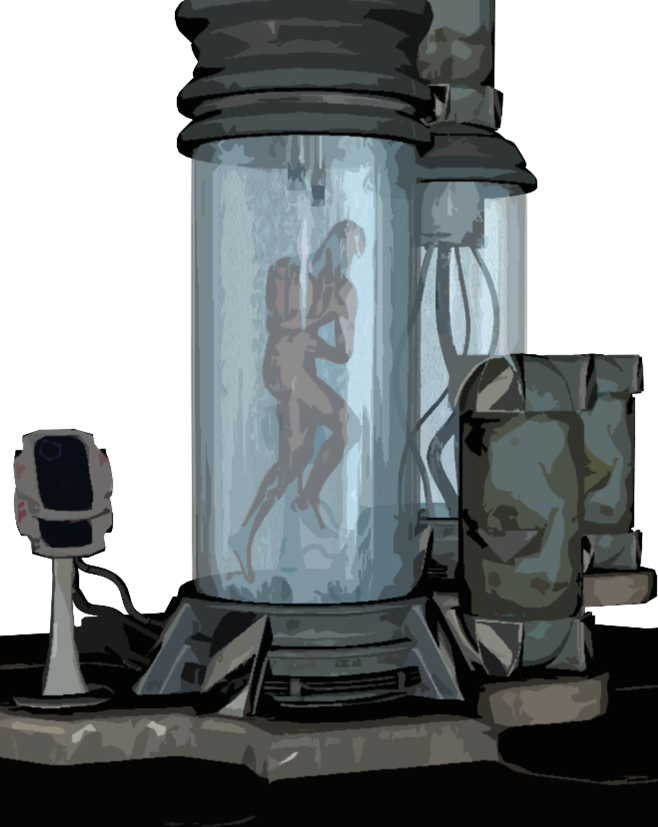
Cloning allows scientists to create genetically identical embryos that age normally without accelerated gestation therapy. Clones develop and age at rates identical to their donor’s. Growing a twenty-two-year-old version of yourself would take twenty-two years plus nine months of gestation. Accelerated gestation allows the clone to mature at an accelerated rate until it reaches the desired age and is a replica of the donor at that age (minus scars, tattoos, and other acquired physical modifications).
Most people that need a clone don’t have years to wait. Clones grown with accelerated gestation are completed in weeks rather than years. It only takes one week to create a baby or a week per year of the clone’s desired age. A clone identical to your twenty-two-year-old self only takes twenty-two weeks. Most clones but not all are created with this method.
MEMORY IMPRINTING
Any clone that receives accelerated gestation therapy and is created to perform a specific task under goes a process called memory imprinting while it develops. Memory imprinting gives the clone the life skills it needs to survive and the professional skills it needs to fulfil its role. Some conspiracy theorist even speculate clones can be given hidden directives in their subconscious, which can be triggered at a later date. A clone with a soldier imprint would begin its career as a 1st level Soldier. Memory imprints cannot take a clone past 1st level.
Timelines
Stroh Hammer, Gravity Age, Starfinder RPG, and Aether 2d12 are trademarks of Stroh Hammer.
Aether 2d12 is published by Stroh Hammer under the Open Game License version 1.0a Copyright 2000 Wizards of the Coast, Inc.
Permission granted to photocopy or print for personal use.
© 2017 Stroh Hammer