
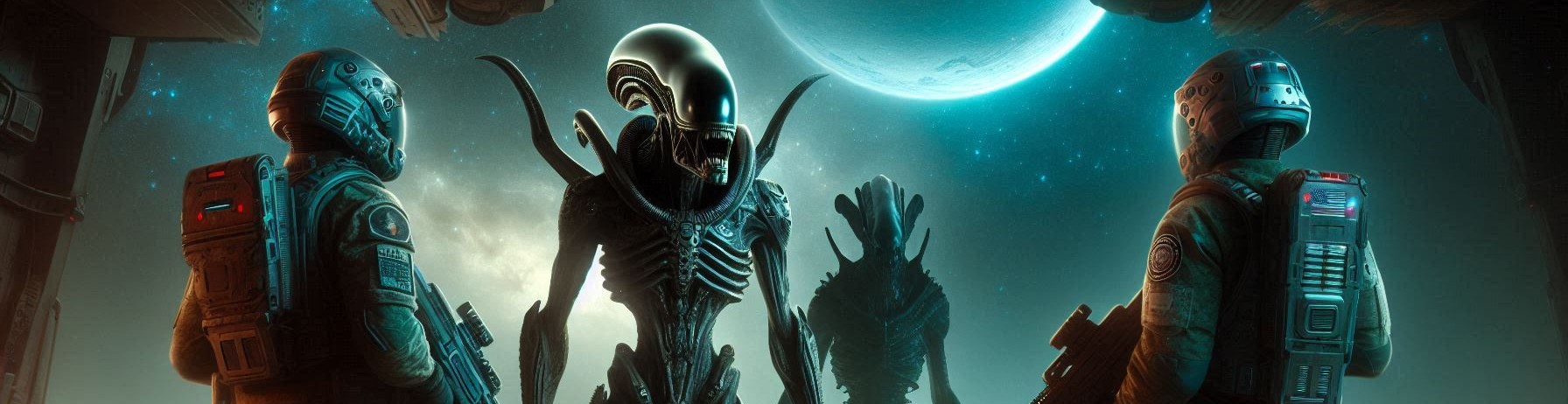
Sythuul
The Sythuul represent a unique symbiotic species composed of two distinct yet interdependent races: the Sythu and the Uul. This partnership is not only biological but also cultural and ecological, forming the foundation of their civilization and survival strategies.
Biology and Lifecycle
The Sythu, the first half of the pair, are humanoid omnivores with intelligence comparable to bovines. They are evolved from aquatic primates, resulting in hairless females with slightly webbed hands and feet, adaptations suited to a semi-aquatic environment. Their all-female population cannot reproduce on their own, requiring a bond with an Uul for reproduction. The Sythu’s sensory adaptations include limited daylight vision (10 feet), but they compensate with advanced blindsense (60 feet out of water) and blindsight (120 feet underwater), making them highly functional in aquatic habitats. Sythu are obligate air breathers, further distinguishing them from their aquatic partners. The Uul, the symbiotic counterpart, are cephalopod-like creatures reminiscent of octopi, endowed with three elongated tentacles and two shorter ones. They are asexual and reproduce by laying eggs, a process that is fatal to the parent. Uul exhibit primate-level intelligence and possess keen vision, well-suited to underwater environments. Their unique physiology allows them to breathe underwater, providing a complementary ability to the air-breathing Sythu.
Bonding Process and Emergence of the Sythuul
The symbiosis is initiated when a Sythu reaches sexual maturity, emitting hormones that attract an unbonded Uul. The bonding involves the Uul physically attaching to the Sythu’s head, with a slender, barbed tentacle penetrating the spine and two padded tentacles interfacing with the lungs beneath the arms. This invasive process serves to merge their nervous systems, allowing for direct genetic exchange. Two remaining tentacles are left free, granting the Sythuul dexterous manipulation abilities. Once bonded, the Sythuul experience a significant leap in intelligence, attaining human-like cognitive abilities. This neural integration awakens the capacity for both species to reproduce without the fatal consequences previously associated with Uul reproduction. Additionally, the hybrid Sythuul can now breathe in both air and water, reflecting the union of their physiological strengths.
Ecology and Society
The Sythuul’s unique biology shapes their societal structures and environmental interactions. Their communities likely form around bodies of water, integrating aquatic and terrestrial elements into their daily lives. The requirement for symbiotic bonding means that social rituals and customs are built around the coming-of-age process and the subsequent partnership between Sythu and Uul. Their dual reproductive abilities and hybrid breathing open access to a wide range of habitats, from deep aquatic zones to land-based settlements. Culturally, the merging of two intelligent beings into one may influence Sythuul philosophy, emphasizing partnership, interdependence, and shared identity. Their advanced sensory capabilities, manipulative tentacles, and heightened intellect could lead to technological innovations that blend aquatic engineering with terrestrial craftsmanship. The transition from two species to one unified entity could also impact governance, law, and familial structures, reflecting the necessity of cooperation and mutual survival.
Potential for Storytelling or Game Design
The Sythuul concept offers rich possibilities for world-building in science fiction or fantasy settings. Their unique lifecycle can be central to plotlines involving coming-of-age, partnership, and transformation. The process of bonding, genetic exchange, and awakening of intelligence could serve as metaphors for growth, trust, and the blending of cultures. Their dual nature allows for exploration of themes such as identity, adaptability, and the power of symbiosis, making them compelling characters or factions within a larger narrative universe
6'10"
145 Lbs.
Sythuul seam somewhat emaciated. Mucles are we defined fit and trim.
Beige, brown, and a mix of purple in their native state.

Comments