

NANOSWARM TERRAFORMER TEMPLATE
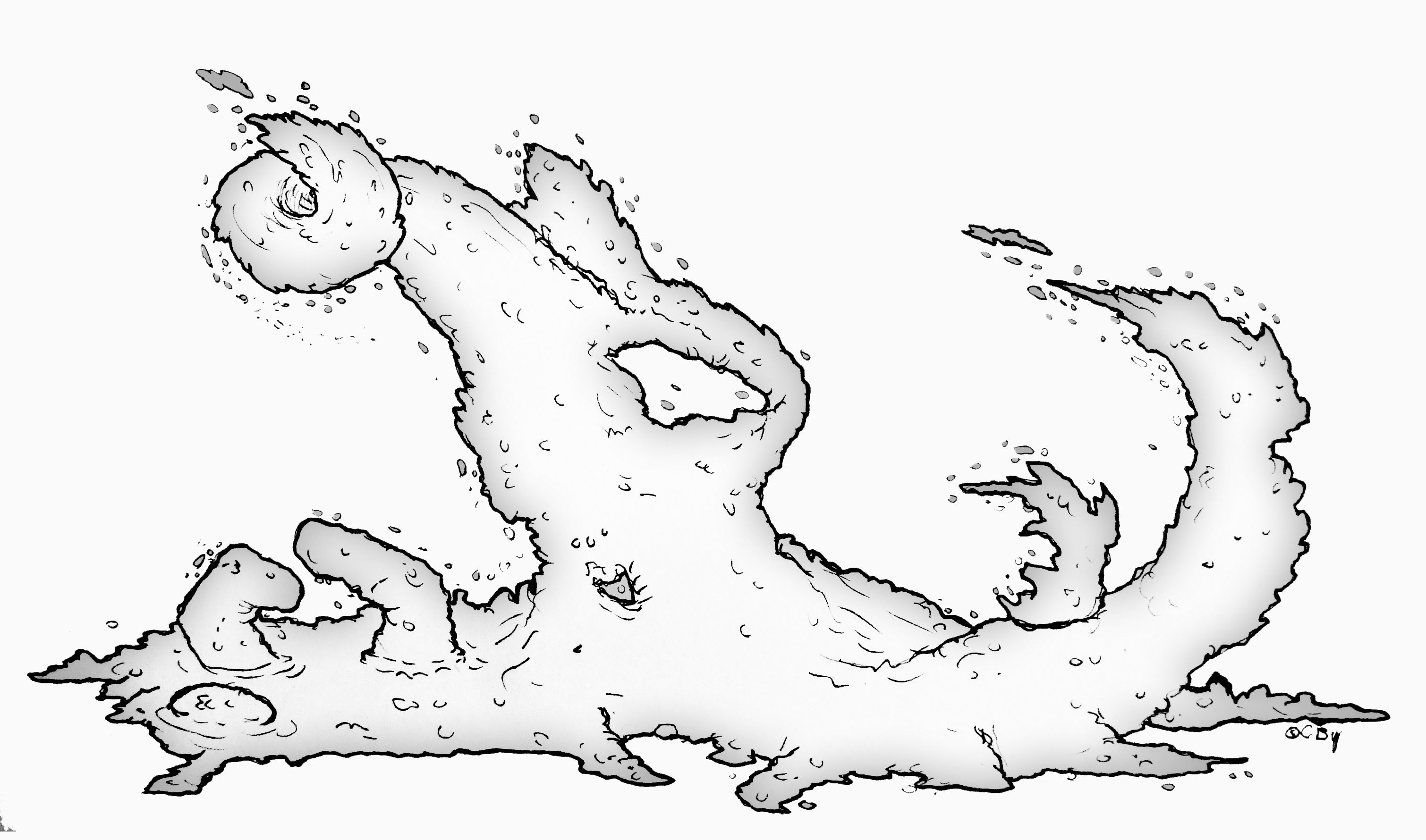
Terraforming nanoswarms are capable of permanently altering the terrain and climate of a small area or entire world if given sufficient time and materials. Although, the swarms are incapable of creating life they are capable of altering the terrain and climate to support life. Once the environment on a dead rock has been altered sufficiently the terraforming nanoswarms introduce different strains of bacteria to produce oxygen, remove toxins, and produce organics necessary for the arrival of plants and animals.
The Terraformer template can be applied to any Large, Huge, Gigantic, or Colossal nanoswarm.
TERRAFORMER TRAITS
- Freedom of Movement (Ex): Not all materials are easy to get to. Terraforming nanoswarms have burrow, climb, fly (average), and swim speeds equal to their regular movement speed.
- Bacterial Affliction (Ex): Many of the bacteria used in terraforming are often toxic to other living creatures. Three times per day any target subject to swarm damage is also subject to bacterial affliction. The terraforming nanoswarm can release its bacterial affliction as a swift action during its swarm attack. Since one nanoswarm carries multiple types of bacteria, GM is encouraged to use a different inhaled or injury type poison each time bacterial affliction is used. The DC for the bacterial affliction is equal to its distraction DC. For additional information on poisons, see the "Afflictions" section in Chapter 11 of the Starfinder Core Rulebook.
- Terraform (Ex) 8 large, 4 huge, 2 gigantic terraformers working in tandem or a single colossal terraformer nanoswarm can strongly influence the surface and internal processes of a planet, minor, plant, natural satellite, or asteroid. These localized environmental changes can slowly effect larger regions or even change the climate of an entire world. Over a 1-week period, terraformer nanoswarms can influence a 1-mile radius with one of the following effects:
- Earthshaper (Ex) Moves dirt (clay, loam, sand, and soil), possibly collapsing embankments, moving hillocks, shifting dunes, and so forth, but does not affect rock formations. The elevation can be increased or decreased by up to 10 feet.
- Hydrosphere (Ex) This effect can raise or lower the water table by up to 10 feet
- Biosphere (Ex) This terraforming method has several effects; barren land bursts with new plant life, normal vegetation (grasses, briars, bushes, creepers, thistles, trees, vines, and so on) becomes thick and overgrown, and doubles the productivity of existing plants. It can be used to stunt the growth of plants by inhibiting their production or reducing their overall biomass by one-half.
- Temperature (Ex) The average temperature in the area is raised or lowered by 10° Fahrenheit.
- Atmosphere (Ex) A poisonous atmosphere can have its saving throw DC reduced by 1. When an atmosphere’s DC would be reduced to 0 it is no longer considered toxic. Atmospheric pressure can be decreased or increased by 1% or the percentage of one of its gases like oxygen can be increased by 1%. (A strategy employed to maintain atmosphere on Mars was building great 1 to 10-mile diameter domes to hold the atmosphere in place. Another strategy in the great caverns of Luna was to flood the caverns with atmosphere and keep the terraforming nanites on task while letting the excess seep to the surface only to get blown away by the solar wind.)
Additional Information
Geographic Origin and Distribution
Earth, Titan, Mars
Origin/Ancestry
Nanoswarm
Lifespan
Immortal
Average Height
Gigantic
Average Weight
Unlimited
Average Length
Gigantic
Average Physique
NA
Body Tint, Colouring and Marking
Varies

Comments