
A to Z of Colourful Critters
Here at the A to Zoo, we have too many creatures for any single person to admire! If you have already seen our A to Z of Amazing Critters, this is our follow-up page, to share with you even more amazing animals!
There are images of creepy crawlies on this page, be aware!
There are images of creepy crawlies on this page, be aware!
Arcoraptor
Arcoraptor parvus Endangered Full Article
Kicking off this list with an animal commonly known as sprinkle raptors, arcoraptors are vicious little dinosaurs. These animals inhabit the Ink Kingdom of planet Osao, preying on all manner of cephalopods, crustaceans, small birds, and other tiny animals scuttling about the vast system of rockpools.
Our raptors are a troublesome pair, constantly squabbling with visitors. We don't mind much, as they haven't escaped yet (somehow) and tourists seem to enjoy it, often giving us a small donation for our arcoraptors.
Our raptors are a troublesome pair, constantly squabbling with visitors. We don't mind much, as they haven't escaped yet (somehow) and tourists seem to enjoy it, often giving us a small donation for our arcoraptors.

Arcoraptor by Mochi
Azure Pelican
Pelecanis caeruleus Least Concern
Azure pelicans are a peculiar bird, with long beaks that can retract into the head and neck, similar to felines with their claws. These birds have a bright blue plumage with black and yellow stripes on the undersides of their wings, earning their spot on this list.
Their preferred method of communication is through repetitive, abrasive calls. Local fisherslimes consider azure pelicans to have the most annoying call out of any bird in Eudan. After some fun experiments testing our pelicans when they arrived, we determined that azure pelicans typically scream at a whopping 139dB at a one metre distance, as loud as a firework at close range.
For that reason, there is a twenty foot gap between the pelican enclosure and visitor footpaths. These pelicans can damage one's hearing if you stand at their enclosure for too long, but a couple of minutes shouldn't be an issue. We still ask people to be cautious, regardless.
Their preferred method of communication is through repetitive, abrasive calls. Local fisherslimes consider azure pelicans to have the most annoying call out of any bird in Eudan. After some fun experiments testing our pelicans when they arrived, we determined that azure pelicans typically scream at a whopping 139dB at a one metre distance, as loud as a firework at close range.
For that reason, there is a twenty foot gap between the pelican enclosure and visitor footpaths. These pelicans can damage one's hearing if you stand at their enclosure for too long, but a couple of minutes shouldn't be an issue. We still ask people to be cautious, regardless.
Apolla
Attacus apolla Vulnerable
Apollas are a species of moth, related to atlas moths. Their stupendous wings shimmer under the moonlight, as they emergy during dusk periods, fluttering about in the night skies in clusters of thousnds. Native to planet Chromus, apollas are closely tied to various mythologies and beliefs, seen as a symbol of birth and new life.
Our cluster of apollas live in the walkthrough Moonlit Aviary; a gigantic enclosure emulating a perpetual night, where you can come face-to-face with a number of harmless nocturnal species. Due to climate change on their native planet, apollas are slowly heading towards extinction, currently a Vulnerable species. We are dedicated to bringing these animals back to a healthy population, with our own small breeding program tailored to these moths.
Our cluster of apollas live in the walkthrough Moonlit Aviary; a gigantic enclosure emulating a perpetual night, where you can come face-to-face with a number of harmless nocturnal species. Due to climate change on their native planet, apollas are slowly heading towards extinction, currently a Vulnerable species. We are dedicated to bringing these animals back to a healthy population, with our own small breeding program tailored to these moths.
Assacan Feathertail
Plumeris assacanensis Least Concern
Soaring through the skies of gas giant Ovoya are assacan feathertails. They are an important animal to the planet, both ecologically and culturally!
These wyverns have an elegant train of feathers on their tail, like a peacock. As they fly around our enclosure, look out for streaks of red and purple in the sky, they like to zoom around faster than the eye can comprehend.
These wyverns have an elegant train of feathers on their tail, like a peacock. As they fly around our enclosure, look out for streaks of red and purple in the sky, they like to zoom around faster than the eye can comprehend.
Did you know?
There are over one hundred billion creatures in the A to Zoo with common names beginning with A? Crazy!
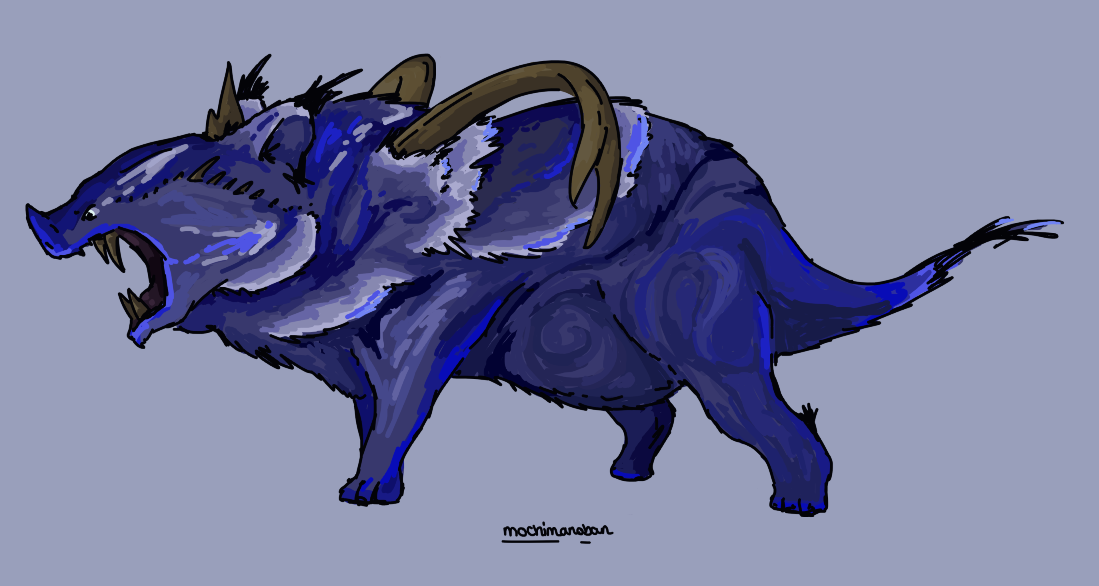
Blueback Boar by Mochi
Blueback Boar
Sus caerulupellis Near Threatened Full Article
Few animals appear as menacing as a blueback boar. Don't be fooled by the menacing stance, razor sharp teeth, and bony back spines, these boars love a good cuddle.
Look out for our baby boars tearing apart bales of hay as they run around the boar forest together! They co-exist with our red ribbon boars, another colourful fan favourite with visitors.
Look out for our baby boars tearing apart bales of hay as they run around the boar forest together! They co-exist with our red ribbon boars, another colourful fan favourite with visitors.
Bulldozer Bee
Magnatergum fortis Near Threatened Full Article
Bulldozer bees are one of the zoo's largest bee species, with a wingspan of over seventy centimetres! Watch out, because these territorial insects throw their entire bodies at those that get too close to their nest, or their queen.
Our state-of-the-art cameras let visitors see inside the queen's quarters. See if you can spot her carefully organising all of the eggs she lays!
Our state-of-the-art cameras let visitors see inside the queen's quarters. See if you can spot her carefully organising all of the eggs she lays!

Bulldozer Bee by Mochi
Buttwoll
Buttwoll buttwoll Least Concern
Buttwolls dance with their purple butts facing the sky. Each cheek has an imprint in the shape ofa giant eye to ward off predators, making them think the ape is larger than it actually is.
Our menagerie of buttwolls will sit next to the glass windows and wiggle their butts at visitors. Making eye contact might intimidate them; our apes love to fling their poop over the walls.
Baleen Wolf
Canis ossetosus Endangered
Swimming up the rushing rivers of Venviri are baleen wolves. With a giant filter-feeding mouth, they absorb toxoplankton in the water. Our five baleen wolves form a lovely pack, very close with one another. If you catch them as they go to bed, you'll see them snuggle up with another!
Baleen wolves are incredibly friendly animals. Two of ours in particular are so gentle we let visitors meet them! Purchasing our special Baleen Wolf Adventure Pack, you can spend an entire day with our friendliest baleen wolf pair.
Bold-Faced Tern
Larosterna ingens Critically Endangered
These friendly, moustached birds are in the same genus as the inca tern. On their home planet, fashion icons love to dress up as the bold-faced tern.
Their glittery blue eyes, yellow and green highlights around their beak, hot pink body and black tail make this bird absolutely unmistakeable. We have nearly two hundred terns in our colony, with an enclosure that covers an entire, real-life size archipelago.
Because we don't expect our visitors to see these birds with the naked eye, we have cameras set up that track these birds, so our monitors always have something exciting to display!
Fun Fact!
Blueback boars were one of the first creatures we acquired. We were looking for something iconic, friendly, yet looks fierce, to attract as many visitors as possible.
Coin Tetra
Venterondus nummuaura Least Concern
Not only are they the size of a gold coin, they look like one, too! They are especially common around the Nakkan Swamp, a protected region on Emycelium.
These golden schools of fish are one of the most common fish kept as pets on Razhea Capita and Emycelium. Sadly, many coin tetras don't have the best quality of life.
Here at the zoo we love to teach people about the proper ways to take care of pets. We have extensive lessons on how to take good care of a pet coin tetra, thanks to some of our most talented zookeepers.
These golden schools of fish are one of the most common fish kept as pets on Razhea Capita and Emycelium. Sadly, many coin tetras don't have the best quality of life.
Here at the zoo we love to teach people about the proper ways to take care of pets. We have extensive lessons on how to take good care of a pet coin tetra, thanks to some of our most talented zookeepers.
Caveapeltus
Caveapeltus scintillaris Extinct in the Wild
These sparkly dinosaurs cannot be found anywhere else in the entire Yonderverse! Sadly they went extinct in the wild a hundred years ago, and our herd is the last one to survive.
They love to roam the savannas of their enclosure, sleeping in piles under a heated rock feature at night. Our herd is skittish and our zookeepers rarely get to interact with them, besides health checks, of course.
Keep an eye out for the dominant caveapeltus, she has purple nodes on her back, while the others have blue!
They love to roam the savannas of their enclosure, sleeping in piles under a heated rock feature at night. Our herd is skittish and our zookeepers rarely get to interact with them, besides health checks, of course.
Keep an eye out for the dominant caveapeltus, she has purple nodes on her back, while the others have blue!
Cloudy Callavan
Callavanii nimbus Least Concern
By releasing air into a skin sac on their back, the cloudy callavan lifts into the skies. These animals spend their entire life in the air, slowly drifting back down to the ground. Their muscles atrophy as they glide, and by the time the animal has drifted to the ground, they become so weak that they die upon impact.
As sad as this may be, the callavans at the zoo also live this unfortunate life cycle. We monitor their position in the atmosphere and use wind currents to keep control of them. Our moleculation of cloudy callavans chatter amongst each other as they drift to the ground, where we provide as soft a landing as we can.
As sad as this may be, the callavans at the zoo also live this unfortunate life cycle. We monitor their position in the atmosphere and use wind currents to keep control of them. Our moleculation of cloudy callavans chatter amongst each other as they drift to the ground, where we provide as soft a landing as we can.
Under 5s free
Adults 12
Over 60s free
Annual Pass 150
Adults 12
Over 60s free
Annual Pass 150
Cute Turaco
Lalacila lepidus Endangered
With a fitting name, cute turacos are one of the zoo's most iconic animals. We feature them on much of our promotional material. Fluttering through the forests of Xiskin, their wild population is unfortunately suffering thanks to atmospheric shifts.
In the wild, these birds all nest in one massive nest atop a flat tree. Safe in large numbers, their erratic flight patterns startles and scares predators.
We currently have twenty turaco eggs in our incubation center. Enter our raffle, and twenty lucky visitors will get the opportunity to name these babies.
In the wild, these birds all nest in one massive nest atop a flat tree. Safe in large numbers, their erratic flight patterns startles and scares predators.
We currently have twenty turaco eggs in our incubation center. Enter our raffle, and twenty lucky visitors will get the opportunity to name these babies.
Attention!
Don't forget to buy plenty of animal snacks at your nearest Feed Station! Half price on all omnivore snacks!
Dusty Tailfoot
Altulagus aridus Least Concern
These tower-like rabbits are mostly legs. They stand more than three feet tall while their body is only the size of a small melon. They have small tufts of fur on their heads that they style to attract a mate!
Our tailfoots are super friendly. They are part of our grand Petting Zoo, where visitors can handle some of our animals, help feed, and play with them!
Dusty tailfoots breed as fast as any other rabbit. Naturally, we have too many to handle! Some get shipped off to other zoos around the galaxies and in other realms.
Our tailfoots are super friendly. They are part of our grand Petting Zoo, where visitors can handle some of our animals, help feed, and play with them!
Dusty tailfoots breed as fast as any other rabbit. Naturally, we have too many to handle! Some get shipped off to other zoos around the galaxies and in other realms.
Dande Lion
Panthera taraxacum Near Threatened
Flowering felines from the fields of Cilvarth, Dande lions are much friendlier than anyone expects. Both males and females have a delightful golden mane, perfectly resembling a dandelion.
Watch live footage of our pride of dande lions sleeping together! Their den is in a far corner of their enclosure, and it cannot be seen from any visitor's paths. It is very important to us that our animals can feel safe and at home when they rest every night.
Watch live footage of our pride of dande lions sleeping together! Their den is in a far corner of their enclosure, and it cannot be seen from any visitor's paths. It is very important to us that our animals can feel safe and at home when they rest every night.
Devil Dhole
Cuon miragii Data Deficient
Devil dholes are native to the Nightmare Mirage, a terrifying realm that feeds off your subconscience. Devil dholes are one of the more kinder creatures found in this horrible place.
Our animals lick at the glass walls in an attempt to eat visitors, but rest assured the reinforced material cannot be broke. They sometimes conjure up visions in an attempt to haunt visitors. However, a quick spray with a water gun solves that problem.
Our animals lick at the glass walls in an attempt to eat visitors, but rest assured the reinforced material cannot be broke. They sometimes conjure up visions in an attempt to haunt visitors. However, a quick spray with a water gun solves that problem.
Dynamite Jelly
Increminfantis kyrophiensis Least Concern
Careful around dynamite jellies as they have a tendency to explode on impact. It is a peculiary evolutionary tactic - larva are stored in the body until there is no more room, and as they drift in the deep ocean, it comes into contact with something at random and then explodes.
The larva settle on the remains of whatever came into contact with the jelly - now dead. They then continue the life cycle and eventually grow into jellies! This life cycle can be observed as both an animated movie and a sped up recording of a real jelly.
The larva settle on the remains of whatever came into contact with the jelly - now dead. They then continue the life cycle and eventually grow into jellies! This life cycle can be observed as both an animated movie and a sped up recording of a real jelly.
Daglacian Caribou
Rangifer daglaciensis Least Concern
The largest type of reindeer, Daglacian caribou stand over six metres tall. They wander the Wilderness of the ice planet in herds of up to a million. The antlers are lined with a bioluminescent lichen that grows slowly as the animal ages. Adult caribou, several hundred years old, may have completely covered antlers!
We sometimes harvest excess lichen and turn them into wonderful sparkling souveniers. Any souvenier sold is money raised for an enclosure overhaul, and new enrichment items for our caribou.
We sometimes harvest excess lichen and turn them into wonderful sparkling souveniers. Any souvenier sold is money raised for an enclosure overhaul, and new enrichment items for our caribou.
Diamondback Turtle
Chelonia magnus Endangered
Diamondback turtles are the utmost cornerstone species on ocean planet Hothiri. They help regenerate corals and keep invasive or dominant plants in check.
Diamondbacks have a very sharp shell, with scutes almost as hard as a real diamond. These animals reflect sunlight as they swim close to the surface, which makes them hard to see from above.
Please consider donating to the zoo to upgrade our diamondback turtle facilities. We are always in need of new enrichment!
Diamondbacks have a very sharp shell, with scutes almost as hard as a real diamond. These animals reflect sunlight as they swim close to the surface, which makes them hard to see from above.
Please consider donating to the zoo to upgrade our diamondback turtle facilities. We are always in need of new enrichment!
Did you know?
We use prop animals made of a firm tofu in our dynamite jelly enclosure, as we would never use a live animal. This tofu was manufactured specifically for the enclosure, as we needed something that could withstand intense water pressure.
Electric-Eared Binturong
Arctictis astrapi Critically Endangered
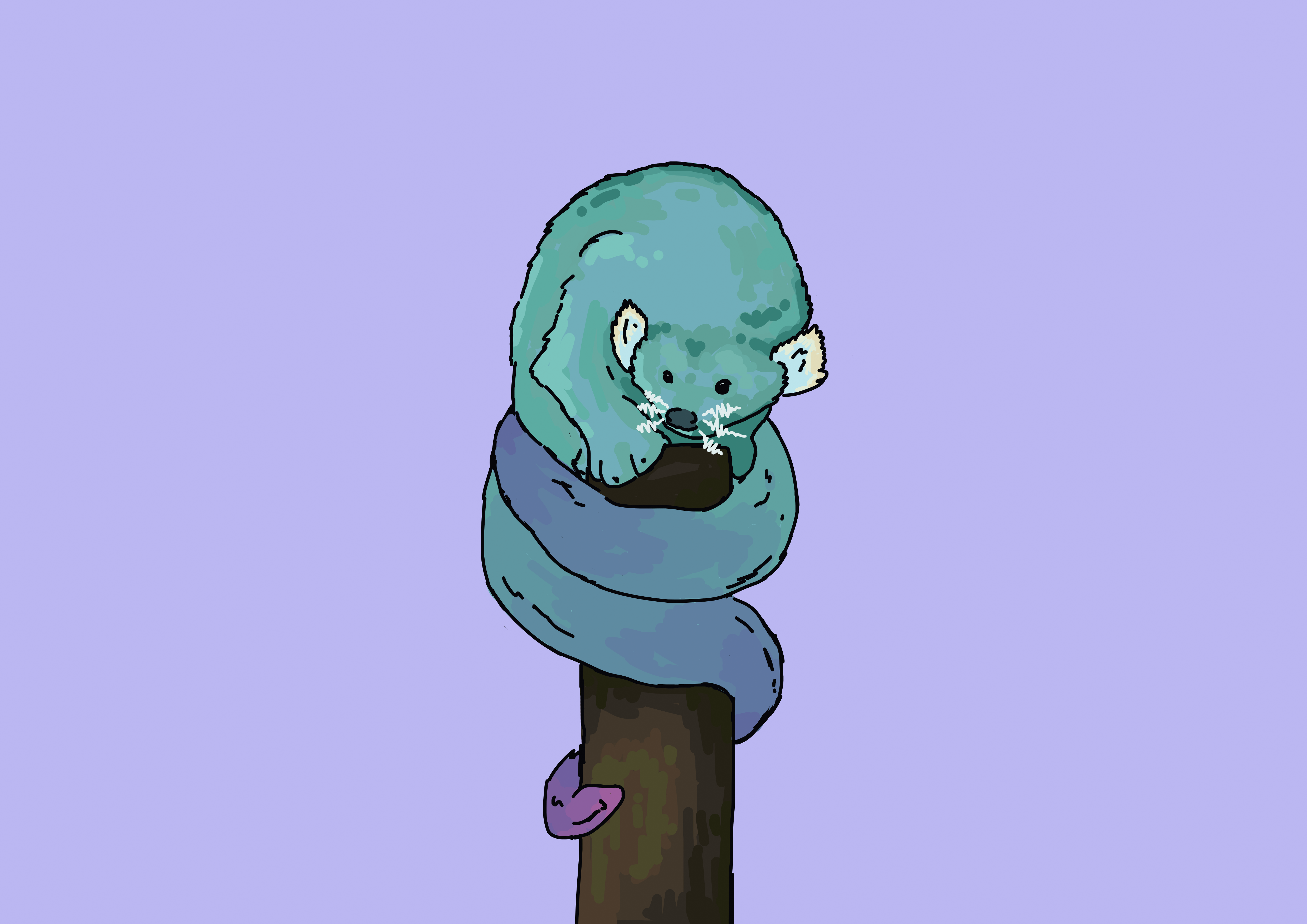
It is a deep shame that such a beautiful creature has nearly disappeared entirely from its native region. Electric-eared binturongs have had a doubled history on its home planet, having been hunted for its pristine fur.
Its two tails help keep the creature balanced when flitting through the forests of Gaenus. Our enclosure fits seven, who always go to rest in separate corners of their hutch, but wake up in one big fluffy mound together.
Their ears and whiskers help them conduct electricity, which they stun prey with. Sometimes they will cook the food we give them!
Its two tails help keep the creature balanced when flitting through the forests of Gaenus. Our enclosure fits seven, who always go to rest in separate corners of their hutch, but wake up in one big fluffy mound together.
Their ears and whiskers help them conduct electricity, which they stun prey with. Sometimes they will cook the food we give them!
Current Events
WorldEmber Prep
Petting Zoo Day
Autumn Feed Week
WorldEmber Prep
Petting Zoo Day
Autumn Feed Week
Echo Crawler
Spelurepta resonaras Data Deficient
Crawling upside down along the caves of planet Xiskin are echo crawlers. They use echolocation to navigate these lightless tunnels, and they hunt whatever creature they come across.
These furless primate-like animals have long, spindly fingers to grasp at tunnel ceilings. They move in silence, their giant, useless eyes creeping out every visitor that makes eye contact with them.
We've had several reports of these animals showing up in visitor's dreams, so be careful!
These furless primate-like animals have long, spindly fingers to grasp at tunnel ceilings. They move in silence, their giant, useless eyes creeping out every visitor that makes eye contact with them.
We've had several reports of these animals showing up in visitor's dreams, so be careful!
Eloqueel
Thymochelis spiladis Critically Endangered
Don't squeal when the eloqueel jumps out of the water to nip at you! Visitors are completely safe, though these apex predators cannot reach. Besides, they are so small they pose very little threat.
Eloqueels are dominant predators of a micro-ecosystem, a very small underwater cave deep underneath Razhea Capita. While their native range is at risk of total destruction any time now, we've created a replica at the zoo. Visitors wander around a recreation of the planet's Underworld, where you'll find many unusual creatures.
Eloqueels are dominant predators of a micro-ecosystem, a very small underwater cave deep underneath Razhea Capita. While their native range is at risk of total destruction any time now, we've created a replica at the zoo. Visitors wander around a recreation of the planet's Underworld, where you'll find many unusual creatures.
Erebeetle
Agelastica eres Least Concern
These tiny beetles mimic the ereberry, a poisonous fruit. They sit on these berries and eat them, which provides them natural protection as every living creature in the maze forests know to avoid these berries.
You'll find our erebeetles in a beautiful cylindrical enclosure in the 31st Insect House, where an entire colony thriving on a giant ereberry bush.
You'll find our erebeetles in a beautiful cylindrical enclosure in the 31st Insect House, where an entire colony thriving on a giant ereberry bush.







This is so amazing. I'm really looking forward to when you're finished. A fat lot I care that it ends up being 10k words long :).
Here are my Entries for the water continent Ulűri̋qi̋
Thank youuu! I'm really excited to have this finished :D