
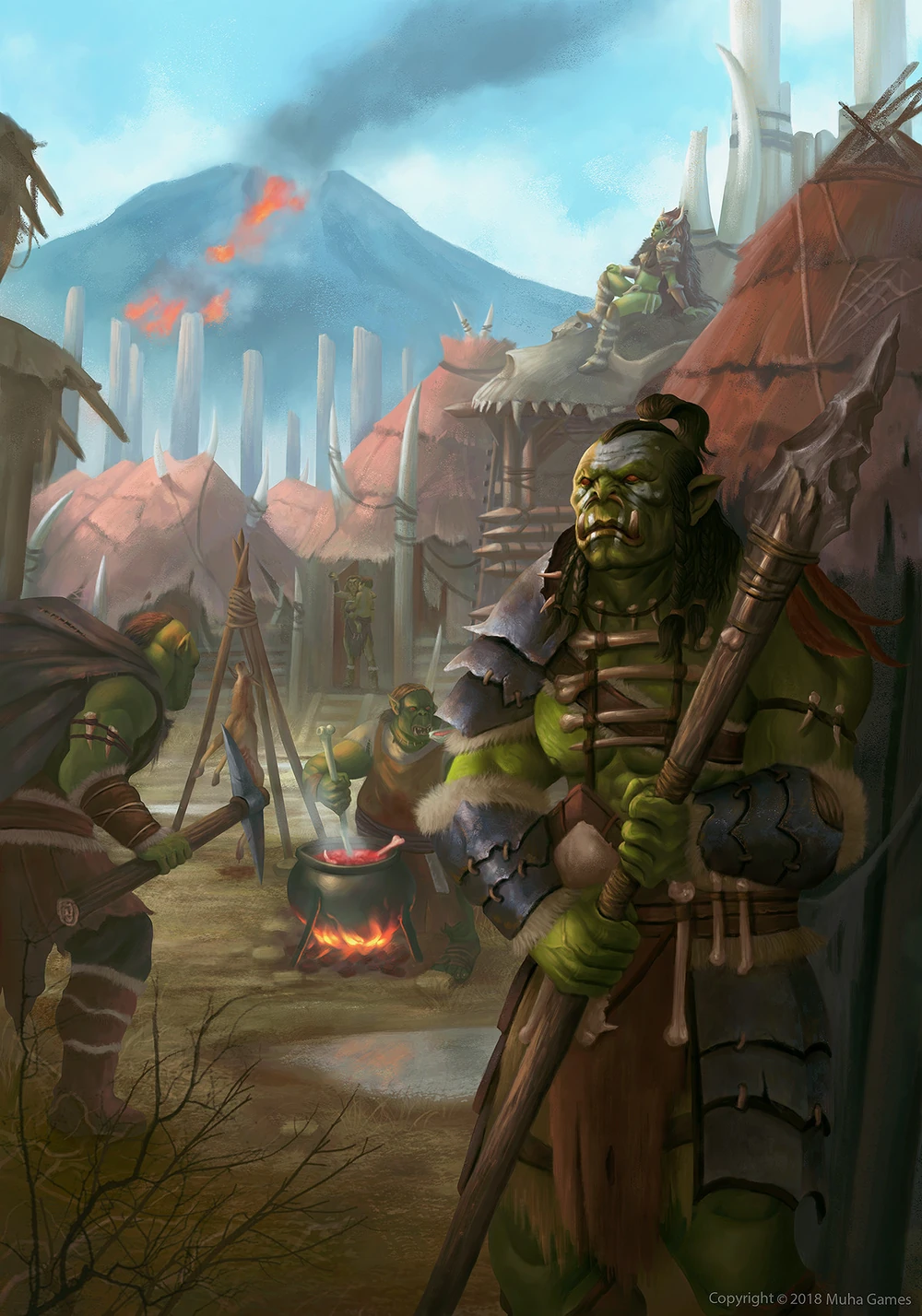
Orcs
While the orcish species seems to have arisen during the latter years of the first human civilizations, the orcs are not known to history for establishing great nations or securing stability for their people through settlement, agriculture, or commerce (although a handful of lesser-known Orcish Kingdoms from antiquity are referenced in some ancient lore of the dwarves and elves). Considered to be little better than sentient monsters by many other peoples, most orcsish societies are structured around a clear tribal system bound by blood, clan loyalty, and codes of honor, with rich oral cultures and spiritual traditions that would rival those of the greatest empires of human, elf, or dwarf–if any orc were willing to betray their people by sharing these with outsiders.
Perhaps the most defining quality of most orcish cultures is the veneration of strength and prowess on the battlefield. Combined with their shorter lifespans and nomadic hunter-gatherer lifestyle, this quality is seen by many other species as barbaric to the point of savagery; the propensity of orcish clans to raid and pillage the settlements of outsiders and occasionally band together in massive hordes to wage war against those they consider more worthy opponents has done little to challenge this prevailing view among the peoples of Yyrda.
However, while orc tribes throughout the Westerlands and the Reach Unsung have a less-than-savory reputation to many, a minority of orcs have in the past left their clans to integrate themselves into the societies of others–at times due to dissatisfaction with their tribe, but more often as the result of following their particular code of honor, choosing to test themselves among a people they see as demonstrating particular strength. Thus the particular nobility and code of honor of many orcs can be seen in their service in the armies of other peoples; it is not uncommon to find an orc in a position of military leadership among the forces of the humans and elves, and occasionally even among the dwarves.
The dwarves have a unique relationship with orcs; while the dwarves have a longstanding rivalry with their ancient neighbors, the elves, the orcs have been among the greatest foes the Dwarves of the Golden Citadels have ever known. Perhaps due to many orcs’ preference for the mountains and tunnels beneath the earth to the open sky, perhaps due to identifying dwarven warriors in their mountain homes as particularly worthy foes, throughout history orcs seem to have been drawn into conflict with dwarves more than any other people; in fact, some of the great Citadels of old fell to orc hordes in the final days of the Dragon War and are rumored to remain in their hands to the present day. As a result of this, many dwarves have an instinctive fear and hatred of orcs; and yet, at the same time, they among all the peoples of Yyrda are the most likely to recognize the hidden nobility of this warrior race.
[WIP]
Gruumsh One EyeWhile no orc is inherently evil, those clans that adhere to the ancient worship of Gruumsh One Eye are among the most cruel and callous of their people, to the point that they are often regarded with discomfort and only the barest tolerance by other orcish clans. [The Blue Orc Clan of the Greater Greenskin Plains in the Reach was an examples of this.]
Perhaps the most defining quality of most orcish cultures is the veneration of strength and prowess on the battlefield. Combined with their shorter lifespans and nomadic hunter-gatherer lifestyle, this quality is seen by many other species as barbaric to the point of savagery; the propensity of orcish clans to raid and pillage the settlements of outsiders and occasionally band together in massive hordes to wage war against those they consider more worthy opponents has done little to challenge this prevailing view among the peoples of Yyrda.
However, while orc tribes throughout the Westerlands and the Reach Unsung have a less-than-savory reputation to many, a minority of orcs have in the past left their clans to integrate themselves into the societies of others–at times due to dissatisfaction with their tribe, but more often as the result of following their particular code of honor, choosing to test themselves among a people they see as demonstrating particular strength. Thus the particular nobility and code of honor of many orcs can be seen in their service in the armies of other peoples; it is not uncommon to find an orc in a position of military leadership among the forces of the humans and elves, and occasionally even among the dwarves.
The dwarves have a unique relationship with orcs; while the dwarves have a longstanding rivalry with their ancient neighbors, the elves, the orcs have been among the greatest foes the Dwarves of the Golden Citadels have ever known. Perhaps due to many orcs’ preference for the mountains and tunnels beneath the earth to the open sky, perhaps due to identifying dwarven warriors in their mountain homes as particularly worthy foes, throughout history orcs seem to have been drawn into conflict with dwarves more than any other people; in fact, some of the great Citadels of old fell to orc hordes in the final days of the Dragon War and are rumored to remain in their hands to the present day. As a result of this, many dwarves have an instinctive fear and hatred of orcs; and yet, at the same time, they among all the peoples of Yyrda are the most likely to recognize the hidden nobility of this warrior race.
[WIP]
Gruumsh One Eye
