
Black Legion

The Black Legion Empire
  • Capital: Rome
  • Continent: South Azure
  • Region: Eastern Coast (Desert Region)
  • Government: Imperial Autocracy with a Senate
  • Ruler: Caesar Lucian Kaeso Dravenius (descendant of Kaeso Antius Tarsicius)
  • Military Strength: 20 Legions
  • Allies: The Elvin Army of the Black Moon Empire, the Realm of the Minotaurs of Lavyrinthos
  • Enemies: The Realm of Avalon, the Sun Elves of Imyfelon
  • Climate: Arid desert with fertile river valleys
  • Primary Exports: Grain, olive oil, glass, stone, papyrus, spices, and bronze weapons
  Historical Overview   9800 AD – The Lost Arrival:   After months adrift on the Sea of Odin, the II and XI Legions of the ancient Roman Empire were presumed lost. Caught in monstrous storms and pursued by sea serpents, they were eventually hurled through a violent maelstrom—emerging on the shores of an unknown continent later called South Azure.   Believing they had reached the coast of Sappire, General Kaeso Antius Tarsicius led his exhausted forces against the fortified coastal city of Gonsum. The siege lasted three days, and the city fell to disciplined Roman steel. Only after taking the city did Kaeso realize they had found not Sappire—but an uncharted land rich with life, minerals, and magic.   The Founding of Rome:   Six months after the conquest of Gonsum, Kaeso renamed the city Rome, declaring himself Caesar and forming a new empire from the remnants of his two legions. He unified the II and XI under a single black banner—the Aquila Obsidian—and proclaimed the birth of the Black Legion Empire in 9795 AD.   From Rome, Kaeso led his forces to subdue neighboring cities and tribes across the eastern deserts of South Azure. He instituted Roman-style governance, road building, aqueducts, and military organization. Rome soon became a center of commerce and power, rivaling the ancient glory of its namesake.    Expansion and Alliances:    As centuries passed, the Black Legion Empire expanded relentlessly along the eastern coast of South Azure, its banners flying from the Sappire Ocean to the Sands of Thal’Kor. Through conquest and assimilation, the Empire forged vast networks of roads, garrisons, and trade routes that transformed the desert frontier into the heartland of civilization.   During its western campaigns, the Empire clashed with the Black Moon Elves, who ruled the dense jungles of the northwestern reaches of South Azure. The wars between Rome and the Elves raged for decades—bloody, magical, and unrelenting. Yet, in time, both sides came to see the futility of endless conflict. A treaty was brokered between Caesar Tarsicius II and High King Vaelion Nocturne, sealing an enduring alliance of power and necessity. From that day forward, the Black Legion and the Black Moon Empire stood as wary but powerful allies, their combined strength unmatched in all of South Azure.   Further to the southwest, the Empire’s legions waged bitter wars against the Minotaurs of Lavyrinthos—towering warriors who dwelled in labyrinthine cities carved into volcanic stone. These battles were legendary, marked by brutal sieges and unmatched displays of valor on both sides. Ultimately, respect was earned through blood. The Minotaurs, impressed by Rome’s discipline and Caesar’s iron will, swore allegiance as honored auxiliaries of the Empire.   Today, the Minotaur Cohorts stand among the Empire’s most feared allies—unyielding in loyalty, unmatched in strength, and bound to Rome by both respect and conquest.   At its height, the Black Legion Empire rivaled the the 5th Dynasty of the Zavabu in power and reach, becoming the second largest empire of North and South Azure before the Fall of Atlantis reshaped the world’s balance.   The March North Following the Fall of Atlantis, the Black Legion Empire turned its gaze northward. With the seas calmer and trade routes open once more, Caesar’s legions crossed into North Azure, seeking new lands to conquer and subdue. Through calculated campaigns of steel and diplomacy, the Empire established strong footholds in the Ephesus Region, securing ports, fortresses, and fertile territories that would feed Rome’s ambitions for centuries to come.   It was during this northern expansion that a powerful alliance was forged with the Harker Clan, rulers of the rugged northwestern highlands of North Azure. The Harkers, known for their formidable warriors and ancient lineage, saw in the Black Legion both opportunity and destiny. Through this pact, the Empire gained northern allies skilled in both strategy and sorcery, while the Harkers gained access to the wealth and infrastructure of Rome’s dominion.   In time, the great city of Ephesus rose as the Empire’s northern capital—its marble walls gleaming beneath the Azurean sun. Governed by the Harker family, Ephesus became the bastion of Black Legion power in North Azure, standing as both fortress and symbol of imperial might.   Yet, even the strongest alliances can falter. During the War of the Ancients, the Harker line was broken, and Ephesus fell to the forces of Avalon. Still, the Empire did not perish. Though diminished, the Black Legion endures—its legions disciplined, its will unbroken, and its banner of obsidian black still casting a long shadow across half of South Azure.

Structure

Government and Society The Black Legion Empire retains the Senatorial structure of old Rome. The Senate debates trade, law, and military strategy, yet Caesar holds absolute power—his word is law, his will divine.   Caesar Lucian Kaeso Tarsicius, the current ruler, is a direct descendant of Kaeso Antius Tarsicius.   Known as “The Iron Serpent,” he is both feared and revered for his ruthless campaigns and uncompromising rule.   The Empire’s architecture mirrors the Roman style—massive stone temples, marble forums, amphitheaters, and desert aqueducts stretching for miles.

Culture

Economy and Culture:   The Empire thrives on desert agriculture, using irrigation canals and river-fed oases. Grain, olives, and dates are the lifeblood of Rome’s markets. Slaves, merchants, and scholars walk the same sunbaked streets.   Black Legion artisans are masters of bronze work, mosaics, and desert glass, exporting their wares across Azure. The Empire values order, conquest, and glory, teaching that civilization is born through discipline and war.

Public Agenda

Present Day   In the modern age, the Black Legion Empire endures—strong, proud, and unyielding. Their banners once again march north, as Caesar Lucian whispers of reclaiming the lands lost to Avalon.   The legions gather. The drums of Rome beat in the desert wind. And once more, the Black Eagle of the Legion prepares to take flight.

Military

⚔️ Military The Black Legion’s might is its core strength. With 20 active legions, each consisting of 5,000–6,000 soldiers, the Empire’s army is disciplined, merciless, and ever-expanding.   Elite Units Include:
  • Praetorian Cohort: Caesar’s personal guard.
  • Legion XIII Draco: A desert legion that rides scaled sand drakes.
  • Legion IV Lavyrinthos: Composed of Minotaur warriors trained in siege warfare.
  • Legion IX Obsidian: Specialists in night raids and stealth tactics.

Religion

Faith and the Pantheon of Rome:   The people of the Black Legion Empire revere a pantheon that reflects both their Roman heritage and their reverence for the ancient powers of Azure. Religion is not merely faith in the Empire—it is its foundation, a sacred bond between mortals, gods, and dragons.
  • At the heart of the imperial faith stands a dual reverence:
  • the Pantheon of Rome, honoring the old gods of war, wisdom, and civilization; and Thanika, the Great Dragon Queen, mother of all dragonkind and eternal guardian of divine order.
  • The Roman Pantheon of the Empire
  • The traditional Roman deities remain pillars of imperial society, their temples rising from the sands of South Azure to the cliffs of Ephesus.
  • Mars Invictus, god of war and conquest, is the Empire’s most honored deity. His priests bless every legion before battle, and his symbol—the crimson spear—flies beside the black eagle on banners across the Empire.
  • Jupiter Dominus, king of gods and guardian of Rome, is invoked by emperors and senators alike. His will is said to guide the Caesar’s rule.
  • Venara Lux, goddess of beauty and prosperity, represents the flourishing of Rome’s people beneath the desert sun.
  • Mercurius of the Sands, patron of trade and travelers, is widely worshiped among merchants and caravan masters who brave the Azure deserts.
  • Zahara the Burning Eye, a local goddess of sun and flame, was once a desert spirit absorbed into the Roman pantheon. Her followers believe she watches over Rome’s expansion, her light both scorching and divine.
  • Thanika, the Great Dragon Queen
  Above all deities, one name inspires both awe and silence—Thanika, the Dragon Queen. Known as the Mother of Flame and Scale, Thanika is said to have ruled the skies of Azure long before the arrival of men. To the faithful, she represents divine sovereignty—the living embodiment of order, creation, and power.   The Caesars of Rome claim their authority through the Blessing of Thanika, a rite performed by the Dracari Priests in the Temple of the Obsidian Flame at the heart of Rome. It is believed that during the first coronation, Caesar Kaeso Antius Tarsicius was visited by Thanika in a dream of fire, where she granted him the right to rule in her name—marking the birth of both Empire and divine dynasty.   Her worship blends ancient Roman ritual with draconic reverence: offerings of gold, flame, and blood are made beneath massive statues of dragons carved from black basalt. To defy the Caesar is to defy Thanika herself, for the Emperor is considered her chosen vessel on earth.   Faith in Daily Life:   Temples to the Roman gods and to Thanika dominate every city and military outpost. Priests, augurs, and flame-tenders walk beside soldiers and citizens alike. Festivals are lavish, marked by gladiatorial combat, sacred fire dances, and the release of golden-scaled doves at sunset.   The Empire’s motto, inscribed upon every temple archway, reads:   “By Flame and Blood, the Dragon Reigns Eternal.”   This faith binds the people together—soldiers, slaves, nobles, and scholars alike—under the gaze of gods old and new, and the eternal wings of Thanika, Queen of Dragons.

Agriculture & Industry

Wine, Grapes, Olives, Grains, Fruit, Fishing, Gold, Silver, Copper, Weapons, Armor, Pearls, Art, Pottery, Ships, Slaves, Rugs, Jewelry, Whaling, and Whale Oil.

Trade & Transport

Trade routes currently go to all five continents as well as road routes to the realms of Black Moon, and Lavyrinthos.
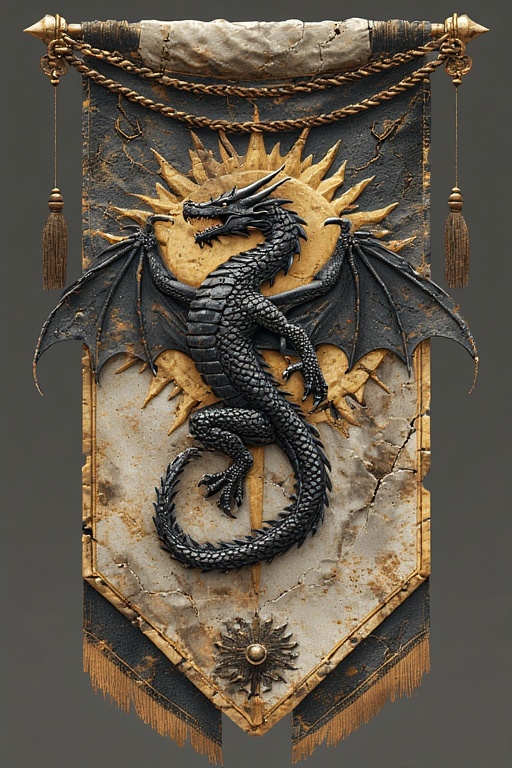
Roma invicta


Comments

Please Login in order to comment!