
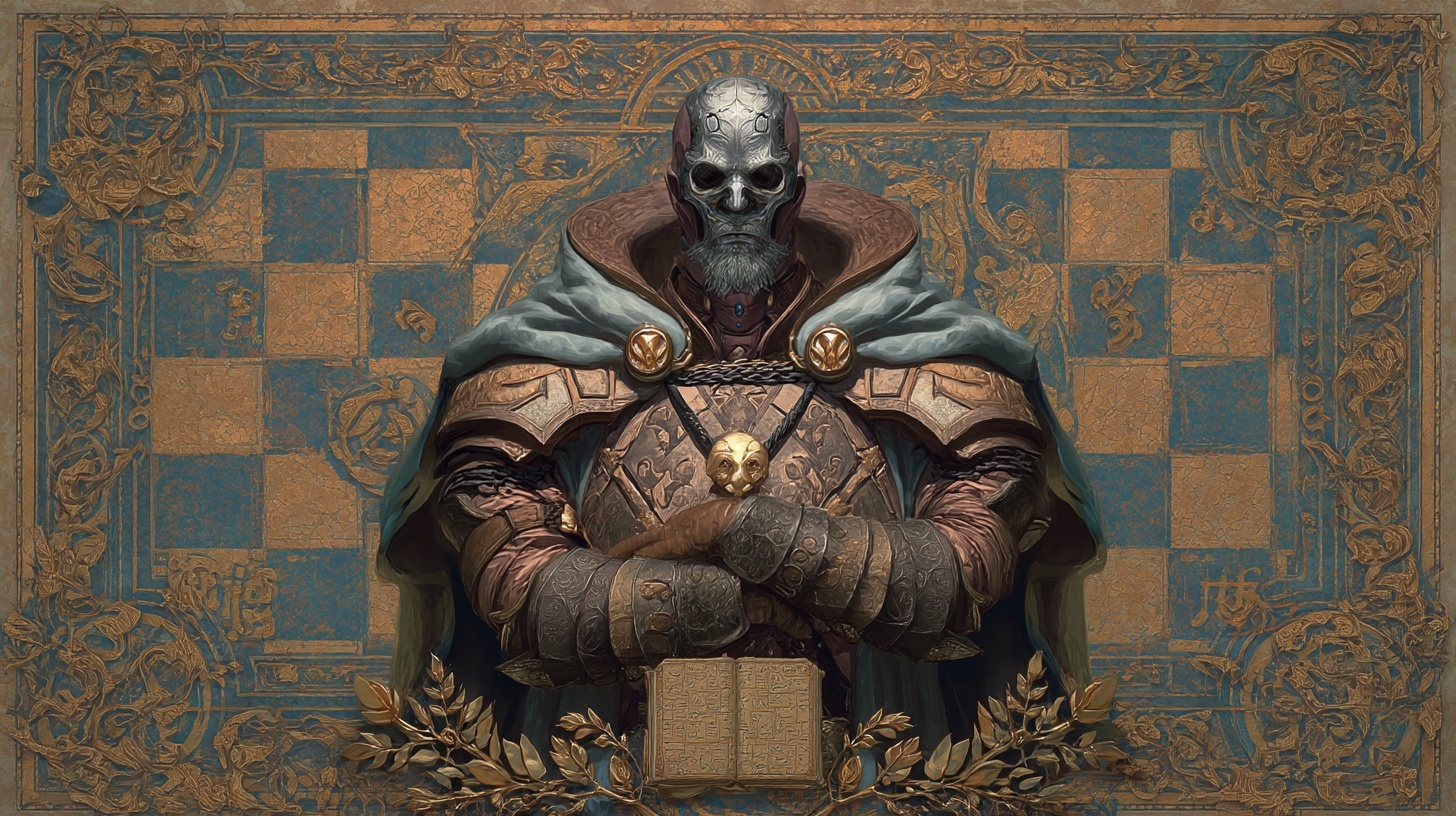
Velkhar
Velkhar: The Grand Strategist
Domains: War, Order Alignment: Lawful Neutral Titles: The Grand Strategist, The Bronze Mantle, The Unseen Blade
Overview
Velkhar is the god of tactics, discipline, and calculated war. Where Sinbog exalts fury and strength, Velkhar embodies the brilliance of planning, maneuver, and patience. He is honored by generals, advisors, and even diplomats — any who understand that true victory lies not in brute force, but in mastery of the board.Velkhar is not a warmonger, nor a pacifist. He is the architect of wars that end swiftly, efficiently, and with purpose. His teachings stress control, foresight, and unyielding order — whether in battle or in the governance of society.
Mythology
The Bronze Mantle: In the days of the first empires, Velkhar descended in mortal form and served as a tactician to a nameless king. With no sword, he won every war the king waged — not with strength, but with strategy. When the king grew prideful and sought to conquer for greed alone, Velkhar vanished — leaving behind his cloak of bronze thread and a warning: “Tactics without purpose is tyranny.”The Fourfold Game: Legends say Velkhar designed the first war game, a massive board called the Fourfold. It reflects real conflicts in miniature, and winning a match is said to grant visions of future battles. Some scholars claim he still plays this game against gods, mortals, and fate itself.
The Broken Tower: A tale tells of Velkhar watching a siege unfold for forty days without interfering. When the tower fell, he spoke only one lesson: “That which cannot be saved should not cost a thousand lives.”
Appearance
Velkhar appears as a tall, lean man clad in regal bronze and slate-grey robes, his face partially masked in polished steel. His eyes are like twin chessboards — layered with ever-shifting patterns. One hand often holds a scepter tipped with a miniature fortress; the other, a scroll sealed with wax.Symbol
A circle bisected by four lines forming a grid — representing the Fourfold Game — with a tower at the center and a laurel at the edge. Often carved into armor, tablets, and war banners.Worship and Practices
Velkhar’s worship is structured, quiet, and often tied to study and preparation.Common Practices: – Strategic fasts before war councils – Stone-table rituals using carved tokens for guidance – Teaching sessions and meditative lectures – Oaths of discipline sworn by officers and planners
Temples: His temples resemble libraries or war rooms more than places of praise. Maps, scrolls, and campaign records fill their shelves. The largest temple, The Bronze Gallery, lies in the capital of the Heilig Empire — part monastery, part academy.
Clergy and Orders
Order of the Bronze Mantle: Scholar-priests, battle tacticians, and political advisors trained in warfare, law, and ethics. They wear robes of slate and bronze and swear to guide without dominating.Public Perception
To rulers, Velkhar is both a boon and a burden. His wisdom ensures victory — but never without reflection. In the Heilig Empire, generals pray to him before campaigns. Among commoners, he is less adored, seen more as a stern force than a comforting god. Yet no strategist dares ignore his name.Legacy
Velkhar’s mark is carved into the blueprints of history. His lessons whisper through every treaty, every maneuver, every bloodless victory. Those who truly follow him do not seek war — they seek its end before the sword is drawn.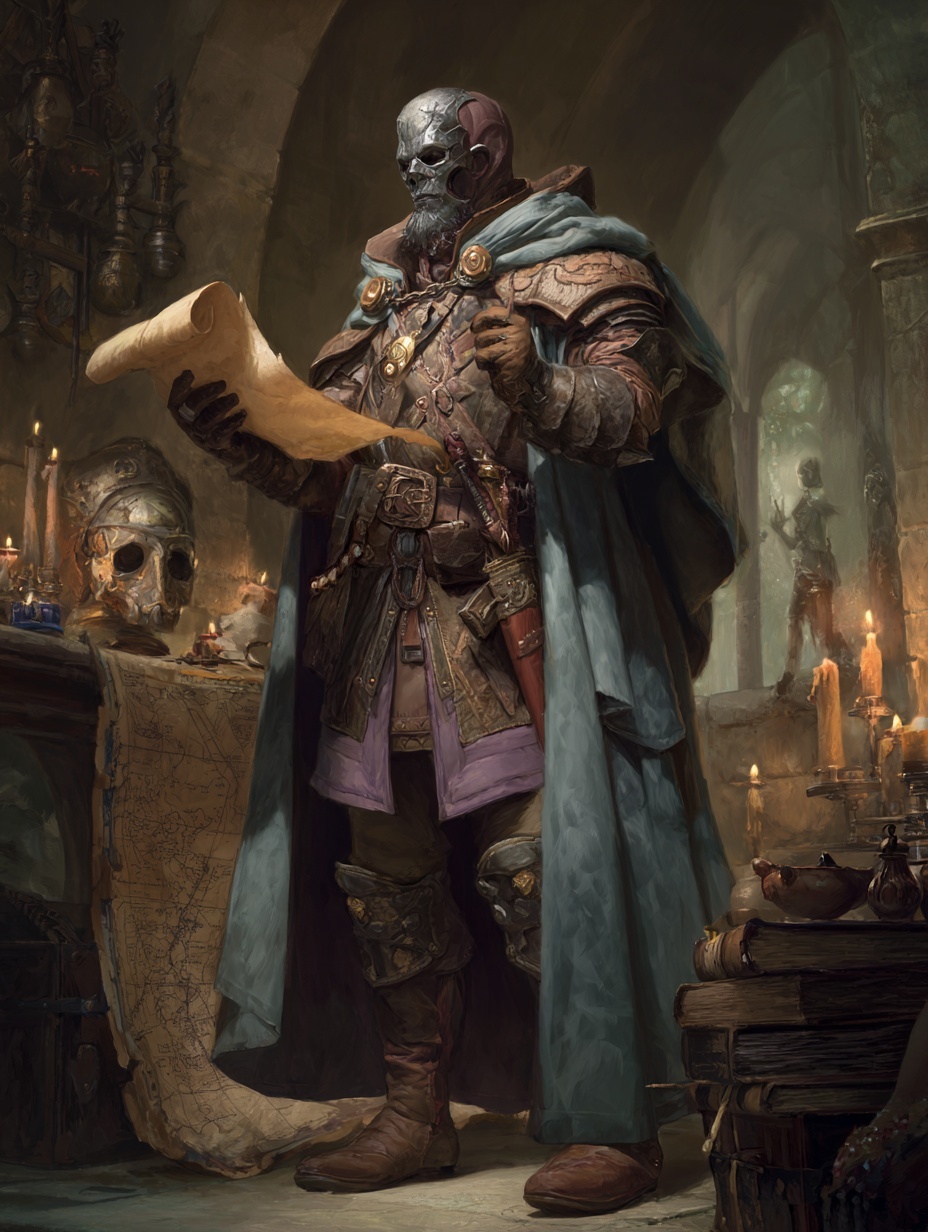
Children

Comments