
Thamira
Mother Thamira
Domains: Life, Nature, Peace Alignment: Neutral Good Titles: Mother Thamira, The Hearthmother, Lady of New Life, Keeper of the Fields
Overview
Mother Thamira is the quiet heartbeat of humanity — a goddess of fertility, family, healing, and harvest. She is prayed to at births, honored during planting, and remembered in lullabies passed from parent to child. Her love is not loud — it’s warm bread, soft rain, and the calm that settles after tears. Worshiped across villages, farms, and homes, Thamira embodies the peace of a life well-tended.Mythology
The First Cry: It is said Thamira was born in the moment the first child ever cried — her spirit shaped from the need to soothe and shelter. From that day, every breath of new life is her sacred song.
The Hand and the Seed: One tale tells of Thamira planting a single seed in a dying wasteland. Where it grew, a great orchard bloomed, and with it, the first village. Her followers believe even barren places can bloom under her hand.
The Cradle of Beasts: Some say she once wept for a hunted doe, and from her tears came the first domesticated animals — a divine gift to soothe and serve alongside mortals.
Appearance
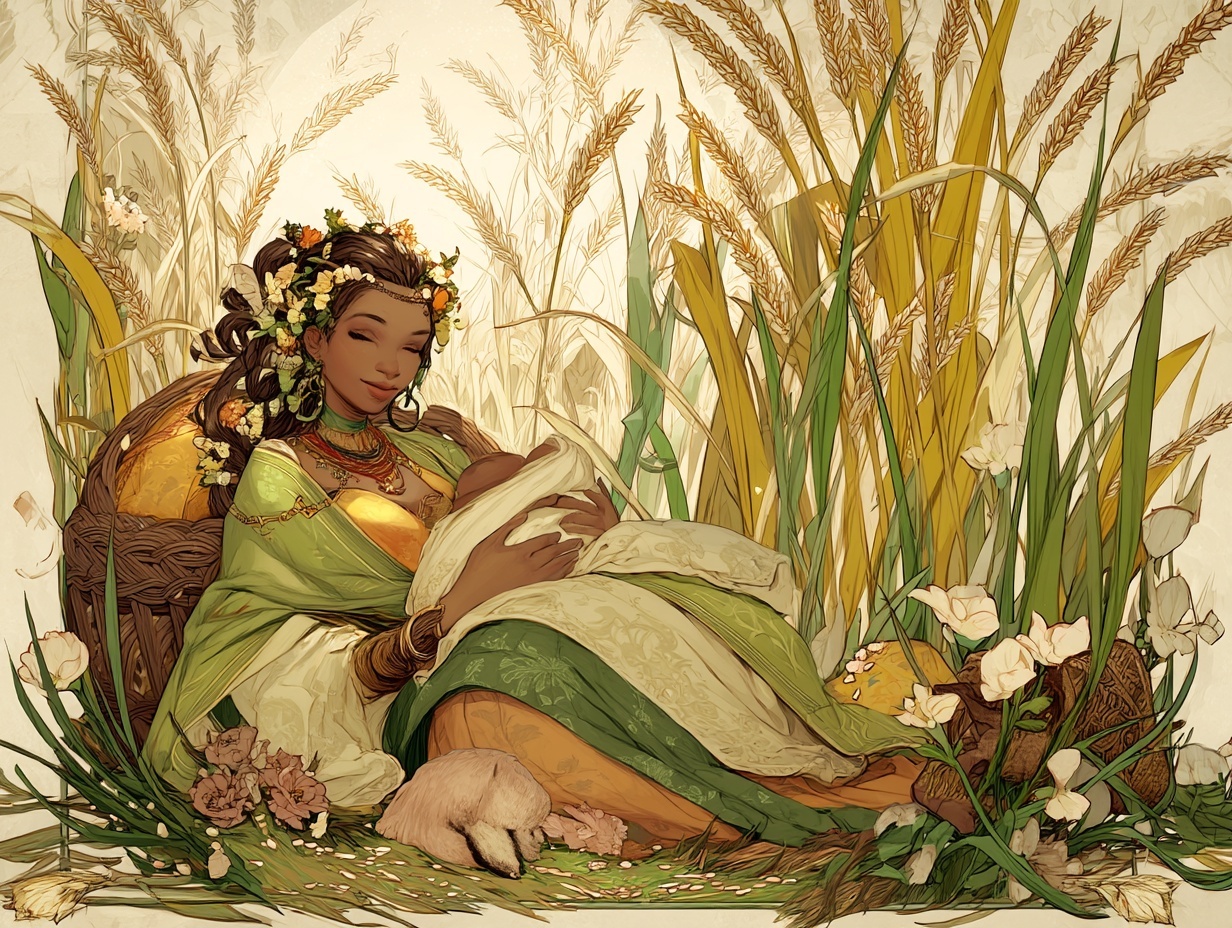
Thamira is depicted as a gentle, full-figured woman with soil-dark skin and eyes like polished walnut. Her long hair is often styled with flowers, ears of grain, or simple braids. Children and small animals gather naturally around her. Her clothes are made from woven flax and flowing green fabrics, always touched by sun and soil.Symbol
A stylized bundle of grain tied with a ribbon — often painted above doorways or etched into cradles, hearthstones, and family keepsakes.Worship and Practices
Mother Thamira is worshiped through simple, daily rituals — baking, planting, nursing, or lighting a candle at dusk. Offerings include bread, milk, seeds, or wildflowers placed near ponds, fields, or home shrines.Festivals and Rites: – Bloomtide: A spring celebration of planting and fertility – Cradlelight Eve: A midsummer vigil honoring childbirth, new parents, and those lost too soon – The Ribboning: A harvest tradition where villagers tie colored cloths to trees to bless future crops and children
Temples and Shrines
Her worship is mostly folk-based — small altars in kitchens, sacred groves, field shrines, and village wells. While few grand temples exist, her presence is widespread. The largest shrine to Thamira stands in the heart of the Eadlen Fields, surrounded by orchards, wheat, and songbirds.Clergy and Orders
Her clergy are often midwives, herbalists, caretakers, or farmers.The Ribbonmother Circle: A gentle order of wandering priestesses who travel to aid with births, bless crops, and mediate family disputes. They wear belts of knotted ribbons, each one a blessing gifted by a family they’ve helped.
Public Perception
Thamira is one of the most widely beloved deities across human lands. She is the protector of the home, the hope in the barren, and the comforter of grief. Even those who worship other gods often speak her name in moments of need.Legacy
Wherever children laugh, bread rises, or a seed finds soil — Thamira is near. Her teachings live on not in grand scripture, but in stories, lullabies, and the quiet strength of those who care for others.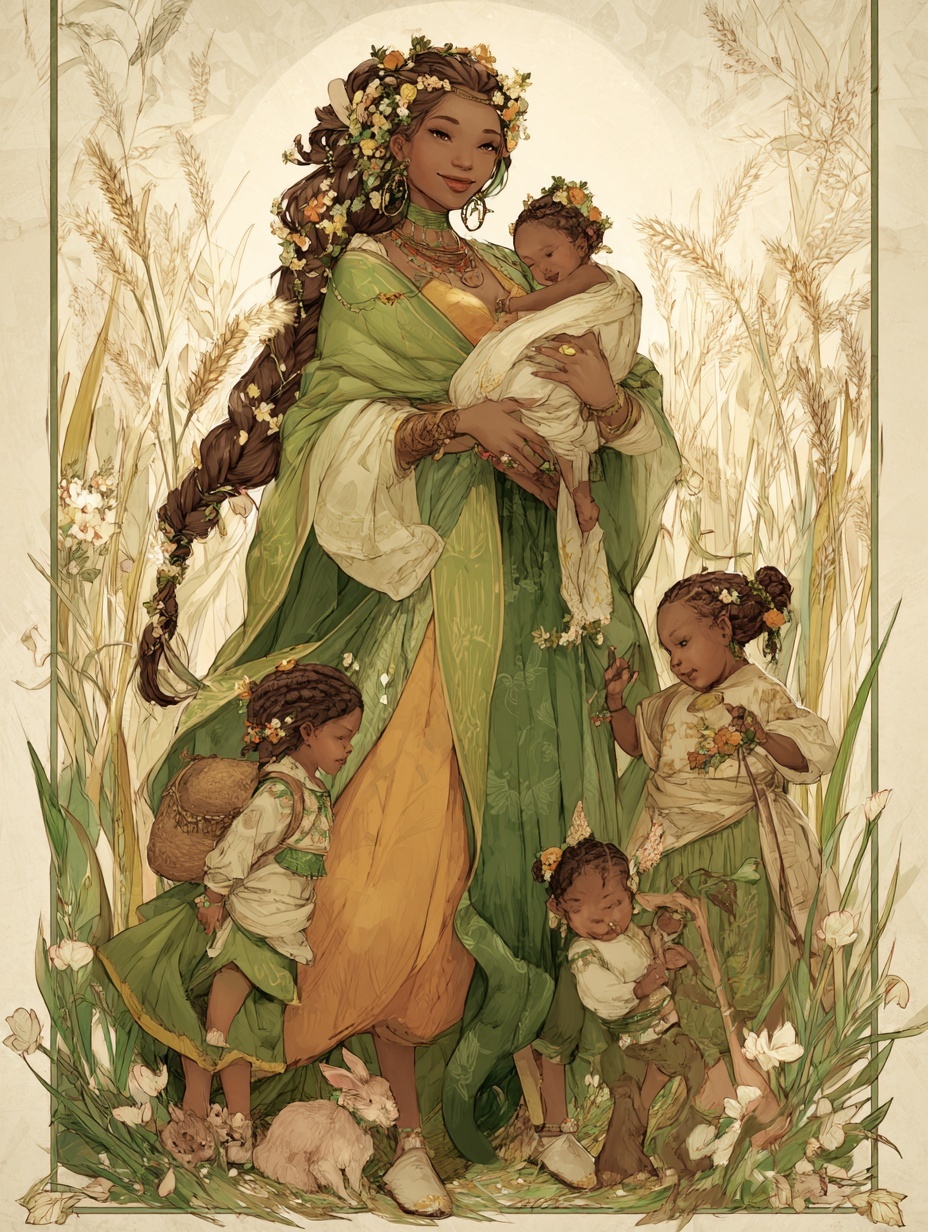
Children

Comments