
Mouren
Mouren: The Burdenbearer
Domains: Life, Grave Alignment: Neutral Good Titles: The Burdenbearer, He Who Endures, Silent Mercy, The Wounded Saint
Overview
Mouren is the god of mercy, suffering, and quiet endurance — a divine figure who takes the pain of others into himself. Where Soldeus brings radiant justice and Tenyari offers contemplative balance, Mouren simply bears the unbearable. He is prayed to in times of mourning, illness, or despair — especially by those who would rather suffer than let others endure pain.To worship Mouren is not to seek power — it is to understand the depth of sacrifice and the grace of silent compassion. His presence is felt in hospital beds, in final farewells, and in the whispered prayers of the grieving. He is not a god of salvation, but of shared burden.
Mythology
The First Wound: It is said Mouren was once a mortal who asked the gods to give him the pain of a dying child so that they might live. The gods granted his plea — and every plea that followed. Over time, his body broke under the weight of divine mercy, and he ascended — not in glory, but in fracture.Chains of the Hundred Sorrows: Mouren wears ethereal chains that float around him, each link forged from a life he once saved or a burden he accepted. They whisper softly in the voice of those he’s helped — not as torment, but as prayer.
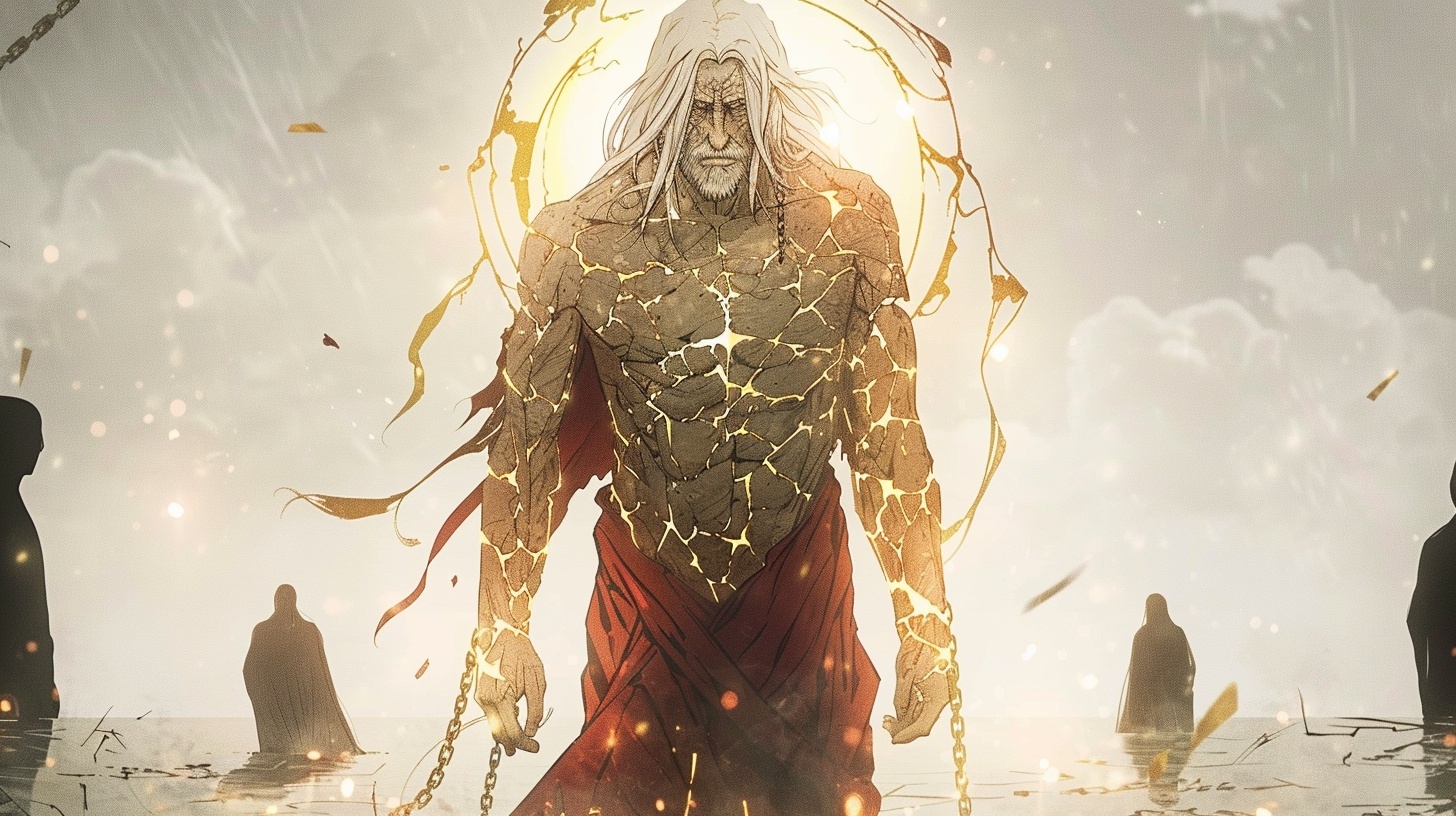
The Vessel Unbroken: His form is cracked — like porcelain or stone — glowing with gentle golden light from within. He is broken, but never shattered. This myth symbolizes that mercy often comes at cost, but is never weakness.
Appearance
Mouren appears as a tall, solemn figure with a body like cracked stone or ceramic, soft golden light glowing from within each fracture. Chains drift gently around his torso and arms, weightless yet ever-present. His face is weathered but kind, his long silvery-white hair flowing in an unseen wind. His robes are simple, stained in faded golds and deep reds — the colors of old wounds and gentle healing. Behind his head glows a faint, fractured halo of broken light.Symbol
A cracked circle or hollow vessel wrapped in a broken chain, glowing with inner light — representing endurance through suffering and the choice to carry another’s pain.Worship and Practices
Mouren’s followers value compassion, self-sacrifice, and quiet service. His temples are often found near hospices, graveyards, or places of healing. There are few grand cathedrals to his name — most shrines are quiet places lit by soft lanterns, where grief can be left and peace can be found.Common Rituals: – The Burden Prayer: spoken before taking on another’s suffering, whether emotional or physical – Offering a Shatterstone — a cracked stone placed in sacred water, symbolizing the breaking and healing of the soul – Wearing a single chain-link as a token of grief carried for another
Clergy and Orders
The Bound Hands: Clerics of Mouren often wrap their hands in cloth or chain, vowing to touch the world gently. They act as end-of-life caretakers, battlefield healers, and grief counselors. Their motto: “To carry what others cannot.” The Hollow Choir: A reclusive sect that chants prayers on behalf of the forgotten dead — said to absorb the unspoken suffering of lost souls.Public Perception
Among humans, Mouren is known as the god of the suffering poor, the dying, and the selfless. Many consider him too heavy to worship openly — but his name is whispered in times of unbearable pain. He is rarely worshiped by kings or generals, but never forgotten by those who have suffered.Legacy
Mouren’s legacy is etched in the quiet places: in bedside vigils, in the last touch of a healer’s hand, in the choice to suffer for another. His faith persists wherever pain exists — and wherever mercy dares to meet it.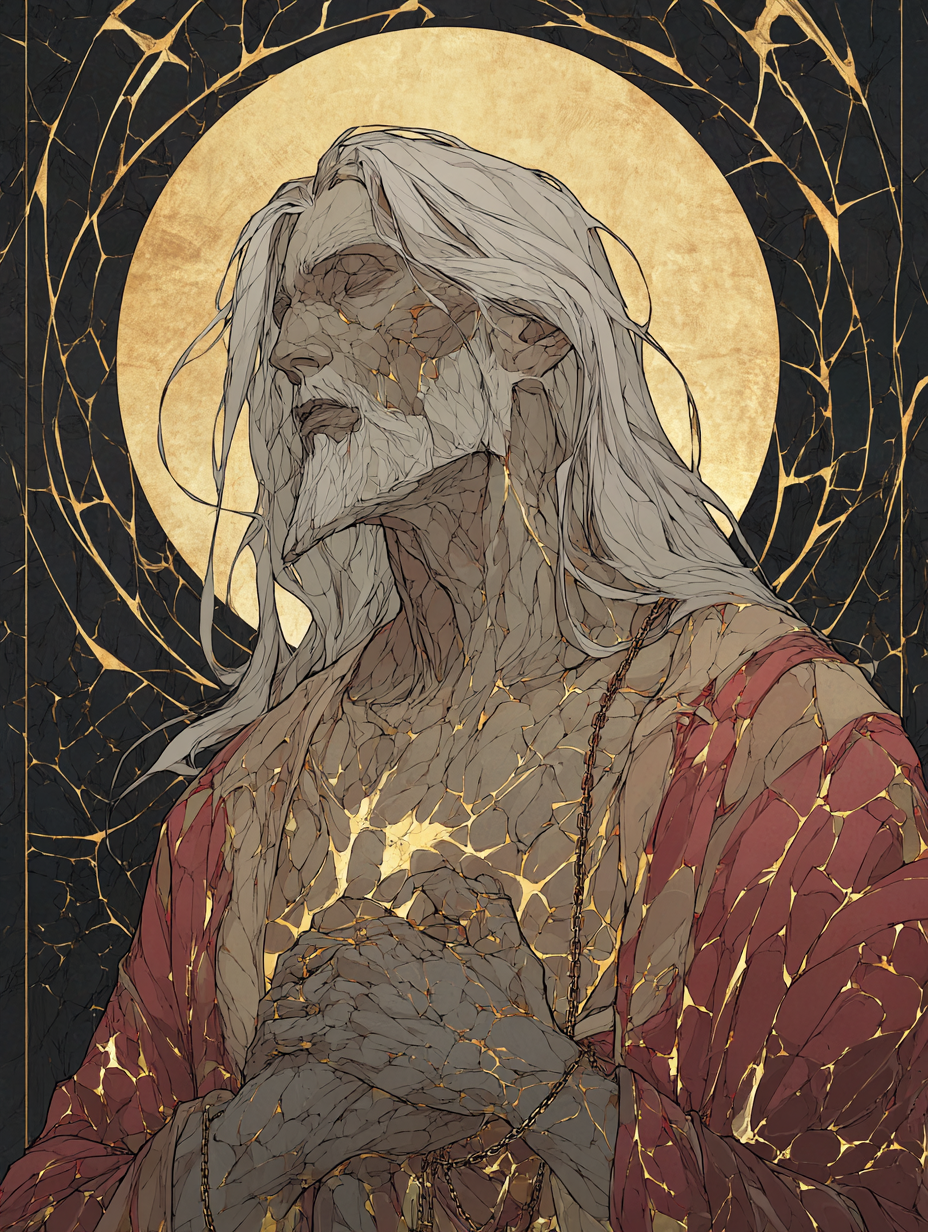
Children

Comments