
Aelos
Aelos: The Laughing Wind
Domains: Trickery, Light Alignment: Chaotic Good Titles: The Laughing Wind, The Chainbreaker, Friend of the Forgotten, Joy Unbound
Overview
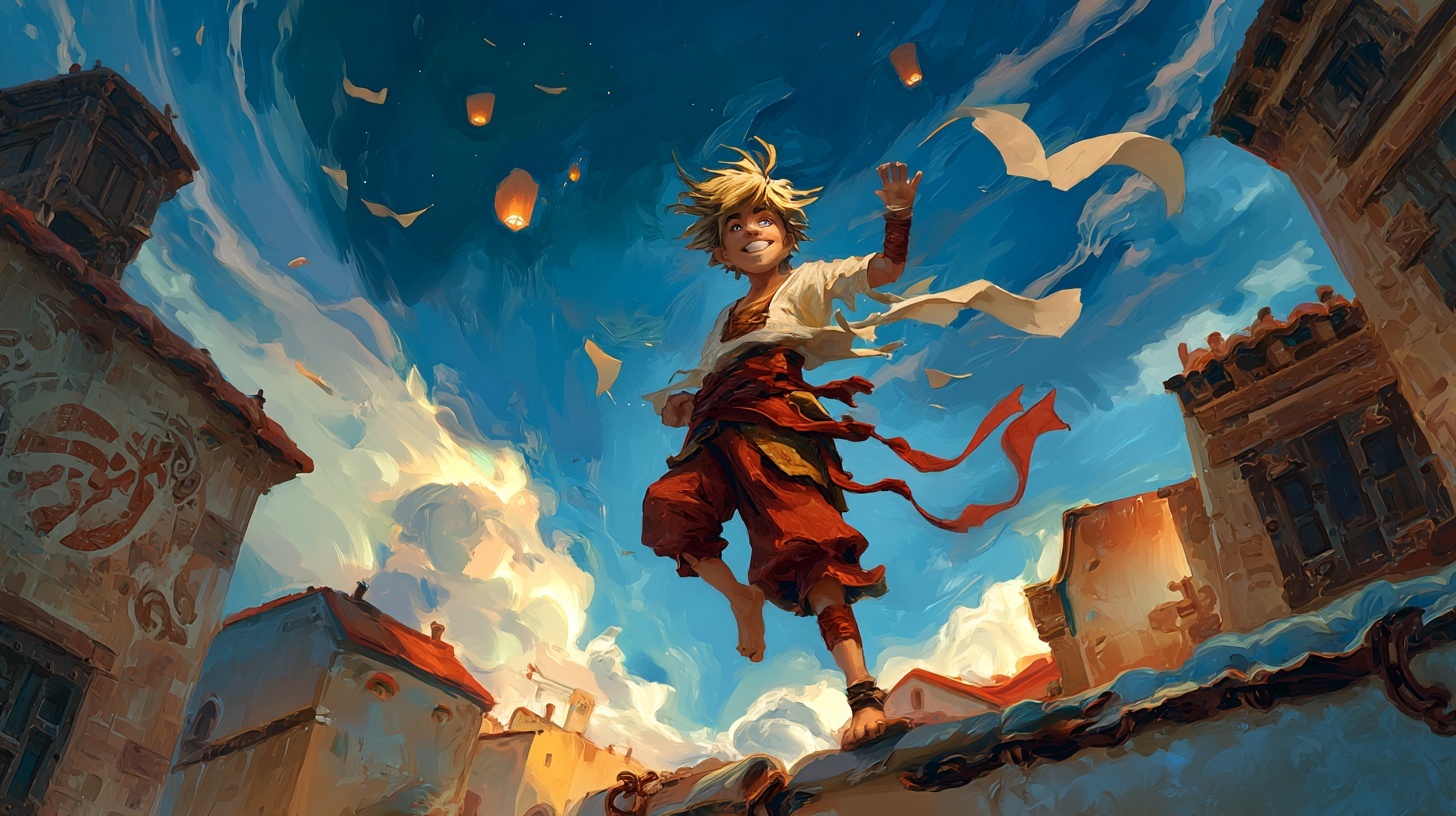
Aelos is the god of freedom, laughter, and wind — the breath of joy in a world bound by chains. He is worshipped as a barefoot boy with tousled hair, breezy robes, and eyes full of stars and mischief. Aelos does not rule from a throne, nor demand offerings. He dances through alleyways, leaps across rooftops, and skips through iron bars with a smile that shames tyrants.To mortals, he is a symbol of rebellion, joy, and hope — especially for the enslaved, the silenced, and the forgotten. Wherever chains are broken, songs are sung, or laughter echoes in defiance, Aelos is near.
Mythology
The Boy Who Danced Past Chains: No one agrees where Aelos came from. Some say he was born from the first breath of a dying slave who smiled at his captor. Others claim he danced out of the Dreaming before even the stars were born. What all agree on is that Aelos cannot be held. The gods once tried to cage him for mocking their order — but he laughed, vanished, and returned only to tie their robes together.The Wind That Freed a City: In one tale, Aelos whispered to a girl in chains and taught her to sing. Her voice sparked a riot, and a thousand slaves escaped under cover of wind and storm. To this day, rebels light paper lanterns in his name, hoping for a breeze to guide them.
The Kite and the Smile: It’s said that when a child laughs as a kite flies high, Aelos is watching — and when the string snaps, he catches the kite and sends it back when it’s needed most.
Appearance
Aelos always appears young — a boy or teen with wind-swept hair, skin kissed by sun and sky, and light, layered clothes that flutter even when there’s no breeze. His grin is infectious. His eyes shimmer like moving stars. He carries no weapon — only a ribbon, a flute, or sometimes a bundle of keys tied with string. His feet are bare, and he never leaves prints.Symbol
A broken shackle looped into a circle, its chain trailing off like a kite string caught in the wind. Often carved into coins, stitched into cloaks, or drawn in chalk where hope still lingers.Worship and Practices
Aelos’s faith has no temples — only stories, songs, and sudden gusts. His followers gather in street corners, campfires, and places where freedom was once lost. Offerings are simple: a shared joke, a dance, a lockpick placed beneath the stars.Common Rites: – Lantern flights and sky offerings during escape attempts or revolts – "Breathfast" feasts: shared meals with strangers, often eaten outside or on rooftops – Whispered prayers for wind before leaping, running, or defying unjust power
Clergy and Orders
The Laughing Ones: Wandering priests of Aelos — storytellers, illusionists, rebels, and freedom fighters. They wear loose sashes, bright colors, and mismatched jewelry taken from broken shackles. They rarely reveal their real names, instead taking nicknames given by others.The Ribbonbound: A secretive group who rescue the enslaved and smuggle them to safety. Each wears a single white ribbon — tied to Aelos’s promise that no cage lasts forever.
Public Perception
Loved by the lowly and feared by the powerful, Aelos is a symbol of dangerous joy. In the Heilig Empire, his worship is tolerated among bards and performers, but outlawed in prisons and slave-holding cities. Among nomads, rebels, and wandering souls, he is called the Friend Who Never Stops Running.Legacy
Aelos’s name is carved into secret doors, whispered in stormwinds, and etched into the memory of every soul who has ever longed for freedom. His legacy is not a kingdom — it’s a world a little less afraid, one smile at a time.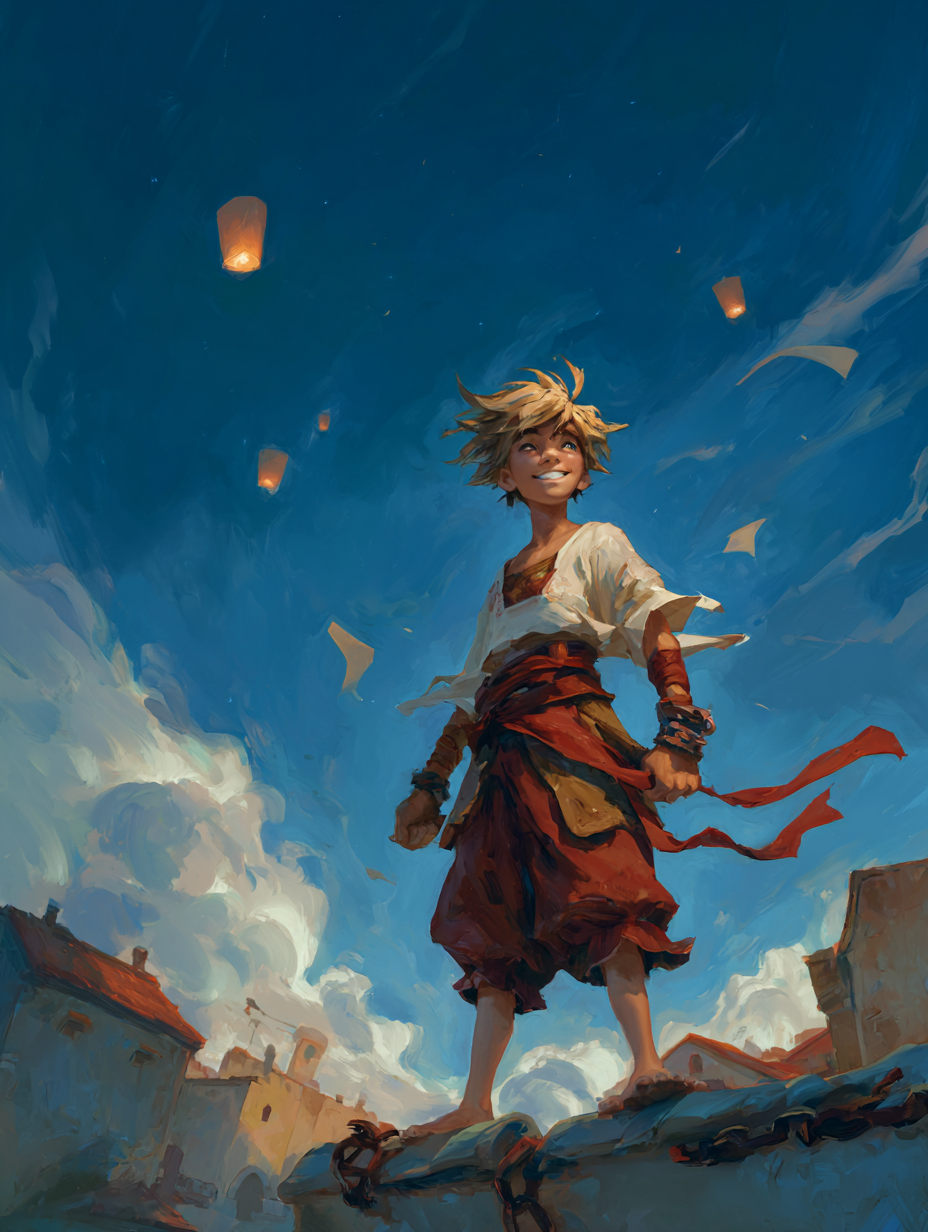
Children

Comments