
Al-Zahira
⚠️ Content Warning
This article may contain mature themes, including homoerotic content, complex power dynamics, sexual encounters with vampires and anthropomorphic beings, as well as other adult material.
Reader discretion is advised.
TABLE OF CONTENTS is in the World Navigation
Nestled between the sun-burned deserts and the glittering edge of the Mediterranean, Al-Zahira stands as a jewel of endurance and grace — a realm where ancient Djinn legacies still shape the rhythm of daily life. Its people, the Jannatari, have cultivated prosperity through trade, artistry, and elemental wisdom, guided by the sacred flame of the Sha’irat al-Nar.
Once courted by empires yet never conquered, Al-Zahira balances on a delicate line between tradition and modernity. White-washed cities shimmer beneath golden domes, caravans wind through the Dune Sea toward the holy oasis of Mahrah, and scholars debate the harmony of fire and reason in marble halls.
To outsiders, it is a land of splendour and paradox — mystical yet pragmatic, devout yet worldly. To its own, Al-Zahira is not merely a kingdom, but a living testament to the belief that civilisation, like fire, must be tended: bright, disciplined, and eternal.
Structure
Al-Zahira is governed through a highly centralised court bureaucracy that combines royal absolutism with religious legitimacy.
All authority flows from the Sultan in Mahrah, whose word is both law and decree of the Djinn-blessed line. Civil administration, faith, and the army are formally distinct but interdependent branches of one divine order.
1. The Sultan (al-Sulṭān)
- Title: Rahim III ibn al-Zahir (as of February 1893)
- Role: Supreme ruler, commander of the army, and spiritual protector of Sha’irat al-Nar.
- Responsibilities:
- Issues decrees (farman), appoints all high offices.
- Oversees foreign treaties, taxation, and temple charters.
- Acts as final arbiter in both civil and sacred disputes.
The Sultan’s authority is regarded as divinely inherited from the Djinn bloodline of the early al-Zahir dynasty.
2. The Royal Diwan (Court Council)
The Sultan’s immediate advisory body; functions as cabinet and privy council.
| Office | Title (Arabic) | Primary Duties |
|---|---|---|
| Grand Vizier | Wazīr al-Aʿẓam | Head of civil administration; supervises taxation, trade, justice, and correspondence. |
| High Chamberlain | Ṣāḥib al-Bayt al-Malikī | Controls palace affairs, finances, household guards, and ceremonial protocol. |
| Keeper of the Seal | Ḥāfiẓ al-Khatm | Authenticates decrees and diplomatic letters. |
| Master of Works | Raʾīs al-ʿImāra | Oversees infrastructure, irrigation, fortifications, and archives. |
| High Treasurer | Amin al-Bayt al-Māl | Manages state treasury, mint, and royal monopolies (salt, pearl, copper). |
The Diwan meets weekly under the Sultan’s eye; decisions require his personal assent to become law.
3. The Religious Hierarchy (Sha’irat al-Nar)
Technically independent but subordinate in practice.
- High Flame (al-Sharāra al-ʿUẓmā): Supreme priest of the Path of Fire; legitimises the Sultan’s rule.
- Circle of Embers: Regional priests managing temple finances, education, and the licensing of tattoo ateliers for Djinn-Touched.
- Keepers of the Ley: Custodians of sacred wells and elemental sites; advise on magic and ritual law.
4. The Armed Forces (al-Jaysh al-Zahiri)
- High Marshal (Amir al-Jaysh): Commands all conventional forces; answers directly to the Sultan.
- Corps of the Djinn-Touched (al-Mutahhayyibīn): Elemental elite divided into four Aspects—Fire, Earth, Water, Air—each led by a Captain of the Aspect.
- Royal Guard (al-Ḥaras al-Malikī): Protects palace and sacred precincts; includes the legendary Four Flames bound to the Sultan himself.
- Frontier Commands: Garrison the mountain passes and desert forts; maintain the caravan routes and patrols against raiders.
5. The Provincial Administration
Al-Zahira is divided into seven provinces (wilāyāt) governed by appointed Wālīs (governors):
- Collect taxes, enforce royal law, maintain public order, and manage local courts.
- Report quarterly to the Diwan in Mahrah.
Each province contains sub-districts under Qāʾids (military prefects) or ʿUmmāl (civil stewards) depending on population and terrain.
6. The Bureau of Trade & Ports
A hybrid civil–military department supervising maritime and caravan commerce.
- Licenses foreign merchants, levies tariffs, and enforces health inspections.
- Oversees the Customs House Corps and Port Wardens of Bayt al-Safin.
- Employs European advisors (chiefly British and French) for accountancy and engineering until the planned reforms later in 1893.
7. The Common Courts
Administered under Royal Law (Qānūn) and Sacred Law (Nār-Sharīʿa):
- Royal Judges (Qāḍīs al-Sulṭān) handle civil, commercial and criminal cases.
- Temple Adjudicators rule on spiritual and magical disputes, particularly those involving Zayyuh conduct and ritual accidents.
Appeals rise directly to the Sultan’s personal bench, the Majlis al-Ḥaqq.
8. Titles of Nobility
Nobility is service-based, not hereditary by right. Ranks (in descending order):
- Amir (Prince / Lord) – provincial ruler or royal blood.
- Sayyid (Peer of the Flame) – high priest or major landholder.
- Effendi (Knight / Gentleman) – decorated officer or scholar ennobled by decree.
Operational Character
The bureaucracy is small but disciplined; posts are paid in coin or through hereditary estates. Loyalty to the Sultan is absolute, sustained by patronage, honour, and fear of dismissal.
The true spine of administration remains the scribal families of Mahrah, whose archives stretch back to the Djinn Courts and whose influence rivals that of minor nobles.
Culture
-- TO DO --
Assets
Territory & Natural Wealth
- ~60,000 km² of Mediterranean coastline, coastal plains and inner desert basins; the holy oasis-capital Mahrah with reliable aquifers.
- Date-palm groves, citrus and olives in irrigated wadis; fine desert wools and long-staple cotton in select riverine belts.
- Quarries (limestone, alabaster), workable copper and minor gold seams; high-grade clays for ceramics and glass.
- Fisheries and pearl beds off the coast; salt pans and bitumen seeps used for ship caulking and construction.
Infrastructure & Trade
- Deepwater roadstead at Bayt al-Safin (primary port) plus two sheltered secondary harbours; bonded warehouses, customhouses and dry docks.
- Caravanserai network from Mahrah to the coast; paved causeways over dune passes.
- Telegraph trunk line (coast ↔ capital) and a short military light railway from the port inland.
- State mint and assay office; royal grain silos and water-rights registries.
Military & Security
- al-Mutahhayyibīn (Djinn-Touched Corps; fire/earth/water/air aspects), fielded as shock, engineering, healing and reconnaissance echelons.
- Regular infantry and camel cavalry; coastal artillery forts; river and coastal patrol flotillas (sail & auxiliary steam corvettes).
- Strategic magazines of powder, shot and engineered siege matériel; mapping bureau and courier pigeons.
- Palace Guard and the Four Flames (sovereign’s bound bodyguard, one of each aspect).
Arcane & Sacred Holdings
- Elemental temples and the Sha’irat al-Nar priesthood’s archives; ritual forges (earth-gold work), sanctified glasshouses (water-pearls), and wind-tower observatories.
- Djinn relics, oaths, and sealed grimoires; licensed tattoo ateliers (aspect inks: obsidian/ash, gold dust, pearl & alga, quartz).
- Protected leylines at Mahrah Oasis and desert way-shrines used as supply points and mustering grounds.
Human Capital
- Skilled artisans in textiles, inlaid wood, mother-of-pearl and cast metals; master shipwrights and glassblowers.
- Multilingual brokers and navigators; medical orderlies trained by water-aspect adepts.
- Loyal tribal levies with caravan expertise; veteran non-commissioned officers from frontier posts.
Finance & Diplomatic Instruments
- Royal treasury with specie reserves (gold dinars, silver dirhams salt and customs monopolies; concessional trade charters.
- Commercial treaties with select European houses (dockyard spares, optics, small arms) balanced against independence clauses.
- Philanthropic endowments for scholars, engineers and young artists (soft-power influence in regional ports).
Culture & Soft Power
- Court patronage of music, calligraphy and dance (including Motivation-/Moral-/Victory-Dances as morale theatre).
- Law codes protecting asylum seekers and merchants; reputation as a safe entrepôt for contested cargos.
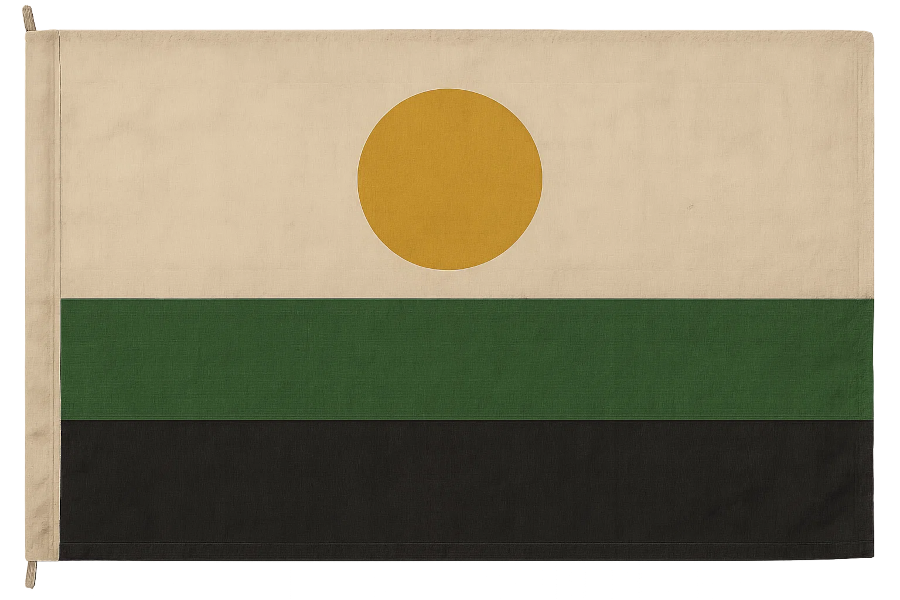
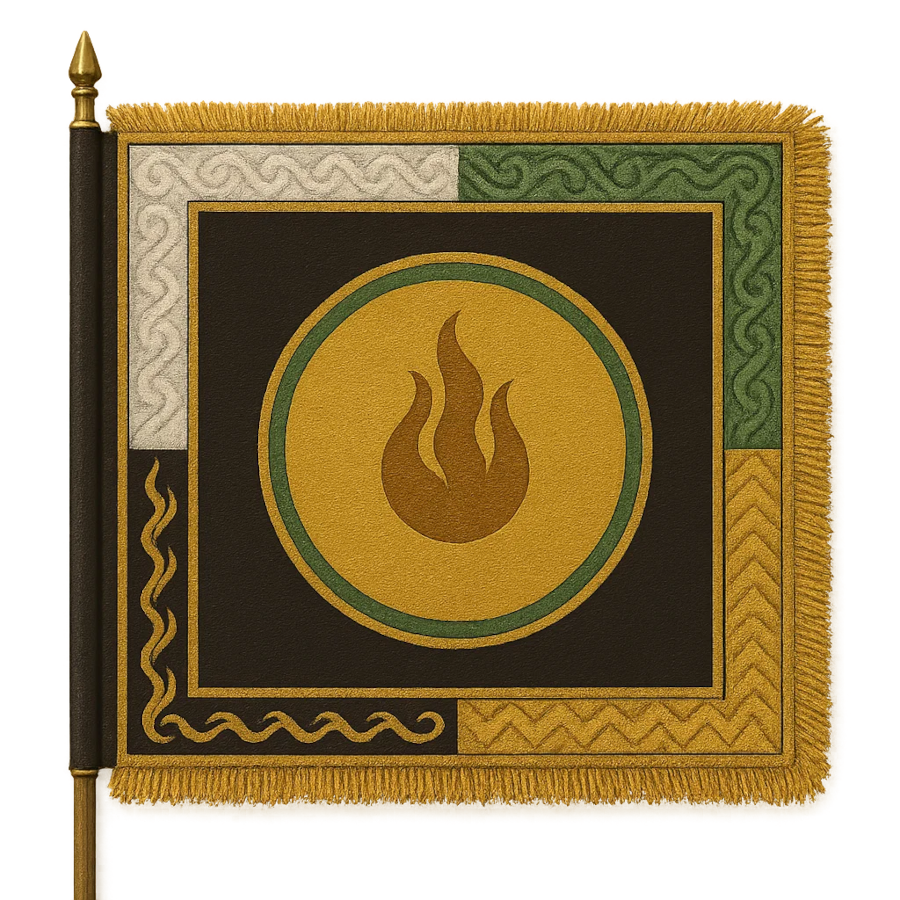
- Mint marks, postage and heraldic standards recognised along the caravan routes.
History
The First Kingdoms (ca. 1100 BCE – 400 BCE)
The earliest civilisation grew around the Mahrah Oasis, where abundant water and the presence of living Djinn shaped an elemental cult-state. Priest-kings ruled through both ritual and irrigation, giving rise to the ancient faith of Sha’irat al-Nar, the Path of Fire.
The Djinn Courts and the Vanishing (ca. 400 BCE – 200 CE)
For centuries mortal dynasts governed beside true Djinn. Their sudden disappearance—remembered as The Vanishing of the Flames—forced humankind to assume all earthly power. Royal lines claimed descent from the last elemental consorts to preserve legitimacy.
The Age of the Pearl Roads (7th – 13th centuries CE)
Al-Zahira prospered as a caravan and maritime hub linking the Levant, the Red Sea and Hindustan. Merchant leagues funded observatories, way-towers and academies of elemental philosophy. The House of al-Zahir unified the coastal emirates and founded the Sultanate.
The Age of Foreign Shadows (1750 – 1840 CE)
European expansion brought treaties and “advisers.” Britain gained port rights and influence over tariffs and minting; France established engineering missions. Though officially sovereign, Al-Zahira’s foreign policy and revenue came under British oversight.
The Great Prohibition (1845 – 1868 CE)
Sultan Rahim III, seeking British favour, outlawed same-sex unions and suppressed Sha’irat al-Nar rites. The Djinn-Touched were confined to remote garrisons; their dances and tattoo ateliers banned. The reforms fractured both nobility and soldiery.
The Mahrah Rebellion and the Night of Ash (1870 – 1872 CE)
When protests erupted near Mahrah’s outer wards, government troops massacred the demonstrators. The legendary Four Flames, the Sultan’s bound Djinn-Touched guard, were slain defending civilians. Foreign “advisers” aided the suppression, leaving a deep scar on national memory.
The Late Reign of Rahim III (1872 – 1893)
In the aftermath, Rahim III tightened his alliance with the British Empire. Forts were refitted with British cannon, the Royal Mint placed under foreign auditors, and London dictated tariffs and harbour dues.
The Sha’irat al-Nar retreated underground, surviving in coded rituals and folk dances. The once-mighty al-Mutahhayyibīn were reduced to ceremonial units, their true powers forbidden.
By the 1880s French agents quietly cultivated reform-minded nobles, while younger officers whispered of self-rule.
The Years of Tension (1888 – February 1893)
Mahrah shines outwardly—trade thriving, telegraph lines humming—but beneath the calm the court divides. The aging Sultan’s son, Prince Amir, gathers allies among liberal nobles and veterans of the Djinn-Touched corps.
British legations press for deeper control of customs and mining rights; the people grow restless.
Priests of the Sha’irat al-Nar speak again in public sermons, calling for balance between old flame and modern steel.
By February 1893
Al-Zahira stands at the edge of transformation: a prosperous yet uneasy realm ruled by an aging monarch loyal to Britain, a populace yearning for renewal, and an heir whose vision could ignite both faith and revolution. The desert holds its breath—the wind before the storm that history will name The Restoration Coup.
Demography and Population
Population Overview
Al-Zahira counts an estimated 4.2 million inhabitants in early 1893, concentrated along the fertile coastal strip, the Mahrah Oasis basin, and the caravan arteries that connect them. Rural hamlets cluster around wells, cisterns and date-groves, while the interior dunes remain sparsely settled by nomadic tribes and pilgrimage routes.
Major Cultural Group: The Jannatari
The Jannatari form roughly 93 % of the population. They are a sun-bronzed, desert-born people whose culture blends elemental philosophy, hospitality and trade pragmatism. Their language, Jannatiya, descends from Old Aramic tongues but incorporates Djinn loan-words for elemental and spiritual concepts.
Urban Jannatari in Mahrah and Bayt al-Safin embrace modern education, foreign fashions and telegraph commerce; rural and nomadic clans preserve older oral traditions, communal festivals, and Sha’irat al-Nar rites adapted to everyday life.
Minorities and Diaspora Communities
- Coastal Merchants of mixed Jannatari, Levantine and North-African descent dominate the port cities; bilingual in Jannatiya and Arabic or French.
- Mountain Tribes in the western highlands maintain semi-independent councils, famed for metallurgy and herd craft.
- Foreign Residents: A small enclave of European engineers, traders and envoys (~3 000 individuals) resides mainly in Mahrah and Bayt al-Safin under treaty protections.
The Zayyuh (Djinn-Touched)
Numbering perhaps one in two thousand births, the Zayyuh are born among Jannatari families but exhibit elemental affinities traceable to ancient Djinn lineage. Recognised as a distinct species since the late classical era, they serve as spiritual mediators, healers, artisans—or, in the case of the al-Mutahhayyibīn—as elite soldiers.
Zayyuh mature physically like humans yet age more slowly, often living to 130–150 years if not slain in service. Their fertility is low, and their births are regarded as omens. The state registers each Zayyuh at adolescence for training and aspect attunement (Fire, Earth, Water or Air).
Average Life Expectancy
- Jannatari (urban): ~64 years
- Jannatari (rural): ~55 years
- Zayyuh: 120 years (average active duty service ends around 80)
Infant mortality remains high in remote districts, though improving under recent water and hygiene reforms.
Birth & Death Rates (per 1 000 inhabitants)
- Birth rate: ~28
- Death rate: ~19
Population growth is modest but steady, offset by desert hardships and migration to port settlements.
Ethnic and Spiritual Balance
While most Jannatari nominally follow Sha’irat al-Nar, practice varies widely—from temple devotion in Mahrah to folk rites among nomads. A small minority adheres to imported faiths introduced by European residents.
Intermarriage between Jannatari and Zayyuh is rare but not forbidden; offspring are statistically human, though some display latent elemental resonance.
Territories
Territorial Overview
The Sultanate of Al-Zahira extends over roughly 60 000 km² of Mediterranean coastland, hinterland plains and central desert basin. Its borders are historically fluid, defined less by surveyed lines than by caravan routes and water rights. The heart of the realm lies between the Mahrah Oasis and the coastal port of Bayt al-Safin, connected by the King’s Road—a paved artery maintained since the classical Djinn courts.
To the north-west, Al-Zahira claims the limestone ridges of the Jabal al-Sirr highlands, although several mountain tribes remain semi-autonomous.
The eastern frontier fades into the red-sand Dune Sea, where only way-shrines and patrol forts mark royal presence.
Southward, the realm reaches the Pearl Coast, whose shallow bays and tidal flats provide fisheries, salt pans and the deepwater anchorage of Bayt al-Safin.
Beyond these borders stretch neutral trade corridors jointly patrolled with neighbouring emirates under long-standing caravan accords.
Historical Acquisition
Most territories are ancestral holdings of the Mahrah Oasis dynasties.
During the 13th century the House of al-Zahir consolidated the coastal city-states through treaty and limited conquest, uniting them under a single banner.
Later expansions—mainly fort chains and desert wells—were achieved through marriage pacts, negotiated water rights, and the settlement of nomadic tribes loyal to the Sultanate.
No foreign colony was ever formally established on Zahiran soil, though 19th-century British “protectorate treaties” granted temporary control of customs stations and port facilities, now largely rescinded.
Major Regions
- Mahrah Basin – Lush core of the realm; fed by deep aquifers and artesian wells. Terraced gardens of citrus and date palms surround the holy oasis and the capital city, whose marble palaces incorporate the ruins of Djinn temples.
- The Dune Sea – Expansive erg of red and ochre sands dotted with way-shrines. Nomadic clans harvest salt and breed hardy desert camels. Magnetic anomalies and old ley-lines make navigation treacherous.
- The Pearl Coast – Narrow coastal strip with mangroves, tidal flats and natural harbours. Climate humid, moderated by sea breezes. Home to shipyards, salt-pans and pearl-diving villages.
- Jabal al-Sirr Highlands – Limestone and basalt ridges to the northwest; cooler climate, scrub forests and metal deposits. Fortified monasteries maintain the oldest Sha’irat al-Nar libraries.
- The River of Shards – A seasonal watercourse emerging from the highlands and vanishing into the desert; lined with ancient caravan ruins and fertile flood-plains used for grain and cotton.
Climate
Predominantly hot-arid with sharp regional contrasts:
- Coast: maritime subtropical; 26–32 °C average, humid nights, rare frost.
- Inland plains: semi-arid steppe; wide day–night range, cool winters.
- Highlands: temperate dry climate; occasional winter rains.
- Dune Sea: extreme desert; >45 °C summer highs, fierce sirocco winds known as the Breath of the Djinn.
Rainfall averages 150–200 mm annually, mostly winter storms blowing from the Mediterranean.
Oasis agriculture depends on qanat channels and dew-catching wind towers—a technology preserved since the Djinn Courts.
Strategic Importance
Al-Zahira’s position between the Levant and the Red Sea makes it a vital caravan and maritime junction.
Its coast offers the region’s safest anchorage and repair docks; its interior controls the only reliable desert route between northern and southern markets.
Whoever commands Mahrah controls not just the wells of the desert, but the passage of trade, faith, and fire across half a continent.
Military
The armed forces of Al-Zahira (al-Jaysh al-Zahiri) combine traditional desert warfare with elemental magic unique to the realm. Though comparatively small in number, they are considered among the most disciplined and spiritually cohesive forces in the region.
Organisation
The army is divided into three primary branches:
- The Royal Guard (al-Ḥaras al-Malikī) — elite household troops and bodyguards of the Sultan, including the legendary Four Flames, one Djinn-Touched warrior of each elemental Aspect bound to the ruler himself.
- The Regular Army (al-Jund) — conventional infantry, camel and light cavalry units stationed at frontier forts and caravan routes.
- The Corps of the Djinn-Touched (al-Mutahhayyibīn) — an elite cadre of Zayyuh warriors whose elemental powers (Fire, Earth, Water, Air) serve as shock troops, engineers, healers and scouts. Each Aspect maintains its own martial traditions and ceremonial dances that strengthen morale and magical focus.
Training & Doctrine
Service in the army is compulsory for men of military age, though volunteers from nomadic tribes and coastal towns form the majority. Djinn-Touched recruits undergo specialised spiritual and physical training under the supervision of the Sha’irat al-Nar priesthood.
Zahiran doctrine favours precision, endurance and unity over mass—small mobile columns supported by elemental units, fighting as living extensions of the desert itself.
Public Perception
Among the Jannatari, soldiers are regarded with a mix of reverence and fear, their loyalty bound as much by faith as by law. The Djinn-Touched are semi-sacred figures: symbols of divine favour and reminders of the nation’s mystical ancestry.
Foreign observers—particularly the British—describe the Zahiran army as “archaic but formidable,” admiring its discipline while dismissing its ritual practices as superstition. Those who have faced the Mutahhayyibīn in combat seldom repeat the mistake of underestimation.
Current Strength (1893)
- Approx. 20 000 regular troops,
- 2 500 cavalry and camel corps,
- Fewer than 300 active Djinn-Touched, most attached to provincial commands.
The Sultan’s Guard and the Four Flames remain stationed at Mahrah, awaiting orders as political tension mounts.
Technological Level
Al-Zahira stands at a late-19th-century level of development, balancing imported European technology with indigenous elemental science.
Urban centres such as Mahrah and Bayt al-Safin maintain telegraph lines, modern docks, and limited light rail for military logistics. Firearms, artillery and steam engines are imported or locally assembled under foreign supervision.
The Sultan’s academies teach engineering, mathematics and elemental theory, producing scholars who blend empirical study with the mystical heritage of the Sha’irat al-Nar.
Rural areas remain largely pre-industrial, relying on wind towers, irrigation qanats and caravan craftsmanship refined over centuries.
Specialisations:
- Elemental metallurgy: gold-dust and obsidian alloys for ritual armour and conduits.
- Tattoo-alchemy: precise ink formulas used to focus Djinn-derived power.
- Desert hydraulics: qanat systems, dew-catchers, and wind-driven mills adapted for arid climates.
Restricted knowledge:
High-level elemental research, weapon enchantment, and ley-line surveying remain under royal and temple control; civilian use is strictly licensed.
Religion
State & Majority Faith
- Sha’irat al-Nar (Path of Fire): de facto majority religion; temples at Mahrah, oasis shrines, lay rites in towns and caravans.
- Status (1893): Official ceremonies permitted but curbed under Rahim III (surveillance, licensing of priests, limits on public dances). Priesthood retains moral authority and manages Zayyuh (Djinn-Touched) registries and ritual law.
Minorities (legal/tolerated)
- Islam (Sunni, with Sufi confraternities): ports and highland towns; some syncretic practices (veneration of wells/ley sites).
- Christian communities (Levantine merchants; a few European chaplaincies in the port).
- Jewish merchants & artisans in coastal markets.
- Small tribal cults (ancestor/river spirits) folded into local Sha’irat customs.
Taboo / Restricted
- Unlicensed summoning rites and blood-oath Djinn invocations (felony).
- Foreign missionary proselytising beyond designated chapels.
- Millenarian sects preaching revolt in sacred precincts.
Power & Influence
- The High Flame and temple councils advise the court, license tattoo ateliers, and arbitrate disputes touching elemental practice.
- In rural districts, priests effectively act as moral courts and mediators; in cities their power is balanced by the Royal Diwan and foreign treaties.
Public Sentiment (1893)
- Urban youth and veterans favour a revival of open rites; conservatives fear unrest. Most citizens see Sha’irat al-Nar as the soul of Al-Zahira, even when practiced quietly.
Foreign Relations
Grand Strategy (1893)
- Balance-of-power neutrality: trade with all, align with none; avoid formal protectorates.
- Maritime access first: protect customs, ports and caravan corridors as core interests.
- Sacred sovereignty: no foreign control over temples, leylines or Zayyuh registries.
- Quiet asylum: discreet refuge for persecuted merchants and minorities to grow soft power.
Status by Counterparty
- Britain: De jure friendly; de facto leverage via customs audits, dockyard spares and advisers in Bayt al-Safin. Zahiran court is wary after past crackdowns; seeks tariff autonomy without open rupture.
- France: Technico-commercial courtship (engineers, artillery fittings, rail surveys). Limited advisers in ports and works; politically non-binding.
- Ottoman Empire & Levantine emirates: Pragmatic neutrality; caravan and water-rights accords, reciprocal consular protection, no mutual defence.
- European houses (Italy, Austria-Hungary, Germany): Commercial missions only (optics, tools, textiles no treaty bases.
- Neighbouring tribes & city-states: Tribute-free caravan compacts, joint patrols against raiders, seasonal pasture agreements.
Instruments & Levers
- Ports & customs: tariff preferences, bonded warehousing, coaling rights.
- Arcane deterrence: limited disclosure of al-Mutahhayyibīn capabilities to dissuade coercion.
- Finance: mint stability, pearl and salt monopolies as bargaining chips.
- Culture: court patronage, scholarly exchanges, safe entrepôt reputation.
Recent Frictions (to Feb 1893)
- British pressure for deeper audit of mint and harbour dues; palace resists scope creep.
- French proposal to expand rail link inland stalls over sovereignty clauses.
- Border dust-ups with highland clans resolved via priest-mediated arbitration.
Risks & Red Lines
- Red lines: foreign troops beyond legation guards; control of leylines/temples; compulsory tariff schedules.
- Primary risk: sudden British economic retaliation if audits are curtailed.
- Mitigation: diversify suppliers, stockpile spares and grain, keep caravan corridors open.
Outlook (Feb 1893)
Stable on the surface, uneasy underneath: Al-Zahira aims to reclaim fiscal independence without triggering a crisis, while quietly deepening technical ties with France and reinforcing regional caravan pacts.
Laws
Legislation & Authority
All law in Al-Zahira derives from the Sultan’s decree (farman) and the sacred principles of the Sha’irat al-Nar.
The Sultan is the supreme legislator, advised by the Royal Diwan and the High Flame (chief priest). Decrees are recorded by the Keeper of the Seal and copied into illuminated codices stored in the Hall of Ashes within the palace complex at Mahrah.
Legal Structure
- Royal Law (Qānūn al-Sulṭān): civil, commercial and criminal code, largely secular and enforced by royal judges (qāḍīs al-sulṭān).
- Sacred Law (Nār-Sharīʿa): governs morality, elemental rites, and the conduct of the Zayyuh; administered by temple courts under priestly oversight.
- Customary Law (ʿUrf): clan and tribal arbitration still recognised in rural areas, provided verdicts do not contradict royal edicts.
Enforcement
The Royal Guard and provincial Qāʾids enforce the Sultan’s edicts. Minor policing is handled by local city watchmen (muḥtasibs) and temple wardens. Priestly enforcers oversee magical or ritual offences involving elemental imbalance.
Punishments
- Fines and restitution for property or trade disputes.
- Public censure, branding, or exile for moral or ritual breaches.
- Imprisonment or forced service for military or civic crimes.
- Execution (usually by fire or the sword) reserved for treason, sacrilege, or forbidden summoning.
Flexibility & Practice
In Mahrah, justice is formal and meticulously documented; in the provinces it is pragmatic and often influenced by local alliances.
Nobles and foreign residents can appeal directly to the Majlis al-Ḥaqq (the Sultan’s personal bench), while commoners rely on priests or scribes to petition on their behalf.
The “long arm of the law” reaches far, but not evenly—wealth, patronage, or priestly favour can soften its grip, while political enemies often feel its full heat.
Agriculture & Industry
Al-Zahira’s economy rests on the dual pillars of oasis agriculture and artisan-based manufacture, supported by caravan and maritime trade.
While the ports of Bayt al-Safin and Mahrah handle foreign commerce, the interior sustains itself through irrigation, craftsmanship and mining—linking the desert to the sea in a single supply chain.
Agriculture
- Oasis Cultivation: Date palms, olives, citrus, figs, barley and chickpeas form the staple crops.
- Irrigation: Ancient qanat tunnels, artesian wells and wind-tower condensers maximise scarce rainfall; temple engineers maintain them as sacred trusts.
- Animal Husbandry: Camels, goats and desert sheep provide milk, wool and transport.
- Specialty Crops: Indigo and saffron near Mahrah; medicinal herbs for temple apothecaries.
- Fisheries: Along the Pearl Coast, boats harvest tuna, mullet and shellfish; the pearl beds supply both jewellery and currency reserves.
Industry
- Textiles: Fine wools, cottons and silk blends woven with gold thread; exported to Levantine and French markets.
- Metalwork & Arms: Bronze and copper smelting in the Jabal al-Sirr highlands; sword- and sabre-making workshops in Mahrah and the garrison towns.
- Glass & Ceramics: High-quality translucent glass from desert clays, used in lamps, ritual vessels and export wares.
- Shipbuilding: Coastal yards build dhow-class vessels and light steam auxiliaries; carpenters combine local cedar with imported iron fittings.
- Mining & Quarries: Copper, salt, alabaster, and limited gold; state-licensed, often managed through temple-royal partnerships.
- Tattoo-Alchemy Workshops: Unique to Al-Zahira—guilds of ink-makers and alchemists refine elemental pigments for the Zayyuh and the Sha’irat al-Nar.
Trade & Dependence
Exports: dates, pearls, goldwork, fine textiles, glass, salt and incense.
Imports: iron, coal, precision tools, machinery parts, paper, and European weapons.
Foreign engineers assist in dockyards and telegraph repair, but domestic craftsmen remain dominant in artisanal production.
Labour & Ownership
Most farms and workshops are family-run or temple-leased; large irrigation estates belong to noble houses or the crown.
Guilds regulate apprenticeships, quality, and pricing, blending civic regulation with religious oversight.
Economic Character
Al-Zahira’s agriculture and industry remain labour-intensive and craft-based, yet increasingly entangled with foreign technology and markets.
The Sultanate’s challenge lies in modernising without dependence—to master imported tools while keeping the sacred flame of its own industry burning.
Trade & Transport
Al-Zahira’s prosperity depends on the smooth flow of goods between the sea, the oasis and the desert. Caravans, river barges and coastal dhows form the backbone of its transport network, while a few modern lines—telegraph and rail—link the old routes together.
Merchants operate under state licence and the watch of the Bureau of Trade & Ports, which oversees tariffs, weights and caravan security.
Internal Trade
- Caravan Routes:
The King’s Road connects the capital Mahrah with the port of Bayt al-Safin, following ancient way-shrines and wells.
From Mahrah, spokes radiate to the Jabal al-Sirr highlands and the Dune Sea, maintained by fortress waystations every 40 km.
Camel trains remain the principal hauliers—each caravan a moving village of drovers, guards, cooks and priests. - River Transport:
The seasonal River of Shards carries barges of grain, salt and copper downstream to the desert markets during the flood months. - Local Markets:
Weekly souks in each district capital exchange grain, wool, leather and crafted wares; taxes are collected in coin or kind.
External Trade
- Maritime:
The Pearl Coast handles most foreign commerce.
Dhows and lateen schooners run the Levantine circuit; a handful of steam-assisted merchantmen operate between Al-Zahira and French or British ports.
Exports include dates, pearls, glass, textiles and incense; imports range from iron and coal to paper and scientific instruments. - Overland:
Northern caravan routes tie into Ottoman and Levantine markets via the Pass of Ishraan, guarded by joint patrols.
Southern routes skirt the Dune Sea toward Red-Sea ports, carrying salt, hides and pilgrims.
Infrastructure & Maintenance
- Roads:
Paved stone causeways near Mahrah and Bayt al-Safin; graded gravel tracks elsewhere.
Temple engineers and the Master of Works maintain bridges, wells and mile markers as religious duties. - Rail & Telegraph:
A single light military railway links the port to Mahrah for grain, ammunition and troops.
Telegraph lines follow the same corridor, extended gradually toward frontier forts. - Postal & Courier System:
Managed by the Royal Diwan; mounted couriers and pigeon lofts at every major garrison ensure dispatch within days across the realm.
Transport of People
Travellers move in caravan convoys for safety, paying a levy to the local Qāʾid for escort rights.
Nobles and officials use litters or covered wagons between estates; the wealthy charter riverboats or coastal steamers.
Pilgrimage caravans to sacred sites depart seasonally under priestly protection.
Economic Flow & Control
Customs are collected at ports, bridges and city gates; tariffs adjust seasonally to favour exports during harvest and pilgrimage peaks.
Caravan masters swear oaths before Sha’irat al-Nar altars to ensure honesty in weight and delivery.
Despite foreign advisers in the docks, the lifeblood of Zahiran trade still beats to the rhythm of hoof, sail and flame.
Education
Education in Al-Zahira blends ancient desert scholarship with temple tutelage and royal patronage.
Knowledge is regarded as a sacred inheritance, tracing back to the Djinn Courts and preserved through oral recitation, calligraphy, and ritual craftsmanship.
While foreign tutors and European engineers now appear in the ports, the kingdom’s intellectual heart remains steadfastly Zahiran.
Primary Education (Household & Temple)
- Most children receive early instruction from family elders or village priests, learning letters, arithmetic, and moral verses from the Flame Hymns of the Sha’irat al-Nar.
- Reading and writing in Jannatiya are near-universal among townsfolk; nomadic clans emphasise memorisation and oral poetry instead.
- Education begins around the age of five; girls are not excluded, though temple schools often segregate classes by gender.
Secondary Education (Madrasat al-ʿIlm)
- Urban students advance to madrasas maintained by the priesthood or noble families.
They study geometry, astronomy, rhetoric, law, and the ethics of elemental balance. - Scripture and philosophy intertwine; reason is seen as a tool for understanding divine fire, not as its rival.
- Apprenticeships in crafts, trade, or medicine begin around fourteen, often combining spiritual mentorship with technical mastery.
Higher Learning
- The capital Mahrah hosts the House of Ashes Academy, founded by the early al-Saffar dynasty.
It trains scribes, judges, and elemental engineers for royal and temple service. - Libraries preserve illuminated manuscripts in ink mixed with powdered gold and volcanic glass.
- The study of alchemy, hydrology, and wind mechanics is unique to Zahiran science, merging observation with elemental attunement.
- Foreign scholars occasionally lecture there, but the curriculum remains anchored in Zahiran cosmology.
Access & Stratification
- Education is broadly accessible, though quality varies:
- Urban children attend formal schools.
- Rural families rely on travelling tutors or temple lessons.
- The Zayyuh (Djinn-Touched) receive specialised instruction at thirteen, including martial discipline, elemental ethics, and tattoo-alchemy.
- Nobility and the priesthood enjoy access to advanced study abroad or in the royal archives.
- Women of higher status may study literature, medicine, or magic privately under patronage.
Cultural Attitude toward Knowledge
Learning is seen not as a privilege but a moral duty.
To read the words of fire is to honour the Djinn who once shaped them; to teach is to keep the flame alive.
As one Zahiran proverb declares:
“He who learns lights a lamp in the desert — and every traveller may see by it.”
Infrastructure
Al-Zahira’s infrastructure is an elegant fusion of ancient Djinn-era engineering, temple stewardship, and modern adaptation.
Where European powers rely on steam and steel, Zahiran builders harness wind, stone, and sacred flame — creating a network designed for endurance rather than speed.
Water & Sanitation
- Qanat networks — underground aqueducts dating back to the Djinn Courts, channel groundwater to Mahrah and the oasis cities.
- Wind-tower condensers harvest dew during the night and vent heat by day; every district maintains at least one as public property.
- Cisterns & fountains serve both practical and ritual roles, often decorated with flame motifs symbolising purity.
- In Mahrah and the larger coastal towns, stone sewers and clay-pipe drains prevent flooding and disease; rural villages rely on sand filtration pits.
- Wastewater is ritually neutralised through ash and salt, linking sanitation to the doctrines of balance.
Roads & Communication
- The King’s Road: paved limestone causeway from Bayt al-Safin to Mahrah, with caravanserai every 40 km and fortified way-shrines.
- Secondary desert routes are graded sand tracks, kept passable by camel patrols and priest-engineers.
- Mountain passes feature arched bridges of volcanic stone, resilient against flash floods.
- Telegraph lines run parallel to the main road, connecting the capital to the coast and the northern garrisons.
- A state-run courier and pigeon post system links all major temples and forts within days.
Ports & Maritime Works
- Bayt al-Safin Harbour — deepwater basin with dry docks, bonded warehouses, and imported steam cranes.
- Smaller coves serve fishing fleets and pearl divers; each has a lighthouse powered by mirrored flame prisms.
- The Customs Fortress on the western mole doubles as an armoury and treasury vault.
- Freshwater cisterns and wind pumps supply the dockyards independently from the city grid.
Urban Structures
- Mahrah: concentric quarters around the holy oasis; wide stone boulevards shaded by colonnades; district courts and hospitals integrated with temples.
- Royal Palace Complex: marble terraces, the Hall of Ashes (records and decree archives), and the Flame Court (ritual chamber and throne).
- Hospices for travellers and pilgrims are maintained by the Sha’irat al-Nar priesthood in every major town.
- Markets are roofed arcades with cooling channels beneath the floor — a blend of comfort and sacred geometry.
Fortifications & Defense
- Frontier Forts (Qalʿat) guard wells and trade routes; built of basalt and reinforced with alchemical mortars.
- Coastal batteries near Bayt al-Safin and Jabal al-Rih host imported cannon and elemental warding sigils.
- Signal towers with mirrored plates and smoke-powder mixtures relay messages faster than riders across the desert.
Energy & Light
- Cities rely on oil lamps and flame channels: narrow copper gutters carrying burning resin drawn through the streets at night — a symbolic echo of the Path of Fire.
- Temple precincts experiment with elemental turbines, small devices converting heated air into motion for fountains or mills.
- Windmills, both traditional and magically attuned, grind grain and pump water throughout the highlands.
Public Health & Welfare
- Every province hosts at least one House of Healing (Dar al-Shifāʾ), combining herbal medicine with elemental therapy.
- Bathhouses (ḥammām) remain social centres; steam channels are sanctified by Fire priests for purification.
- Shelters for the poor and displaced are funded jointly by guilds and temple charities, ensuring that “no man of the flame sleeps in the sand.”
Al-Zahira’s infrastructure embodies its creed: balance through endurance.
Stone, wind, and fire sustain the kingdom where steel and coal would falter — proof that enlightenment need not depend on empire.
Gold & copper alloys, fine textiles woven with gold thread, incense & perfumed oils, glassware, pearls, dates, olives, salt, and alchemical inks used for Djinn-Touched tattoos.
Iron, coal, and steel for tools and weapons; paper, printing dyes, and clockwork; medical supplies, optics, and textiles; European machinery and luxury goods such as wine, porcelain, and perfume.
The Sultan, advised by the Royal Diwan and sanctioned by the High Flame of the Sha’irat al-Nar.
Royal Judges (Qāḍīs al-Sulṭān) and Temple Adjudicators under the oversight of the High Flame.
The Royal Guard, provincial Qāʾids, and city muḥtasibs acting under the Sultan’s command.

Comments