
The Hollow Road
Follow the butterflies, pay the toll—
Or be lost forever on the Hollow Road.
Give what is asked, don’t break the code,
Or you’ll walk nameless where no lights glow.
In the days when Cerellea was still young, when Azalea City was more dust than stone and its lanterns swayed like fireflies in the dark, there lived a merchant who walked the northern roads. He bought from the factories there — new-built, loud with smoke and iron — and carried their goods back to his store in town.
It was the early days of winter, when the nights grew long though the air was still warm, summer and autumn breathing together. And it was on such a night that the merchant wandered the roads until he was lost.
The roads bent back upon themselves. The fields stretched wide and empty. No hearth, no gate, no fire met him, no matter how far he walked. His cart was heavy, his purse nearly bare. With his purse so light, he feared he would not have enough to barter his way back into town after dusk. If he could not pay, the gatekeepers would drive him off and forbid him to return until dawn.
At last he thought he must resign himself to the night. He would tie down his wares and sleep by the roadside, keeping watch for beast or thief who might mistake him for an easy meal.
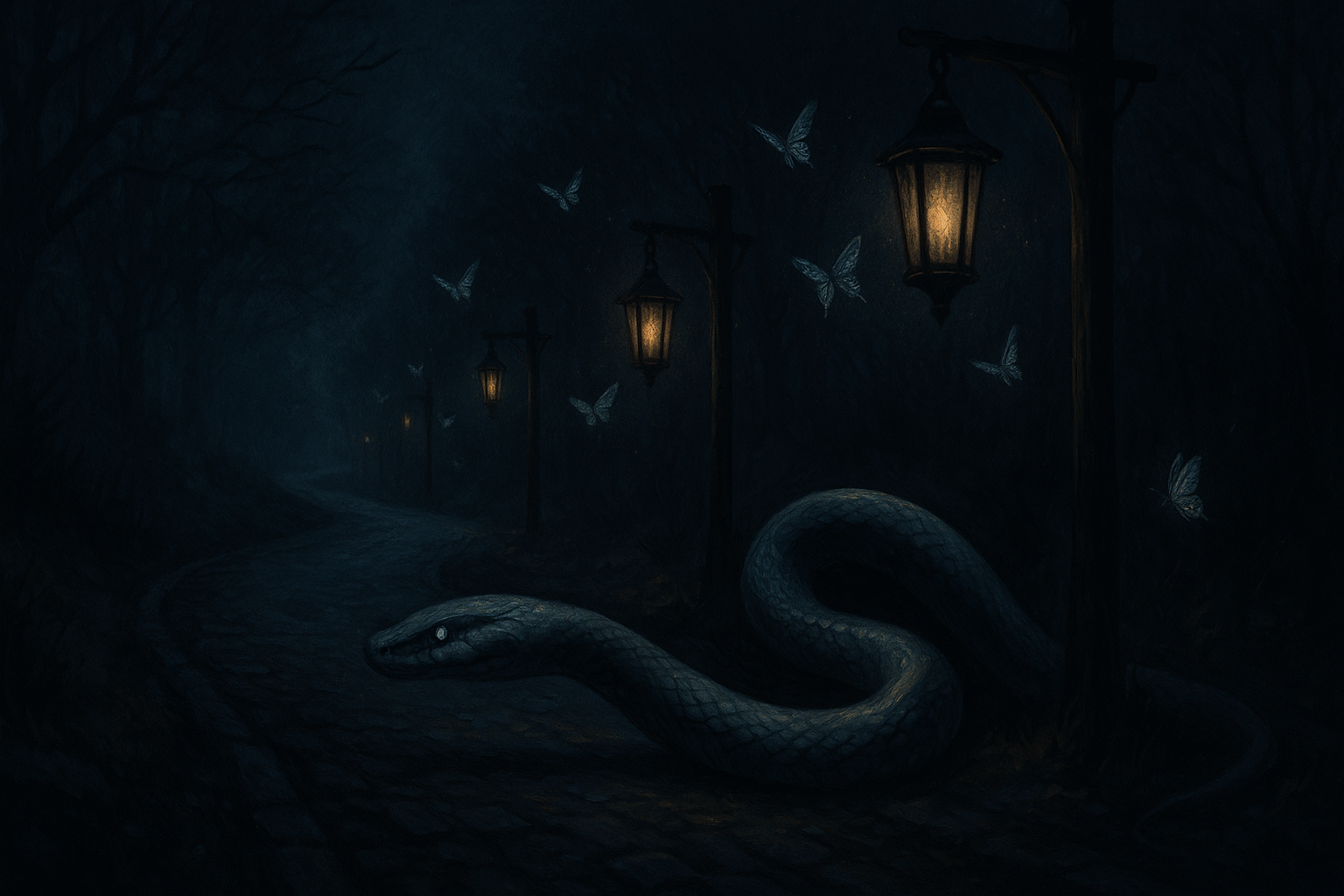
He was sunk deep in his weary thoughts when, looking up, he saw a serpent lying across the road, bright as silver in the lantern-light. He pulled up short, for he had nearly run it down, and would not strike it. The serpent paused, then slid on its way. As he watched it go, he envied it, for at least the serpent knew its path in the darkness, while he did not. He wished he knew the way, or that someone might tell him if the road he walked would lead him home at last.
Then a voice spoke.
“You seek the way home.”
The merchant looked around. Then the voice came again, from the road before him.
“I will show it.”
The merchant started, for the serpent was before him once more, as if it had never left at all. It raised its head, and its eyes glowed pale.
“What are you?” the merchant asked.
“I am a guide,” the serpent said. “The Lord of the crossroads. The patron of travelers and merchants alike. You seek the way home, and I will show it. If you pay my tolls in full, you will not only find your way — you will prosper. Withhold, and you will be cursed.”
“What do I need to do?” the merchant asked.
“Follow the butterflies. They will show your way,” Soryn said. “But every road has its toll, and mine must be paid in full.”
The merchant agreed, and pale butterflies rose into the air, glimmering like lanterns. They led him on.
At the first crossroad, the butterflies gathered at his feet, brushing against his shoes. A whisper rose: “These.”
So he set down his shoes upon the stones and went on barefoot.
At the second crossroad, the butterflies swarmed his purse, tugging at the last gold coins inside. The whisper came: “These.”
So he gave his last coins, the very ones that would have opened Azalea’s gate, and the purse hung empty at his side.
At the third crossroad, the butterflies circled his hands until their wings grew red against his skin. The whisper pressed: “Blood.”
So he pressed his palm to the stones until blood welled, and the butterflies moved on.
At the fourth crossroad, the butterflies lit upon his brow, his heart, his mind, and the whisper deepened: “Memory.”
The merchant thought to trick Soryn, offering up the memory of his parents, for they were old and frail and would not live long. But the butterflies turned cruel and tore from him his wife instead — her smile, her voice, all he held most dear.
At the last crossroad, the butterflies swirled about his mouth and ears, muffling his breath. The whisper coiled like a serpent’s hiss: “Your name.”
Fear took him then. If I give it all, I will be nothing. If I give nothing, I will be lost again. So he spoke only part of it, a half-name, a shard of who he was.
The butterflies fell silent, but Soryn is not deceived. To give less is to lose more. The butterflies tore from him not only the half-name, but the rest of his name, and with it his very self. His identity was unmade, leaving him hollow.
When he came at last to Azalea, the lanterns glowed upon the gate. A guard stood watch, pacing the wall and checking the locks. When the traveler passed, the guard hailed him by a new name, as though they were old friends. It was a nickname the man had hated in life.
“That is not my name,” he said in his heart, but he played along. The guard smiled, never knowing the truth.
Later, in the market square, a merchant was shuttering his store and turning the key in the lock. Looking up, he greeted the man by the very same name.
The man frowned, irritation flickering in his eyes. “That is not my name,” he muttered, then waved it off, saying only that it was late and he needed to be home. The merchant nodded, never questioning.
At last, in the hall of the magistrate, laughter spilled into the street as the magistrate stepped out from a party, wine still on his breath and lantern-light at his back. He turned his eye upon the man and spoke that same name, spoken with the certainty of command.
Then the man could bear it no longer. “That is not my name,” he said aloud.
Three times he was called by the same name. Three times he denied it.
Once in silence.
Once with impatience.
Once with his voice.
Once for who he had been.
Once for what he had lost.
Once for what he denied to become.
As he stumbled on, the lantern-light before him wavered, and a vision came to him. He saw himself whole, his wife beside him, his store filled to bursting, his purse heavy with coin. Each thing he had given away was returned to him, doubled and bright. Shoes finer than he had ever worn. Coins enough to never fear the gates again. A house filled with laughter and plenty. This was the reward he might have claimed, had he paid in full.
But the vision broke, and his bare feet bled upon the stones. His fine clothes withered into rags. His pockets forever had holes. His wife’s face was dust in his memory. Even the road home was lost to him, winding back upon itself until it led nowhere at all.
This was his curse for failing to pay.
No past.
No present.
No future.
It is said he still walks the roads of Azalea, barefoot and bleeding, forever in the shadows of the butterflies’ light. The lanterns do not burn for him. Soryn will not hear his cries until he pays what he owes.
And so his story is remembered thus:
The path of survival is paved in loss. The weak cling to what is gone; the strong accept what is, what must be, and go on.
Or be lost forever on the Hollow Road.
Give what is asked, don’t break the code,
Or you’ll walk nameless where no lights glow.
In the days when Cerellea was still young, when Azalea City was more dust than stone and its lanterns swayed like fireflies in the dark, there lived a merchant who walked the northern roads. He bought from the factories there — new-built, loud with smoke and iron — and carried their goods back to his store in town.
It was the early days of winter, when the nights grew long though the air was still warm, summer and autumn breathing together. And it was on such a night that the merchant wandered the roads until he was lost.
The roads bent back upon themselves. The fields stretched wide and empty. No hearth, no gate, no fire met him, no matter how far he walked. His cart was heavy, his purse nearly bare. With his purse so light, he feared he would not have enough to barter his way back into town after dusk. If he could not pay, the gatekeepers would drive him off and forbid him to return until dawn.
At last he thought he must resign himself to the night. He would tie down his wares and sleep by the roadside, keeping watch for beast or thief who might mistake him for an easy meal.
He was sunk deep in his weary thoughts when, looking up, he saw a serpent lying across the road, bright as silver in the lantern-light. He pulled up short, for he had nearly run it down, and would not strike it. The serpent paused, then slid on its way. As he watched it go, he envied it, for at least the serpent knew its path in the darkness, while he did not. He wished he knew the way, or that someone might tell him if the road he walked would lead him home at last.
Then a voice spoke.
“You seek the way home.”
The merchant looked around. Then the voice came again, from the road before him.
“I will show it.”
The merchant started, for the serpent was before him once more, as if it had never left at all. It raised its head, and its eyes glowed pale.
“What are you?” the merchant asked.
“I am a guide,” the serpent said. “The Lord of the crossroads. The patron of travelers and merchants alike. You seek the way home, and I will show it. If you pay my tolls in full, you will not only find your way — you will prosper. Withhold, and you will be cursed.”
“What do I need to do?” the merchant asked.
“Follow the butterflies. They will show your way,” Soryn said. “But every road has its toll, and mine must be paid in full.”
The merchant agreed, and pale butterflies rose into the air, glimmering like lanterns. They led him on.
At the first crossroad, the butterflies gathered at his feet, brushing against his shoes. A whisper rose: “These.”
So he set down his shoes upon the stones and went on barefoot.
At the second crossroad, the butterflies swarmed his purse, tugging at the last gold coins inside. The whisper came: “These.”
So he gave his last coins, the very ones that would have opened Azalea’s gate, and the purse hung empty at his side.
At the third crossroad, the butterflies circled his hands until their wings grew red against his skin. The whisper pressed: “Blood.”
So he pressed his palm to the stones until blood welled, and the butterflies moved on.
At the fourth crossroad, the butterflies lit upon his brow, his heart, his mind, and the whisper deepened: “Memory.”
The merchant thought to trick Soryn, offering up the memory of his parents, for they were old and frail and would not live long. But the butterflies turned cruel and tore from him his wife instead — her smile, her voice, all he held most dear.
At the last crossroad, the butterflies swirled about his mouth and ears, muffling his breath. The whisper coiled like a serpent’s hiss: “Your name.”
Fear took him then. If I give it all, I will be nothing. If I give nothing, I will be lost again. So he spoke only part of it, a half-name, a shard of who he was.
The butterflies fell silent, but Soryn is not deceived. To give less is to lose more. The butterflies tore from him not only the half-name, but the rest of his name, and with it his very self. His identity was unmade, leaving him hollow.
When he came at last to Azalea, the lanterns glowed upon the gate. A guard stood watch, pacing the wall and checking the locks. When the traveler passed, the guard hailed him by a new name, as though they were old friends. It was a nickname the man had hated in life.
“That is not my name,” he said in his heart, but he played along. The guard smiled, never knowing the truth.
Later, in the market square, a merchant was shuttering his store and turning the key in the lock. Looking up, he greeted the man by the very same name.
The man frowned, irritation flickering in his eyes. “That is not my name,” he muttered, then waved it off, saying only that it was late and he needed to be home. The merchant nodded, never questioning.
At last, in the hall of the magistrate, laughter spilled into the street as the magistrate stepped out from a party, wine still on his breath and lantern-light at his back. He turned his eye upon the man and spoke that same name, spoken with the certainty of command.
Then the man could bear it no longer. “That is not my name,” he said aloud.
Three times he was called by the same name. Three times he denied it.
Once in silence.
Once with impatience.
Once with his voice.
Once for who he had been.
Once for what he had lost.
Once for what he denied to become.
As he stumbled on, the lantern-light before him wavered, and a vision came to him. He saw himself whole, his wife beside him, his store filled to bursting, his purse heavy with coin. Each thing he had given away was returned to him, doubled and bright. Shoes finer than he had ever worn. Coins enough to never fear the gates again. A house filled with laughter and plenty. This was the reward he might have claimed, had he paid in full.
But the vision broke, and his bare feet bled upon the stones. His fine clothes withered into rags. His pockets forever had holes. His wife’s face was dust in his memory. Even the road home was lost to him, winding back upon itself until it led nowhere at all.
This was his curse for failing to pay.
No past.
No present.
No future.
It is said he still walks the roads of Azalea, barefoot and bleeding, forever in the shadows of the butterflies’ light. The lanterns do not burn for him. Soryn will not hear his cries until he pays what he owes.
And so his story is remembered thus:
The path of survival is paved in loss. The weak cling to what is gone; the strong accept what is, what must be, and go on.






Sabrina, this is beautifully done! The poem really sets the tone for the story, evoking the feel of a classic grim tale or even a German fairy tale. It reminded me a little of “The Most Foolish Traveler in the World” from Fruits Basket, in the way the traveler faces consequences for missteps. I especially loved how you used the butterflies—they guide him, yet Soryn’s design ensures he cannot outsmart the toll. The sense of inevitability, loss, and the haunting path of the Hollow Road is so vivid. Truly well-crafted and memorable!
Thank you so much!