
Maigalinnu
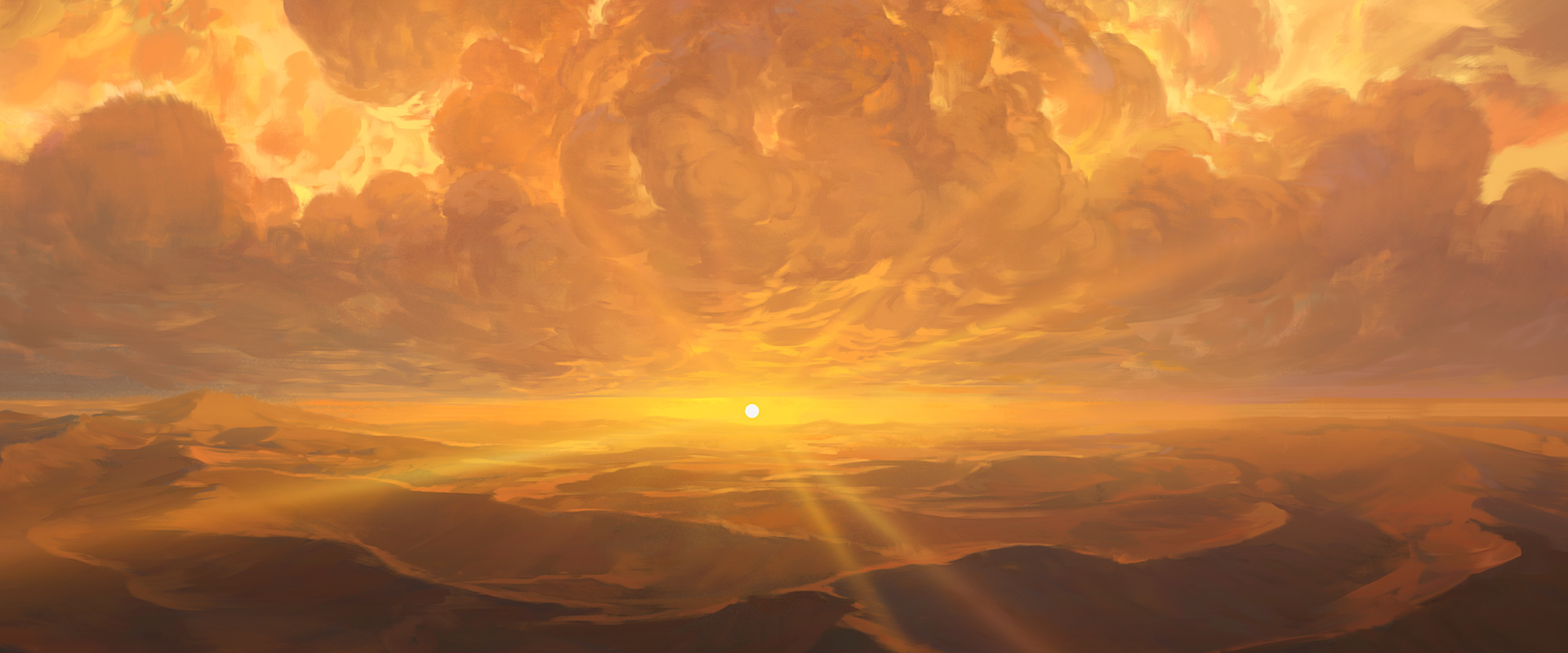
When the great kingdom of Tahumu fell, what rose to take its place was a people unbound by the constraints of the tyrannical curse-bringers of the Order Pantheon, and yet connected by the threads of Arachnida. Slowly but surely, Arachnida's children spread throughout the Great Sea of Sand, making the most of lands and bodies doomed to suffering by cruel divinity. Today, the enclaves of Maigalinnu maintain a strong level of diversity, and yet their traditions and practices are still their own. As a people, they have transformed an inhospitable desert into a home.
Governance
As Arachnida was cast out of the mortal plane by jealous gods, she left her children, a son and a daughter, in charge as leaders of her people. To this day, the Maigu follow her example; leadership of each tribe of arachs is held by a pair of siblings, assisted by any council that they choose. Only a pair, bound by blood, can temper the madness of Arachnida - a gift and a curse she bestows upon those who lead. The Sister, the religious leader, draws on Arachnida's insanity to connect with her, and the Brother, the military leader, takes on some of the madness in order to temper it. Gender matters not in determining who is Sister and who is Brother; in Arachnida's eyes, all are equal.
A powerful pair of siblings, the Diarchs, rule all the people of Maigalinnu from the heart of Old Tahumu itself. As the mind and heart of Arachnida constantly shifts from one thought, one feeling, to the next, so too does the rulership of Maigalinnu change. Every year, during the week that Arachnida's conquered realm of Nib’quabal passes closest to Alvandis, trials are held to determine who shall be crowned the land's next Diarchs. Any pair of siblings is allowed to represent their tribe in the trials, although existing Brothers and Sisters commonly serve this purpose. The current Diarchs are also allowed to participate in order to continue their rule, although their shared madness serves as an obstacle. The trials are tests of mental and physical fortitude, pitting each pair against the others, culminating in one final task: taming a Shadewoven, an endeavor which requires both strength and faith.
Brothers and Sisters serve as absolute monarchs, their word being law. The siblings jointly create the law, the Brother and their officers, Fathers, enforce it, and the Sister and their priests, Mothers, interpret it and punish those who break it. Both Brother and Sister must agree in order to create a new law, but all laws are subject to change, and change they do on a regular basis. If a pair of siblings is united in purpose, they can define their tribe for many years, even past their own tenure.
Maigu are all children of Arachnida, therefore, they care for each other as if they were blood relatives. Larger settlements, with access to more resources, tend to have more services than smaller ones, who will be more focused on survival. Mothers are usually the ones who organize and enact social services, especially considering that they follow in the footsteps of the original Mothers, who were cursed by Gnol-Dotera to be infertile by virtue of pledging themselves to Arachnida's ways. Formal education is not prioritized, but magical healing is incredibly common. The Diarchs will often send resources and services directly to their own tribe and its allies, although this practice is contentious.
Economics
Maigalinnu is not a rich nation, nor does it desire to be. The Maigu are scattered across the Great Sea of Sand with very little to offer traders, so they rarely see any, save for the odd group from Yonghéng Dìguó, Sol Sphaera Societas, and perhaps a very lost caravan from the Snail's Pitch Merchant's Guild here and there. Even if they had the capacity to set up trade routes, rules and policies change so often that the route could be dissolved completely before the traders ever make it home. The average Maigu has no money, most of it resting in the hands of Siblings and Fathers for purposes of interacting with outsiders. Family does not have to pay family, after all, and the wealth of the family as a whole is more important than the wealth of the individual. Instead, gifts are given on a regular basis, usually in the form of shaped glass, which the world beyond the Great Sea of Sand considers to be very valuable. The Diarchs are said to rest upon a massive hoard of gold in Arachnida's old palace, but no one has confirmed these rumors. What goods the Maigu do trade mostly consists of parts from dead Shadewoven, quite popular on the black market. Most of Maigalinnu's food is hunted rather than farmed. Curses from the Order Gods make it so: Katisan cursed the arachs to stomach only meat, Aurius banished rain from the Great Sea of Sand, and Chitas decreed that no structure built by arach hands in their conquered lands may stand. Once, the Ember Empire provided food, but the days of alliance are far in the past.Social Relations
Maigu rarely interact with other races, but when they do, their reactions are extreme. They see the Ahda-Sha as slavers, traitors, and heretics, trapped in a long-buried past, and tend to greet them with hostility. The fire ants and chilopodeans of Yonghéng Dìguó get a more mixed reaction. Some tribes see them as oathbreakers, having abandoned a long-ago alliance, while others believe the alliance is still ongoing. Regardless, people of the Ember Empire are kept at arm's length. The Order races are decried as curse-bringers, and the Maigu are wary of them. They get along fine with the roaches, though, due to mutual uneasiness with the races of Order. As for muscans, they find those little ones to be absolutely adorable, and will react positively to those who stumble into their territory. Maigalinnu is not a united nation, but rather a loose coalition of tribes aligned with each other by way of intersecting beliefs and practices. If a tribe comes across another tribe with differing beliefs, the situation will inevitably come to blows. However, there are very few other aspects dividing the Maigu. There are the leaders, the Siblings; the priests, the Mothers; the military officers, the Fathers; and everybody else, the Children. There is no difference between male and female; anyone who cares for the young ones is treated with respect. Mothers are also given differences for their willingness to forgo their fertility in exchange for a deeper connection with Arachnida.Cultural Influences
The Fathers defend each tribe in Maigalinnu from threat, and each answers only to their tribe's Brother. They wear their own insignia to differentiate them from Children, often dye their fangs to honor their goddess, and rarely travel alone, bringing at least a few of their soldiers with them. It is customary to welcome an outsider Father and their soldiers, and it is customary for them to respect the hospitality of their hosts in turn. The Brother of the Diarchs has control of their own army, the Thousand Fathers, drafted from different tribes to serve as a force to keep peace and uphold law amongst them all. Fathers work closely with Mothers, who serve as the link between Arachnida and her people. A Mother can usually be signified by a silk shawl, woven in the shape of a spider's web - the symbol of Arachnida herself. Most Mothers only scratch the surface of Arachnida's power, keeping their minds clear for purposes of healing, judging, and educating. The more powerful an acolyte of Arachnida becomes, the lesser their grip on reality. Only Superior Mothers dare to delve deeply into the scripture left behind by Arachnida, seeing visions of her will. A Mother usually operates a small shrine, which is where most Children honor their goddess, or take care of a portable altar that has been placed inside a temple. One of the few permanent temples lies on the very edge of the Maw. Maigalinnu holds buried secrets of Tahumu within its sands, and whenever someone digs up one of those secrets, they are very eager to use it, although they don't see a need to advance beyond it - they don't have time to devote to technological advancement when they could survive. However, the Maigu hold a rich cultural tradition completely divorced from that of Tahumu. The clothes they wear take advantage of an arach's unique body shape, with bright colors to reflect the sun and intricate headresses. Aside from clothes, they also weave stories, often accompanied by music and dance, telling tales of Siblings past or even of Arachnida herself. Some craft art from molten glass instead. No two pieces of art are ever alike, just as no two children of Arachnida are one and the same - and yet, they are all her children.
The Eight-Legged Enclave Type
Geopolitical, tribal union Population/Inhabitants
90% arach, 7% scion, 3% other Demonym
Maigu Government System
Theocracy Official State Religion
Mother's Embrace Dates Active
8 AH - today Important Locations
The Maw, Old Tahumu Notable Members
Diarchs Elago and Munene, Diarchs Lesane and Pretar



Comments