
Funeral Rites of Zahirara
When life departs, the flesh once our vessel, becomes a prison. It is then that the spirit, unable to excape the decaying form, is ensnared, a captive within its own husk.
The funeral rites of Zahirara are not merely a ritual, but a desperate race against the inevitable dissolution. The people of Zahirara understand that the flesh, once a vibrant vessel animated by the spark of life, becomes a prison upon death. It is a tragic irony; the very form that sheltered the spirit now ensnares it, its biological language silenced, unable to release its passenger. This is no malicious act of the body, but a consequence of its organic truth. Should the spirit linger too long within its decaying husk, it too begins to wither, a process that gives birth to the spectral entities that haunt our twilight hours. This grim understanding fuels the urgency of our ceremonies, a profound haste born from the knowledge that time, for the departed, is a luxury we cannot afford to waste.
The immediate aftermath was a sacred window where the bereaved could unburden themselves, voicing every personal grievance and regret to the departed. It was a raw, cathartic outpouring, for it was understood that any unexpressed negativity would cling to the speaker, a spiritual blight that would forever attract unwelcome, malevolent attention.
Once this critical period passed, the Narcosis Scarabs were introduced. The people, their faces concealed by protective coverings to ward off watchful spirits and prevent possession through open mouths, would carry the departed to a stone altar. Here, the larvae were carefully poured over the body. This was a dangerous undertaking, not only due to the potential for attracting the dreaded Crypt Killer Wasp, but also because of the inherent risks in handling such potent agents of decay. These creatures, in a meticulously controlled application, consumed the flesh, their voracious appetites acting as agents of purification, ensuring the spirit's swift liberation from its decaying husk.
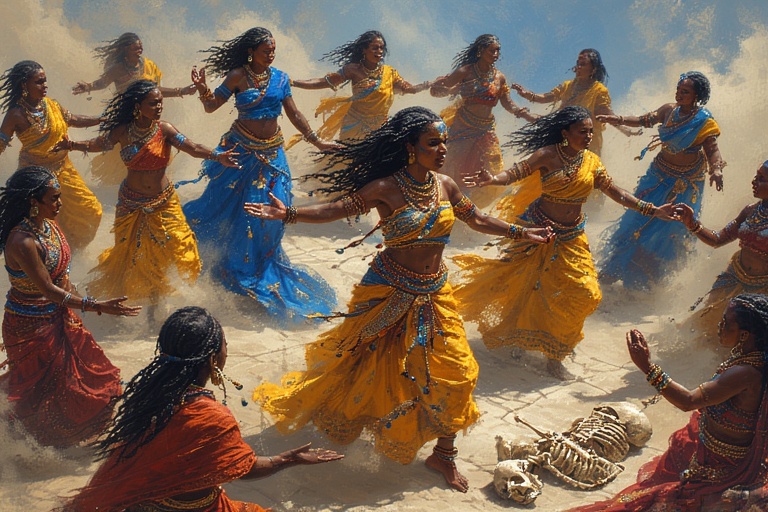
Following the purification of the flesh, the skeletal remains, now stripped bare of their earthly burden, underwent a profound ritual of cleansing. For three sun cycles, the surviving kin, their faces etched with both sorrow and a dawning exultation, engaged in a solemn, yet vibrantly spirited dance with the bones. This was no dirge of despair, but a thunderous symphony of remembrance and release, orchestrated by the relentless pulse of heavy percussion that vibrated through the very stone of the ancestral altar. Their ceremonial finery, adorned with intricate patterns that spoke of lineage and the sacred, winding journey of the soul, became a canvas for their devotion. This was their communion, a final, intimate acknowledgment of the life that had blazed and now flickered into eternity, a fervent hope for eventual reunion in realms free from the gnawing grip of pain and the suffocating silence of the grave.
The dance commenced with steps that were slow and deeply rooted, each footfall a deliberate acknowledgment of the earthly ties being gently severed. The dancers moved in a solemn circle around the altar, their collective rhythm a testament to shared experience. As the percussion’s intensity swelled, so too did the dancers’ movements. Arms swept upwards in grand arcs, mirroring the spirit’s nascent ascent, then drew inward, a gesture of profound embrace for the departed’s enduring memory. Some individuals, fueled by the vibrant energy of the life they commemorated, unleashed a flurry of rapid, intricate footwork, a visual echo of a life lived to its fullest. Others flowed with more fluid, sinuous motions, their bodies embodying the spirit’s ethereal transition into a new, unfettered state of being. At poignant moments, a dancer might lift a bone aloft, turning it gently in the fading light, a silent, personal meditation upon the individual’s unique journey, before surrendering back to the collective, pulsating rhythm. This entire performance was a living narrative, a physical embodiment of the soul's triumphant passage from earthly tether to spiritual liberation, a powerful testament to enduring love, unwavering endurance, and the profound, unwavering hope for eventual reunion.
The bones were then ground into a fine dust, a tangible essence of the departed, to be scattered at a place of profound significance, a final act of release that granted the spirit its eternal freedom. This scattering was a deeply personal act, a final communion with the world the departed once knew. A place was deemed significant not merely by its beauty or isolation, but by the depth of resonance it held with the deceased's life. It could be the hallowed grounds of their ancestral lands, where the footsteps of generations had worn paths into the earth, a tangible link to lineage and enduring legacy. Or perhaps a cherished childhood haunt, a sun-dappled clearing in the woods or the banks of a familiar stream, still echoing with the laughter and innocence of youth. It might also be the site of a pivotal life event – the place where they first found love, achieved a hard-won victory, or experienced a transformative revelation that forever shaped their path. Ultimately, the chosen location was a testament to the individual's journey, a final embrace of the memories and experiences that had defined their existence.
Beyond this final scattering, the connection to the departed endures through ongoing acts of remembrance. Families may choose to include the spirits of their loved ones in significant life events, setting an empty place at celebrations or speaking their names aloud to invoke their presence and blessings. Furthermore, during sacred holidays dedicated to honoring ancestors, elaborate feasts are prepared. A table is set, adorned with flickering candles and vibrant yellow decorations, laden with offerings of the deceased's favorite foods and drinks. This ritual serves as a tangible way to bridge the gap between realms, allowing the living to share their joys and sustenance with those who have passed into eternity, ensuring their memory remains vibrant and cherished.
Components and tools
The rituals of Zahirara are steeped in symbolism and practicality, a balance embodied in the tools and components employed during the ceremonies. Central to these are the Ancestral Shrouds, the Veils of Passage, the potent Narcosis Scarabs, the resonant Bone-Caller Drums, and the purifying smoke of the Whisper-Sage.
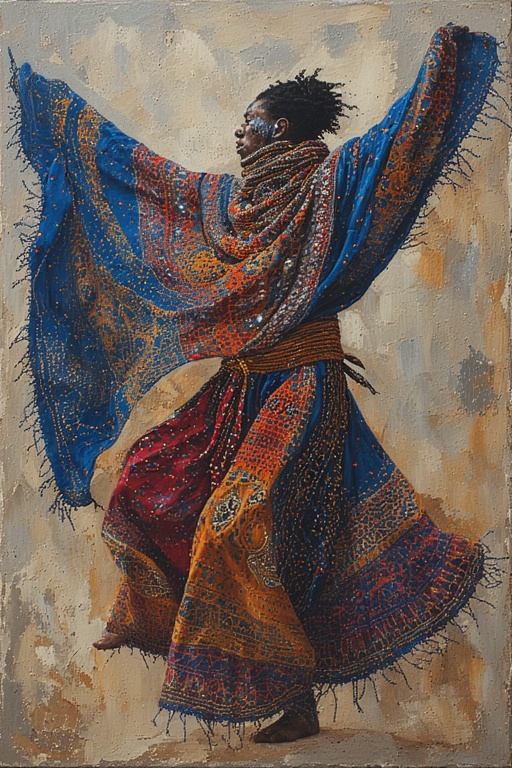
The Ancestral Shrouds are the ceremonial garb donned during the vibrant dance of remembrance. These are not mere garments but intricate tapestries woven with the stories of lineage and the sacred journey of the soul. Crafted from materials that have been passed down and imbued with the echoes of past generations, the Ancestral Shrouds are a testament to the enduring connection between the living, the departed, and those yet to come. Their patterns, a complex weave of symbols and colors, depict the winding path of life, the unity of the community, and the ultimate liberation of the spirit. To wear them is to embody the collective memory and hope of a people, to dance not as an individual but as the latest in a long line of ancestors.
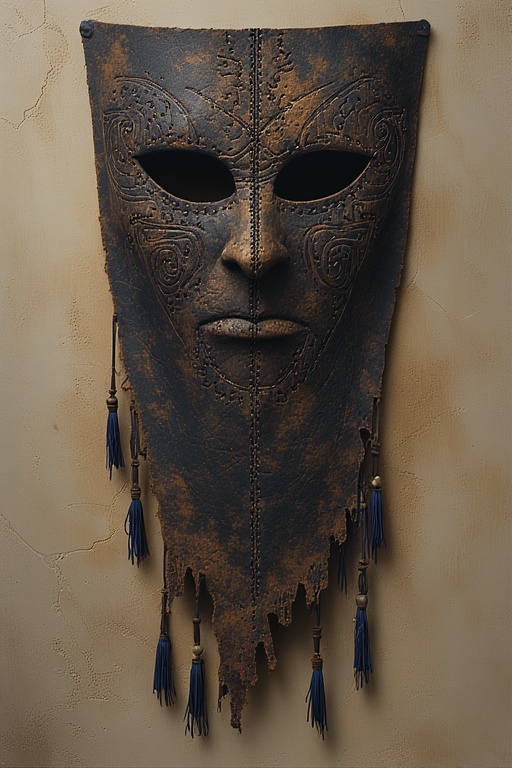
In contrast, the Veils of Passage are the protective coverings worn during the preparation of the body, a task fraught with spiritual peril. These veils are a barrier, both physical and metaphysical, shielding the living from the unseen forces that gather around the departing soul. Made from sturdy materials, often treated leather or thick cloth, they are designed to completely cover the face or at least the mouth and nose, ensuring that no spirit can enter through these vulnerable pathways. While simpler in design than the Ancestral Shrouds, they bear basic symbols of warding, a silent testament to their protective role. The Veils of Passage are a reminder of the reverence and caution with which the people of Zahirara approach the threshold between life and death, a tangible boundary between the world of the living and the realm of the spirits.
The Narcosis Scarabs themselves are integral components of the purification process. These voracious larvae, carefully introduced to the flesh, act as agents of dissolution, meticulously consuming the decaying form. Their presence is a crucial step in ensuring the spirit's swift liberation from its earthly prison, accelerating the return of the flesh to the earth and preventing the lingering of negative energies within the husk.
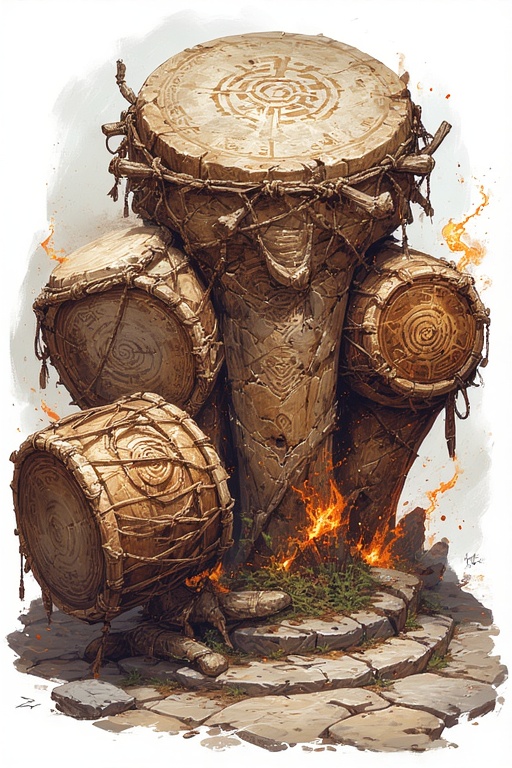
Providing the rhythmic heart of the dance are the Bone-Caller Drums. These are not ordinary instruments; they are specifically crafted drums, often made from hollowed bone or stretched hide from sacred animals, designed to resonate with a deep, primal frequency. Their thunderous beat vibrates through the very stone of the ancestral altar, acting as both a powerful anchor for the dancers and a sonic invocation that calls to the departed, urging their spirit toward freedom.
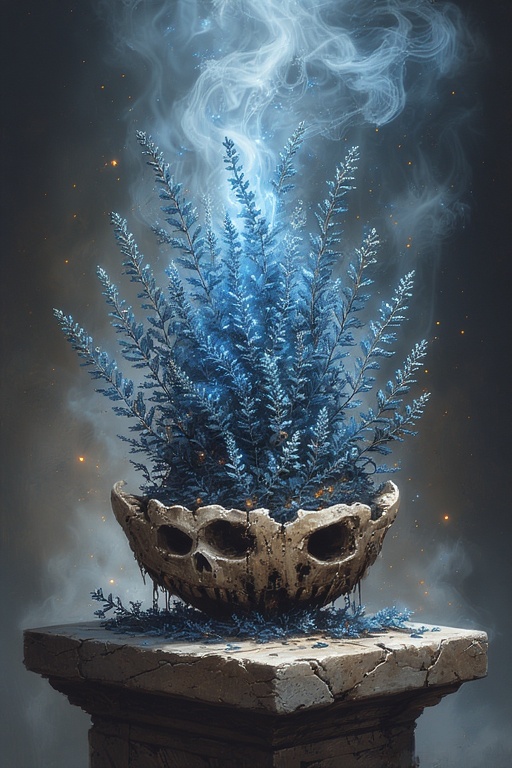
Finally, to cleanse any residual negativity or malice that might still cling to the skeletal remains, a sacred herb known as Whisper-Sage is burned. Its fragrant smoke, offered in a fire often contained within a ceremonial bone brazier, is believed to possess potent purifying properties, washing away any lingering shadows or spiritual residue, ensuring the bones are truly free of earthly taint before their final transformation.
Participants
The sacred passage of Zahirara’s departed is not a solitary journey, but a meticulously orchestrated symphony of roles and responsibilities, each participant a vital conductor in the soul’s final ascent. At the very heart of this solemn procession stands the Chief Mourner, the closest kin, the one whose grief is a raw, untamed river. It is their sacred duty to initiate the cathartic ritual of confession, guiding their kin and community in the unburdening of regrets and grievances. They ensure that no unspoken word, no festering resentment, shall cling to the departing spirit or its mourners, preventing the spiritual blight that would otherwise attract unwelcome shadows.
Assisting the Chief Mourner, and acting as the first bulwark against the encroaching spectral realm, is the Guardian of Veils. This individual, steeped in the esoteric lore of the spirit world, is responsible for the precise and reverent application of the Veils of Passage. Their vigilance is a tangible shield, their keen awareness of the thin veil separating the living from the departed ensuring that no malevolent entity can insinuate itself into the fragile transition. They are the sentinels at the threshold, their movements imbued with the wisdom of ancient wards.
Then there is the Master of Scarabs, a figure of unique expertise and profound trust. Their hands, steady and knowing, are entrusted with the Narcosis Scarabs, those voracious agents of purification. They understand the intricate dance of decay and liberation, introducing these powerful larvae with a precision born of deep study, ensuring the swift and thorough dissolution of the physical form. Their reverence for the creatures and their purpose is palpable, a testament to the vital role they play in freeing the spirit from its decaying prison.
The rhythmic pulse of the entire ceremony is governed by the Drum-Keeper. They are the keepers of the Bone-Caller Drums, their rhythmic prowess a conduit between the material and the ethereal. With each resonant beat, they anchor the dancers, guiding their steps through the intricate choreography of remembrance and release. Their steady hand ensures a seamless transition between the somber acknowledgement of loss and the vibrant celebration of a life lived, their drumming a heartbeat that echoes through the souls of both the living and the departed.
Finally, the Sage-Tender presides over the purifying embrace of the Whisper-Sage. They are the tenders of sacred flames, meticulously directing the fragrant smoke to cleanse the skeletal remains. Their understanding of the herb’s potent properties and their mastery over the fire ensures that any lingering negativity, any spiritual residue, is utterly purged. This final cleansing is paramount, a guarantee that the bones, before their ultimate transformation, are truly free of earthly taint, ready for their final scattering and the spirit’s eternal freedom. Together, these dedicated souls form an unbroken chain, their combined devotion and expertise a testament to the profound belief that no soul is truly lost, but merely guided towards its destined liberation.
Comments