

Keteatamdoo
The City of Beasts
Keteatamdoo, also known as Keteat, is the largest settlement on the Key of Beasts, an island off the coast of Udai central to Beastman society, though it is not home to all Beastmen. The city is primarily inhabited by Minotaurs and Satyrs, with some Felids, Crocutions, Centaurs, Mammen, and other Beastmen living there in a small minority. Due to this, it is often considered the city of Minotaurs, as they run it and make up its majority population.
During periods where the Beastmen have worked together, Keteat is the seat of power they rule a joint coalition from, as it sits between the vast plains where both Crocutions and Centaurs roam and the jungles where Felids, Satyrs, and many other beasts reside. It is beneath a massive waterfall, known as "the Tears of the Soul", which feeds a river that flows through Keteat and into the sea. Keteat itself is not in the jungle, instead being in the savannah, but it sits beneath the waterfall's cliff, atop which is the Felid Jungle. 
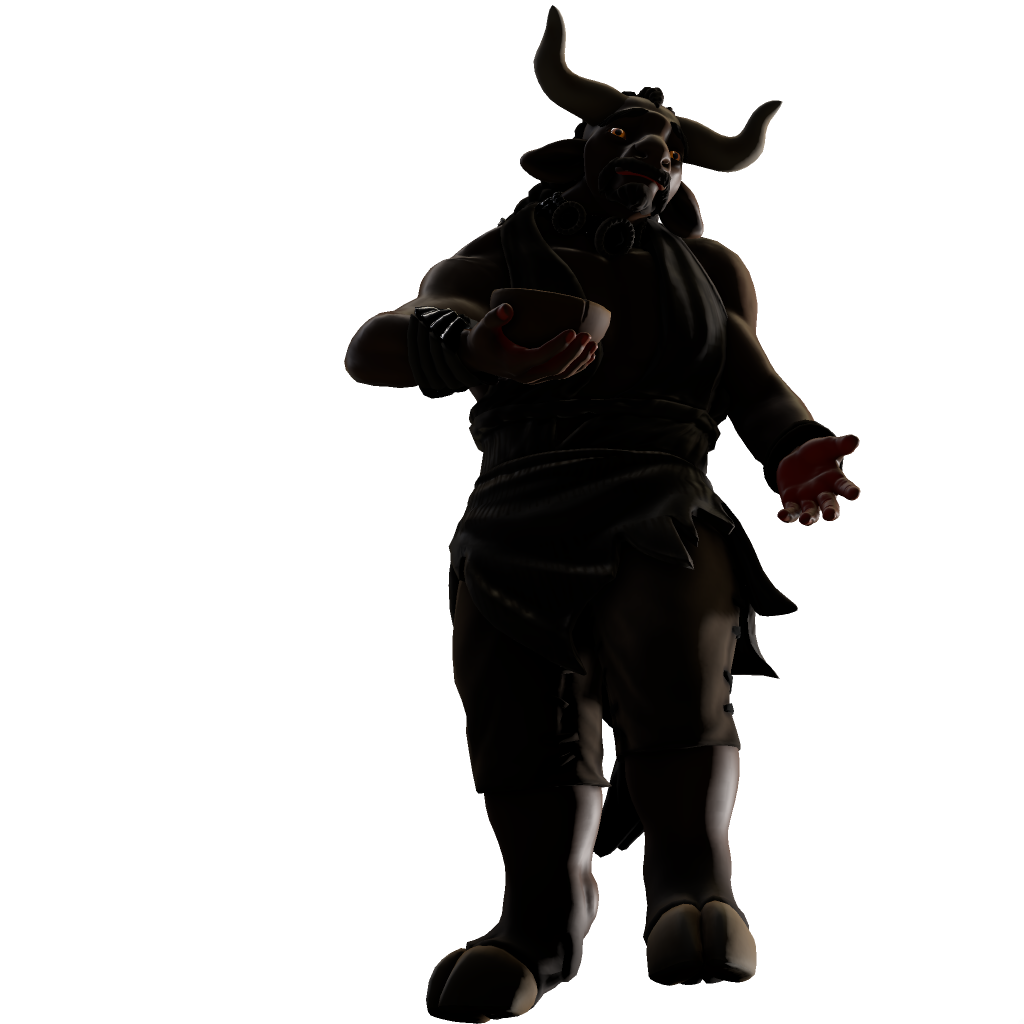
Bud the Hollow by Jarhed
Edicts of Keteatamdoo
Keteat has a set of laws agreed upon by all Beastmen that makes it stand out in contrast with other settlements in Udai. These include:- Violence is prohibited within the boundaries of the city. Keteat is to be a meeting place for Beastmen, a safe haven from the hostilities of Totania.
- All folks of bestial blood are equal here, though the cold-blooded lizards and the feathered folk of northern Udai are not permitted.
- Magic is forbidden on the streets of the city and in all public spaces. Keep all enchanted activities within the walls of your homes or other private enclosures.
- Animals are sacred, and all animal sacrifice and slaughter must be carried out outside of the city. A portion of the fertile city grounds around the river are to be allocated for farmland, so that Beastmen may not only survive off of beast meat.
- There are no more than three Gods: the Sun, the Grave, and the Prison. All end up in the grave, but one must strive towards the sun of heaven rather than the eternal prison of one's own making. All other worship must be supplementary, and worship that disregards these Gods is punishable by death.
Etymology
It is known as "the City of Beasts" to most of the world, as it is the only settlement on the Key of Beasts to be classified as a city, but to beastmen and many Udai residents it is known as "the Fatherly City", as its rulers and residents are often responsible for being figures of discipline and guidance for the rest of the beastmen on the island and around the world. It also gets this name from its founder, known only as "the Father of Beasts." Keteatamdoo's etymological roots are debated, though it is said the root "Keteat" may have once meant "soul" in the old tongue of the beasts, and from this some say he instructed his people to "preserve the soul" of their culture above all practices, which is why the language has changed and his name has been lost, but all he stood for has remained intact.Major Locations
The streets of Keteatamdoo are mazelike, with very few going very far without turning around a building, river, or other fixture of the city. Most residents grow accustomed to this, able to navigate it without any confusion or fear of losing their way. It was this that is said to have inspired Amukk's mazelike temple to the west of the Key of Beasts on mainland Udai.The Father of Beasts by Jarhed
The Tears of the Soul
The waterfall on the southeastern edge of Keteat, the Tears of the Soul can be seen from almost anywhere in the city due to how high it stretches into the sky. Flowing down from the Felid Jungle, the Tears of the Soul or just "Tears" as some call it are the primary source of water for the city, flowing into the city's river. It is said that the Felids above the cliff ensure the water remains pure and untainted, though the exact rituals and practices that go into such a thing are unknown. The Tears of the Soul serve as the sole reason Keteat was able to thrive when it was first built, as the Beastmen were on their last legs following the Beastman Genocide and the river formed by the Tears was able to create lush soil and feed them with the fish in the water and the animals that grazed on the grass.Nature's Precipice
The palace of Keteat's ruler (inhabited by the Herd Leader most often, unless there is a King of Keteat), carved into the cliffside overlooking the city, Nature's Precipice was created by the Korvians when they believed Keteat would have a monarch as they did. When Korvians were banished from the city, the palace remained as a testament to Keteat's freedom from such structures. At least, that is the case when someone has not seized power in the city, which is a more frequent occurence than most of its residents would prefer. It sits directly beside the waterfall, having direct access to the Tears of the Soul. Herd Leaders have been known to take thirsty citizens up to Nature's Precipice and give them the clearest, cleanest access to the Tears to quench their thirst. It is also where Herd Leaders take their partners when they are fulfilling their duty.Empty Nests
On many rooftops in Keteat, one can find empty nests that once housed Korvians and Avians, long before the presence of the two species was forbidden in the city. Some remain completely abandoned, while others serve as watchtowers and guard posts for the Minotaur guards who keep the city safe.Gathering Tents and the Guardians' Tipi
To the west of Keteat, a large chunk of land has been claimed and left untouched. Here, tents are raised when the Crocution tribes gather in Keteat, as military action is not allowed in the city, so most Crocutions prefer staying on the outskirts so they can settle any feud or grievance that comes up with other tribes while present in the City of Beasts.Founding
While people have lived around the edge of the jungle on the coast far before recorded history catches up with the Key of Beasts, the city of Keteatamdoo can trace its founding to a specific period: the Beastman Genocide. When Bud the Hollow was going across Udai with his Grand Clan of Orcs, exterminating Beastmen, it is said that more Beastmen lived outside of the Key of Beasts on the mainland of Udai. Many tribes and herds were fighting, scattered, but some had united and others were at the very least on peaceful terms with each other for the sake of their survival against the Orcs. But no leader had risen to unite them as Bud had done for their enemies, and things grew more dire every day. When the Glirens were wiped out, three options remained: stay on the mainland and fight, build a stronghold like Ruzrugh and try to hold out against an Orcish seige, or retreat to somewhere Bud would not reach them. The name of the figure responsible for convincing a majority of beastment to retreat has been lost: Korvians involved in the keeping of this history were likely responsible for this, as names don't exist in their culture. But a title he was known by has withstood the test of time, as it can be traced back through all the Tongues of the Beast (or Bestial Languages, as some know them): "Father" or, as it was in those days when the beastmen spoke a more unified language, "Kooth." The Father of Beasts (as he has since been known due to his kindness and care in leading the Beastmen and raising them from their nearly extinct state, as well as the likelihood of him being the ancestor of many future Minotaurs due to the low fertility rate of the Minotaur species) led to the edge of the jungle on the Key of Beasts, beneath a waterfall. While he was not a strong warrior, he has become the central image of leadership, kindness, heroism, and what it means to be holy in the Key of Beasts, and has served as a symbol of what the Beastmen (particularly the Minotaurs who call Keteat their primary home) can and should be. He was not singlehandedly responsible for Keteat's construction: he had other leaders of different tribes and groups suggesting many different ideas. Credit for the location has often been given to Centaur scouts who had roamed around the Key of Beasts looking for the perfect location that was both defensible and easy to escape from if the Orcs did end up reaching them, while Mammen and Korvian ideas were merged to create the city plans, Felid gatherers found the resources to build the city, and Crocution and Minotaur labor was responsible for the construction itself. All names of figures involved have, like the Father of Beasts, been lost, and none have stood out quite so much as he has.The Father of Beasts Murals and Depictions
Depictions of the Father can be found all over Keteat, though there are certain rules regarding how he may be depicted which were put in place with the cultic worship of him that has sprung up in the beastman societies. They must all be with little detail, showing him as only a vague figure. This is to allow anyone to be "fatherly", a key tenet of Keteat's culture, where they act like the Father of Beasts did to their fellow man: kindly, gently, patiently, and with no judgement. He is portrayed as a Minotaur because, by all accounts, he was, but all other descriptions and details are simply styled after Minotaur fashion at the time of the carving or artistic rendering. He is often shown in a position helping someone up from the ground, or perhaps up off of a boat onto the island, with a bowl of food in hand that he would offer to those he helped. It is said the Father of Beasts starved himself while building Keteat, as he prioritized feeding those around him, and so Keteat's leaders have since tried to do the same, prioritizing aid for the rest of the Key of Beasts rather than abudance in the city itself.
These tents are mostly temporary, though some tribes prefer the safety of the city's outskirts, and remain there most of the year, only moving when threatened or when it gets too cold near the shore.
One large tent is always there, at the center of the claimed area, so that other tents know where to go. This is home to Keteat's sole permanent Crocution pack, the Stalwart Guardians, who hold a seat in the government of Keteat itself as well. This tent, known as the Guardians' Tipi, is what most people approaching the city from the south or west see first, a large yellow-orange tent, which actually has multiple smaller tents inside it, with the Stalwart Guardians themselves living either in one of the smaller tents within this large monument or a smaller tent right outside it.
These tents are said to be the best place to get a hard drink in Keteat, as the Crocutions often have competitions to see who can outdrink everyone else in the camps, and celebrate every victory and defeat with a night of drinking. For other drinks, one need only find other places in Keteat, which may have the widest selection of places to drink at in all of Totania.
 Some consider these establishments of debauchery to be temples for the Satyrs, but it may not be that serious for them. Satyrs are raised on the idea that they must live life to the fullest, and they do so with mischief and celebration of all kinds, spending most of their lives in the altered state of drunkness or otherwise intoxicated. These locations are open to anyone who visits, for all are one in the throes of merriment. Satyrs often try to lure visitors to the city into their locations, with some of these interactions being far more predatory, while others are more about sharing the joy of their celebrations and introducing it to those not yet aware of the "true faith".
Attempts have been made to ban these establishments, as they are said to "defile" the city, but those attempts do not last long, as the Satyrs can gather an abundance of political power when they need it (as they do when their venues are in danger). Felids in particular support these establishments, especially the bars, as Felid culture also has a heavy emphasis on intoxication as a way towards a form of enlightenment. Crocutions are more likely to frequent the brothels, as it's more consistent than what they can find when traveling the plains with their packs.
One of their more accepted locales in the city are the theaters, run entirely by Satyrs, often with baudy satires on all year round. Here, all can enjoy a good time without the need to, as many Minotaurs and Crocutions have called it, "debase onself" with substances.
The most famous Satyr theater is at the center of Keteat, known as "The Theater of Dual Rods" for a pair of pillars that uphold the stage, as well as a sign that hangs over the entrance to the theater featuring two phalluses. The most famous bar sits right outside of the theater, known as "The Endless Cup" for a challenge one can find there, with it said that the more drinks one can have, the less they have to pay, causing many to attempt the challenge and fail quickly, paying exorbitant amounts for very few drinks (strong as they may be). The most famous brothel is the world's largest, taking up three blocks of Keteat along the river. This brothel is known as "Witty Sisters", as its original name (one whose first name rhymed with that of the new location) was banned, and the Satyrs decided to rebrand it for their wit in writing to sate the puritan views of Keteat's leadership. Despite the name, it isn't wit that most visit the brothel for, but the physical endowments the location was once named for.
Some consider these establishments of debauchery to be temples for the Satyrs, but it may not be that serious for them. Satyrs are raised on the idea that they must live life to the fullest, and they do so with mischief and celebration of all kinds, spending most of their lives in the altered state of drunkness or otherwise intoxicated. These locations are open to anyone who visits, for all are one in the throes of merriment. Satyrs often try to lure visitors to the city into their locations, with some of these interactions being far more predatory, while others are more about sharing the joy of their celebrations and introducing it to those not yet aware of the "true faith".
Attempts have been made to ban these establishments, as they are said to "defile" the city, but those attempts do not last long, as the Satyrs can gather an abundance of political power when they need it (as they do when their venues are in danger). Felids in particular support these establishments, especially the bars, as Felid culture also has a heavy emphasis on intoxication as a way towards a form of enlightenment. Crocutions are more likely to frequent the brothels, as it's more consistent than what they can find when traveling the plains with their packs.
One of their more accepted locales in the city are the theaters, run entirely by Satyrs, often with baudy satires on all year round. Here, all can enjoy a good time without the need to, as many Minotaurs and Crocutions have called it, "debase onself" with substances.
The most famous Satyr theater is at the center of Keteat, known as "The Theater of Dual Rods" for a pair of pillars that uphold the stage, as well as a sign that hangs over the entrance to the theater featuring two phalluses. The most famous bar sits right outside of the theater, known as "The Endless Cup" for a challenge one can find there, with it said that the more drinks one can have, the less they have to pay, causing many to attempt the challenge and fail quickly, paying exorbitant amounts for very few drinks (strong as they may be). The most famous brothel is the world's largest, taking up three blocks of Keteat along the river. This brothel is known as "Witty Sisters", as its original name (one whose first name rhymed with that of the new location) was banned, and the Satyrs decided to rebrand it for their wit in writing to sate the puritan views of Keteat's leadership. Despite the name, it isn't wit that most visit the brothel for, but the physical endowments the location was once named for.
 The Council of Twenty-Three has that number because of the twenty surviving tribes and herds that stood against Bud the Hollow during the Beastman Genocide. While legends have the original number of tribes going as high as eighty-four herds and tribes of Minotaurs and Satyrs, only twenty remained by the end, and those twenty joined together with a united Felid, Crocution, and Centaur army to fight and, ultimately, flee to Keteat. While the Felids and Crocutions mostly left Keteat, some remained, taking three positions once belonging to now-extinct tribes.
These tribes are not as easy to distinguish now, as they have lived in Keteat for a long time; however, their cultural practices, holidays, and religions exhibit slight variations that enable residents of Keteat and scholars familiar with the tribes to easily identify which tribe a Minotaur or Satyr belongs to. Four other Satyr tribes survived the genocide, but they have since been assimilated into the other two tribes, and many of the clearer distinctions in Minotaur herds have disappeared.
The Council of Twenty-Three has that number because of the twenty surviving tribes and herds that stood against Bud the Hollow during the Beastman Genocide. While legends have the original number of tribes going as high as eighty-four herds and tribes of Minotaurs and Satyrs, only twenty remained by the end, and those twenty joined together with a united Felid, Crocution, and Centaur army to fight and, ultimately, flee to Keteat. While the Felids and Crocutions mostly left Keteat, some remained, taking three positions once belonging to now-extinct tribes.
These tribes are not as easy to distinguish now, as they have lived in Keteat for a long time; however, their cultural practices, holidays, and religions exhibit slight variations that enable residents of Keteat and scholars familiar with the tribes to easily identify which tribe a Minotaur or Satyr belongs to. Four other Satyr tribes survived the genocide, but they have since been assimilated into the other two tribes, and many of the clearer distinctions in Minotaur herds have disappeared.
 The King has only once dismantled the Council of Twenty-Three, in an attempt to take full control of the city, while usually anyone who claims the title has instead sat at the head of the council, using it as a form of legitimacy, becoming the Herd Leader with more power.
Of course, what most Kings of Keteat have sought is not just the power, but the role of Herd Leader without needing to earn the trust and experience it requires. Endless partners, as many as they desire, all but throwing themselves at the Herd Leader... at least that was the dream of many former Kings, though in practice they have not been that popular without needing to use force.
The King has only once dismantled the Council of Twenty-Three, in an attempt to take full control of the city, while usually anyone who claims the title has instead sat at the head of the council, using it as a form of legitimacy, becoming the Herd Leader with more power.
Of course, what most Kings of Keteat have sought is not just the power, but the role of Herd Leader without needing to earn the trust and experience it requires. Endless partners, as many as they desire, all but throwing themselves at the Herd Leader... at least that was the dream of many former Kings, though in practice they have not been that popular without needing to use force.
Brothels, Bars, and Other Hubs of Mischief
Satyrs make up a large portion of the population in Keteat, but few have been known to lead honest lives there. Instead, most Satyrs can be found either running or enjoying establishments like brothels, bars, and other places of that ilk. Debauchery is the way of life for most Satyrs, as befits their faith (which often goes unnamed due to the edicts of Keteat forbidding whatever God they may worship, likely a minor deity).Halfer Ravengrove by Jarhed
Mino Pass
There are docks on the northern shore of Keteat, leading out to the waters of Mino Pass that separate Udai and the Key of Beasts. The waters north of Keteat are deep and difficult to traverse, which is what protects the city, but it makes it so the docks are often empty and the beaches too. Swimming in the Mino Pass is a death sentence, and few ships seek to traverse it, leaving Keteat cut off from much of the outside world. Still, some do, and the docks at least always have some boats owned by the various tribes so they can occasionally raid the mainland when resources grow scarce or it is unprotected.Artificial Jungle
While the streets of Keteat are mostly stone and dirt, a district of the city was created to make the Felids feel a bit more at home, with some small jungle trees (constantly trimmed to not grow too high in the skyline) for the Felids to gather around. There are no homes here, as it is instead a place of gathering and community, but it is a popular area for Felids to meet. This jungle is dangerous, leading most Minotaur guards to avoid the area and simply patrol around it. One must enter at their own risk, but within it is said that a vast selection of drugs can be found, though the primary purpose is for spiritual gatherings, worship, and other calm practices that are otherwise difficult in a bustling city.Stables of the Ancients
The oldest structures in Keteat are the Centaur stables, dating back likely to the nomadic Centaur hunters who predate even the Orcs in Udai, having roamed and hunted from the Key of Beasts to the Dwarven Mountains in Elone, when the two continents and the island were connected by a land bridge. These stables are places of community for Centaurs, where they can graze and meet with other Centaurs and rest when night comes. They are closest in comparison to inns in other cities, and those who ride on horses or other mounts often visit the stables with their pets or animals to feed them. They can mostly be found on the outskirts of the city, as Centaurs like the ability to leave the stables to roam the open fields as easily as possible. While Satyr bars and Crocution camps are best for drinking, and the artificial jungles are where strange drugs can be found, the stables are home to a drug unique to Centaurs, which is banned outside of the stables: an anesthetic hallucenogen known as Ketea (for its place of origin, Keteat).Perch of the Setting Sun and Other Holy Grounds
While there are multiple temples near Keteat (Tartarus' self-titled prison to the west on the Key of Beasts and the Gravesite of Irkalla across the waters of Mino Pass, Keteat itself has holy sites as well, particularly a point on the cliffside where people can climb to get a view of the sun as it sets over the western coast. This is known as the Perch of the Setting Sun, and it is a frequent spot for many to make a pilgrimage to during the later hours of the day. It gets so many visitors that it often has to be blocked off at a certain point, so as not to have it hold too many people who could break off the perch and send it plummeting down the cliffside. Other holy sites around the city are only for Irkalla and Tartarus, as all other divine worship is banned, though some temples to Minor Gods are allowed via the loophole that those sites are "primarily" for Irkalla or Tartarus, they just happen to also worship other Gods alongside them.Tunnels of the Shady Beach
Underneath the city, secret tunnels run, according to some rumors and legends, with access to all buildings in the city. These tunnels were carved in the mid-500s, around the time of the Grand Crowning, by a revolutionary who opposed the formation of the Beastman Triumvirate government in Keteatamdoo, which united the Minotaurs, Crocutions, and Felids under a joint leadership (which most beastmen knew heavily favored the Felid tyrant and Time Mage, known only as the Remnant of History.) The true identity of the revolutionary, or group, responsible has been lost, known only as the Shady Beach because of communications found partially faded in the sand of the beaches off Keteat's shores, before the waves washed away all traces of his existence. The tunnels themselves have corridors that apparently date back long before Shady Beach or the Remnant, though they were only connected then into one network. While there are stories of people living in there during the time of Remnant's reign, and even later, no one knows how to access it. Rumor has it that Shady Beach's methods of opening it were given only to those who needed it, and they were sworn to secrecy, only passing it on to those who required passage or haven in the tunnels. Now, there are rumors that the tunnels are used for nefarious purposes, though this may be a rumor spread by government officials to expose the part of the city that even they cannot access.Government
Keteatamdoo has had many different governments throughout the years, though one body has always remained in power (though it may, at times, be surpassed by other forms of governance).Council of Twenty-Three
This primary power in the city is the Council of Twenty-Three, a group of representatives from different tribes and herds of beastmen. Eighteen of these are Minotaur herds, two are Satyrs (though they are historically known not to attend), and then there are representatives from the Felids, Crocutions, and Centaurs of the city as well, though they don't have decisive power in the council and must gather support from others on the council to get their way.Remnant of History by Jarhed
Herd Leader
A voice of the council, the Herd Leader is a senior member of the Council of Twenty-Three, who has the experience to speak for them and the trust of a majority of the members to represent their will to the people and in diplomatic endeavors. While most world leaders care only to speak to the Herd Leader, seeing them as the de-facto head of Keteat, they hold little power on their own, and cannot make legislation or deals unless a split-second decision is needed to secure a deal or make a decision on law. The Herd Leader need not always be the most powerful warrior. However, there is another criterion they must meet, in addition to being on the council and being a Minotaur: they must be a parent, as Minotaur fertility has been an issue for a long time, and it is important that the person who represents them as a leader can produce children. It is often a man, as this allows Minotaur women to seek out the Herd Leader for a child when they cannot find a suitable, fertile partner. The few times a woman has been Herd Leader, this has slowed the process by which Minotaur children have been made, as she can only carry one child at a time (or twins, triplets, etc in some rare cases). The Herd Leader takes after the Father of Beasts in being a father figure to those in the herd and, when needed, being a father to as many children as he can (though the position may date back to before him, as no one is entirely certain when Minotaur fertility declined to the drastic level it now sits at). Due to their role in helping give birth to the next generation of Minotaurs, they cannot be too old despite the experience needed, and a Satyr cannot hold this position, though many Satyrs have sought it out due to the traditional love for parties, lovemaking, and liquor that is so common among them.King of Keteat
Keteatamdoo has rarely been a monarchy, but there have been times where the city is overthrown and one figure stands above all as King of Keteat (though this kingship is taken from the Korvian term, which is gender-neutral and based on strength, meaning there is no familial succession that comes with the title).Odrukh of the Jaded Executioners by andreaspsillos4

Comments