
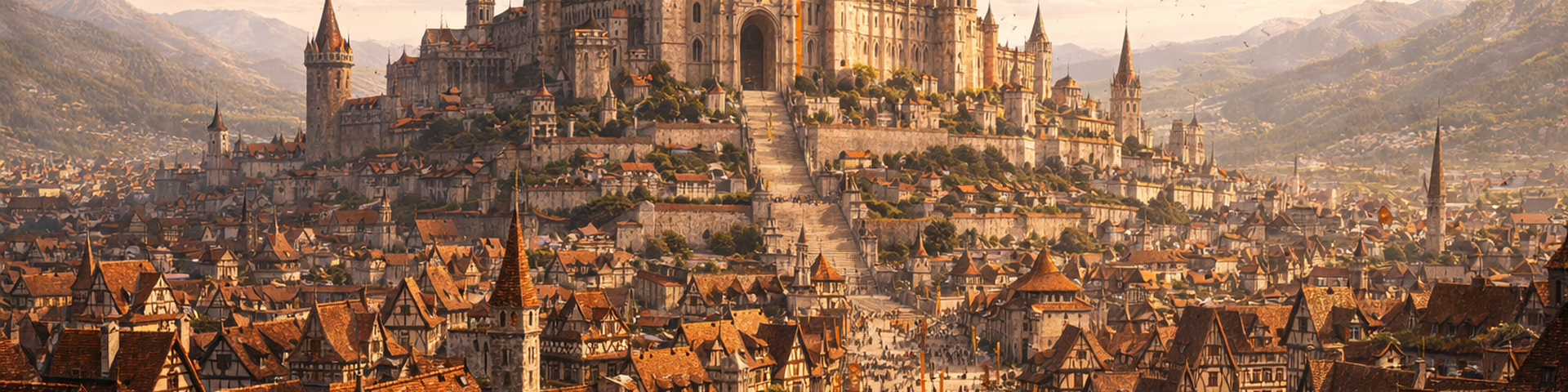
Andervaan
The Empire of Andervaan is the oldest continuously functioning imperial power on Tilea and, by most measures, the most stable. Where other realms rose through conquest, arcane dominance, or cultural consolidation, Andervaan arose through order, law, and shared belief. It was founded not as a theocracy, but as a state consecrated—a political entity shaped by faith without being ruled by priests.
Andervaan sees itself as the spine of civilization: not the most innovative, not the most enlightened, but the most enduring. Its institutions are ancient, its laws layered and precedent-heavy, and its people possess an almost cultural allergy to chaos. Where Eelia tolerates experimentation and Evanwyn improvises pragmatically, Andervaan preserves.
This conservatism has made the Empire slow to change—but exceptionally difficult to fracture.
Founding and Ideological Roots
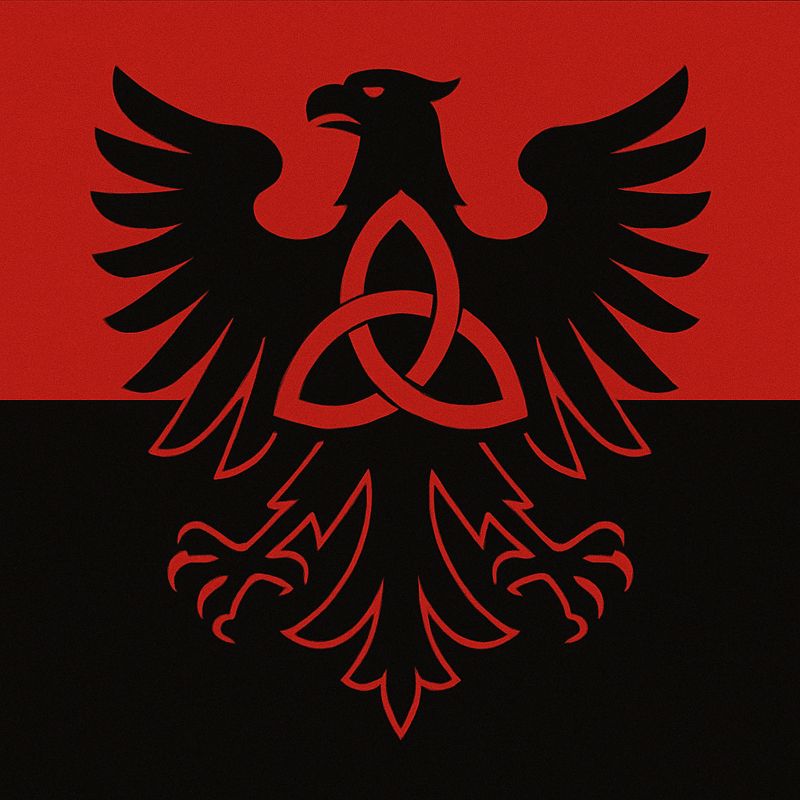
Andervaan was forged in the aftermath of an early continental collapse, when competing city-states failed under religious schism and internal war. The unifying solution was the Triumverant Doctrine: the belief that mortal society must reflect a threefold balance of Law, Sacrifice, and Stewardship. None of the three may dominate without corrupting the whole.
Crucially, the Triumverant does not rule. Instead, it sanctifies rule.
The first emperors bound themselves to the doctrine through law, creating a precedent where divine legitimacy flows through institutions, not individuals. The Emperor is therefore not divine, not chosen, and not infallible—but he is consecrated, and breaking that consecration is both a legal and spiritual crime.
Governance and Law
The Emperor
The Emperor of Andervaan rules as Protector of the Dioceses, not their owner. His authority is supreme in matters of:
- Imperial defense
- Inter-diocesan law
- Foreign policy
- High justice (appeals, treason, heresy)
However, his rule is constrained by:
- Codified Imperial Law
- The Concords of the Triumverant
- The Diocesan Assemblies
Emperors reign long, cautiously, and with an emphasis on continuity over ambition.
The Dioceses
Andervaan is divided into sixteen Dioceses, each centered on a major city named for a canonized saint. These are not religious fiefs but administrative-spiritual units, blending civil governance with ecclesial oversight.
Each Diocese is governed by:
- A Diocesan Prefect (civil authority)
- A Canon-Legate (Triumverant representative)
Neither may act unilaterally on matters of taxation, military levies, or capital punishment.
This dual structure is slow—but deliberately so.
Religion: The Triumverant
Religion in Andervaan is omnipresent but not oppressive.
Temples dominate city skylines. Saints’ names define geography. Oaths invoke divine witnesses. Yet personal belief is not policed unless it threatens public order.
The Triumverant is understood less as a set of gods demanding worship and more as a metaphysical framework that legitimizes law, hierarchy, and sacrifice. Saints function as moral exemplars rather than miracle-dispensers.
Heresy is rare—and dangerous—not because dissent is forbidden, but because it implies the rejection of order itself.
Society and Culture
Andervaan culture values:
- Duty over ambition
- Stability over innovation
- Continuity over charisma
Citizens are raised to believe that civilization is fragile, hard-won, and easily lost. This produces a population that accepts regulation, ritual, and obligation as the cost of peace.
Social mobility exists, but slowly. Institutions matter more than individuals. Lineage matters less than service.
The Empire produces excellent:
- Administrators
- Jurists
- Engineers
- Infantry officers
It produces fewer artists and philosophers than Eelia—and does not particularly care.
Military Doctrine
The Andervaani military is defensive, disciplined, and patient.
Rather than conquest, its purpose is:
- Border integrity
- Diocesan stability
- Protection of trade routes
- Deterrence
Legions are raised by Dioceses and standardized at the imperial level, ensuring loyalty to both local and central authority. Religious symbolism is present but restrained—soldiers are guardians of order, not holy crusaders.
Mercenary use is minimal and regulated.
Economy and Trade
Andervaan sits astride several critical maritime and overland trade routes. Its economy is based on:
- Agriculture (grain, olives, wine)
- Manufactured goods
- Bureaucratic services
- Ecclesial trade (pilgrimages, relic custodianship, sanctioned orders)
It trades heavily with Evanwyn and maintains cautious, formal trade agreements with Eelia.
Kharqet trade exists, but is politically sensitive.
Foreign Relations
- Eelia: Rival, competitor, occasional ally. Philosophical tension more than open hostility.
- Evanwyn: Trusted buffer state and trade partner.
- Kharqet: Respected, misunderstood, diplomatically distant.
- Suin’ai: Watched carefully. Ideologically incompatible but stable.
- Drakewild: Outside civilization. Treated as a natural hazard.
- Skrevan Wastes: A perpetual concern. Border defenses are robust

Comments