
Ikaran Culture
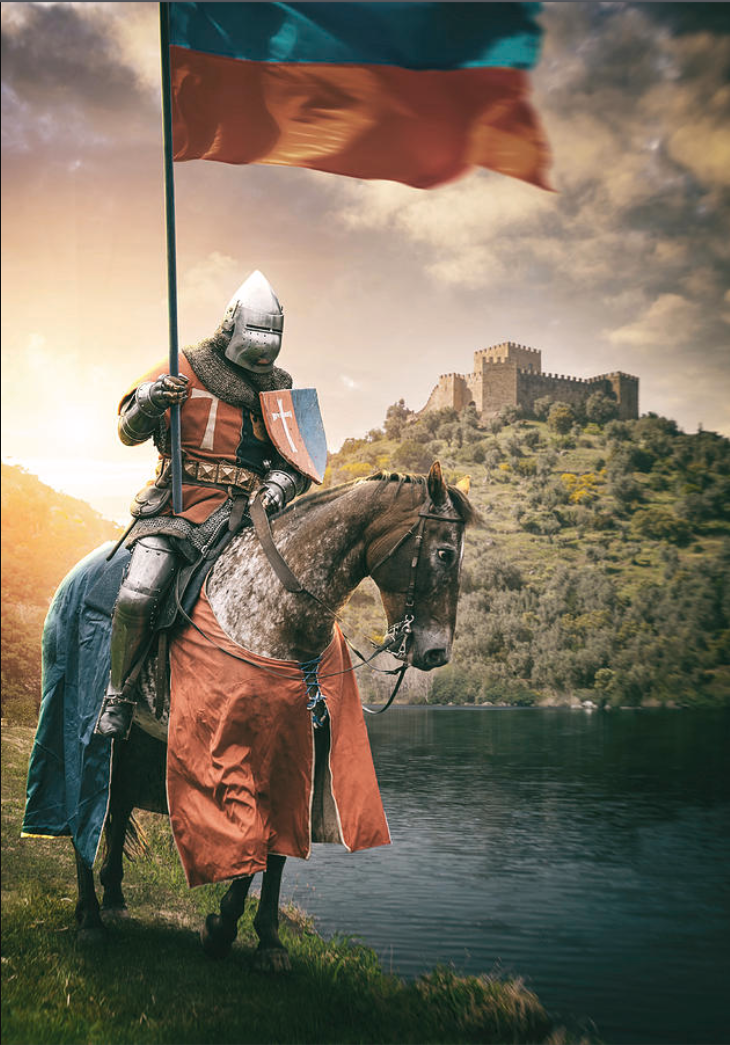
Honor, Fealty, Duty, such things define the culture of the Ikarans. From the very early days of the Ikaran People, their society has been structured around these central tenants. Countless peoples around the world have been home to knights, men who proclaim honor as their shield, virtue as their sword and chivalry as their purpose, but only the Knightly Orders of Ikara have truly embodied these ideals down to a man, for to be a Knight of Ikara, is to sacrifice everything.
Whatever the Origins of the Ikarans, their stories speak often and heroically of the Knights, heroes who slew bandits, battled dragons, saved fair maidens and served as beacons of chivalry and honor, the word knight itself, while originating from the Nuzun would be used often to describe the Ikaran Knights, Zalduna in the Ikaran language, with modern cultural depictions of knights across the continent based on these tales of the Zalduna. These early tales, be they true or fantastical, would be used as justification for the social organization of the Ikarans, for Ikara would not become home to a noble class, at least not one in any traditional sense, but rather the fundamental block on which it's society was built would be the Knightly oOrders.
The means by which the Orders governed would also vary, most orders would maintain a light grip over whatever territory they controlled, often relying on the cooperation of the towns and villages they controlled more like allies then subjects. Often the leaders of these towns and villages would be the Buruak or Headsmen, who often relied on the Lurjabea, the minor landholders of Ikara, for support to maintain their own position of prominence over their community.
Some orders, often the largest and most powerful would directly administer their territory without relying on the cooperation of the Buruak and Lurjabea, instead their lands would be run by the Alkatea, which while often translates to mayor, holds little similarities to the mayors of other people, as the Alkatea serves as a primarily military role with civil powers over the people under their protection.
The use of the word protection is deliberate, for it was fundamentally believed that the role of the knights was to protect the people under their care, this idea of protecting served as the 4th pillar upon which the knightly orders were organized, the other three being: Honor, Fealty and Duty. While these pillars would be thought of and interpreted differently from order to order, they fundamentally bound every knight sworn to one of the orders to them, to betray these oaths was punishable, based on severity, by expulsion or even death.
Located in the central plains of Ikara, the City of Pertonces was the largest city in all of Ikara and was central to the resistance against Tekederia as it was home to the largest knightly order of Ikara, the Flaming Lance. The Tekederians had for the past 5 years assailed it's walls no less than 4 times, and each time had been repelled by it's defenders, with the 4th attempted assault ending in the death of Princep Tiberius II in 558, with his son Tiberius III vowing revenge for the death of his father, who marshalled the largest army in Tekederian History.
The Ikarans believed that, if they could crush this new army at Pertonces and Kill Tiberius III, the Tekederian Empire would be forced to abandon Ikara as Tiberius was without heir and civil war would certainly follow his death without a clear successor. Thus the Flaming Lance gathered to it the full might of Ikara, over two dozen knightly orders mustered to face the Tekederains on the field and put an end to the invasion.
The Open plains outside of Pertonces lent themselves well to the Heavy Cavalry of Ikara, something that the Tekederians simply held no answer for, while the main Tekederian force had been harried for weeks by skirmishers, their supply lines frayed and their green force about to contend with a army half in size but battle hardened after 5 years of fighting.
Despite the favorable terrain, better experienced men and the belief they needed but this single victory to save their homeland, the Orders could not prepare for what Tiberius had arrayed against them. For Tiberius force had been augmented by a large contingent of heavy cavalry of his own, many Lurjabea had long chafed under the rule of the Knights and now sought to supplant them, having been offered power and the right to rule the Ikaran lands on behalf of the empire if only they switched sides, in addition was the Knightly Order of the Golden Chalice, based from the hinterlands of Ikara, they had thrown their lot in with the Tekederians for the promise of prestige and power never before held by the knights of Ikara.
This betrayal shocked the Ikaran defenders, in but a single moment their countrymen had abandoned all 4 pillars that defined their society, and thrown their lot in with the enemy. Such a betrayal disheartened many, and enraged more, and without much thought 3 knightly orders along the left flank launched a wild charge into the Tekederian right where the traitor Lurjabea had arrayed their forces. This charge would be butchered by arrow and stakes raised by rope at the last moment, the knights impaling themselves and their mounts in droves.
What followed was a massacre, with the Ikaran left in disarray and the rest of the army demoralized, Tiberius III won a shocking victory and entered Pertonces, sacking the city and burning it down to its foundation, wiping it off the map with only the smouldering embers evidence that a city had once stood there.
Tekederian Rule would completely unroot the Ikaran social structure, the knightly orders would be dismantled and their power transferred to the Lurjabea, with only the Golden Chalice escaping the destruction of their kin. Instead, the Knights of the Golden Chalice would serve as the bodyguard of the Princeps until their dissolution in 318 IE, acting as the Princeps' enforcer and wholly loyal to the Princep over the Senate or local power holders in the Empire
In addition to empowering the Lurjabea, Tekederia would import a large amount of Gallians from it's outer territory into the lowlands of Ikara, and while they would never overtake the native Ikaran, they remain a large minority in the region and a long sore spot between the Modern Provinces of Gallia and Ikara in the Forzorian Empire.
Tekederian Rule would last until 324 IE, when the slowly declining Tekederian Empire would once again enter civil war and the region simply slip away as the many Lurjabea declared independence and established their own petty states as the Tekederians were forced out mostly without violence.
Despite the instability in this period, the Ikarans saw a grand cultural renaissance take hold across the land, with much of the Tekederian legacy on their culture overturned as their language was practically reconstructed to remove Tekederian influence in an attempt by several Lurjabea to try and instill a sense of unity among the Ikarans, this in turn lead to a lionization of the Knightly Orders.
While they had mostly faded into history by the time the Tekederians withdrew, they became lionized in Song, Poem, Plays and countless books. Their concepts of honor were lionized, their desperate last stand at Pertonces was immortalized as the death of chivalry and honor in a brutal world, and in many cases the names and arms of these ancient orders were adopted by the Lurjabea and new knightly orders in attempt to mimic the glory of their ancestors. It is this period that lead to the stereotypical image of a Knight, clad in full plate, lance in hand atop a horse charging into battle against evil and chaos.
Another major development in this period would be the resurgence of the Forest Brothers, guerilla groups that had operated for centuries in the northern forests and mountains of Ikara since the battle of Pertonces, tracing their heritage to those knightly orders that kept fighting after the fall of Ikara. While the Forest Brothers would be little better then bandits for centuries, the revival of Ikaran culture, the growing idolization of the knightly orders and power of the Lurjabea would see the forest brothers grow from petty bandit groups into organizations with dedicated causes, in many ways becoming reborn knightly orders free of the landholders, swearing to overthrow them and restore knight rule over Ikara.
This period would come to an end in the 490s, as a new Empire set its sights upon Ikara. Not from the South but this time from the West, the Forzorian Empire, once apart of the same empire as Ikara, had come to make the knights once more bend the knee or be destroyed.
In this position, Emperor Tribunius sought to solidify his reign and the future reign of his daughter in an invasion of Ikara, granting his daughter command of the invasion in hopes this would secure her reputation in the Imperial Army and among the common soldiers. The Opening move of the invasion would be in 491, with not fighting but several lesser Lurjabea along the western border with the Empire swearing oaths of fealty to Catherina and the Empire. This gave the Empire a strong base of operations in Ikara from which to operate, and allowed it to make use of both imperial troops and local Ikarans in the conquest of the region.
The first battles would erupt in late 491, as the Imperial Army launched a rapid invasion of inner Ikara, marching on the city of Ibarga, the largest in Ikara and currently home to the dominant Lurjabea Vigilio Agorrody, who had come close to unifying all of Ikara under his rule. The Battle of Ibarga would be quick, as the Ikaran defenders proved unable to resist the overwhelming power of the Imperial Army and by 492, almost all of Ikara fell under the Empire's control, only the forests and mountains remained out of imperial control, the forest brothers bitterly resisting the empire for another century.
Imperial Rule over Ikara would in a strange sense of irony only intensify the efforts to restore the reputation of the knightly orders, as the Princess Catherina, serving as the new provinces first governor, would attempt to legitimize her families rule over Ikara by tapping into the mythical founder of the House of Manstein, Fredrich Manstein, who had been a knight in the days before the Tekederian invasion of Forzoria. Making use of traditional imagery and ideas of Ikaran knighthood and applying them unto Fredrich, the Empire sought to exploit the chivalry of Ikaran culture to bound the region closer to Imperial Rule.
The fall of Ikara would not be the end of an independent Ikara, in 495 the City of New Ibarga would be established by several prominent exiled Lirjabea and knight orders on the island of Hartonby in the Howling Isles, far to the northeast of the continent. It was here a new Ikaran nation would be established far from their homeland, and is considered by many as the birthplace of Modern Republicanism.
Drink is also an important part of this tradition, with all forms of Ikaran Wines, Beer and other drinks being prominent in their culture. Wine Vineyards are some of the largest agricultural estates in Ikara, with grapes and wine being some of its largest exports to the rest of the Empire and foreign nations, something that sadly is near impossible in New Ibarga due to its cold climate.
History
Shrouded Origins
The Early Ikarans are shrouded in mystery, where they came from, and how they came to inhabit the modern lands known as Ikara are shrouded in myth and legend, with no two stories being the same, yet all share one central theme, the knights. The Ikarans along the great mountains that straddle their northern borders believe they came into the world as a great host lead through the mountain passes lead by a host of knights with flaming lances, knights who waged war on an eternal night, the Ikarans of the Plains speak of their arrival as refugees fleeing from south, heroic forces of knights holding the rear as the people fled, other stories range from the first knights sprouting from the dirt and them simply having always been in Ikara.Whatever the Origins of the Ikarans, their stories speak often and heroically of the Knights, heroes who slew bandits, battled dragons, saved fair maidens and served as beacons of chivalry and honor, the word knight itself, while originating from the Nuzun would be used often to describe the Ikaran Knights, Zalduna in the Ikaran language, with modern cultural depictions of knights across the continent based on these tales of the Zalduna. These early tales, be they true or fantastical, would be used as justification for the social organization of the Ikarans, for Ikara would not become home to a noble class, at least not one in any traditional sense, but rather the fundamental block on which it's society was built would be the Knightly oOrders.
Knightly Orders
The Knightly Orders of Ikara would be numerous and diverse, but would share several key similarities as over the centuries they become more homogeneous. The Orders would be organized in an order of Zalduna who banded together to achieve some sort of mutual objective, but would over time transform into a military and political order dedicated to controlling whatever region of Ikara they operated. These orders would typically ruled by a council of ranking Zalduna, with the leading of the order being titled Zaldun-Kapitaina, or Knight-Captain, the power of the Knight-Captain would differ from order to order, some serving mostly ceremonial roles while others would wield near absolute power over the Order they lead.The means by which the Orders governed would also vary, most orders would maintain a light grip over whatever territory they controlled, often relying on the cooperation of the towns and villages they controlled more like allies then subjects. Often the leaders of these towns and villages would be the Buruak or Headsmen, who often relied on the Lurjabea, the minor landholders of Ikara, for support to maintain their own position of prominence over their community.
Some orders, often the largest and most powerful would directly administer their territory without relying on the cooperation of the Buruak and Lurjabea, instead their lands would be run by the Alkatea, which while often translates to mayor, holds little similarities to the mayors of other people, as the Alkatea serves as a primarily military role with civil powers over the people under their protection.
The use of the word protection is deliberate, for it was fundamentally believed that the role of the knights was to protect the people under their care, this idea of protecting served as the 4th pillar upon which the knightly orders were organized, the other three being: Honor, Fealty and Duty. While these pillars would be thought of and interpreted differently from order to order, they fundamentally bound every knight sworn to one of the orders to them, to betray these oaths was punishable, based on severity, by expulsion or even death.
Tekederia
The Status Quo of the Knightly Orders dominating Ikara would remain until the year 562 BIC, when the forces of the slowly growing Tekederian Empire would invade the lands of Ikara intent on growing their new empire beyond their home peninsula. The Knights of Ikara would stage a vaillant defense of their homeland, the Legions of Tekederia held little answer for the heavily armored cavalry of the Ikarans, nor for the brutal guerilla war waged in the forests and mountains in northern Ikara, yet despite all their bravery and honor, the Tekederians proved a consistent enemy, and by 557 the Ikarans had been forced into a single decisive battle to decide the fate of their homeland, the Battle of Pertonces.Located in the central plains of Ikara, the City of Pertonces was the largest city in all of Ikara and was central to the resistance against Tekederia as it was home to the largest knightly order of Ikara, the Flaming Lance. The Tekederians had for the past 5 years assailed it's walls no less than 4 times, and each time had been repelled by it's defenders, with the 4th attempted assault ending in the death of Princep Tiberius II in 558, with his son Tiberius III vowing revenge for the death of his father, who marshalled the largest army in Tekederian History.
The Ikarans believed that, if they could crush this new army at Pertonces and Kill Tiberius III, the Tekederian Empire would be forced to abandon Ikara as Tiberius was without heir and civil war would certainly follow his death without a clear successor. Thus the Flaming Lance gathered to it the full might of Ikara, over two dozen knightly orders mustered to face the Tekederains on the field and put an end to the invasion.
The Open plains outside of Pertonces lent themselves well to the Heavy Cavalry of Ikara, something that the Tekederians simply held no answer for, while the main Tekederian force had been harried for weeks by skirmishers, their supply lines frayed and their green force about to contend with a army half in size but battle hardened after 5 years of fighting.
Despite the favorable terrain, better experienced men and the belief they needed but this single victory to save their homeland, the Orders could not prepare for what Tiberius had arrayed against them. For Tiberius force had been augmented by a large contingent of heavy cavalry of his own, many Lurjabea had long chafed under the rule of the Knights and now sought to supplant them, having been offered power and the right to rule the Ikaran lands on behalf of the empire if only they switched sides, in addition was the Knightly Order of the Golden Chalice, based from the hinterlands of Ikara, they had thrown their lot in with the Tekederians for the promise of prestige and power never before held by the knights of Ikara.
This betrayal shocked the Ikaran defenders, in but a single moment their countrymen had abandoned all 4 pillars that defined their society, and thrown their lot in with the enemy. Such a betrayal disheartened many, and enraged more, and without much thought 3 knightly orders along the left flank launched a wild charge into the Tekederian right where the traitor Lurjabea had arrayed their forces. This charge would be butchered by arrow and stakes raised by rope at the last moment, the knights impaling themselves and their mounts in droves.
What followed was a massacre, with the Ikaran left in disarray and the rest of the army demoralized, Tiberius III won a shocking victory and entered Pertonces, sacking the city and burning it down to its foundation, wiping it off the map with only the smouldering embers evidence that a city had once stood there.
Tekederian Rule would completely unroot the Ikaran social structure, the knightly orders would be dismantled and their power transferred to the Lurjabea, with only the Golden Chalice escaping the destruction of their kin. Instead, the Knights of the Golden Chalice would serve as the bodyguard of the Princeps until their dissolution in 318 IE, acting as the Princeps' enforcer and wholly loyal to the Princep over the Senate or local power holders in the Empire
In addition to empowering the Lurjabea, Tekederia would import a large amount of Gallians from it's outer territory into the lowlands of Ikara, and while they would never overtake the native Ikaran, they remain a large minority in the region and a long sore spot between the Modern Provinces of Gallia and Ikara in the Forzorian Empire.
Tekederian Rule would last until 324 IE, when the slowly declining Tekederian Empire would once again enter civil war and the region simply slip away as the many Lurjabea declared independence and established their own petty states as the Tekederians were forced out mostly without violence.
Petty States
With the dominance of the Lurjabea over the new Ikara, the region would enter a century and a half period of conflict and power struggles as an uneasy balance of power settled over Ikara. Often a prominent line of Lurjabea would come to dominate most, but rarely all of Ikara for several decades before declining, and a new line of Lurjabea taking their place as the dominant power in the region.Despite the instability in this period, the Ikarans saw a grand cultural renaissance take hold across the land, with much of the Tekederian legacy on their culture overturned as their language was practically reconstructed to remove Tekederian influence in an attempt by several Lurjabea to try and instill a sense of unity among the Ikarans, this in turn lead to a lionization of the Knightly Orders.
While they had mostly faded into history by the time the Tekederians withdrew, they became lionized in Song, Poem, Plays and countless books. Their concepts of honor were lionized, their desperate last stand at Pertonces was immortalized as the death of chivalry and honor in a brutal world, and in many cases the names and arms of these ancient orders were adopted by the Lurjabea and new knightly orders in attempt to mimic the glory of their ancestors. It is this period that lead to the stereotypical image of a Knight, clad in full plate, lance in hand atop a horse charging into battle against evil and chaos.
Another major development in this period would be the resurgence of the Forest Brothers, guerilla groups that had operated for centuries in the northern forests and mountains of Ikara since the battle of Pertonces, tracing their heritage to those knightly orders that kept fighting after the fall of Ikara. While the Forest Brothers would be little better then bandits for centuries, the revival of Ikaran culture, the growing idolization of the knightly orders and power of the Lurjabea would see the forest brothers grow from petty bandit groups into organizations with dedicated causes, in many ways becoming reborn knightly orders free of the landholders, swearing to overthrow them and restore knight rule over Ikara.
This period would come to an end in the 490s, as a new Empire set its sights upon Ikara. Not from the South but this time from the West, the Forzorian Empire, once apart of the same empire as Ikara, had come to make the knights once more bend the knee or be destroyed.
Forzoria
The Forzorian Empire of the 490s was in a state in a precarious position, Emperor Tribunius I was elderly and nearing death, while the nobility of the Empire was growing more restless with his wide sweeping reforms to the Imperial Government, which saw the establishment of the Imperial Diet, along with the fact Tribunius insisted his daughter and only child Catherina was his heir, over his younger brother Narbe.In this position, Emperor Tribunius sought to solidify his reign and the future reign of his daughter in an invasion of Ikara, granting his daughter command of the invasion in hopes this would secure her reputation in the Imperial Army and among the common soldiers. The Opening move of the invasion would be in 491, with not fighting but several lesser Lurjabea along the western border with the Empire swearing oaths of fealty to Catherina and the Empire. This gave the Empire a strong base of operations in Ikara from which to operate, and allowed it to make use of both imperial troops and local Ikarans in the conquest of the region.
The first battles would erupt in late 491, as the Imperial Army launched a rapid invasion of inner Ikara, marching on the city of Ibarga, the largest in Ikara and currently home to the dominant Lurjabea Vigilio Agorrody, who had come close to unifying all of Ikara under his rule. The Battle of Ibarga would be quick, as the Ikaran defenders proved unable to resist the overwhelming power of the Imperial Army and by 492, almost all of Ikara fell under the Empire's control, only the forests and mountains remained out of imperial control, the forest brothers bitterly resisting the empire for another century.
Imperial Rule over Ikara would in a strange sense of irony only intensify the efforts to restore the reputation of the knightly orders, as the Princess Catherina, serving as the new provinces first governor, would attempt to legitimize her families rule over Ikara by tapping into the mythical founder of the House of Manstein, Fredrich Manstein, who had been a knight in the days before the Tekederian invasion of Forzoria. Making use of traditional imagery and ideas of Ikaran knighthood and applying them unto Fredrich, the Empire sought to exploit the chivalry of Ikaran culture to bound the region closer to Imperial Rule.
The fall of Ikara would not be the end of an independent Ikara, in 495 the City of New Ibarga would be established by several prominent exiled Lirjabea and knight orders on the island of Hartonby in the Howling Isles, far to the northeast of the continent. It was here a new Ikaran nation would be established far from their homeland, and is considered by many as the birthplace of Modern Republicanism.
Modern Ikara Culture
Modern Ikaran Culture is in many ways a time capsule of their old heritage, things like Honor, Truth and Chivalry have become central to their own identity, while the Ikarans themselves have harshly resisted any attempt to alter their own identities and belief systems.Ikaran Cuisine and Eating Habits
Ikaran meals are complex and often extravagant, with multiple courses a meal being commonplace among the average Ikaran family, with all sorts of meats, fruits and vegetables mixed in interesting combinations to create the Ikaran eatery experience. Presentation is a core component of Ikaran Cuisine and Culture, as simply providing these meals is not enough, they must be presented in a formal and extravagant manner by which the eaters of the meals will be impressed and jealous of the food as presented by their host. This creates a sense of competition among families and communities on special festivals and holidays, seeking to outdo each other every year in a never ending race to be better.Drink is also an important part of this tradition, with all forms of Ikaran Wines, Beer and other drinks being prominent in their culture. Wine Vineyards are some of the largest agricultural estates in Ikara, with grapes and wine being some of its largest exports to the rest of the Empire and foreign nations, something that sadly is near impossible in New Ibarga due to its cold climate.
