
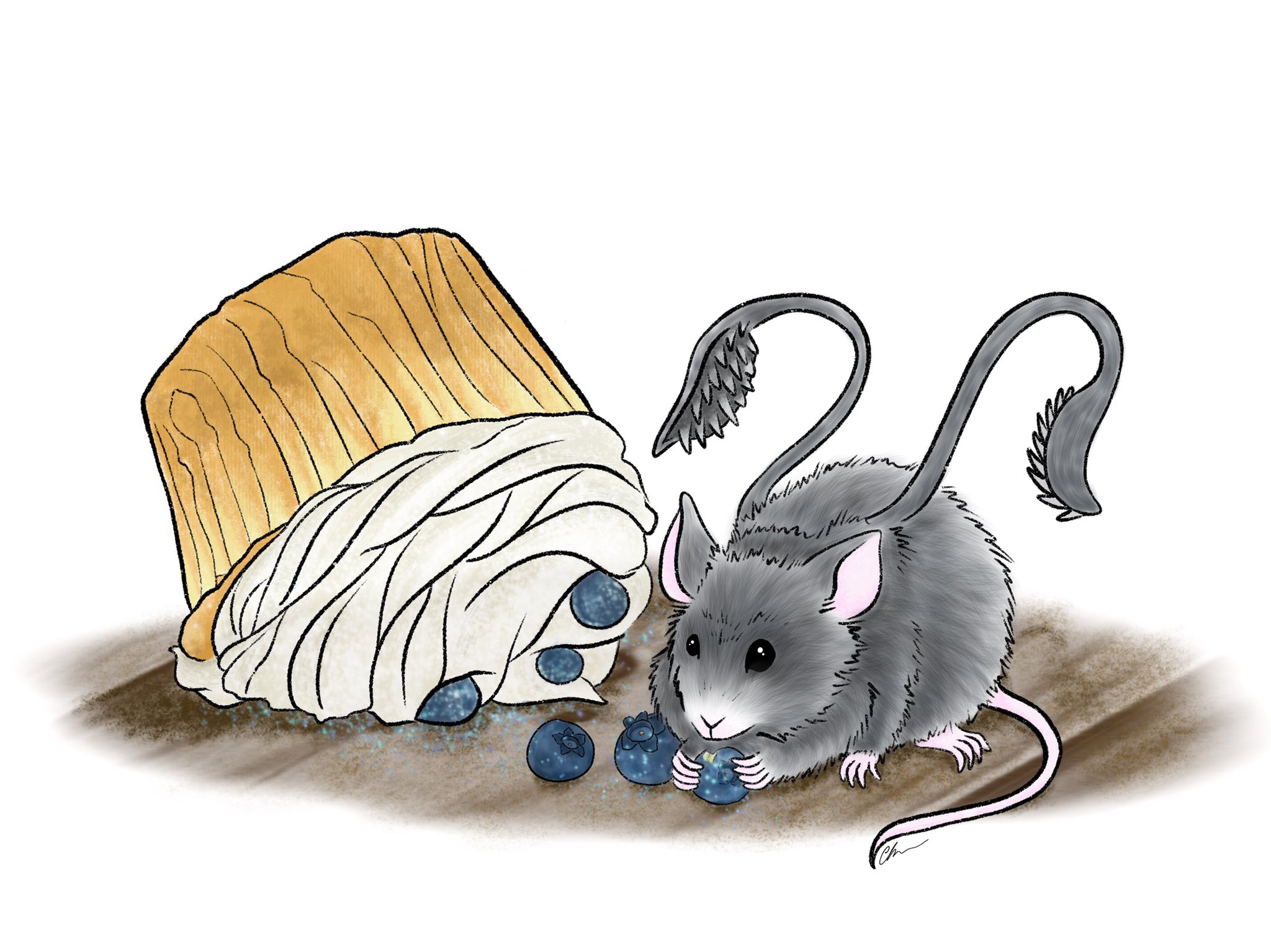
Displacer Rat
“My cousin swears one took his best hen, but when he chased it, there were two of the vermin running in opposite directions.”
Rats are one of the most adaptable species to have coevolved with humanoids, thriving everywhere by exploiting manmade ressources such as shelter and food. The Displacer Rat is one of the most succesfull rodent on Aurora, no civilization free of its unassuming presence.
Basic Information
Anatomy
The Displacer rat can easily be distinguished from other rats by its additionnal set of arms and pair of tentacles sprouting from its shoulders. Said tentacles end in pads with sharp horny edges. Their fur can range from white, grey, brownish and reddish hues; it can also include patterns or spots.
Ecology and Habitats
Though rats commonly arent picky about their habitat, Displacer Rats tend to gravitate towards manmade structures for reliable sources of shelter, food, and safety from predators. Therefore, they are known as commensals. They may cause substantial food losses, especially in cities that rely mostly on stockpiling to feed the population during harsh winters. Many merchants who had thought their grain storage areas impenetrable have been infuriated to find that a pack of very well-fed Displacer rats had set up a nest and eaten half their profits.
Additional Information
Perception and Sensory Capabilities
What seperates them from common rats and allowed them to thrive is thus: they use their innate magic to bend light, making them appear to be between 1 to 3 feet from their actual positions. The same ability makes them excellent at hiding. The light-bending effect is caused by molecular vibrations generated by specialized nerves located only in the outer layers of the displacer rat's skin. The vibrations were too small to be noticed by the naked eye but were enough to bend light and create an illusion of the rodent's body. Sages believed that the ability was unconscious for them, but they could direct the illusory image at will. This image was apparently projected by the thorns on the ends of its tentacles, as the real rat would have a faint blue glow about these thorns when the power was in use. Displacer rats could see each other's true locations, despite the illusions, as was evident when observing mischiefs - a group of rats (real look it up) - interacting amongst themselves.
Scientific Name
Rattus Motus
Lifespan
In the wild they tend to live 5-6 Years
Geographic Distribution

Comments