

Aetherglow
“It won’t save you—but it’ll convince you to try.”
“It won’t save you—but it’ll convince you to try.”
Afterglow exists only within this world. It is a narrative device meant to explore how people endure fear, loss, and impossible choices—not a reflection of real substances or their effects. Its purpose is story, not suggestion.

"Oh man, I need a hit of Glow. We’re going into this battle, and I need to feel like it’s possible to live through this." —Alrexis Ventridge, soldier on the border of Stormer and Portcross.
A new substance has swept across the world since the return of Vael’therin, the Drift of Echoes. The time-locked island, long thought lost, was reintroduced with the help of the Crimson Vow. Among the relics and whispers of its history came Aetherglow, a drug thought buried in memory as deeply as the island itself.
Once lost to time, now reclaimed, Aetherglow has become the substance of choice for those who need to cope—something that takes the edge off, offering a fragile calm in a world that rarely allows it. Its effect is fleeting, a balm for worry, fear, or doubt, but for a moment, it allows the user to breathe, to endure, and perhaps even to hope.
It goes by many street names. Novices call it Glo or Shimmer. Those in deeper circles whisper of Aether or Calm Whisper. They greet it like an old friend before a storm. Soldiers take it knowing it won’t fix what waits for them—but with enough Aetherglow in their veins, they might get through it. They might cope..
The drug itself is said to have been created by a Clockwork Witch, not to heal the damage of the time-locked island, but to make it feel survivable. The loops remained. The glitches persisted. Reality continued to fracture—but Aetherglow allowed its users to believe, if only briefly, that everything was under control.
Once lost to time, now reclaimed, Aetherglow has become the substance of choice for those who need to cope—something that takes the edge off, offering a fragile calm in a world that rarely allows it. Its effect is fleeting, a balm for worry, fear, or doubt, but for a moment, it allows the user to breathe, to endure, and perhaps even to hope.
It goes by many street names. Novices call it Glo or Shimmer. Those in deeper circles whisper of Aether or Calm Whisper. They greet it like an old friend before a storm. Soldiers take it knowing it won’t fix what waits for them—but with enough Aetherglow in their veins, they might get through it. They might cope..
The drug itself is said to have been created by a Clockwork Witch, not to heal the damage of the time-locked island, but to make it feel survivable. The loops remained. The glitches persisted. Reality continued to fracture—but Aetherglow allowed its users to believe, if only briefly, that everything was under control.
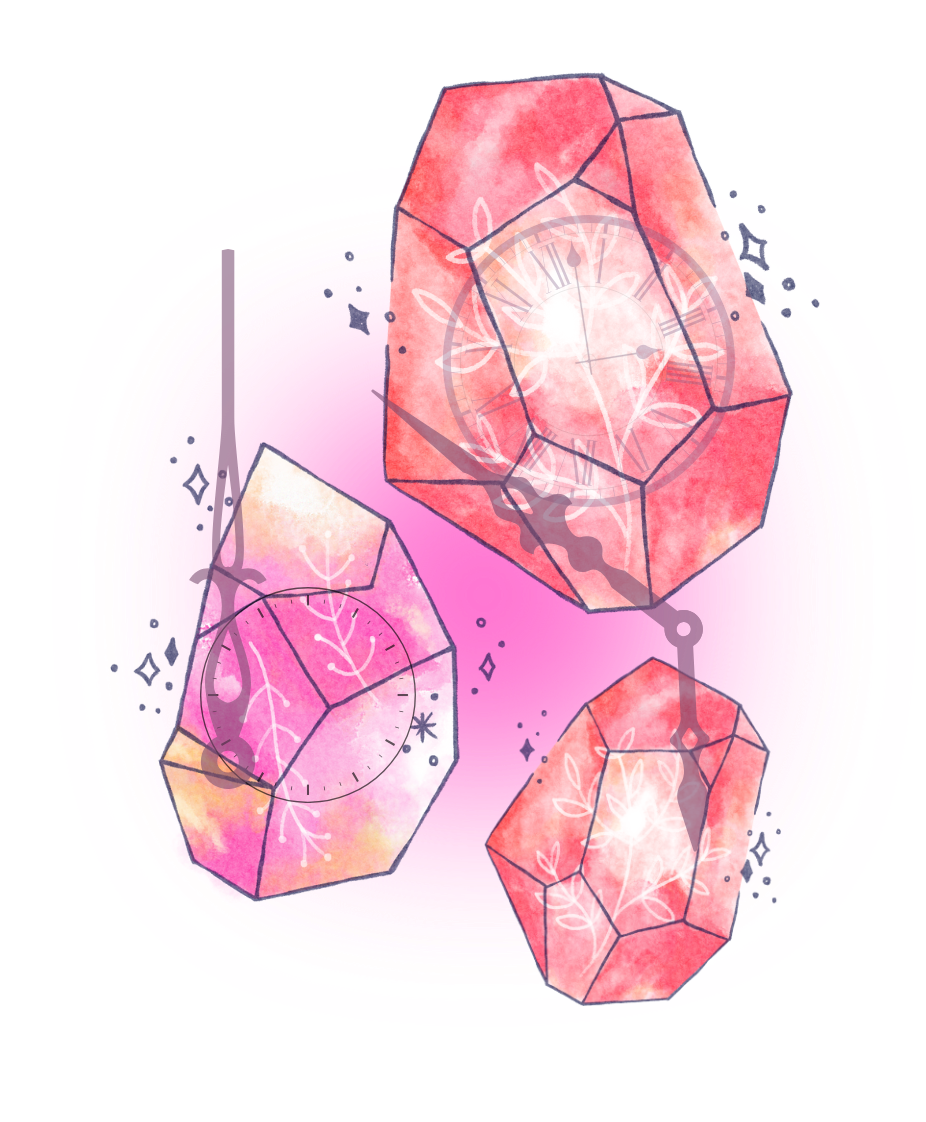
"It was never meant to fix the world. Only to make living in it feel possible."
Aetherglow forms as small, softly glowing crystals, most often pink or rose-hued, warm in the palm and faintly reassuring to look upon. It can be inhaled, dissolved, or consumed, bringing the user a powerful sense of emotional reassurance. Fears feel manageable. Outcomes feel optimistic. Even impossible odds seem… reasonable.
Nothing changes. But it feels like it might.
The substance is said to be harvested from minor magical deposits scattered across the world—often found in places where reality bends, or where people have needed hope for far too long.
Reported Effects:
A deep, convincing calm that overrides panic
The sensation that everything will “work out somehow”
Emotional buffering strong enough to face otherwise unbearable situations
The sensation that everything will “work out somehow”
Emotional buffering strong enough to face otherwise unbearable situations
Warnings:
Prolonged use may result in detachment from reality. Users can develop a persistent, unfounded optimism, ignoring danger, loss, or consequences. Some become incapable of confronting hardship without Aetherglow at all—clinging to its comfort while refusing to acknowledge what is truly happening.
Among soldiers and survivors, it is sometimes said: “Aetherglow doesn’t help you win. It just makes you believe you’re going to.”
Among soldiers and survivors, it is sometimes said: “Aetherglow doesn’t help you win. It just makes you believe you’re going to.”
Visible Effects
It is this calm that gives them away.
Veterans say it looks like confidence, but it isn’t. It is the calm of someone who believes they can make the bad decision and survive it. Users often walk forward when others hesitate, convinced they have clarity when what they truly have is reassurance.
Those who rely on Atherglow too often develop lasting tells: a persistent pink shimmer in the gaze, a habit of sinking into calm at precisely the wrong moment. They speak steadily while choosing paths that should terrify them—mistaking composure for wisdom, and certainty for truth.
Frequent users are often called Pink-Eyed Pixies, or simply Pixies—a name borrowed from the small magical creatures of Mothalisa, known for their soft glow and careless bravery. The comparison is not meant kindly.
Among soldiers and healers alike, there is a saying:
“Atherglow leaves more than just light. It leaves a mark you can’t wash off—peaceful or not.”
Pixie Dens
The air inside is acrid, sharp beneath layers of incense and sweetness. Silks are draped along the walls and ceilings, stirring constantly in an unnatural breeze that has no clear source. The space feels suspended, as though the world outside has loosened its grip.
People of every kind linger within—dockhands, soldiers, merchants, nobles—too calm, too still. They wear the expressions of those who have eaten something delicious yet remain unsatisfied. Conversation is low and unhurried. Laughter comes easily, but never lasts.
Soft pink mushrooms glow along the walls and floors, casting gentle light across relaxed faces and unfocused eyes. For a time, nothing feels urgent. Nothing feels impossible.
And that is the danger.
Healers, clerics, and the sober often regard Pixie Dens with quiet sorrow, offering pity rather than condemnation to those who linger within. To them, these places are not dens of vice, but rooms full of people who could not face reality unaided.
Those who serve in the Order of Drava, god of healing, are known to guide the willing back from Afterglow’s embrace. Their methods are gentle, patient—and rarely quick. They teach that the hardest part of treatment is not the withdrawal, but the desire to be free of it. No prayer, poultice, or ritual can help those who do not wish to return to themselves.
Addiction to Afterglow is not born of excess, but of longing. Many who fall into its use do not seek escape—they seek the strength to endure. And for some, simply coping feels better than healing.
“Hope feels real when it’s borrowed.”

Comments
Author's Notes
Afterglow is a fictional substance created for narrative and role-playing purposes. While it explores themes of coping, denial, and emotional endurance, it is not intended to reflect or encourage real-world substance use. Any similarities to real experiences are thematic, not prescriptive, and exist to support storytelling within a fantasy setting.