
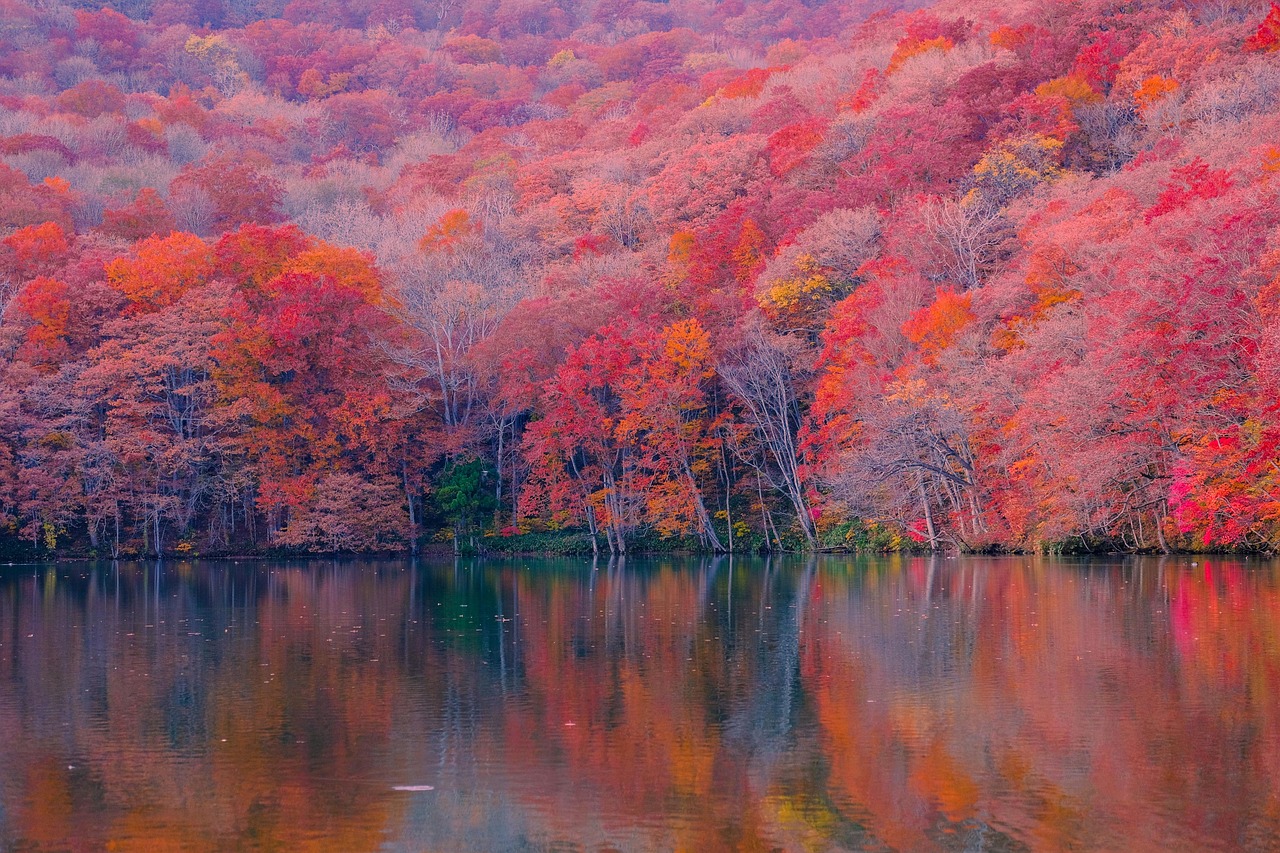
Autumnal Elves
Seasonal Elves
All elves possess a deep connection to some aspect of nature, be it forest, ocean, or sky. Elves are immortal: once reaching adulthood they cease to age. Certain elves, however, embody change itself while they themselves are unchanging. Elves that have strong connections to seasons are this way.
Winter elves live typically in isolation. They are quite passivistic and tend to hibernate for centuries at a time before awaking once more. Their immortal lives are spent in solitude, and they rarely interact with other beings.
Summer and spring elves are the majority in the elven population connected to forests. Those who dwell in non-seasonal areas are another matter entirely and are generally unrelated. Spring elves, like the autumnal elves, represent change itself, though to a lesser extent. Spring elves are usually very proactive in whatever society they find themselves part of. They are the ones who most often involve themselves in other beings' affairs. Summer elves are more isolationist than those of spring.
The Fourth Seasonal Elf Ethnicity
Autumnal elves are very different from all other elves. They embody not growth, as the spring elves do, but decay. These beings of eternal life are those representing death.
Naming Traditions
Unisex names
Autumnal elves, like all elves, place little care on biological sex. The traditions of naming can be quite different from other elves, however. All names are seen as gender-neutral, but autumnal elves each go through many different ones in their lives.
There are childhood names: when a young elf is born, they are given a short name; one that the child can learn, and that their peers can remember. Some of the most common names are one- or two-syllable colors (always those found in fall leaves) such as Red, Yellow, and Crimson. Descriptions of those colors are common too: Sun, Bright, Flame are some examples. Other fire-related names are typical as well. Others that do not easily fall into a category but are nonetheless popular are Fleck, Slip, Timber, and Drift.
After a child declares themselves ready (and once an elder has agreed with them), they choose their own name. The average age for this is around fourteen in human maturity. Many elves adapt their childhood name into one more connected to the Elven language. For example, a child named Drift might choose the name Drinsyl, which incorporates many of the same sounds.
Adults may choose to alter their name again, often after a major change in their life. It is required when joining the Blood-Red and recommended when becoming a Leafless One.
Family names
For the Wind-Carried, family names are a simple single syllable added to the end of the breeze name. An elf named Rentis part of a breeze named Zylynti who possessed the family name Sel would be called Renfel Zylyntisel. Wind-Carried who choose to leave their breeze will switch to calling themselves just their given name and family name (i.e. Rentis Sel).
The Blood-Red renounce family names. They will come up with fake ones on the spot when asked but will never share their true former family name.
Other than that, family names work in the same was as other elves: when elves marry, they keep their own family names (and breeze names, if that is relevant) and decide together on a new family name for any children they might choose to have or adopt. This makes tracking Elven bloodlines through history to be a difficult task: there is no family name to give to a dynasty other than the one who began it, and every descendant after has a different family name from that.
Culture
Major language groups and dialects
Most autumnal elves speak the Common Tongue, and most childhood names are derived from that relatively simple language. Elven has longer words and is less suitable for childhood names, but it too is spoken by most autumnal elves, though fluency varies greatly depending on region and lifestyle. Riparian is an Elven dialect, and the official language of the River Leaves villages. Leafless Ones typically are fluent (at least in reading and writing) in multiple ancient languages, and elves who live away from the River Leaves villages might not know Riparian at all.
Shared customary codes and values
Freedom is valued greatly by the Wind-Carried in particular. The River Leaves value unity over all else. The Leafless Ones believe that the natural cycle of life and death is the most important part of the world, though they also care greatly about knowledge and wisdom. The Blood-Red's values are shockingly similar to those of the Leafless Ones: they believe that their truest purpose is upholding death in the world and keeping life from running rampant. The Blazing Hearth cares most about providing for others, generosity, and gratitude.
The one value they all have in common is a need for constant change. All autumnal elves detest stagnation, and though the Leafless Ones preserve the past, they seek to move the world forward using the knowledge previously discovered.
Common Dress code
Most autumnal elves, like other elven ethnicities, dress to blend in with their surroundings. Bright reds, oranges, and yellows are common for elves living in villages or out in nature. The Leafless Ones wear pale off-white or gray robes, usually with embroidery of leaves in fall colors. The Blood-Red wear dark red and black outfits; the only requirement is that they be suitable for combat and stealth alike. The daily attire of elves living in cities is usually the shades found in decaying leaves: brown, green, and the occasional streak of fiery color. Those are the colors most often worn in cities. Plaid and tweed were popularized by humans but have become typical of autumnal elves as well.
Art & Architecture
Long-term buildings created by all forest elves are made of beautiful wood. It is usually still alive and was convinced to grow into the necessary structure. Tents and stone monasteries are made to look the same way, with graceful arches woven into fabric and carved into stone. The libraries have famously high ceilings and rope bridges are used to cross the gaps between stairs carved into the walls so the top shelves can be reached.
The most famous piece of art made by autumnal elves is found in one of the largest River Leaves villages, Rhendanil. The area experiences an abundance of rain, most of which occurs while the sun is shining. Because of it, the courtyard in the middle of the village was given a canopy made of wood and glass. Thin branches were coaxed across the large courtyard and between the gaps in those, stained glass was placed. The glass was made to look like leaves of a thousand different varieties of deciduous trees in a dozen different shades of fire. It is called the Firesky by some, and Eternal Autumn by others. The most famous name is the Unfallen Leaves.
Foods & Cuisine
Every type of food associated with autumn is loved by autumnal elves. Pumpkins and squash, turkey, cranberries and potatoes of every variety, apples and figs, chestnuts, persimmons, and so many more can be found on the dinner tables of the River Leaves villages and nomadic tribes alike. Decay magic can even be used in the smallest of amounts to ripen fruits and vegetables to perfection.
Funerary and Memorial customs
Elves can only be killed; they do not die naturally. Because of this, funerals are rare and very somber. Autumnal elves' bodies are set alight and burned with spices that make flames turn as red as possible. The dead are called Fallen Leaves, or simply the Fallen. The Fallen Leaves festival occurs once every twenty years to commemorate those lost, and it involves a huge feast and loud, deliberately joyous festival games. The festival always ends with every elf choosing an autumn leaf, wrapping it in a bit of their own cut hair, and setting the glowing bundle alight. All of these are tossing into a bonfire and after an hour of silent tending of the fire, there is dancing and singing around the bonfire. Death is considered a part of change, and thus inherently good. Funerals are sad because they relate to a specific loss, but the Fallen Leaves festival celebrates the concept itself.
Major organizations
Autumnal elves greatly vary, just as much as other ethnicities do, in their societal structure. Many autumnal elves live in small villages, many live in cities with humans and other ethnicities, and many wander the world. The main five organizations of these elves are as follows: The River Leaves, the Leafless Ones, the Wind-Carried, the Blood-Red, and the Blazing Hearth.
The River Leaves
This is a coalition of villages along the Kyserian River, the widest river in the world. It flows down from the Oenin Mountains all the way to the ocean. Villages are placed about once every five hundred miles. Surrounding each is a huge grove of trees frozen in perpetual autumn. The villages share a flag: a yellow leaf floating down a stream. They also share a specific dialect of Elven called Riparian. The reason these dozens of villages are so connected is due to the autumnal elves' penchant for change. Residents of each village will usually stay there for less than five years before moving to a different one. Stagnation is impossible for these elves, and they solve it by maintaining strong communications between the villages, so families are never completely separated.
Communications are not the only reliable connection between the villages. Gondolas are always available to any elf heading downstream: some elves practically live on the gondolas they use to transport others. That is another way some use to stave off the depression that descends on autumnal elves from lack of change.
The Leafless Ones
Though the River Leaves coalition spreads all the way to the origin of the Kyserian River, they are unconnected with the elves who live high up, above where deciduous trees are able to live. Within the evergreens of mountain peaks, those known as the Leafless Ones live. These autumnal elves are primarily monks. They spend their time in monasteries built into cliffsides, creating books and protecting great libraries filled with ancient knowledge. Many of the original documents of famous philosophical and historical texts can be found in the Leafless Ones' libraries. To avoid that knowledge being destroyed, they make copies of that ancient wisdom. The Leafless Ones then go down the slopes as emissaries of knowledge.
Though the Leafless Ones are almost all religious, they do not attempt to spread their beliefs. They only care about sharing knowledge and learning with people of all origins, ethnicities, and social standings. Those who cannot read, they teach. Those who seek knowledge with a passion, the elves bring back up the mountain. Many of these outsiders can be found in the libraries, reading into the early hours of the morning. All fire is forbidden near those precious manuscripts, so a particular ability of autumnal elves comes in handy: when autumnal elves cut a piece of their hair, no matter its color, it glows in all the colors of true fire.
The deity Leafless Ones worship is none other than the god of Death, Itheriv. The god's name is only spoken by other ethnicities as 'Virethi,' because most fear that god far too much to speak their name any way but backwards. Autumnal elves in general have no fear of death, even though elves are very capable of being killed. Their bodies will never give in to age, but a sword can still send them 'to the soil,' as they say (like the drifting of an autumn leaf to the ground). The Leafless Ones still feel a kinship with Itheriv, and fear death little. They typically pay respects to the deity by setting fresh fruits and flowers on an outdoor altar. If the offerings are taken by animals, so much the better. The Leafless Ones see intruding upon Itheriv's authority as the greatest of offenses to the god and refuse to kill as a result. They also refuse to use the magic granted upon one in sixty autumnal elves: Decay.
The Wind-Carried
The Wind-Carried are nomadic elves who never pause in one place for longer than a month. Some 'breezes,' as they call their groups, are like traveling theater troupes, performing everywhere they go. Other breezes are hunter-gatherers who live off the land and seek the meaning of freedom itself. That pursuit of freedom is taken to an extreme by those who worship Ziryphil, the deity of the wind and of freedom. The breezes who follow Ziryphil do so literally: they will walk whichever way they must to have the wind at their backs. Wind-Carried who seek the meaning of freedom are often philosophers, meteorologists, and mathematicians. These elves spread deep thought and unheard-of theories about existence, the universe, and time wherever they go. They are not averse to speaking of their quest and the fruits it has bourn to other peoples, though if any elf has discovered the meaning of freedom, it has never been spoken of.
The Blood-Red
The Blood-Red are one of the few organizations of autumnal elves who live exclusively in big cities. They utilize the powers of Decay to kill the enemies of whoever hires them: in short, they are an assassination guild. Though a few elves who connect to aspects of night are independent assassins, the Blood-Red are the only true assassination guild formed of elves. They are a small enough group (only one in sixty autumnal elves are born with Decay magic) that they are primarily legend. Most people speak of them in hushed tones, and they are occasionally featured in ghost stories. Despite that, they are very real. Whether one believes in their existence or not, the Blood-Red are infamous across the world.
The Decay is a magic thought to be granted by Itheriv, though the Leafless Ones would disagree. An elf who can harness its magic only requires a touch to damage, and a prolonged one to kill. It can vary from elf to elf, but the average time it takes to kill with Decay is 12 seconds of continuous contact. Autumnal elves can Decay anything abiotic as well: stone, metal. There are some magical substances and enchantments that can resist it, but only one ethnicity is always immune: autumnal elves themselves. For whatever reason, though they embody change, their bodies resist its direct power. Autumnal elves can die in other ways, but the power of the season they represent is not capable of harming them.
The symbol of the Blood-Red is a crimson maple leaf on a black background. It is depicted sometimes as dripping with blood, but the ones around the strongholds of the organization are simply leaves turned red naturally.
The Blazing Hearth
This organization of autumnal elves is somehow both the most legendary and the most ordinary of them all. There are inns set up all over the world run by the Blazing Hearth. They embody the harvest and the other aspects of abundance found in fall. A customer of such an inn could have no idea of the place's connection to the organization. Legends speak of extraordinary inns, taverns, and markets that appear and disappear randomly. In truth, the Blazing Hearth is a group of about two hundred autumnal elves who partner with a species of magical creatures to bring their hospitality to the world. Their magical partners are known as Hearthstones: they are small, talking spheres of fire who teleport entire buildings in exchange for food. They crave the harvest feasts thrown by all the world's ethnicities, and the elves in the Blazing Hearth seek to bring those feasts to everyone in the world. And so, each elf, with a Hearthstone by their side (within a lantern or in the fireplace of the building itself), runs an inn, tavern, or market that appears alongside the ripening of crops and disappears anywhere from a day to a year later.
Population:
The population of autumnal elves is a little over 140,000. The majority of those live in the River Leaves villages or in large cities filled with thousands of other peoples. Almost 2500 of those elves have the power of Decay, though only a few hundred of those are part of the Blood-Red.

Comments