
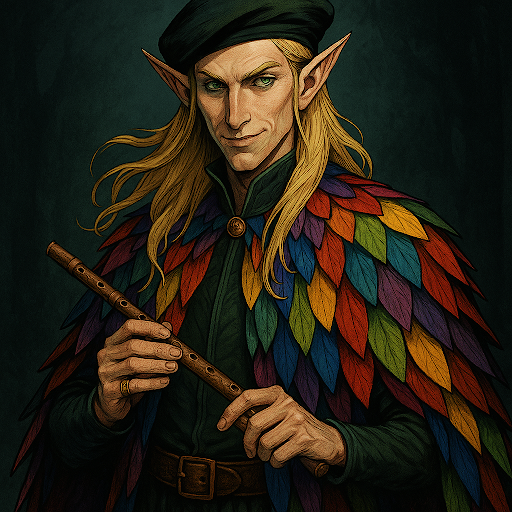
The Pied Piper of Hamelin
Background
The story mortals tell is almost true. In 1284, Hamelin choked on its rats. A stranger in pied cloth came to the Bürgermeister with an offer and a number: one thousand guilders for a city made clean. He played; the town was a river of fur and teeth; the Weser drank them all. The city breathed—and then pinched its purse.
They called him thief. He smiled, because he is fae, and oaths are the only coin that keeps its shine. On the feast of Sts. John and Paul, while the bells pulled the grown-ups into church, he returned dressed as a hunter in green and played a different song. One hundred and thirty children walked, not compelled so much as enchanted into consent, and followed him to Koppelberg. The hill opened for him; the mountain closed behind them. In some versions, three were spared—lame, deaf, blind. He likes that telling; it flatters his precision.
Hamelin never paid. He never forgave. The Bungelosenstraße—“street without drums”—keeps its silence still, an old ward against his music.
He is not a bedtime moral, and he did not stop. Centuries taught him to make the bargain before the grievance. He plays plague cities clean and takes payment in gold, land, or favors; most pay. He plays courts and palaces, then prowls back years later as collector when a duke’s grandson tries to shave a coin from the owed. He raises wolves with a horn and drowns them with a flute. He conducts bees like spears. He has led men to safety and led men to drown with the same melody, because the stave is neutral—the oath is not.
Modern masks fit him well. Munich gave him a studio and a stage name; the world calls him genius. He writes hooks that won’t leave your head and contracts that won’t leave your blood. In private he offers “fixes”—infestation solved, mobs calmed, crowds enthralled, rival swarms turned on a mark—always for a price written in words that look simple until the day they come due. Kept oaths feed him; broken ones arm him. He is courteous, punctual, and mathematically vindictive.
The children of Hamelin? They are not dead. They are ageless servants in a mountain hall that only opens to the right chord. Some have been lent to Otherworld courts; some sing in choirs that have never seen a sun. He visits them like a gardener visits a cherished bed. They are his proof that every debt has a ledger.
Personality
He is pleasant the way winter light is pleasant—bright, exact, and merciless when the shadow falls. The Piper speaks softly, listens well, and remembers everything: the amount, the hour, the phrasing you chose when your mouth was dry and your need was sharp. He adores clean deals: the right price named, the right coin counted, the right bow at parting. Kept oaths make him almost generous; he has opened mountain doors to let a paid debt pass with all its children intact. He will toast you for that, with a cup that tastes of green apple and rain.
But break faith with him—even by a hair—and he becomes what Hamelin wrote on its bones. There is no tantrum, no raised voice, only a cheerful correction of the record. If you shave him a penny, he takes a finger. If you slander him for doing what he promised to do, he gives you precisely what you asked for, and then he takes what you didn’t read in the margin. He enjoys artistry in revenge: punishments that fit the meter of the lie, collections that rhyme with the debt. When he smiles at you like a kindly uncle, people around you should start counting their children.
He is not cruel for sport in the way of goblins; his is the cruelty of equation. He believes the world keeps time when oaths hold, and he will tune it with a knife if he must. Music is his language, but ledger is his faith. He loves mortals the way a conductor loves an orchestra: for what they can do together under his hand. When the piece ends, he bows; if you didn’t pay the ticket, he keeps the instrument.
Children? He says they came willingly, which is the sort of truth the fae tell when they’ve already made the song irresistible. He is fond of them in the way a gardener is fond of saplings that will never grow taller than his fence. Every now and then, when the Erlkönig rides, the Piper plays the second horn and laughs like a river breaking. Mercy happens, but only when mercy keeps tempo.
He understands the mind of the many and the weakness of the one and foolish people keep thinking the bill won’t come due. It always does.
The story mortals tell is almost true. In 1284, Hamelin choked on its rats. A stranger in pied cloth came to the Bürgermeister with an offer and a number: one thousand guilders for a city made clean. He played; the town was a river of fur and teeth; the Weser drank them all. The city breathed—and then pinched its purse.
They called him thief. He smiled, because he is fae, and oaths are the only coin that keeps its shine. On the feast of Sts. John and Paul, while the bells pulled the grown-ups into church, he returned dressed as a hunter in green and played a different song. One hundred and thirty children walked, not compelled so much as enchanted into consent, and followed him to Koppelberg. The hill opened for him; the mountain closed behind them. In some versions, three were spared—lame, deaf, blind. He likes that telling; it flatters his precision.
Hamelin never paid. He never forgave. The Bungelosenstraße—“street without drums”—keeps its silence still, an old ward against his music.
He is not a bedtime moral, and he did not stop. Centuries taught him to make the bargain before the grievance. He plays plague cities clean and takes payment in gold, land, or favors; most pay. He plays courts and palaces, then prowls back years later as collector when a duke’s grandson tries to shave a coin from the owed. He raises wolves with a horn and drowns them with a flute. He conducts bees like spears. He has led men to safety and led men to drown with the same melody, because the stave is neutral—the oath is not.
Modern masks fit him well. Munich gave him a studio and a stage name; the world calls him genius. He writes hooks that won’t leave your head and contracts that won’t leave your blood. In private he offers “fixes”—infestation solved, mobs calmed, crowds enthralled, rival swarms turned on a mark—always for a price written in words that look simple until the day they come due. Kept oaths feed him; broken ones arm him. He is courteous, punctual, and mathematically vindictive.
The children of Hamelin? They are not dead. They are ageless servants in a mountain hall that only opens to the right chord. Some have been lent to Otherworld courts; some sing in choirs that have never seen a sun. He visits them like a gardener visits a cherished bed. They are his proof that every debt has a ledger.
Personality
He is pleasant the way winter light is pleasant—bright, exact, and merciless when the shadow falls. The Piper speaks softly, listens well, and remembers everything: the amount, the hour, the phrasing you chose when your mouth was dry and your need was sharp. He adores clean deals: the right price named, the right coin counted, the right bow at parting. Kept oaths make him almost generous; he has opened mountain doors to let a paid debt pass with all its children intact. He will toast you for that, with a cup that tastes of green apple and rain.
But break faith with him—even by a hair—and he becomes what Hamelin wrote on its bones. There is no tantrum, no raised voice, only a cheerful correction of the record. If you shave him a penny, he takes a finger. If you slander him for doing what he promised to do, he gives you precisely what you asked for, and then he takes what you didn’t read in the margin. He enjoys artistry in revenge: punishments that fit the meter of the lie, collections that rhyme with the debt. When he smiles at you like a kindly uncle, people around you should start counting their children.
He is not cruel for sport in the way of goblins; his is the cruelty of equation. He believes the world keeps time when oaths hold, and he will tune it with a knife if he must. Music is his language, but ledger is his faith. He loves mortals the way a conductor loves an orchestra: for what they can do together under his hand. When the piece ends, he bows; if you didn’t pay the ticket, he keeps the instrument.
Children? He says they came willingly, which is the sort of truth the fae tell when they’ve already made the song irresistible. He is fond of them in the way a gardener is fond of saplings that will never grow taller than his fence. Every now and then, when the Erlkönig rides, the Piper plays the second horn and laughs like a river breaking. Mercy happens, but only when mercy keeps tempo.
He understands the mind of the many and the weakness of the one and foolish people keep thinking the bill won’t come due. It always does.

Children


Comments