

Duncan McEnroe - Weird West Era
Background:
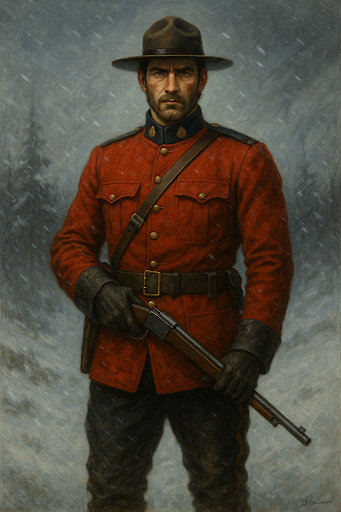
Born in 1859 in the fog-bound town of Truro, Nova Scotia, Duncan Alistair McEnroe was raised at the jagged edge of two stormy bloodlines—his father, a stern Highland Scotsman, and his mother, a fierce, fast-talking Irish Catholic. Locals joked he had the iron will of a Scot and the firebrand soul of an Irish rebel—making him either destined for greatness or doomed to die young.
He spent his youth hauling nets, fending off drunks at the local dockside inn, and learning the cruel rhythm of Atlantic storms. At sixteen, chasing the promise of pay and purpose, he lied about his age and enlisted in the British Army. What followed were four brutal years abroad: sweat-drenched skirmishes in India, bloodied hills in Afghanistan, and long nights wrestling the morality of empire beneath foreign stars. The experience hardened him—but it also broke something. Duncan saw too many innocents trampled beneath flags and orders, too many fellow soldiers callous to cruelty.
When he returned to Canada at twenty, his chest bore medals, but his eyes held shadows. He refused a commission and turned instead to a different calling—joining the nascent Royal Canadian Mounted Police, a force not yet mythic, but already tasked with taming the wild and often lawless frontier.
Assigned to the North—places too cold for ambition and too remote for oversight—Duncan rode beyond the edge of the map. From the towering Rockies to the frozen coasts of Hudson Bay, he became the Dominion’s sentinel in lands where justice traveled by snowshoe and rifle, not gavel or robe. His knowledge of the wilderness deepened under the tutelage of Cree elders, Métis scouts, and Dene trackers—men and women who showed him how to read the language of snow, wind, and firelight. Unlike many officers of his time, Duncan listened. He learned.
He did not just enforce the law—he embodied it. He carried treaties in his saddlebag with as much care as he did bullets. He arrested white settlers and government men alike if they broke trust with the First Nations. His sense of justice was unwavering, but never blind. He saw all people of the North—black, white, native, Chinese, freed slave, fur trapper, fortune-seeker—as Canadians, bound not by blood, but by the land they endured together.
His fame spread not by his words—Duncan was quiet, bordering on ghostlike—but through stories told around fire pits and saloons:
Of the Mountie who tracked a murderer across five hundred miles of tundra on foot, returning weeks later with the man roped to a dogsled.
Of the blizzard where three search parties turned back, but McEnroe rode on—and pulled two frostbitten children from a collapsed cabin the next morning.
Of the time he faced a bear at knifepoint and walked away, bloodied but alive.
To criminals, he became a walking nightmare—the Redcoat Ghost who could follow ashes through snowfall. To settlers and tribes alike, he became a folk hero—proof that perhaps someone would come, no matter how far, no matter how cold, no matter how monstrous the trail.
As technology creeps westward and stranger things stir in the deep pine woods and icy lakes—wolves that speak, mines that bleed, trains that vanish into snowbanks—Duncan stands unmoved. He’s no magician. No superhuman. Just a man with callused hands, a sharp eye, and a promise:
“You can run. You can lie. But if you broke the law—I’ll find your trail. And I’ll follow it.”
Even when the storms howl louder than prayers. Even when the tracks vanish. Even when no one else dares ride.
Personality:
Duncan McEnroe is a man of few words and vast patience. Stoic, unyielding, and incorruptible, he holds to the law like a priest to scripture—but tempers it with mercy and fairness. He doesn’t tolerate cruelty or injustice, whether from outlaws or officials.
He believes all who live in Canada deserve protection—regardless of race, origin, or creed. This principle has earned him allies among the disenfranchised and suspicion from certain colonial authorities.
He has no family, few friends, and no home but the trail. Some say he’s part spirit already—part glacier, part oath, part gun.
But he’d just tip his hat and say, “Just a man doin’ his job.”
Children


Comments