

Chance Blackwell
Magi Chance Alexander Blackwell (a.k.a. The Wizard of the 401; Mister Occult; Canada’s Occult Outsourcer)
"Right. Fine. Apparently I’m doing this.
For the record, I did not apply to be bonded to a chronically overworked wizard with a martyr complex, terrible luck, and an alarming tendency to talk to cursed objects like they’re coworkers. That said, here we are.
Chance Blackwell is—against all odds—competent. Annoyingly so. He plans ahead, listens before acting, and insists on helping things that any sensible being would salt, burn, or run away from. He believes everyone deserves dignity, even when they are objectively a problem. This makes his life harder. Repeatedly. Constantly. Predictably.
He is also stubborn, self-sacrificing to a fault, and far too willing to take responsibility for things that were never his burden to carry. He will skip sleep, meals, and basic self-preservation if it means someone else gets to rest easier. I have tried explaining that this is inefficient. He refuses to listen.
Socially, he is a disaster in very specific ways. Put him in front of an authority figure and he becomes polite, careful, and quietly defiant. Put a pretty magical woman in his line of sight and his brain temporarily forgets how words work. I have documentation.
Despite all this, he is kind. Not performatively. Not loudly. He listens. He remembers. He comes back when others don’t. Spirits trust him. Houses recognize him. Lost things tend to follow him home. This is not an accident.
He treats me as an equal, which I am. He feeds me properly, wards the house responsibly, and scratches behind my neck feathers exactly the way I like. When he is hurt, I notice. When he is tired, I tell him. When he ignores me, I mock him until compliance improves.
Is he a hero? No. Heroes seek glory.
Is he dangerous? Yes. Frequently.
Is he mine to keep alive? Unfortunately.
Someone has to watch him.
Someone has to remember the things he pretends don’t hurt.
Someone has to say “I told you so” when the universe inevitably proves me right.
That someone is me.
You’re welcome." - Bertram the Raven
Physical Description
General Physical Condition
Chance maintains excellent physical condition, not through formal training programs or gym routines, but through necessity. His work routinely involves running from monsters, fighting off vampires, navigating hazardous environments, and enduring prolonged physical stress while exhausted, injured, or under-equipped. Survival has proven to be a remarkably effective fitness regimen.
He is lean, strong, and deceptively tough, with stamina built from long nights, extended chases, and the kind of physical exertion that comes from improvising under pressure rather than following a controlled plan. His reflexes are sharp, his balance reliable, and his pain tolerance higher than average—less from bravado and more from experience.
While he does not pursue peak athleticism for its own sake, Chance keeps his body functional and responsive because his life depends on it. He understands that magic fails, tools break, and plans collapse, and when they do, physical competence becomes the last line of defense.
Body Features
Standing at 180 cm (5’11”) and weighing approximately 79 kg (175 lbs), Chance is more solidly built than he is often given credit for. His frame is lean rather than bulky, but it carries functional strength—muscle earned through constant movement, physical confrontation, and long hours spent hauling gear, climbing, running, and fighting when plans fail.
Along both forearms, Chance bears a series of interconnected tattoos of magical design. These are not decorative markings but carefully constructed arcane circuits: protective sigils, grounding lines, and focus glyphs woven together into a cohesive system. The tattoos are designed to help stabilize his magic, provide limited defensive reinforcement, and serve as emergency focus points for on-the-fly casting when he is separated from his usual tools.
While powerful, the tattoos are intentionally constrained. They do not replace proper ritual work or dedicated focuses, and using them extensively carries physical and mental strain. To Chance, they are a last-resort safety net—evidence of his preference for preparation and redundancy rather than flashy power.
The combination of practical build and functional body-markings reinforces a central truth about him: Chance treats his own body as part of his toolkit, maintained and modified not for appearance, but for survival.
Facial Features
Chance is considered conventionally handsome by most standards, though it’s not a quality he consciously cultivates. His face is well-balanced and symmetrical, with a strong, defined jawline softened by subtle signs of fatigue that keep him from ever looking polished or pristine. There’s a lived-in quality to his features—attractive not because they’re perfect, but because they feel earned.
He has expressive brows and a steady, observant gaze that tends to linger a beat longer than most people expect, giving the impression that he’s always listening, always noticing more than he says. His eyes carry warmth and intelligence, but also a hint of distance, as if part of his attention is perpetually elsewhere—half in the room, half on whatever unseen thing might be sharing it.
A well-kept goatee and moustache frame his mouth, adding maturity and a slightly rugged edge to his appearance. When he smiles—and he does, more often than people realize—it’s genuine, a little crooked, and disarming in a way that contrasts with his reputation as a serious occult professional.
Overall, Chance’s face reflects exactly who he is: approachable, capable, quietly intense, and unmistakably human—someone who looks like he’s been through things and come out the other side still willing to care.
Identifying Characteristics
Chance’s most immediately recognizable identifying features are the interconnected arcane tattoos running along both forearms. To anyone with even a basic understanding of magic, they read as more than body art—protective circuits, grounding lines, and emergency focus glyphs arranged with deliberate restraint. Practitioners who know what they’re looking at recognize them as the work of someone serious, cautious, and experienced enough to plan for failure.
The other identifying feature—one Chance stubbornly denies despite overwhelming evidence—is his unmistakable Libra dedication to looking effortlessly put together. His hair maintains a perfectly tousled, “just rolled out of bed” appearance that somehow never crosses into actual disarray, and his beard is immaculately groomed even after long nights, physical altercations, or supernatural disasters. He insists this is coincidence, genetics, or “just how it dries.”
It is not.
Friends, familiars, and house-spirits alike are fully aware of the quiet ritual care that goes into maintaining this balance of scruffy and polished. Chance treats it as a practical baseline rather than vanity—a small, controlled aesthetic order in a life otherwise dominated by chaos—though anyone who knows him well can clock the Libra energy from a mile away.
Physical quirks
None particularly pronounced—but Chance does have a handful of subtle, situational habits that tend to surface under stress or concentration.
When thinking through a complex problem, especially one involving magic, he unconsciously rubs his thumb along the edge of his forearm tattoos, tracing sigils he knows by heart. It’s a grounding behavior rather than a tic, a way of anchoring his focus without realizing he’s doing it.
He also has a habit of tilting his head slightly when listening—human or otherwise—as if trying to catch a second layer of meaning beneath the words. Those who know him well recognize this as the moment he’s taking something seriously.
Beyond that, Chance carries himself with an easy physical confidence born of familiarity with danger rather than showmanship. He moves like someone used to navigating tight spaces, unstable ground, and sudden threats, conserving energy instinctively. None of these rise to the level of overt quirks, but together they mark him as someone perpetually half-prepared for things to go sideways
Special abilities
Necromantic Tethers:
Chance exists in a permanent state of liminality as a result of the necromantic rite that restored him at birth. He can see, hear, and communicate with ghosts effortlessly, without the need for active spellcasting or focus. Undead creatures register to him instinctively; he senses their presence with minimal concentration, often before they fully manifest. This same tether grants him a notable resistance to necromantic spells, death-aspected effects, and many abilities wielded by undead entities, making him difficult to manipulate through soul-based magic.
The cost of this protection is visibility. Chance’s soul is “loud” on a magical level—bright and unmistakable to beings tied to death and undeath. Spirits notice him. Predatory entities recognize him. He cannot easily hide from the attention of things that exist along the Veil, and prolonged magical activity only amplifies that signal.
Blackwell Family Wizardry & Occultism:
Chance practices the Blackwell family’s agnostic arcane discipline, a method-driven, non-pact-based tradition that treats magic as a structured system rather than a matter of faith, destiny, or divine permission. His training emphasizes precision, preparation, and accountability, favoring techniques that can be understood, repeated, and controlled. He is a talented dabbler in a wide array of magical studies traditions and schools and is most effective with:
Necromancy is his strongest natural aptitude, encompassing communication with ghosts, perception of death residue, ectoplasmic interaction, and the management of undeath phenomena. He approaches the discipline pragmatically, focusing on negotiation, containment, and resolution rather than domination.
His divinatory talents include scrying, clairvoyance, probability shaping, omen-reading, and intuitive urban prognostics—an ability to read the subtle currents of chance and meaning within a cityscape. In defensive magic, Chance excels at warding and protection, constructing anti-possession sigils, curse-shields, boundary wards, and precise geometric arrays designed to hold under sustained pressure.
Chance is also highly skilled in exorcism and spirit-handling. He prefers dialogue where possible, but is fully capable of banishment, severing harmful tethers, dispersing hostile entities, and safely relocating lingering dead when negotiation fails. His ritual magic relies on structured, symbol-based spellwork, requiring carefully prepared circles, diagrams, offerings, and exact correspondences rather than improvisational force.
A hallmark of his modern practice is urban sympathetic magic—a Blackwell adaptation that draws power from emotional hotspots, street markings, graffiti sigils, and the shifting ley currents of populated environments. This allows him to work effectively in cities where traditional natural magic would otherwise be muted.
Elementally, Chance has a strong affinity for air and earth, manifesting through lightning, magnetism, shockwaves, grounding sigils, and tactical manipulation of environmental forces. Like all Blackwells, he is also a practiced magical dabbler, studying and incorporating useful techniques from a wide range of traditions without adopting their underlying dogmas.
Taken together, Chance’s abilities reflect a wizard who values understanding over spectacle and control over raw power—someone who survives not by overwhelming the supernatural, but by knowing it well enough to face it on equal terms.
Apparel & Accessories
Chance puts deliberate thought into how he dresses, though he’d never frame it as vanity. He likes to look cool—or at least what he personally considers cool—and his style reflects a blend of old-world wizardry and modern urban practicality.
When working, his preferred look layers an old-fashioned suit—often slightly worn, always well-fitted—beneath a long coat, paired unapologetically with a hoodie. The contrast is intentional. The suit speaks to tradition, discipline, and professionalism; the coat offers protection and gravitas; the hoodie is comfort, utility, and quiet rebellion all at once. He is particularly fond of hoodies and maintains a small but carefully curated collection, each chosen for warmth, durability, and aesthetic rather than trend.
Chance firmly believes that real wizards wear hoods and will state this as fact with complete sincerity. The hood serves both symbolic and practical purposes: concealment, warmth, and a familiar shape that makes him feel properly equipped to face the strange.
Accessories are chosen with equal care. His lucky trilby—once his father’s—is worn often, especially off the clock, and carries subtle enchantments woven into the band. Practical boots, reinforced gloves, and discreet protective charms are common, as are pockets weighted with small tools, tokens, and emergency components. Everything he wears is either functional, meaningful, or both.
Overall, Chance’s style is unmistakably his own: timeless without being archaic, modern without being flashy, and quietly confident in its refusal to conform to anyone else’s idea of what a wizard should look like.
Specialized Equipment
Chance is the first to admit that his magic is highly focus- and gear-reliant. This is not a weakness in his eyes, but a conscious design choice rooted in discipline, redundancy, and risk mitigation. He prefers tools he understands, maintains, and can replace over raw, uncontrolled power. As a result, he keeps a substantial and carefully curated collection of equipment, much of it inherited, modified, or personally constructed.
Lightning Rod (Primary Arcane Focus):
A hand forged iron rod serving as Chance’s favored magical weapon and primary catalyst. It is specifically attuned to his affinities for thunder, lightning, and electromagnetic sorcery, allowing him to channel power with high precision and minimal bleed-through. The rod functions equally well in structured ritual work and in close-quarters emergency situations, acting as both conductor and defensive implement. It is deliberately plain in appearance, prioritizing reliability over spectacle.
Enchanted 1989 Chevy Astro Van (“WizardMobile”):
Chance’s mobile sanctum and primary mode of transport, heavily warded and temperamental. Locals mock it, occult practitioners respect it, and Chance considers it his most loyal—if dysfunctional—steed. Features include:
Anti-intrusion wards designed to repel demons, cultists, and other annoyances.
An expanding interior chamber, larger on the inside (or so he claims), which functions only when the van “feels like it”
A minor pocket-dimension glovebox, ideal for snacks and small tools, notoriously unreliable when retrieval speed matters
An unstable but thematically appropriate engine that growls like a Hellhound and smells perpetually of fuel and ozone
The van’s most notable feature is its exterior mural: a heavy-metal album-style depiction of a lightning-wreathed battle-mage standing atop a skull-strewn mountain, staff raised like a thunderbolt. The mural has no magical properties whatsoever. Chance considers this irrelevant. He refuses to repaint it, modify it, or apologize for it. It is art.
Ritual Kit:
A comprehensive field kit containing chalk, salts, bone dust (used strictly for divination), consecrated tools, herbs, incense, candles, and geomantic instruments. The kit allows Chance to construct wards, circles, and ritual arrays in non-ideal conditions with minimal improvisation.
Protective Sigils & Charms:
Pre-inscribed tags, tokens, and wards designed for rapid deployment. These provide short-term protection against possession, hostile entities, curse effects, and magical backlash when there is no time for full ritual work.
Assorted Arcane Components:
A constantly evolving collection of reagents, relic fragments, spirit-beads, ritual coins, and Blackwell research notes. These items are stored in coat pockets of improbable capacity, the result of layered spatial enchantments and a refusal to travel unprepared.
Together, this equipment reflects Chance’s philosophy: magic should be deliberate, supported, and survivable. When something goes wrong—and it often does—he prefers to have three backups, a spare focus, and at least one questionable but workable solution already within reach.
Mental characteristics
Personal history
Chance Alexander Blackwell’s life began in defiance of a final boundary. Born stillborn, he was claimed by death before he ever truly entered the world, only to be pulled back by his father, Malcolm Blackwell—a brilliant, disgraced necromancer whose love for his son outweighed every law, taboo, and consequence. The forbidden rite that restored Chance did not merely revive him; it altered the terms of his existence. From that moment on, Chance lived half a step closer to the Veil than anyone else, his soul permanently marked, audible to the dead, and resistant to being neatly categorized as either wholly alive or touched by undeath.
Malcolm raised Chance within the old Blackwell tradition, a lineage of methodical, non-pact-based wizardry that treated magic as a discipline rather than a calling. Chance’s childhood was defined by structure and study. He learned sigils alongside spelling, ritual geometry alongside mathematics, and necromantic theory with the seriousness other children reserved for learning manners. His father was exacting but not unkind, determined to give his son mastery over the forces that had already shaped his fate. By the time Chance reached his early teens, his foundational training exceeded that of most adult practitioners.
Then Malcolm vanished.
There was no body, no sign of struggle—only extinguished candles, an open grimoire, and a final note that read: Live well. Die better. Official authorities ruled it a ritual failure. The occult underground whispered of darker possibilities. Chance accepted none of them. The disappearance left him with advanced fundamentals, incomplete higher teachings, and no mentor to guide him through the deeper, more dangerous reaches of Blackwell magic.
Afterward, Chance was raised by relatives in Toronto. Cut off from the full family archives but unwilling to abandon his training, he adapted. The rigid discipline his father had instilled allowed him to improvise responsibly, extending his knowledge without collapsing under it. As he grew older, spirits began to gather around him instinctively, drawn to the necromantic tether humming beneath his ribs. He became a quiet fixture of urban folklore—the boy shadows lingered near, the one who spoke to empty corners and noticed things others didn’t.
Fantasy, science fiction, comics, and tabletop games offered refuge during those years, frameworks where the strange were protagonists rather than problems. By adolescence, Chance was already using his skills to help where he could: warding community spaces, calming restless spirits in apartment buildings, dismantling minor curses, and solving small supernatural problems before they grew teeth.
At twenty-one, guided by divination and probability manipulation, Chance engineered a modest lottery win—not out of greed, but necessity. With the money, he reclaimed Blackwell Manor, an abandoned Victorian house on the outskirts of Toronto that locals called “the house that sighs.” The manor recognized him immediately. He restored its wards, negotiated with its spirits, and re-established it as a living, functioning magical space. Over time, it became a sanctuary—not just for him, but for displaced house-fae, goblins, and other small beings the modern world had forgotten or discarded.
Today, Chance lives and works out of Blackwell Manor as an independent wizard-for-hire. He is not a hero in the traditional sense, nor a figure of authority. He handles the overlooked horrors: curses that never make the news, spirits feeding on grief or exhaustion, haunted spaces everyone else ignores. Institutions often rely on him quietly while denying him publicly. Communities trust him because he listens, explains, and doesn’t make suffering theatrical.
Chance does not believe he is special. He believes he is responsible.
His life is defined by endurance, compassion, and a refusal to walk away when something is afraid or hurting. He stands between the living and the dead not out of destiny or glory, but because someone has to—and he knows the rules well enough to break them safely.
Gender Identity
Chance understands gender in a simple, untheoretical way: he is a man because that is what feels natural and comfortable to him, not because he has ever felt the need to interrogate or defend it. His sense of self is practical rather than philosophical—gender, like most personal identity markers, is something he is, not something he performs or debates.
Growing up immersed in magic, spirits, and non-human intelligences gave Chance an early understanding that rigid human categories are often parochial at best. He has interacted with beings for whom gender is fluid, symbolic, seasonal, irrelevant, or entirely absent, and he accepts this without surprise or discomfort. As a result, he extends the same courtesy to people: everyone has the right to define themselves and live comfortably in that definition without judgment or explanation.
For Chance, respect is the baseline. He uses the names and pronouns people ask for, doesn’t police expression, and has little patience for anyone who treats identity as a hierarchy or a weapon. His own masculinity is unforced—quietly confident, practical, and unconcerned with proving anything.
Sexuality
Chance is a cisgender heterosexual man, and—much like his understanding of gender—he doesn’t feel any particular need to overanalyze it. His attraction is straightforward, instinctive, and comfortably aligned with who he is. It’s not an identity he interrogates, debates, or centers; it’s simply part of the background hum of his life.
Years of working with spirits, fae, and people who exist well outside neat human categories have left him deeply uninterested in judging how others experience attraction or desire. To Chance, sexuality is descriptive, not prescriptive. People are what they are, and that’s the end of the conversation as far as he’s concerned. Anyone trying to rank, shame, or moralize identity immediately earns his quiet disapproval.
On a personal level, this translates into an easy, unforced approach to intimacy. He’s not performative about desire, doesn’t chase conquests, and isn’t interested in reducing attraction to bravado or ego. When he’s drawn to someone, it’s genuine, often inconvenient, and usually paired with a strong emotional component. He tends to fall for people, not ideals—and once he does, he’s earnest to a fault.
In short: Chance knows what he likes, accepts it without fuss, and extends the same courtesy to everyone else.
Education
Legally and mundanely, Chance’s formal education ends with high school. He never attended college or university, not out of lack of ability, but because the trajectory of his life was never compatible with a conventional academic path.
From early childhood, Chance received an intensive, structured education in magic, esoteric theory, and occult lore under the direct tutelage of his father, Malcolm Blackwell. This instruction was rigorous and method-driven, emphasizing ritual precision, symbolic logic, historical context, and practical application over mysticism or faith. By his early teens, Chance possessed a level of magical literacy and theoretical grounding that surpassed most adult practitioners, formal institutions included.
After Malcolm’s disappearance, Chance’s education became largely self-directed. He continued to study obsessively, expanding his knowledge through grimoires, fieldwork, comparative magical traditions, and lived experience. His learning has always been pragmatic: if something works, he studies it; if it’s dangerous, he studies it harder. Urban magic, modern folklore, and contemporary supernatural phenomena became areas of particular focus, blending classical foundations with real-world adaptation.
While he lacks academic degrees, Chance is widely regarded within occult circles as extremely well educated—often more so than credentialed scholars who lack hands-on experience. His expertise is experiential, interdisciplinary, and continuously evolving, shaped by necessity rather than curriculum.
Employment
Before magic became his primary livelihood, Chance lived a thoroughly unglamorous working life. Like most teenagers and young adults without generational wealth or institutional backing, he cycled through a series of ordinary, low-wage jobs—retail, fast food, stockrooms, overnight shifts, and customer-facing positions that required patience, resilience, and the ability to smile through exhaustion.
These jobs paid the bills and kept him anchored in the mundane world while his magical responsibilities quietly expanded in the background. They also gave him a firsthand understanding of economic precarity, bureaucracy, and the quiet grind most people endure just to stay afloat. Long hours, inconsistent schedules, and the emotional labor of service work shaped his empathy far more than any lecture ever could.
After a carefully engineered lottery win allowed him to reclaim Blackwell Manor, Chance transitioned into working full-time as an independent magical problem solver. His current “employment” defies easy classification: part consultant, part investigator, part emergency responder for occult incidents that fall through institutional cracks. He charges when he must, works for free when he can, and measures success less in income than in problems resolved and people kept safe.
The years spent in mundane employment left him grounded, practical, and deeply unimpressed by authority—traits that continue to inform how he approaches both magic and work.
Accomplishments & Achievements
Chance Alexander Blackwell’s accomplishments are rarely public, rarely celebrated, and almost never framed as heroics. They exist in the negative space of disaster averted and suffering reduced—things that only become notable when they fail.
He survived a stillbirth through forbidden necromantic intervention and grew into functional adulthood without succumbing to soul instability, possession, or spiritual decay—an outcome many occult authorities would have considered statistically unlikely at best. Maintaining long-term equilibrium with a birth-granted necromantic tether is itself a quiet, ongoing achievement.
He completed an advanced foundational education in wizardry under Malcolm Blackwell before adolescence, mastering disciplines that typically require decades of formal apprenticeship. After his father’s disappearance, he successfully continued that tradition alone, extending and adapting the Blackwell system without catastrophic error—a rare feat among self-directed practitioners.
At twenty-one, Chance executed a controlled act of probability manipulation to secure a modest lottery win, then used those resources to reclaim and restore Blackwell Manor. He reactivated its dormant wards, stabilized its genius loci, and transformed a dangerously neglected haunted structure into a functioning, self-regulating magical residence.
He rehabilitated multiple corrupted or neglected house-fae populations, including reversing boggart degeneration back into stable brownies—an undertaking that required patience, ethical restraint, and long-term commitment rather than brute magical force. He has also successfully integrated hob-goblins, kobolds, and other minor fae into a cooperative domestic ecosystem, preventing at least one known bugbear manifestation.
Chance maintains a curated containment collection of dangerous cursed objects and entities—items that could not safely be destroyed or banished—without incident. His “terrible little museum” has prevented multiple secondary disasters caused by irresponsible artifact handling.
Professionally, he has resolved numerous low- to mid-tier supernatural incidents across Ontario without escalation to public panic, structural damage, or loss of life. His work has earned him quiet recognition and repeat contact from private investigators, occult specialists, community leaders, and select RCMP liaisons, despite his lack of formal accreditation.
Most significantly, Chance has established himself as a trusted figure among both mundane and supernatural communities—a wizard known for listening first, acting decisively when necessary, and treating even dangerous beings with dignity where possible. His greatest achievement is not any single act, but the sustained trust he has built by consistently showing up when no one else will.
Failures & Embarrassments
Chance carries his failures far more heavily than his successes. Every spirit he cannot help move on lingers with him—not as a tally of incompetence, but as a quiet inventory of limits. There are ghosts bound too tightly by trauma, regret, or unfinished business for even careful intervention to resolve. There are entities that might have been reasoned with under different circumstances, given more time, more trust, or fewer external pressures. When violence becomes the only remaining option, Chance does what must be done—but the necessity never sits easily with him. Each such incident leaves an imprint, reinforcing his belief that some endings are losses no matter how cleanly they are handled.
He is particularly haunted by the knowledge that patience and compassion are not always enough. The monsters he is forced to destroy, especially those shaped by neglect or misunderstanding rather than malice, trouble him long after the danger has passed. These failures do not paralyze him, but they accumulate, contributing to his exhaustion and his reluctance to frame himself as a hero.
Embarrassment, by contrast, is something Chance has learned to coexist with.
His luck is notoriously poor—an almost comedic counterweight to his careful planning and discipline. He has been publicly inconvenienced by fae trickery, probability backlash, wardrobe mishaps, ill-timed magical interference, and a steady stream of minor humiliations that follow him like a curse with a sense of humor. Long-distance teasing from his girlfriend, Wyrd Wendy, is relentless and affectionate, often gleefully reminding him that no amount of competence makes him immune to being the universe’s favorite punchline.
Rather than bristling at this, Chance has developed a resilient, self-aware acceptance of it. He takes embarrassment in stride, treating it as a survivable condition rather than a personal failing. Where failures wound him deeply, embarrassment simply becomes another story—one more reminder that staying human means occasionally being ridiculous.
Mental Trauma
Chance’s psychological landscape has been shaped by loss, isolation, and a lifelong proximity to death that he never consented to. The sudden disappearance of his father, Malcolm Blackwell, remains the deepest and least resolved wound. There was no body, no certainty, no closure—only absence and unanswered questions. The lack of finality denied Chance the ability to grieve in any clean or linear way, leaving him with a persistent fear that important things can vanish without warning and without explanation.
Compounding this loss is the quiet, pervasive disapproval he has long felt from certain elders within the magical community. To them, Chance is not simply a wizard—he is evidence of a transgression. The circumstances of his birth, and Malcolm’s willingness to employ forbidden necromancy to save his son, mark him as a living reminder of rules that were broken. This scrutiny is rarely overt, but it is constant: the polite distance, the conditional acceptance, the sense that his existence is tolerated rather than celebrated. Over time, this has instilled in Chance a deep sensitivity to judgment and an ingrained habit of proving his worth through action rather than seeking validation.
Growing up able to see and hear ghosts added another layer of strain. From early childhood, Chance was exposed to grief, fear, and unfinished lives without the emotional tools to process them. The dead were not abstractions; they were neighbors, witnesses, and sometimes accusations. This early and sustained exposure fostered empathy but also accelerated emotional maturity in ways that isolated him from his peers. It taught him too young that suffering is common, often invisible, and rarely fair.
Socially, Chance spent much of his youth as the “weird” kid—the occult-obsessed outcast with unusual interests, strange habits, and an aura others couldn’t quite name but instinctively avoided. Being marked as different shaped his introversion, his reliance on humor as a deflection, and his comfort with solitude. It also reinforced a pattern of self-reliance that borders on self-neglect: he is quick to help others, slow to ask for help himself.
Taken together, these experiences have left Chance with a quiet, persistent trauma profile—not explosive, but cumulative. He functions well, even admirably, but carries an underlying fatigue and hyper-responsibility that stems from a lifetime of being watched, judged, and relied upon. His resilience is real, but it has been hard-won, and it continues to exact a cost.
Intellectual Characteristics
Chance has always been highly perceptive and intellectually gifted, with a mind that operates comfortably on multiple levels at once. Academically, he is quick to grasp complex systems, patterns, and abstractions, particularly when they involve symbolic logic, correspondences, or layered cause-and-effect relationships. His early training in structured wizardry reinforced this natural aptitude, teaching him to think in frameworks, contingencies, and consequences rather than isolated facts.
Equally important is his emotional intelligence. Chance is unusually adept at reading people, spirits, and situations—not through mind-reading or supernatural insight alone, but through careful observation and empathy. He notices subtle shifts in tone, body language, emotional residue, and unspoken tension, allowing him to anticipate reactions and de-escalate conflicts before they escalate. This perceptiveness extends to supernatural entities as well; he understands that many hauntings and hostile manifestations are expressions of pain, confusion, or unmet needs rather than inherent malice.
His intelligence expresses itself pragmatically. Chance is not interested in intellectual dominance or academic prestige; he values understanding that leads to better outcomes. He synthesizes information from disparate sources—folklore, lived experience, formal theory, and intuition—into workable solutions. When confronted with a problem, he instinctively asks not just what is happening, but why and what happens next if I intervene.
This combination of analytical rigor and emotional awareness makes Chance an effective problem-solver and negotiator, particularly in volatile or morally complex situations. It also contributes to his mental fatigue; his mind rarely disengages fully, always cataloging details, weighing options, and tracking the emotional states of those around him.
Morality & Philosophy
Chance’s moral framework is anchored to the last words his father left him: Live well. Die better. To Chance, this was never a riddle or a threat—it was a directive. Living well means acting with compassion, integrity, and responsibility in the present; dying better means leaving the world slightly less broken than he found it, regardless of recognition or reward.
He does not subscribe to rigid dogma, cosmic balance doctrines, or the idea that morality must be sanctioned by authority. Instead, his ethics are situational but not flexible in spirit. He believes that suffering, when it can be prevented or alleviated, imposes an obligation on those capable of acting. Ignoring harm is, in his view, a form of participation.
Chance judges actions by their consequences, not by their pedigree. Forbidden magic is not inherently evil to him; reckless, cruel, or self-serving use of power is. Laws, traditions, and institutions are tools at best and obstacles at worst—useful only insofar as they protect people and prevent harm. When they fail to do so, he feels no moral compulsion to obey them.
At the same time, he is not a moral absolutist. Chance understands that some situations do not have clean resolutions, and that choosing the least harmful option can still leave blood on one’s hands. He accepts this weight without romanticizing it. Responsibility, to him, includes bearing the emotional cost of necessary actions rather than deflecting it onto fate, destiny, or higher powers.
Ultimately, Chance’s philosophy is quietly defiant. He stands against cruelty, exploitation, and indifference—not because he believes he can fix the world, but because refusing to try would betray the meaning he has carved from his own survival. To live well is to help where he can. To die better is to know he did not look away.
Taboos
Chance does not operate under taboos in the traditional sense. Raised within an agnostic magical tradition, he was taught to view taboos as cultural shorthand—rules born from fear, history, or moral panic rather than from consistent logic. To him, a taboo implies irrational avoidance. Magic, in his experience, is too dangerous and too precise for superstition.
Instead, Chance works with rules and limits.
Every practice he engages in is governed by cause and effect, risk assessment, and ethical consequence, even when those causes operate under supernatural logic rather than mundane science. He does not avoid practices because they are labeled “forbidden,” but because he understands why they are dangerous, unstable, or morally corrosive. When he breaks a rule, it is a calculated decision made with full awareness of the potential fallout.
Necromancy, demonology, spirit-binding, probability manipulation—none of these are taboo to Chance. They are tools with known failure modes. What he refuses to do is act blindly, cruelly, or without accountability. Magic that strips agency, inflicts suffering for convenience, or externalizes responsibility crosses his personal limits, regardless of how accepted or prohibited it may be elsewhere.
In short, Chance rejects taboo thinking in favor of informed restraint. His boundaries are rational, intentional, and internally consistent—even when the reasoning behind them belongs to a world where ghosts argue, houses remember, and magic follows rules most people never learn.
Personality Characteristics
Motivation
Chance’s motivation is straightforward and uncompromising: do what is right, help those who cannot help themselves, and take a stand against anyone or anything that preys on the vulnerable.
He does not seek power, recognition, or legacy. What drives him is the simple conviction that suffering imposes responsibility on those capable of responding. If someone is frightened, trapped, or being exploited—by spirits, curses, institutions, or people who know better—then stepping in is not heroic, it is necessary.
This motivation is deeply personal. Having survived because someone refused to let him be taken, Chance feels an obligation to extend that same refusal to others. He does not believe the world will ever be fair, but he believes it can be made less cruel, one intervention at a time. When systems fail or look away, he steps forward, regardless of cost or inconvenience.
For Chance, doing right is not a grand philosophy or a dramatic calling. It is a daily practice—quiet, persistent, and non-negotiable.
Savvies & Ineptitudes
Savvies:
Chance is particularly savvy when it comes to navigating liminal spaces—both literal and social. He has a strong instinct for when a situation is about to escalate, when something is being deliberately concealed, or when an unseen presence has crossed from passive to predatory. He is adept at reading systems: how a haunting, curse, or supernatural ecosystem sustains itself over time, and where to intervene with minimal collateral damage.
He is also notably savvy in dealing with people under stress. Victims, witnesses, and bystanders tend to trust him quickly because he explains without condescension and listens without dismissing fear as irrational. This makes him effective at gathering accurate information in chaotic situations where others might panic or shut down.
In practical terms, Chance excels at preparation and contingency planning. He thinks several steps ahead, anticipates failure points, and builds redundancy into his approach—often without realizing he’s doing it. When plans fall apart, he adapts smoothly, relying on experience rather than impulse.
Ineptitudes:
Chance is notably inept at self-promotion and long-term self-preservation. He undersells his own expertise, avoids asserting authority, and frequently accepts more responsibility than is reasonable or healthy. This makes him easy for institutions and more confident personalities to exploit or overburden.
He also struggles with emotional detachment. While empathy is one of his greatest strengths, it becomes a liability when he cannot disengage from cases that have already ended or from outcomes that could not be changed. He has difficulty letting go of guilt, even when circumstances were beyond his control.
Outside of his professional sphere, Chance is inept at recognizing when he is being flirted with, manipulated socially, or subtly maneuvered into commitments. He tends to assume good faith until proven otherwise—sometimes well past the point where others would have drawn a line.
Likes & Dislikes
Likes:
Chance has an unabashed love affair with coffee in all its respectable forms—black coffee, lattes, cappuccinos, espresso—if it contains caffeine and warmth, he’s on board. Coffee is less a preference and more a survival strategy.
He also enjoys tea and herbal teas, despite stubbornly refusing to acknowledge this publicly. The kettle knows. The house knows. Bertram definitely knows.
Food is another simple pleasure. Chance is not picky and operates on the philosophy that if something is shaped like food, smells like food, and is meant to be eaten, then it probably should be eaten. He appreciates hearty, comforting meals and has a soft spot for leftovers that reheat well.
Hoodies are a point of pride. Comfortable, practical, hood-equipped, and magically sensible—Chance considers them essential wizard wear and maintains a small but well-loved collection.
He also enjoys geek culture in all its forms: fantasy and sci-fi media, tabletop games, comics, obscure lore deep-dives, and enthusiastic conversations about fictional systems that somehow end up informing real magic theory.
Dislikes:
Bureaucracy for bureaucracy’s sake, especially when it delays helping someone who needs it.
Beings who prey on the vulnerable—whether they wear suits, robes, or fangs.
Magic treated as a shortcut for responsibility.
Anyone who says “that’s just how things are” as an excuse for cruelty or inaction.
And, quietly, running out of coffee.
Virtues & Personality perks
Chance’s greatest virtue is compassion tempered by competence. He does not mistake kindness for softness; his empathy is informed, deliberate, and paired with the ability to act decisively when a situation demands it. He listens first, takes suffering seriously, and treats fear—human or otherwise—as something to be addressed, not dismissed.
He is deeply reliable. When Chance says he will handle something, he does. This dependability extends beyond the supernatural—people trust him because he shows up, follows through, and doesn’t vanish once the immediate crisis passes. That trust is one of his most valuable assets, opening doors that raw power never could.
Intellectually, Chance benefits from a rare balance of analytical rigor and emotional awareness. He understands systems, patterns, and consequences, but he also understands people. This allows him to negotiate, de-escalate, and resolve problems that would otherwise spiral into violence or catastrophe.
Another key virtue is restraint. Chance knows the extent of his abilities and, more importantly, their limits. He avoids unnecessary escalation, prefers preparation over spectacle, and is willing to walk away from power he could technically wield if the cost is too high. This makes him safer than many more overtly powerful practitioners.
As a perk of his lifestyle and reputation, Chance enjoys a wide informal support network. House-spirits, minor fae, local practitioners, and even skeptical institutions tend to give him the benefit of the doubt. He has access to favors, information, and quiet assistance that can’t be requisitioned through official channels.
Finally, Chance possesses an underrated perk: persistence. He endures. Whether through exhaustion, embarrassment, bad luck, or moral ambiguity, he keeps going. Problems wear him down, but they don’t stop him—and in a world full of things that rely on people giving up, that quiet persistence is often what saves the day.
Vices & Personality flaws
Chance’s most obvious vice is a well-acknowledged weakness for women, particularly pretty faces paired with charm, confidence, or just enough danger to make him forget his better judgment. He’s self-aware about it—embarrassingly so—but awareness doesn’t always translate into immunity. While this weakness has never led him to betray trust, cheat, or endanger someone’s life, it has led to questionable decisions, unnecessary complications, and at least a few mornings where he’s had to reassess his life choices with coffee and regret.
More broadly, Chance struggles with overcommitment. He has a hard time walking away, even when doing so would be healthier for him. If something is suffering and he believes he could help, he will often push past exhaustion, common sense, and personal boundaries to do so. This tendency leaves him vulnerable to burnout and quietly reinforces the idea that his own well-being is negotiable.
He also carries guilt poorly. Failures linger, replaying long after outcomes are fixed and dangers resolved. He internalizes responsibility for situations that were never fully under his control, which can lead to second-guessing and emotional fatigue.
Finally, Chance has a chronic habit of underestimating how much others value him. He assumes competence is expected, kindness is baseline, and gratitude is unnecessary—making him slow to recognize when he deserves rest, praise, or help in return.
Taken together, his flaws don’t make him reckless or cruel—but they do make him human, fallible, and occasionally his own worst enemy.
Personality Quirks
Chance has a handful of small, habitual behaviors that surface without conscious intent, especially when he’s tired, stressed, or deeply focused.
When thinking through a problem, he tends to mutter to himself under his breath, quietly narrating steps or arguing with his own conclusions as if someone else were in the room. This is less absentmindedness and more an externalization of his thought process—useful when dealing with complex magical logic, mildly embarrassing in public spaces.
He has a tendency to over-explain when nervous, particularly around people he wants to impress. What starts as a simple answer can spiral into a detailed lecture on magical theory, historical context, and a completely unnecessary tangent before he realizes he’s lost the room.
Physically, Chance often rubs the bridge of his nose or runs a hand through his hair when exhausted, usually just before conceding that he needs coffee. He also adjusts his sleeves or coat cuffs reflexively before entering a tense situation, a subtle preparatory gesture that signals he’s bracing himself.
Despite insisting he’s not sentimental, he talks to objects—his van, his tools, the house—especially when something isn’t cooperating. He denies this counts as “talking back” when they respond.
Finally, Chance has a quiet habit of checking exits and reflective surfaces whenever he enters a new space. He does it automatically and without obvious alarm, the mark of someone who has learned—through experience—that the world occasionally looks back.
Hygiene
For Chance, hygiene is not merely a matter of comfort or presentation—it is a matter of safety. Years of practical experience have taught him that hair, fingernail clippings, blood, skin cells, and personal residue can all be weaponized by a sufficiently motivated spellcaster. As a result, he is meticulous about grooming, disposal, and cleanliness, treating personal upkeep as a form of passive defense.
Hair is trimmed deliberately and disposed of properly. Nail clippings are never left unattended. Cuts are cleaned, sealed, and warded as needed. Clothing is laundered with mild protective measures, and personal spaces are kept orderly enough to deny opportunistic magical exploitation. None of this is obsessive; it is simply habit, ingrained through training and reinforced by survival.
Beyond the practical, Chance is also more vain than he openly admits. He enjoys looking put together, takes quiet pride in good grooming, and appreciates the confidence that comes from feeling clean, sharp, and presentable. He would never frame this as vanity—he prefers to call it professionalism—but the effort he puts into his appearance betrays a fondness for order and self-care that goes beyond mere necessity.
In short, Chance’s hygiene reflects his broader philosophy: take care of yourself, because the world will absolutely try to use any negligence against you—and because looking good while surviving chaos is its own small victory.
Social
Contacts & Relations
Chance maintains a wide, informal network of contacts that spans the mundane, the magical, and the comfortably strange. His reliability and discretion have earned him quiet working relationships with select members of the RCMP, particularly those tasked—officially or otherwise—with incidents that defy conventional explanation. These connections are pragmatic rather than friendly, built on mutual trust and a shared desire to keep situations contained.
He also works with private investigators and independent agencies who operate in legal and ethical gray zones, often acting as a specialist consultant when cases brush up against the occult. In addition, Chance has established professional rapport with a small number of superheroes, typically those who recognize that supernatural problems benefit from someone who knows how to talk to ghosts before punching them.
Within the supernatural world itself, Chance is well connected. He maintains ongoing relationships with ghosts, fae, house-spirits, goblins, kobolds, and other magical entities, many of whom he speaks with regularly. These connections function as both friendships and information networks, grounded in mutual respect rather than coercion. He listens, remembers favors, and treats even non-human contacts as people rather than assets.
Among the broader magical community, Chance’s standing is mixed. He remains on cool, professional terms with staunch traditionalists such as Hermeticists, Enochianists, and Kabbalists, who often disapprove of his methods, aesthetics, and his father’s legacy of darker necromantic study. While they cannot deny his competence, many view him as undisciplined, insufficiently reverent, or outright improper.
In contrast, Chance enjoys far stronger relationships with more flexible and accepting traditions. He counts numerous witches, independent wizards, sorcerers, and hedge-practitioners among his friends and allies—practitioners who value results, ethics, and adaptability over rigid orthodoxy. These relationships are collaborative, supportive, and often built on shared work rather than shared ideology.
Taken together, Chance’s affiliations reflect his broader philosophy: trust earned through action, loyalty built on respect, and community defined by who shows up when it matters.
Family Ties
Chance’s relationship with his extended family is best described as distant but not hostile—a state of cool, polite separation that is fairly typical within the Blackwell lineage. The family has never been close-knit in an emotional sense; Blackwells tend to respect competence and boundaries more than intimacy, and silence is often treated as a form of courtesy rather than neglect.
The majority of Chance’s spellcasting relatives reside in Scotland and England, where the older branches of the Blackwell family maintain their traditions and archives. He knows many of them only by name, reputation, or academic footnote rather than personal experience. Contact is infrequent, formal, and usually prompted by necessity rather than affection.
There is no open animosity, but neither is there warmth. His father’s controversial practices—and the circumstances of Chance’s birth—cast a long, quiet shadow over those connections. Disapproval is rarely voiced outright; it manifests instead as distance, omission, and the unspoken understanding that Chance occupies an uncomfortable place within the family’s history.
Chance accepts this arrangement without bitterness. He does not feel rejected so much as unsought, and he has long since built a sense of family elsewhere—among the spirits, house-fae, colleagues, and communities that actively choose him. To a Blackwell, distance is normal. What Chance has done is simply redefine where “home” begins.
Religious Views
Chance would describe himself as a polytheist with agnostic leanings. Through lived experience, he knows—without question—that gods, spirits, angels, demons, and a wide spectrum of higher and lesser beings are real. He has spoken to them, negotiated with them, and seen firsthand the consequences of treating any of them as purely symbolic.
That certainty, however, has not translated into worship or hierarchy. Chance does not consider any one class of entity inherently superior to another. To him, divinity is a matter of scale, function, and narrative rather than moral authority. Power does not equate to goodness, and age does not grant wisdom by default.
He approaches gods and godlike beings with the same cautious respect he extends to all powerful forces: acknowledging their reality, understanding their domains, and refusing to surrender his moral agency to them. He is willing to work with such entities when interests align, but he does not kneel simply because something demands reverence.
In practice, this makes his spirituality pragmatic. He honors agreements, respects sacred spaces, and recognizes the cultural weight of belief, but he remains unconvinced that truth belongs exclusively to any single pantheon, doctrine, or cosmic narrative. For Chance, faith is less about devotion and more about discernment—knowing what exists, understanding what it wants, and deciding for himself where he stands.
Social Aptitude
Chance’s social skills are highly situational. Around mainstream, mundane people—especially in unfamiliar or formal settings—he can be awkward in a way that is unmistakably geeky. He second-guesses small talk, overthinks tone, and has a tendency to ramble when nervous. When trying to impress someone he likes, this often escalates into enthusiastic yapping: detailed explanations, unnecessary context, and the occasional magical tangent that he only realizes was excessive in hindsight.
Once he is comfortable, however, or among people who share his interests—magical practitioners, fellow geeks, occult scholars, or anyone fluent in niche enthusiasm—Chance becomes genuinely charming. His humor lands, his warmth comes through, and his natural empathy makes conversation easy. He listens well, responds thoughtfully, and has a knack for making others feel taken seriously.
This contrast means first impressions can be misleading. Those who dismiss him as socially clumsy often revise that opinion once they see him in his element. Chance isn’t socially inept so much as selectively fluent—far more articulate in spaces where curiosity, weirdness, and sincerity are treated as strengths rather than liabilities.
Mannerisms
Chance’s mannerisms are subtle and functional, shaped by habit rather than affectation. When speaking, he tends to soften statements with qualifiers—“probably,” “I think,” “from what I can tell”—not out of uncertainty, but out of respect for nuance. He dislikes absolute claims unless he is very sure, and his speech reflects that caution.
He often gestures with his hands while explaining things, especially when discussing magic, unconsciously tracing shapes in the air that resemble sigils or geometric patterns. When interrupted mid-thought, he pauses, recalibrates, and resumes as if picking up a thread only he can see.
In tense situations, Chance grows quieter rather than louder. His voice lowers, words become more precise, and humor fades as he focuses. Conversely, in safe or familiar company, his tone relaxes and he becomes more conversational, with dry asides and understated wit.
He has a habit of acknowledging non-human presences—nodding to empty corners, greeting unseen spirits, or muttering polite apologies when moving through spaces that feel occupied. This behavior is automatic and respectful, born of long practice rather than superstition.
Physically, he tends to stand or sit in ways that keep his back to solid surfaces and his field of view open, a defensive posture he barely notices anymore. When leaving a space, he often gives it a brief, thoughtful look, as if mentally closing a door behind him before moving on.
Hobbies & Pets
Pets:
Bertram, Chance’s raven familiar, is the closest thing he has to a pet—though the term barely applies. Their relationship is a true partnership, formed through a soul-bond rather than ownership. Bertram is intelligent, opinionated, and fully capable of independent action, serving as scout, advisor, archivist, and relentless commentator. He offers guidance as often as criticism and considers it his duty to keep Chance honest, functional, and only moderately self-destructive. Chance, for his part, treats Bertram as family rather than an accessory, valuing his presence as much for companionship as for utility.
Hobbies:
Magic occupies an unusual place in Chance’s life: it is simultaneously his profession, his vocation, and his primary hobby. He is a genuine enthusiast of the esoteric, taking pleasure in studying obscure traditions, refining techniques, testing theories, and cross-referencing lore purely for the joy of understanding how things work.
Outside of magic, Chance’s hobbies skew unapologetically geeky. He loves tabletop roleplaying games, both as a player and a quiet system-tinkerer. Reading—particularly fantasy, science fiction, horror, and non-fiction on mythology or folklore—is a regular refuge. He enjoys movies and television for much the same reasons, favoring strong world-building, clever writing, and stories that take the strange seriously.
He also has a fondness for miniatures, appreciating both the craftsmanship and the meditative focus of painting them. Collectively, these hobbies provide him with balance: structured escapism, creative outlets, and social spaces where curiosity and enthusiasm are not only acceptable but encouraged.
Speech
Chance speaks with a soft Canadian lilt—subtle enough that he rarely notices it himself, but distinct enough that others do. Wendy (Wyrd Wendy), in particular, finds his accent endlessly charming and makes a point of reminding him of it whenever she can. He denies that it’s noticeable. She disagrees.
Beyond his accent, Chance’s speech is measured, clear, and articulate. He chooses his words carefully, favoring precision over flourish, and has a habit of explaining complex ideas in plain language without talking down to his audience. When discussing magic or esoteric topics, his vocabulary becomes more technical, but he remains conscientious about clarity, adjusting his language to suit whoever he’s speaking to.
Emotionally, his voice is generally calm and even, softening further when he’s trying to reassure someone who’s frightened or overwhelmed. Under pressure, he doesn’t raise his voice—he grows quieter and more deliberate, signaling that he’s fully engaged and taking a situation seriously.
Overall, Chance’s manner of speaking reinforces his presence: thoughtful, approachable, and quietly confident, with just enough warmth to make people listen.
Wealth & Financial state
Chance is technically wealthy, though very little of that wealth ever touches his day-to-day lifestyle. The lottery win that allowed him to reclaim Blackwell Manor provided him with enough financial security to maintain the property, fund his spellcasting, acquire specialized equipment, and absorb the constant costs associated with magical upkeep. Wards, reagents, repairs, offerings, and emergency contingencies all require steady resources, and Chance ensures those needs are met first.
He treats this money as earmarked, not discretionary. The bulk of his savings are reserved exclusively for maintaining the manor, sustaining its wards and inhabitants, and ensuring he can continue doing his work without being compromised or dependent on outside patrons. Using that money for luxury, status, or indulgence feels irresponsible to him, bordering on a violation of trust—both of the house and of the people who rely on him.
In his personal life, Chance is notably frugal. He lives comfortably but modestly, spending on quality, durability, and function rather than excess. Coffee is a justifiable expense. Hoodies are a necessary one. Everything else is weighed against whether it improves safety, preparedness, or stability.
He measures wealth not by accumulation, but by independence—the ability to say no to dangerous compromises and yes to helping when it matters.
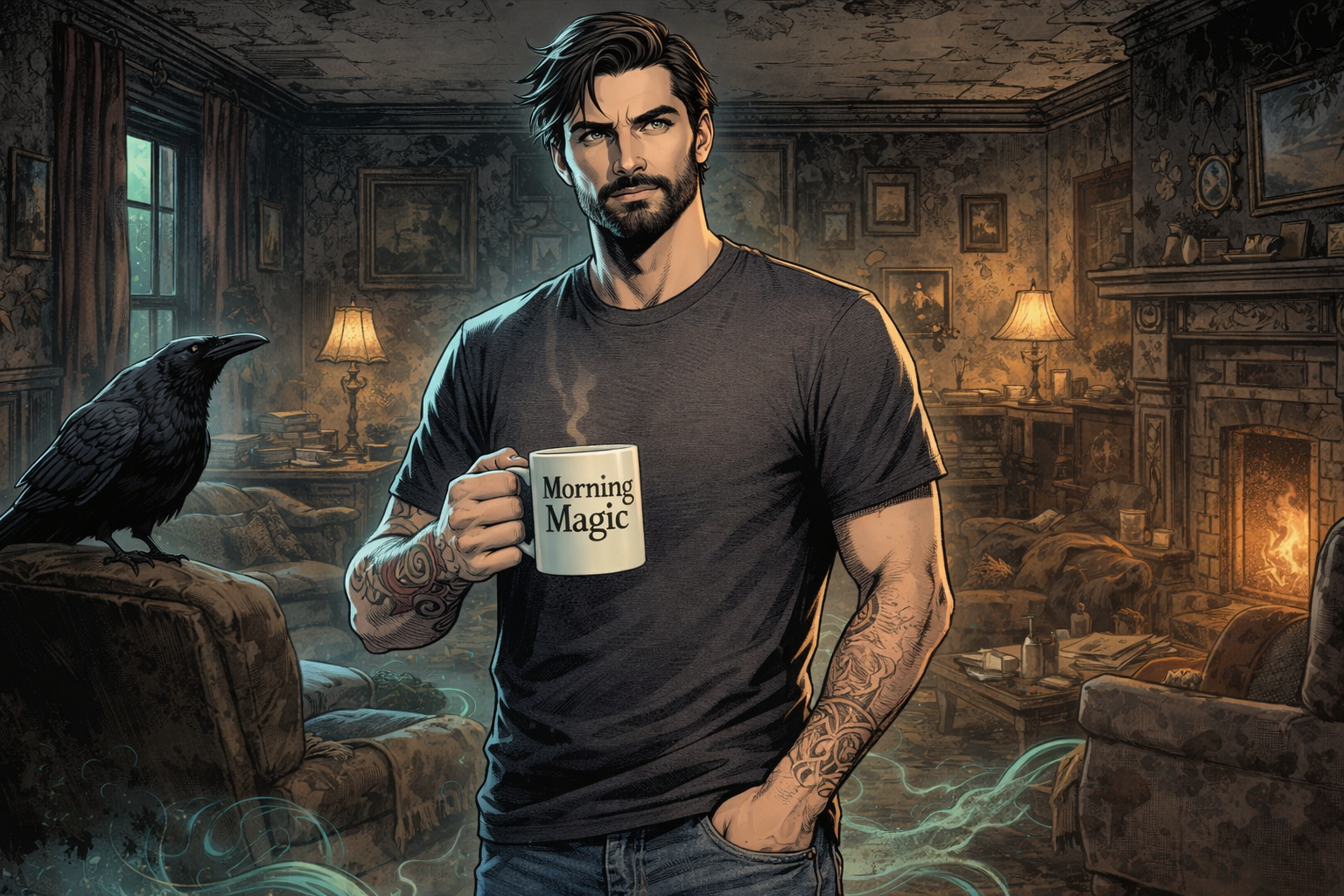
Current Status
Tired, overworked, underpaid , please send coffee
Honorary & Occupational Titles
Chance holds surprisingly few formal titles, and fewer still that he actively uses. Despite ongoing disapproval from certain elder practitioners—stemming from the circumstances of his birth, his father’s use of darker necromantic arts, and Chance’s own unorthodox methods—he is officially recognized as a Magus within the broader magical community. This recognition is begrudging, procedural, and difficult to revoke, rooted in demonstrated competence rather than approval.
Among institutions and councils, his title is used sparingly and often with qualifiers. He is acknowledged as legitimate, trained, and dangerous enough to warrant respect, even if his style, aesthetics, and ethics make traditionalists uncomfortable. His refusal to adhere to rigid hierarchies or ceremonial posturing has earned him a reputation as a problematic but effective practitioner.
Outside formal circles, his titles are informal and situational—bestowed by communities, colleagues, and those he has helped rather than claimed by himself. Most of these are practical descriptors rather than honors, reflecting what he does rather than who he is.
Chance himself avoids leaning on titles at all. To him, recognition matters only insofar as it allows him to keep working without interference. Authority that does not serve protection or accountability is something he tolerates, not something he seeks.
Date of Birth
September 20 (Libra)
Circumstances of Birth
Stillborn, revived by his father using necromancy to recall and tether his soul.
Birthplace
Scarborough General Hospital, Scarborough, Ontario, Canada
Family
Children
Current Residence
Blackwell Manor, GTA, Canada
Sex
Male
Gender
Man
Presentation
Masculine
Eyes
Blue
Hair
Thick very dark brown hair in a permanent “artful mess,”
Skin Tone/Pigmentation
Fair skin with a chronically overworked, occult-pale undertone
Height
180 cm (5'11")
Weight
79 kg (175 lbs)
Quotes & Catchphrases
“Okay. First—nobody panic. Second—I get to panic a little”
“This is either a minor haunting or a deeply personal grudge. Either way, let’s start with talking.”
“I promise I know what I’m doing. The universe and I just have… a complicated relationship.”
“If it’s whispering, bleeding, or violating causality, stop touching it.”
“Good news: it’s not cursed. Bad news: it possessed.”
“Yes, I’m aware this looks bad. But to be fair it looked worse ten minutes ago.”
“Just another day living the dream of being a wizard...”
“I’m not a hero. I’m a professional. There’s a difference—and a billing policy.”
“If this goes wrong, I want it to go wrong spectacularly.”
“I survive on coffee, preparation, and the assumption that something will absolutely go sideways.”
Belief/Deity
Vaguely Agnostic Polytheist
Character Prototype
The Urban Fantasy Wizard
Chance Blackwell embodies the Urban Fantasy Wizard archetype in its most grounded, functional form. He is not a robed archmage hidden in a tower or a chosen savior marked by prophecy, but a working practitioner navigating the supernatural layered directly over modern life. His magic exists alongside traffic, apartments, coffee shops, and bureaucracies, adapting ancient systems to contemporary environments rather than retreating from them.
As an Urban Fantasy Wizard, Chance blends classical occult disciplines with modern improvisation—reading ley currents through city blocks, using graffiti as sympathetic sigils, and treating neighborhoods as living magical ecosystems. He operates in the margins between the mundane and the unseen, handling problems too small, too strange, or too inconvenient for institutions to acknowledge.
The prototype emphasizes competence, preparation, and moral agency over destiny or raw power. Chance survives through knowledge, restraint, and empathy, relying on tools, planning, and experience rather than innate superiority. He is a problem-solver first and a spellcaster second, defined by his willingness to engage with the consequences of magic rather than abstract theory.
In essence, Chance represents the wizard as civic infrastructure: a quiet, necessary presence who keeps the lights on, the wards intact, and the monsters manageable—so the rest of the world can pretend none of it exists.


Comments