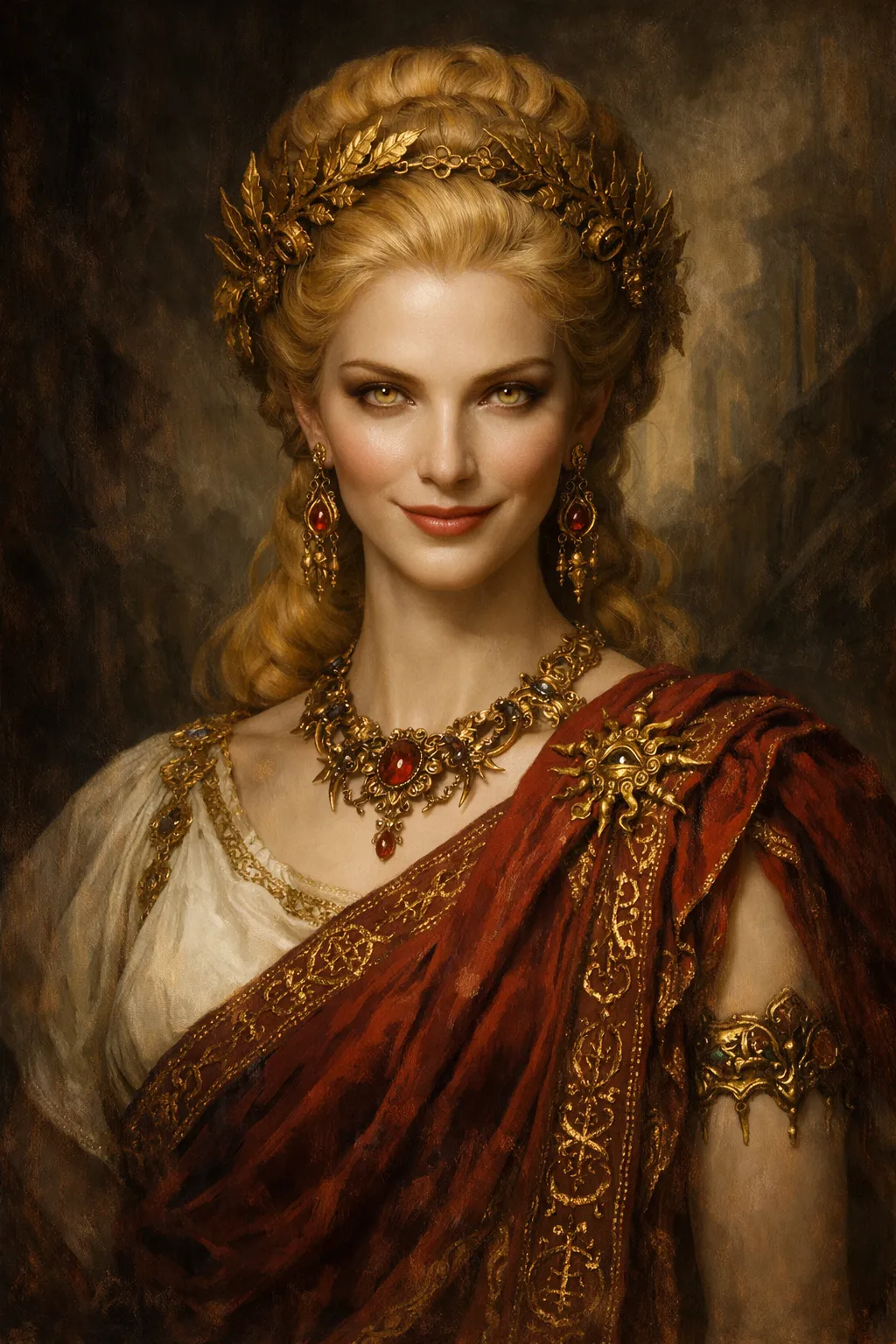
Solis
When Clarion determined that he needed to conduct a more direct investigation into the nature of The Egregoric Force, he also knew that he would need to recruit several other Clarati in order to fully carry out his research agenda. However, he found it difficult to convince his fellow sorcerers to leave the comfort of Sange in order to conquer a backwards land and use its population as a living engine of belief to drive experiments on the power of The Egregoric Force to shape reality. To achieve his ends, he was forced to accept whoever was willing to participate, even those he would have preferred to refuse. It was in this way that Solis became part of the group of Clarati who carried out The Conquest of Ynys.
After the Clarati used their magic to seize control of the island and its population, Solis claimed the northeastern portion as her territory, where she was free to conduct whatever experiments she saw fit. She professed a particular interest in the mechanics of fear and trauma, and in how they interacted with The Egregoric Force, at least as she framed her work to her colleagues. In practice, her research appeared unnecessarily cruel, even to those Clarati who regarded the human population as little more than laboratory animals. She explored how to push one group of humans toward a strange and eldritch relationship with the world, while trapping another within a self-perpetuating cycle of terror and violence that persists to this day. Of all the Clarati, Solis did more than any other to establish the legend of the sorcerers as monstrous and callous pseudo-gods, beings who sought nothing more than to toy with the minds of those less powerful than themselves, a reputation that continues to shape how they, and the era of their rule, are remembered.
During the Conquest
In preparation for the conquest of the Ynys Archipelago, Solis undertook the task of divining the True Names of the region's most powerful gods, binding them into servitude or imprisonment so that they could not interfere with the Clarati agenda. While she was not alone in this effort, it is clear from later writings that she was the most skilled practitioner of this art and that she led the campaign to neutralize the gods of the islands. As a result, she was granted her choice of territories to rule, and she selected the northeast, the region now comprising the kingdoms of Cait and Rheged.
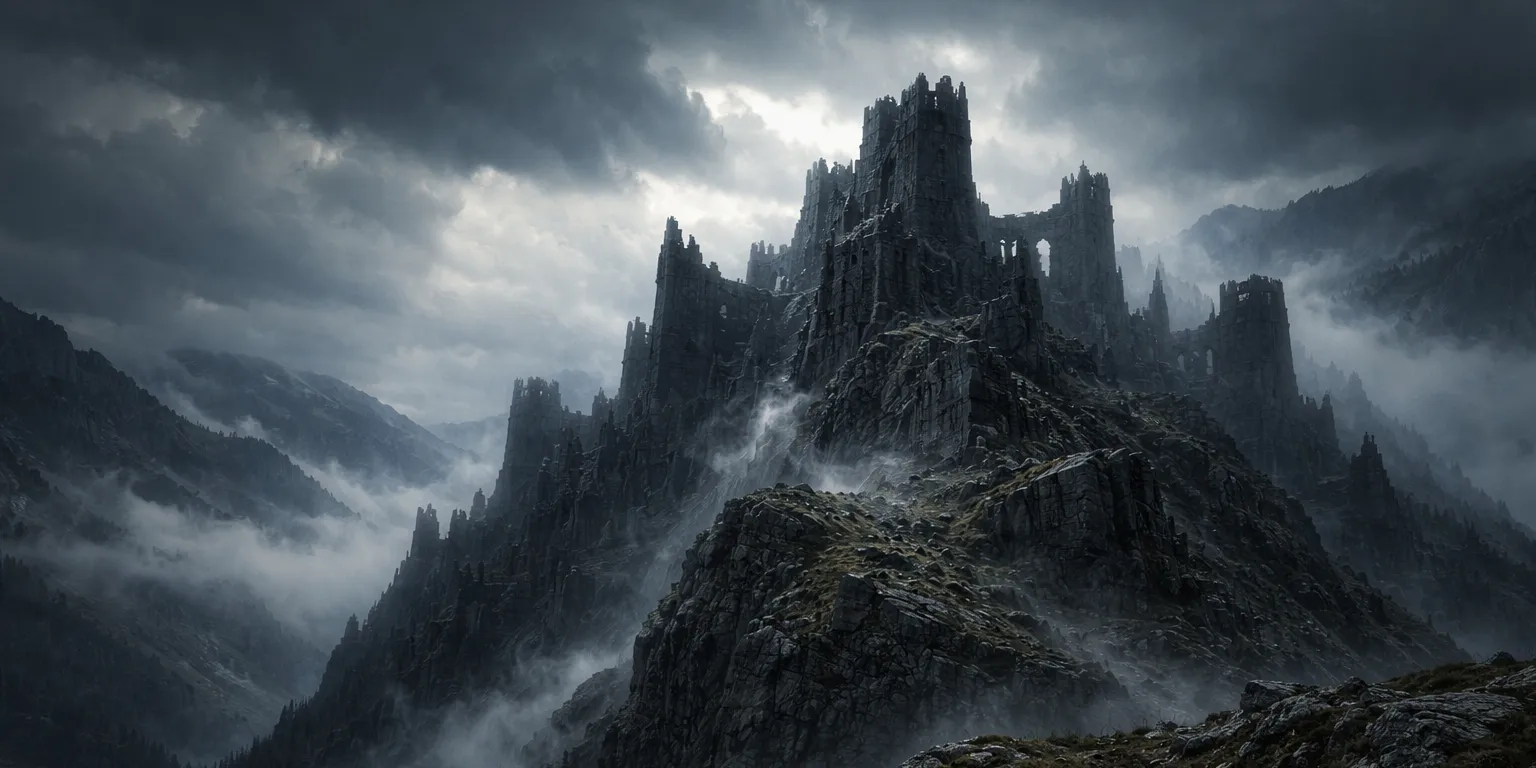
Using her magic, she constructed a castle for herself in the mountains of Cait, naming it Castle Ulthor for reasons she never shared with her new subjects. From this seat of power, she ruled the region through constructs fashioned from shadow-stuffed animal skins, spreading such tales as she wished the people to know and enforcing their compliance with her designs as needed. She divided the territory into northern and southern domains in order to conduct the two experiments she had planned, the first upon the Albidosi in the north, and the second upon the Albannach in the south.
Making Strange
In the north, Solis sought to see how far she could push the minds of the people away from typical human patterns while still maintaining a cohesive society. She was particularly interested in steering them toward a way of life dominated by melancholy, the macabre, and a fascination with darkness. Her early notes, recovered from Castle Ulthor after her death, describe a people transformed into something akin to night-haunting monsters, bound into societies only by mutual need, with no true feeling for one another. Each was to be an independent and terrifying creature, capable of empathy only for the shadows that surrounded them, and none at all for other people.
These notes go on to document several early attempts that ended disastrously. Those individuals most heavily altered eventually turned on their companions, slaughtering them in strange and ritualized ways designed to empower the murderer through Folk Magic. In many cases, these rituals succeeded, creating inhuman monsters that then terrorized nearby communities that had not yet manifested the full effects of her mental manipulations through The Egregoric Force. While Solis appeared to take pleasure in these creatures, she would invariably imprison them within remote mountain caves to prevent them from interfering with her later experiments, caves in which some of these monstrosities are said to survive to this day.
In the end, she failed to create the inhuman society she had initially envisioned, though her manipulations left a lasting mark upon the Albidosi. They are not the melancholic monsters she once imagined. While they have embraced the macabre, find beauty in the grotesque, and maintain a deeply unsettling relationship with the shadows of their realm, they are also loving, supportive, and fiercely loyal to one another. Rather than producing a people without bonds, Solis drove them to form bonds in defiance of the strangeness imposed upon their minds. As a result, the Albidosi are among the most open-minded and accepting of all the peoples of Ynys.
Fear and the Forest
Solis's experiments in the southern reaches of her territory were both more successful and more cruel. There, she sought to determine how much fear alone could drive The Egregoric Force, and how the manifestations that resulted might then generate further fear, pushing the cycle ever forward. She used her skill in the binding of spirits to ensnare most of the Ellyll associated with the forest now known as the Cully Dhorcha, directing them to attack the humans who lived along the forest's edges.
At the same time, she employed mental magics to implant fear of the forest's monsters directly into the minds of the human population, fears that were then confirmed by the attacks themselves. As the cycle intensified, the communities surrounding the forest elaborated upon the terrors said to dwell within the wood, and Solis was forced to expend substantial magic to keep her subjects from fleeing the region entirely. In a surprisingly short span of time, the cycle of fear and violence surrounding the forest became self-sustaining and even began to expand, gaining memetic momentum with each attack and each nightmare.
After several generations had passed, she was able to relax her prohibitions on leaving the territory. By then, the cycle was so deeply embedded in local culture that most found it difficult to live elsewhere. The fear had been ingrained so thoroughly that they carried it with them wherever they went, and the monsters they dreaded would begin to manifest from the shadows of their new homes. Solis wrote with glee about the success of this experiment, and spent much of the centuries before the fall of Sange refining its details to ensure its persistence. She carefully balanced the frequency and lethality of the attacks in order to maintain both a population to be frightened and a cohort of monster-gods to do the frightening.
The Fall of Sange and the Age of Warlocks
When the Clarati homeland of Sange vanished, the remaining sorcerers on Ynys turned upon one another for reasons no human scholar has ever been able to fully understand. Most believe this conflict to be a manifestation of the inhuman psychology of the Clarati. In the absence of their society, or perhaps due to the disappearance of Empress Illuminata, they appear to have been compelled to fight until only one remained.
In the earliest phase, this took the form of personal duels, and both Clarion and Illustrata were slain within two years of the disaster. Thereafter, the struggle escalated from individual conflict into open warfare. By this time, Celestina was suffering from acute Dissolutio Identitatis and confined herself to fighting rebellions on Oileán Fiáin. Niten, whose base lay in the Korabovi Islands, relied primarily on mystical assassins to strike at his rivals. This left only Solis and Fulmen in control of territory on the island of Ynys.
For more than three hundred years, Solis and Fulmen waged war against one another, a period later named the Age of Warlocks. Fulmen, creator of terrible and wondrous beasts, unleashed dragons and other horrors to the north against Solis's armies of shadows and monsters. In response, she opened the caves that held her imprisoned terrors and loosed them upon her enemies, while also forging new monsters from the bound gods of the land. These supernatural forces were accompanied by vast human armies, drawn both from conscripted local populations and from mercenaries hired in the Norður Islands.
Their battles swept across Ynys, razing much of what had been built under Clarati rule. To this day, remnants of these wars remain scattered across the island: hidden Artifacts, fragments of monstrous creations, and the occasional imprisoned beast or terror that still waits to be unleashed. Ultimately, the armies served only to exhaust the powers of the two central figures. In the year 3305 PC, Solis and Fulmen met in direct magical combat.
Solis emerged victorious, though only barely. Both Clarati were grievously injured and utterly depleted by the encounter, and both were forced to flee the battlefield to recover. Upon his return, the gravely injured and critically weakened Fulmen was murdered by his own seneschal, Wuffa. Solis, meanwhile, spent the next two years ensconced within Castle Ulthor, struggling to regain her strength. Before she could fully recover, a group of Albidosi warriors, accompanied by the Witch of Rheged, breached her compromised defenses and executed her. This feat was made possible only through the formidable magical power of the Witch, and even so was a near-impossible feat. With Solis dead, the Age of Warlocks came to an end, and the people of Ynys were free to chart their own course again.
The Legacy of Solis
After her death, Castle Ulthor was abandoned and became the focus of ghost stories and dreadful legend. Yet her lasting impact extends far beyond a single haunted ruin. Across the land, spirits and gods once bound by Solis were freed upon her demise, though none emerged unchanged from their long imprisonment. Eilidh Oirbheartach, the cat-goddess of Aran, stands as the most prominent example of a deity made strange by Solis's enchantments, but she is far from the only one.
Her experiments upon the peoples of the northeast also continue to shape their descendants. The culture of the Albidosi was irrevocably altered by her manipulations, and the Cully Dhorcha remains trapped in a cycle of fear and violence with the people of Rheged, despite numerous attempts to dismantle the machinery of terror Solis constructed from both people and gods. Above all, the legacy of the Clarati as a whole is viewed through the lens of the Age of Warlocks, when Solis and Fulmen spent centuries warring over every inch of Ynys, unleashing terrible creatures upon armies and innocents alike.
Scholars who study the Clarati generally agree that Solis was the worst among them, and that the trauma she inflicted upon the people of Ynys has done more to shape how the Clarati are remembered than the actions of any other sorcerer of that age.
Do As Thou Wilt
While it is clear from the surviving writings of the other Clarati that they did not approve of Solis's experiments, they took no action to prevent her from carrying them out. Scholars generally attribute this to a cultural prohibition deeply embedded within Clarati society and enforced by Empress Illuminata: that no Claratus should ever interfere in the activities of another unless those actions directly affected the intervening party.
Thus, despite their revulsion at the cruelty Solis inflicted upon the inhabitants of her territory, the other Clarati would not lift a hand to protect them unless her actions threatened their own experiments or personal interests. Many historians have condemned the Clarati for failing to halt Solis long before the fall of Sange, and this collective inaction remains one of the primary reasons the Clarati are remembered as the greatest villains in the history of Ynys, nearly seven hundred years after Solis's death.
Related Articles
This article was originally written for Spooktober 2024. You can find all of my Spooktober Articles at Spooktober Central.
This article was originally written for Spooktober 2023. You can find all of my Spooktober Articles at Spooktober Central.

That opening quote does really set a tone, an excellent choice Demon. Quite the strong, to the point, introduction to this individual.
Thanks! She's been on my list for a while, and I'm glad I got her written up!