
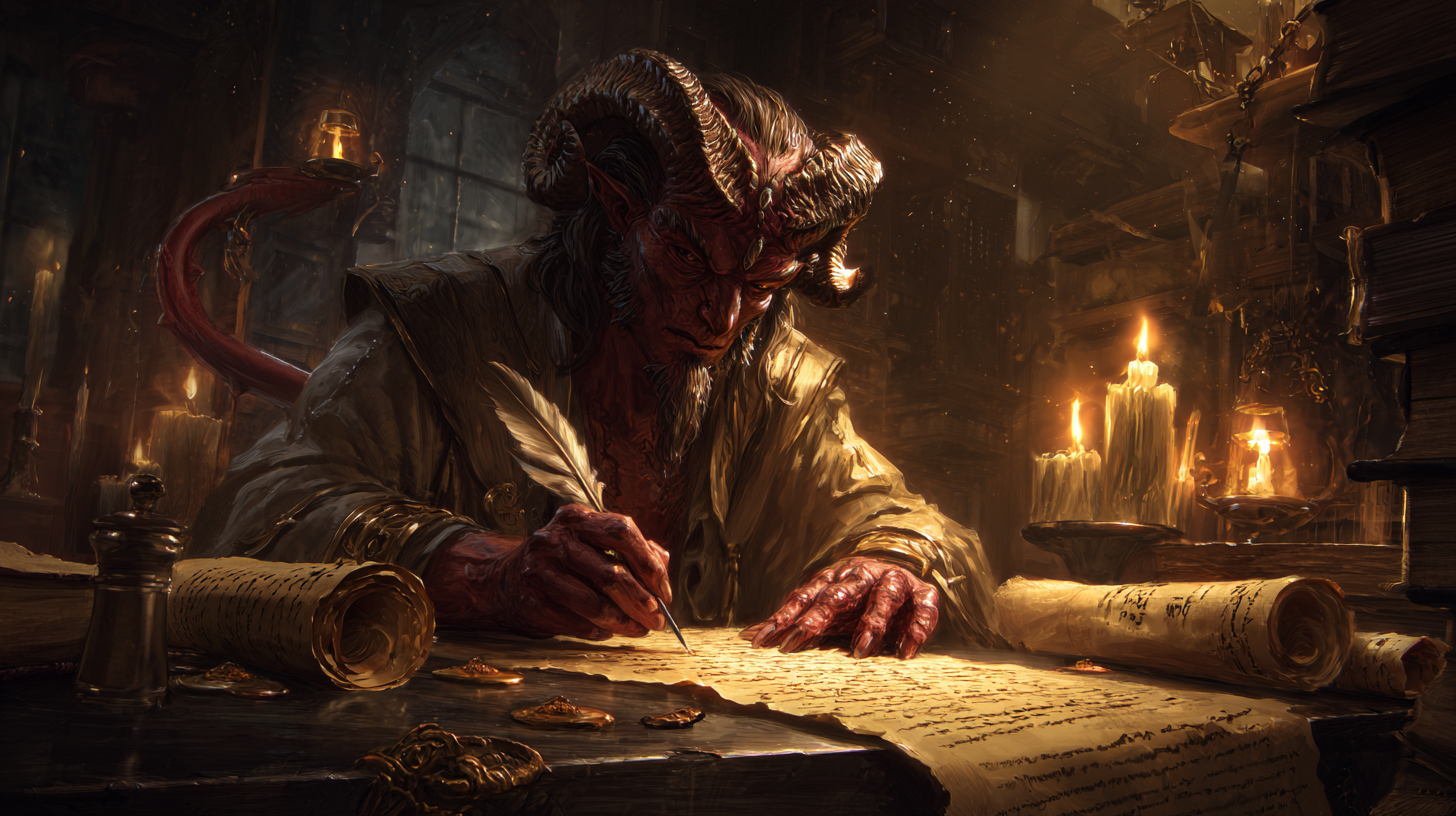
Rights & Codes
Standardized Legal Framework in Faerûn
The following Rights are used to describe regional laws. Each Right has a set of codes representing levels of restriction. Regions will list their Rights using these codes, and licenses or organizations may improve a character’s standing.
DMs may add special rules (S) for unique local flavor — such as banning fire spells in a druid grove, or requiring a license for owlbear mounts in Baldur’s Gate.
Codes can be combined where laws overlap. A settlement with LT for Spellcasting requires both licenses and travel restrictions, while one marked PG for Faith allows worship of only the good and neutral members of a pantheon.
Right of Arms
Regulates weapons, armor, and martial presence.
- U — Unrestricted: Any arms or armor are legal.
- M — Minimal: Simple weapons and all armor allowed; weapons of war restricted.
- R — Regulated: Heavy armor and weapons of war restricted; medium armor may justify inspections.
- X — Complete Lockdown: No weapons or martial armor permitted; light armor may pass as clothing.
- S — Special: Region-specific rules apply.
Common Exceptions:
- Nobles may claim inherent Right of Arms: U.
- City guards/watch may hold special commissions.
- Duels may be sanctioned under special writs.
Right of Spellcasting
Regulates the public use of arcane and divine magic.
- U — Unrestricted: Any spellcasting is legal.
- L — Licensed Only: Spellcasting requires permits or guild membership.
- N — Noncombat: Utility and ritual spells allowed; combat spells banned.
- T - Travel Restricted, teleport/flight and other spells are restricted to designated ingress/egress zones, which most often includes a spellcaster's home (if a resident) and designated toll areas for inspections.
- D — Defensive Only: Self-defense spells allowed; spells of war (e.g. fireball) banned.
- H — Alignment Restricted: Necromancy and charm magic proscribed.
- S — Special: Region-specific rules apply.
Common Exceptions:
- Recognized priests may cast divine magic even in restricted zones.
- Watchful Order of Magists & Protectors (Waterdeep) upgrades NT → DT.
- Necromancy bans are nearly universal unless licensed (e.g. funerary rites).
Right of Beasts
Regulates familiars, mounts, companions, and exotic pets.
- U — Unrestricted: Any beast or familiar allowed.
- D — Domestic Only: Cats, dogs, horses, livestock.
- E — Exotics Licensed: Familiars or magical beasts permitted with a license.
- X — No Beasts of War: Large or dangerous creatures banned (dire wolves, griffons).
- S — Special: Region-specific rules apply.
Common Exceptions:
- Familiars may be tolerated as “exotics", though most simply keep their familiar in their pocket dimension.
- Paladin or druid companions often granted exemptions.
- Cities may ban specific creatures due to past disasters.
Right of Trade
Regulates buying, selling, tariffs, and the movement of loot.
- U — Unrestricted: Open market, no tariffs.
- T — Tariffed: Standard tax (10–20%) applies.
- G — Guild-Only: Must sell through or belong to a guild.
- M — Monopolized: Certain goods are state-controlled (slaves in Thay, spices in Calimshan).
- X — Forfeiture: Loot or relics confiscated without charter.
- S — Special: Region-specific rules apply.
Common Exceptions:
- Adventurer Salvage Charters upgrade X → T.
- Guild membership upgrades G → T.
- Smuggling networks may bypass tariffs but risk criminal penalties.
Right of Faith
Regulates which deities or pantheons are permitted in public worship. Gods are rarely banned outright in Faerûn, since every soul must align with a deity for the afterlife, but local rulers determine which faiths may be worshipped openly.
- U — Unrestricted: No recognized religion, or authorities do not interfere with faith.
- P — Pantheon (All): Worship of the listed pantheon permitted, including darker gods.
- G - (Good/Neutral) gods only of a given pantheon.
- R — Registry Required: All faiths must be formally registered; unregistered worship illegal.
- X — Exclusive: Only the listed god permitted; other faiths persecuted.
- S — Special: Region-specific rules apply.
Common Exceptions:
- Cults — Twisted sects or non-divine worshippers may be outlawed even within accepted faiths.
- Foreign Clerics — Traveling priests sometimes tolerated even if their god is not sanctioned.
- Pragmatic Exceptions — Authorities may quietly allow worship of darker gods (Umberlee at sea, Bane in wartime).
Right of Status & Justice
Determines how one is judged and by whom.
- C — Common Justice: Tried as an ordinary subject.
- A — Adventurer’s Charter: Cases handled by council or special courts.
- N — Noble Privilege: Judged by peers or rulers.
- O — Organization Law: Guilds, temples, or orders judge their members internally.
- S — Special: Region-specific rules apply.
Common Exceptions:
- Nobles default to N unless stripped of title.
- Adventurers with revoked licenses revert to C.
- Large organizations (Zhentarim, Harpers) may attempt to enforce O even in hostile territory.
Right of Movement
Regulates travel, borders, and movement within settlements.
- U — Unrestricted: Free travel.
- P — Papers Required: Travel permits, writs, or charters needed.
- C — Curfew: Movement restricted to set hours.
- X — Martial Law: Lockdown enforced by checkpoints and patrols.
- S — Special: Region-specific rules apply.
Common Exceptions:
- Merchants’ caravans may be granted exemptions.
- Adventurers may obtain special writs for travel.
- Borderlands often fluctuate between U and X depending on wartime conditions.
Using This System
- Each region lists its Rights in a Law Block.
- Licenses and organizations modify these codes.
- S (Special) always points back to regional flavor text.

Comments