
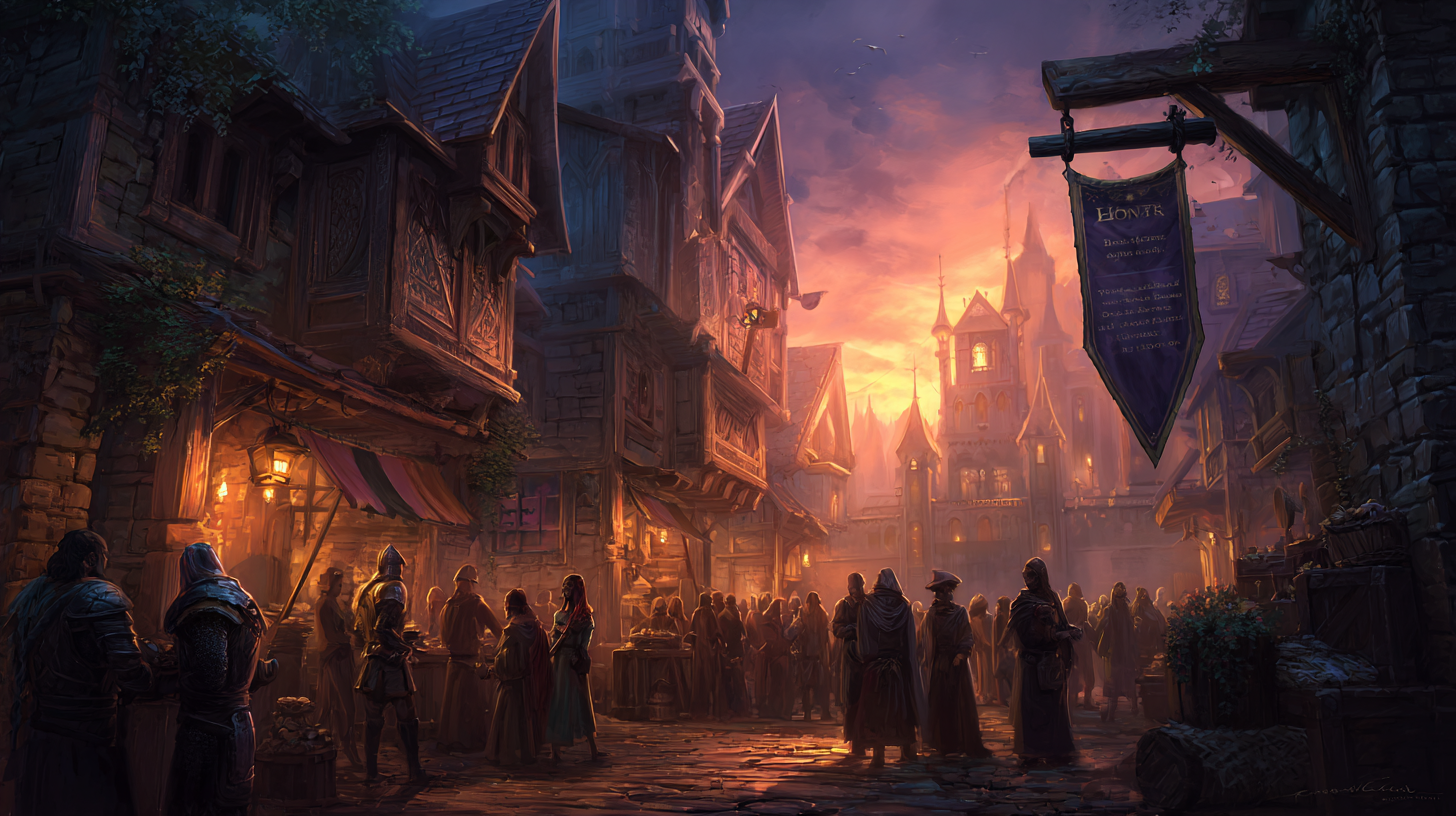
Commoners
It is the lot of common folk to pay, to bow, and to bleed — until some hero reminds the mighty why they need the rest of us.
Most folk of Faerûn fall into this category: farmers, craftsmen, sailors, and townsfolk who live under the rule of lords, councils, or guilds. A commoner represents the default status in Faerûn — no licenses, no privileges, and no protections beyond what the local law provides. Their rights are limited, their obligations heavy, and their freedoms vary greatly from city to city.
Because commoner status is precarious, most families do everything they can to push their children into a trade, temple, or guild. Membership in an organization grants protections and privileges far beyond what common law provides. Few would ever encourage their children to become adventurers — a path widely seen as dangerous and short-lived.
In some regions, even commoner rights are denied to outsiders or strangers. These individuals may have no legal standing at all unless a patron, guild, or temple claims responsibility for them. Such variations will be noted in each settlement’s laws.
Variation by Locale
- Neverwinter — Commoners are heavily taxed but benefit from the stability of Lord Neverember’s rule. Right of Spellcasting is generally more tolerant than elsewhere; hedge magic and cantrips are often overlooked. Outsiders, however, are watched closely and may be denied full Rights without sponsorship.
- Fort Leilon — Taxes are lighter (10–15%) as the Vexmoors encourage growth, but law enforcement is stricter. Right of Movement and Right of Status are tightly controlled: outsiders (tieflings, drow, orcs) often require papers or patronage to claim even commoner-level protections.
- Waterdeep — Nearly all Trade Rights are Guild-Only (G). Commoners must belong to or work through a guild to practice a craft or sell goods. While this creates heavy bureaucracy, magistrates provide commoners with more legal recourse than in most cities.
- Baldur’s Gate — Corruption dominates. Commoners may bribe their way into Rights (Trade, Movement, even Arms), but protections are weak. Without money, most disputes end poorly for the powerless. Street magic is punished harshly, but bribes often turn a blind eye.
- Rural Villages — With little bureaucracy, Rights default to Unrestricted (U) in Arms, Spellcasting, and Beasts — but only in theory. In practice, commoners are vulnerable to bandits, nobles, or cults. Religion dominates local law, with priests acting as both judge and enforcer.
- Nyelath’s Grace — The sea elf council grants commoners unusual autonomy: taxes are modest, and trade rights respected. Even non-elves may petition the council, though outsiders are expected to strictly follow sea elf custom. Violators risk penalties harsher than locals would face.
- Skullport — Commoners survive only by bribery, deals, or protection rackets. Rights are effectively replaced by syndicate contracts. Without paying a faction, a commoner has no legal standing at all. Even recognized religions must operate under the patronage of a crime lord.

Comments