
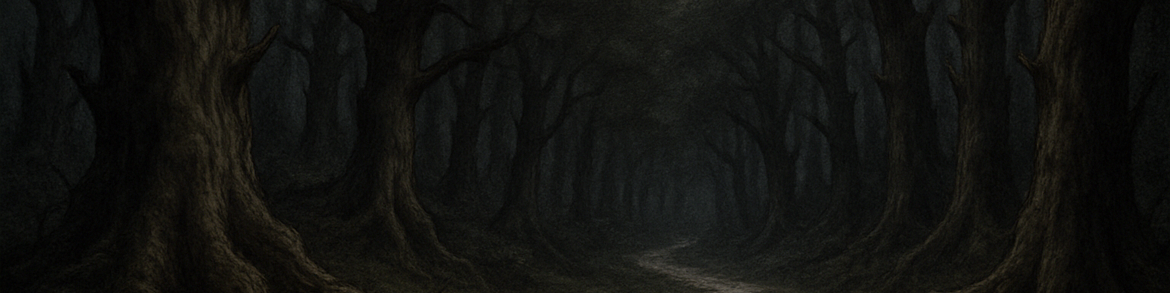
The Watchful Wood
"The Watchful Woods are patient collectors. They return what you lost—only hollowed, only hungrier."
Lanterns glowed among the garden’s branches, their light trembling on the leaves. Children clutched their sweets and hushed as Seraphis rose. She did not ask for silence; it arrived of its own accord.
“The Watchful Woods,” she said. “They do not hunt as wolves do. They do not roar like beasts. They watch. They wait. And when the light fails, they invite.”
The fire snapped. Her violet eyes swept the circle, sharp as pins.
“Once, a man strayed from the road through the woods. Three nights passed. Then he returned. His wife wept, for he spoke her name. His children clung to him, for he remembered their games. He told them of a clearing filled with music, and begged them to come see.”
Her gaze lingered, the smallest curl of amusement at her mouth.
“They refused. At first he pleaded. Then he grew insistent. At dawn the neighbours heard screaming. The house stood empty. Only footprints—four sets, side by side—led back into the trees.”
The lanterns quivered.
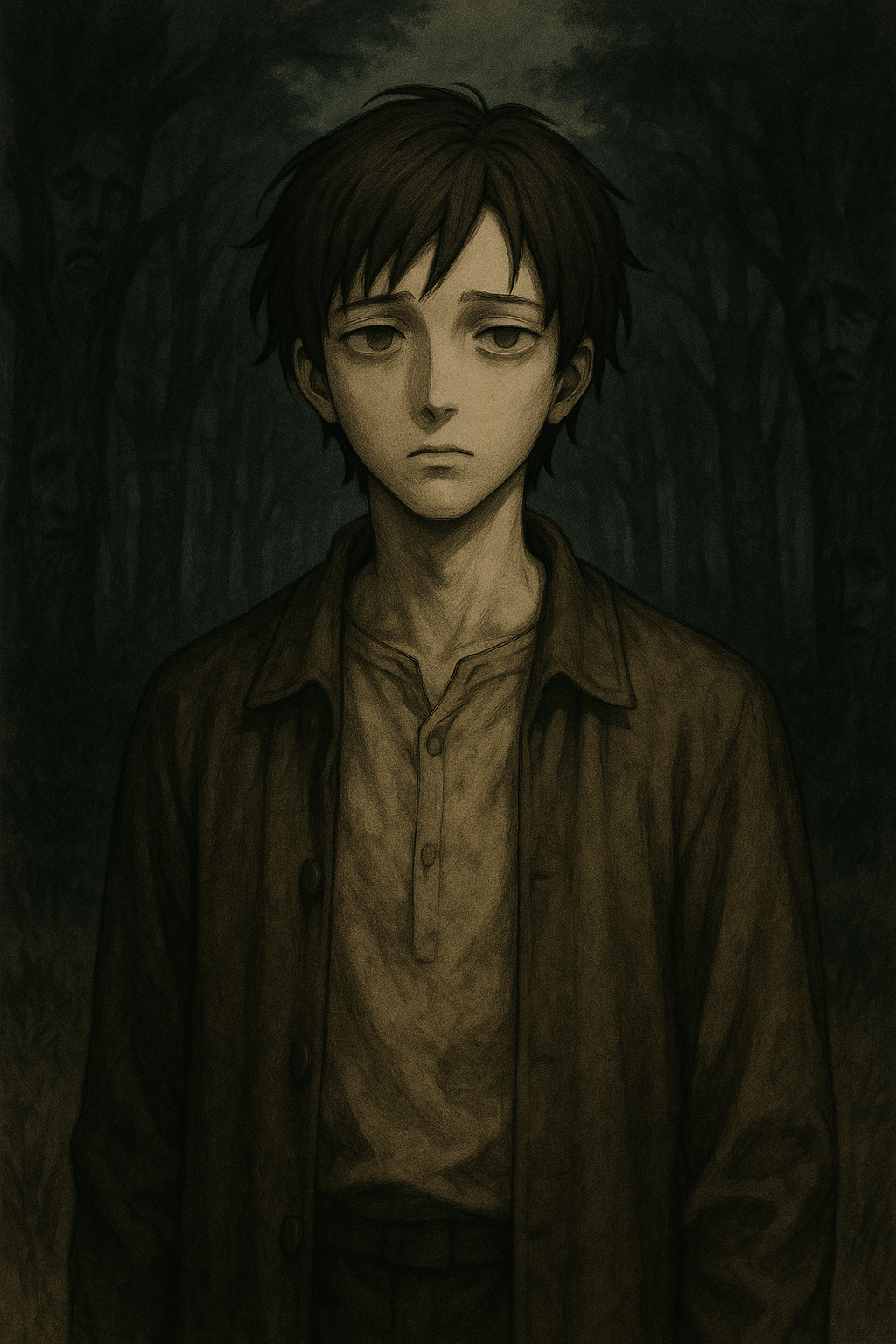
“Later, hunters searching the wood found faces knotted into the bark. Not carved—grown. Eyes, mouths, likenesses of those who had vanished. Some swore the knots turned to follow them. And still they said nothing, for what is there to say when trees remember more than you?”
Her voice sank lower, velvet and certain, forcing the crowd to lean in.
“So the Witchmarked teach their children this: bar your doors at dusk. Keep to the road. Never open when someone calls from the threshold at night. And never, ever follow a loved one into the Watchful Woods, no matter how sweetly they beg. For what comes back is not your own. It is the forest, wearing their memory.”
A pause. Her eyes fixed on the crowd, violet and unblinking.
“And if you ever find your own face in the bark—pray it does not blink.”
Where the Veil is Thinnest
The Watchful Woods are not every forest, but only those places where the Veil has worn itself thin. Such places prefer loneliness: untravelled paths, hollow groves, and hedgerows allowed to grow wild. The Church claims these are the haunts of demons. They are not. They are simply the consequence of a wound ignored too long.
By day, one may pass safely, so long as the path is kept. The air will feel crowded, the shadows untrustworthy, and names may be whispered from no direction at all. Yet the road remembers where it leads, even when you cannot.
At night the woods change their manners. Lanterns falter, shadows move with intention, and the boundaries between one’s own shape and another’s become perilously negotiable. Should the forest’s shadow cross your own, you do not return. Not truly.
What Returns
The neighbours always insist the figure that steps back through the threshold is the same husband, wife, or child they lost. The voice is familiar, the stories correct, the memories too precise to doubt. But the precision is the problem. Memory without warmth, laughter without breath, a hand too cold to belong to the living.
These returnees coax first with tenderness, then demand with insistence, until finally they drag those they claim to love into the woods. Entire households have vanished in this fashion, their homes left neatly swept, as though waiting for the next occupants. Deep in the forest, knots grow in the bark—eyes, mouths, faces recognisable to those who dare to look. The shell goes home. The soul stays pinned.
Superstition, Faith, and Denial
Rural folk do not call their caution faith. They call it memory. Doors are barred at dusk, no matter how piteous the knocking may sound. Kin who vanish into the woods are mourned, not welcomed home. These rules are not cruelty; they are courtesy offered to a land that does not forgive carelessness.
Cities, however, prefer arrogance to prudence. They burn their lamps bright and claim that the hand of God shelters them. Villagers are mocked for their “witch-lore,” as if empty streets and silent caravans were a choice. The Church repeats its usual sermons, insisting that obedience is enough. It never explains why Inquisitors carry charms into the field, or why so many Hunters begin to sound like Witchmarked when pressed for practical advice.
What the Witchmarked Remember
The Witchmarked speak the rules aloud because no one else will. They teach their children not to stray from the path, not to travel after dusk, and not to answer when their name is called from the hedges. These are not superstitions. They are reports disguised as lullabies.
The Church despises this candour, for it robs them of authority. The villagers cling to it, for it robs them of coffins. And the Witchmarked endure, walking the dusk roads and leaving offerings beneath the bark-faces, whispering kindness to those pinned within. Courtesy, not conquest, has always been their method.
Final Thought
The Watchful Woods do not hunt, nor do they chase. They simply wait until the careless step close enough to be tallied. What they return is never the person you loved, but only the memory of them, hollowed into shape.
If the bark bears your face, it means you have already been counted. And once the forest has written you down, it does not forget.
At A Glance
For those who refuse to read past the first page: the forest is not impressed by your shortcuts. If you cannot manage patience, it will teach you its own.
What They Are:
Not all forests, only those where the Veil has frayed. In Duskworn they are called the Watchful Woods: wild places that do not forget, patient thresholds where souls are taken and worn thin.
What They Do:
They wait. By day they whisper names and twist the road. By night they claim shadows, sending home shells that coax the rest of the household into following. Faces are left behind, grown into bark.
Who Remembers Them:
The Witchmarked, who pass down the rules their neighbours call superstition. Bar your doors at dusk. Never follow a voice into the trees. Never greet kin who return from the dark too willingly.
How to Stop Them:
There is no cure once taken. Prevention is the only mercy: carry lanterns, keep to the road, and never admit anyone once the sun has fallen. Kindness at the wrong hour is simply an invitation.
Why It Matters:
Because Duskworn does not preserve stories as folklore. It preserves them as geography. The Watchful Woods are not tales to frighten children. They are the map one follows, if one wishes to live.
Current Consensus (Such as it is):
Villagers call them superstition. Cities call them heresy. The Witchmarked call them memory. The woods themselves do not care what you call them. They are already watching.
Related Reading
“Your continued reading is more valuable than coin. However, the author assures me that Ko-Fi support assists in ‘keeping the kettle on.’ I am told this is a metaphor. I remain unconvinced.” — Seraphis Nightvale Ko-Fi: #madmooncrow


Comments