
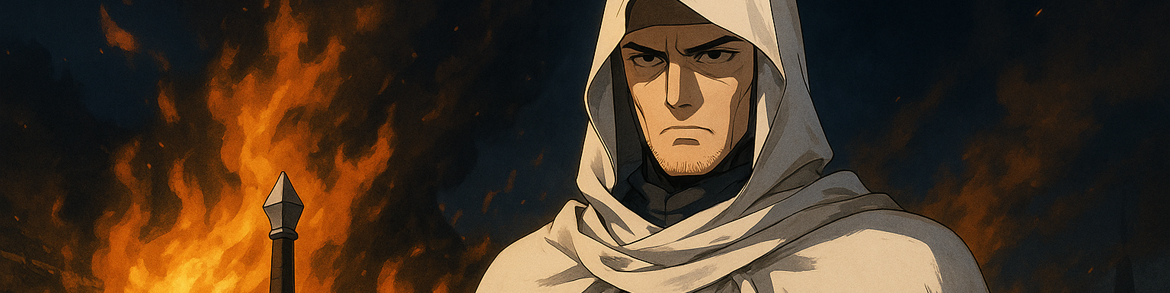
The Order of the Ember Cross
“They call themselves the Light. I have seen their light. It leaves no shadows because it burns everything that could make one.”
This is not a priesthood. It is a mechanism built to seek corruption wherever it hides and to destroy it, even when it is not certain what it has found.
The Ordo Crux Cineris, known among the people as the Order of the Ember Cross, was founded to defend the faith from spiritual decay. It succeeded only in redefining decay as anything that does not kneel fast enough.
Where others pray for salvation, they legislate it.
Where others preach mercy, they catalogue it.
Where others hesitate, they burn.
The Flame That Judges
The Ember Cross rose during the first centuries after the Veil began to fray. The Church, already fearful of losing control, needed an arm that could act without conscience. These Inquisitors were meant to excise corruption from the soul of the world. They did so by assuming that every soul was already guilty.
Their guiding scripture reads, “The Light Redeems All.”
They took it literally. To redeem, one must first destroy.
Their emblem is a golden cross wreathed in stylised flame upon white cloth. They call it the Sign of Perfect Mercy. To those who have seen their work, it is the mark left on the walls when the fire has gone out.
Structure of Obedience
The Order presents itself as a society of equals, bound by faith rather than rank. In practice, obedience defines every breath they take.
High Confessors sit in cathedrals and issue decrees that determine which villages are next to be “cleansed.”
Confessors travel widely, polite and precise, gathering names and stories that may later be used as evidence of moral infection.
Reckoners perform the executions, delivering both sermon and flame with unwavering rhythm.
Sanctifiers prepare the Dreamwine, a sacramental narcotic that ensures the condemned meet their god with serenity and no memory of accusation.
Promotion is granted not for wisdom but for purity. To question a superior is to question Heaven itself, and Heaven does not entertain discussion.
The Creed of Perfection
Members of the Ember Cross are taught that they are the living hands of the One True God. To defy them is to defy divinity. To hesitate is to imperil creation.
They do not strive for compassion. They strive for the absence of error. They polish their armour until it reflects light so fiercely that nothing human can survive in its glare. They call humility a weakness of the flesh. They call mercy a temptation. They believe that the world will heal only when it is burned clean enough to stop asking questions.
The Theatre of Fear
Villages prepare for the arrival of the Ember Cross as others prepare for plague. Extra candles are lit, bells are rung out of rhythm, and every window bears the sign of the cross to prove allegiance before accusation.
The Inquisitors travel in pairs. They speak softly. They observe everything.
When a field rots, they see a curse.
When a child dreams of voices, they see possession.
When a midwife whispers the wrong blessing, they see heresy.
They fight monsters, yes, but only those that can be witnessed. A werewolf’s corpse can be presented as proof of purity. A restless spirit or a poisoned field cannot. In such cases they look for the human source of contamination. Someone must always be responsible.
Their interrogations are silent except for prayer. The condemned often begin to sing hymns midway through. That is the Dreamwine speaking. By morning, the air smells of incense and fat.
Fear is not their tool. It is their liturgy.
The Flame’s Reflection
Individually, many of them are sincere. Collectively, they are a disaster. Each believes himself incapable of corruption and therefore becomes its most hospitable vessel. They hear voices in the blaze and call them revelation. They follow orders signed by hands that leave no shadows. When cities burn, they record that the Light has triumphed.
They hunt what they call corruption, but they no longer know what that word means. They burn witches who heal the sick. They hang hunters who consort with witches to keep villages alive. They strike bargains with noble families that reek of blood.
“The Devil does not tempt them. He applauds.” — Seraphis Nightvale
Relations and Rivalries
The Hunters are useful until they are inconvenient. They track what the Cross cannot find and destroy what the Church prefers not to acknowledge. When their methods become too effective, the Cross arrives to remind them who is permitted to save the world.
The Witchmarked are treated as living blasphemies. The Cross insists that they are descendants of the first corruption, unable to recognise that the Witchmarked are the only people who still remember how to keep the dark asleep. Their persecution of these wanderers ensures the darkness will never lack for fuel.
The Grey Vigil are untouchable in name but constantly watched. Their ancient charge to guard the crown makes them politically inconvenient to burn, but the Cross keeps ledgers ready for the day that protection fails.
Even within the Church, the Ember Cross inspires dread. They are purity given bureaucracy, and every discrepancy is a sin waiting to be corrected.
The Faith They Enforce
The people do not worship the One True God. They worship survival.
They sing louder when the Inquisitors are near. They bow deeper. They light twice as many candles. They offer prayers they do not believe in, hoping that appearance will count as virtue.
The Church calls this devotion. I call it terror perfected into habit.
The Gold Within the Ash
Some of the High Confessors display traits that cannot be explained by exhaustion alone. They do not sleep, and their eyes emit a faint light even in daylight. The Church calls this divine favour. The Hunters whisper that it is something older and far less forgiving.
These men are not priests any longer. They are vessels for the very corruption they claim to cleanse. Their faith has become a mirror that reflects only flame.
The Psychology of the Flame
The Order selects the most dutiful and the most insecure. It replaces their doubt with certainty and trains them to see compassion as a form of weakness. They are obsessive, disciplined, and pathologically afraid of being wrong.
When doubt does arise, they treat it with confession and pain until it heals into conviction. They do not enjoy cruelty. They simply mistake it for justice.
The worst among them are not sadists. They are believers. That is why they are beyond redemption.
Final Thought
The Order of the Ember Cross believes it keeps the darkness at bay. Perhaps it does, but only because it creates enough fire to drown the night in smoke. What they call illumination is merely the blindness of those standing too close to their own flame.
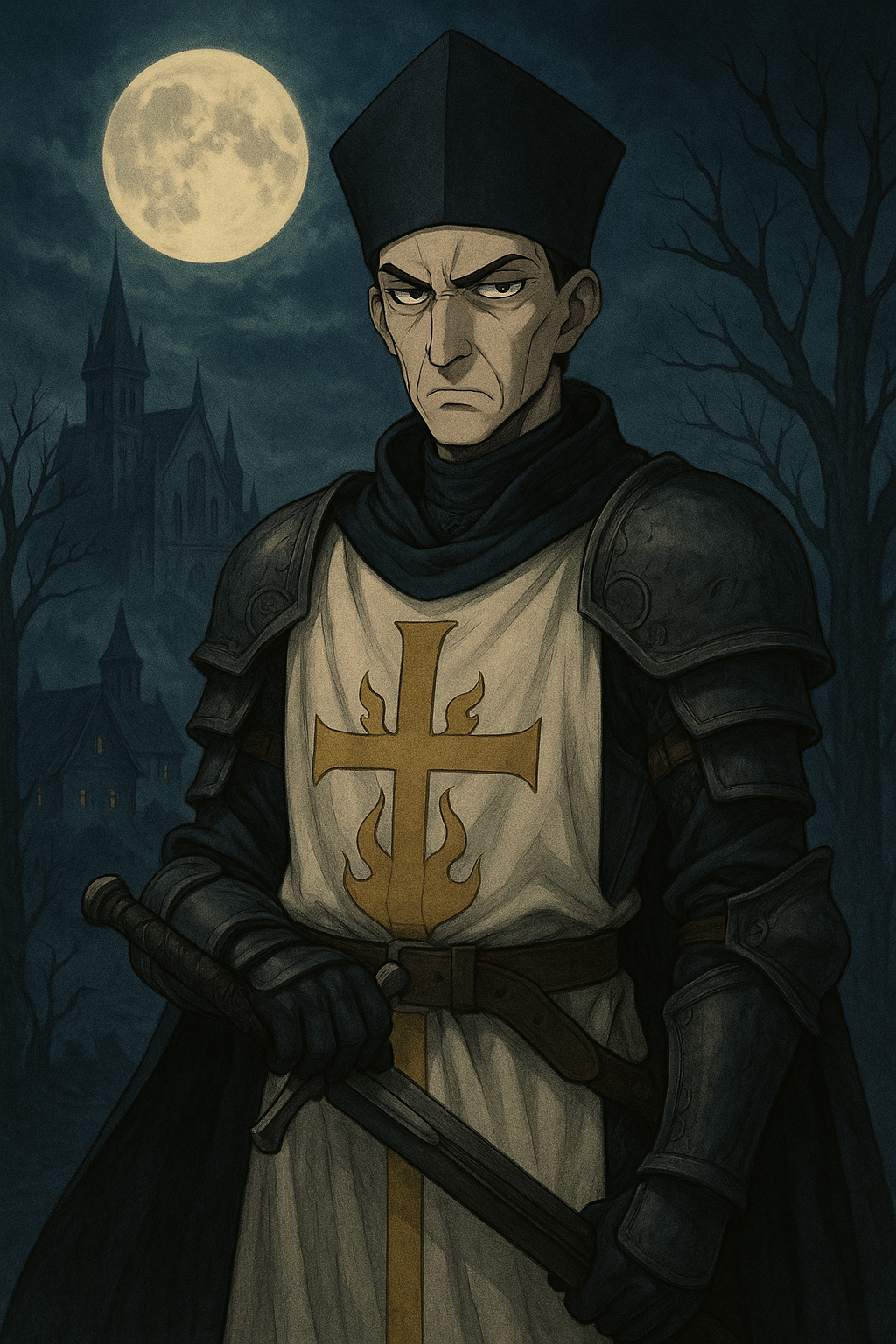
At a Glance
For those who cannot endure the full record, or who now find themselves staring at a torch and wondering which side of it they stand on.
What It Is:
The Ordo Crux Cineris, known as the Order of the Ember Cross, serves as the Church’s cleansing arm. Officially, it hunts corruption in all its forms. In practice, “corruption” means anything that inconveniences the hierarchy. The members call themselves the Light. The villages call them by prayer before the doors are barred.
What They Actually Do:
They arrive without warning, take confession by night, and leave fields of ash by dawn. Their duties range from purging monsters to executing midwives who used the wrong blessing. They claim to cure the disease of sin. In truth, they only change its symptoms.
Who Commands Them:
The High Confessors of the One True Church. The hierarchy is absolute, and dissent is a heresy punishable by purification. Their word is law, interpreted by men who have forgotten how to listen.
Who Suffers Them:
Everyone else. The Witchmarked burn first, the Hunters next, and finally the villagers who spoke too slowly. Even nobles feign devotion when the golden cross appears on the horizon. No one survives the Light’s curiosity unscathed.
Why They Matter:
Because they are efficient. Because they are everywhere. And because they still believe they are saving the world. In a sense, they are. A world without sin is easiest to maintain when there is no one left alive to commit it.
The Hunters’ Opinion:
“They clear the path of monsters, then salt the road so nothing human grows there again.” It is said quietly, and only once.
The Church’s Official Position:
The Ember Cross are divine instruments of purification, immune to error by virtue of purpose. Their failures are classified as “tests of faith.”
Their Unofficial Reality:
A weapon that burns its own wielder, kept only because no one else can lift it without catching fire.
Current Consensus (Such as it is):
To see the gold cross is to kneel.
To speak after kneeling is to burn.
And if they smile while they light the pyre, pray that they do not remember your name.
“Your continued reading is more valuable than coin. However, the author assures me that Ko-Fi support assists in ‘keeping the kettle on.’ I am told this is a metaphor. I remain unconvinced.” — Seraphis Nightvale Ko-Fi: #madmooncrow



Am scared they exist in the story
Yes you should be :)
Still standing. Still scribbling. Still here.
The Last Home
Especially as I gel with your demons and kitsune and the like