
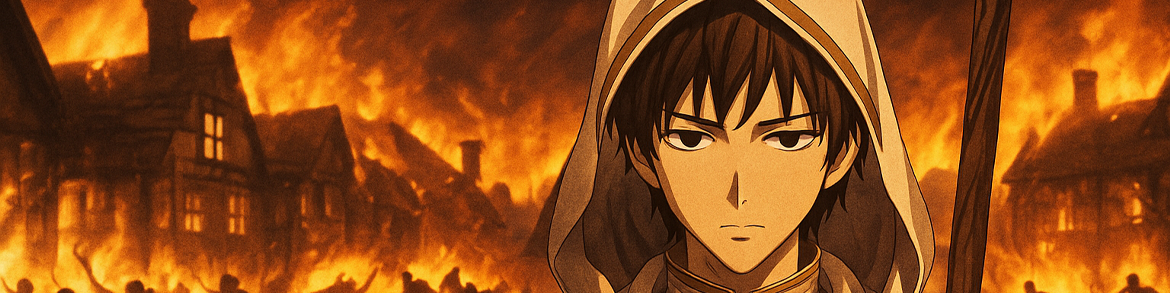
Of Seals and Magic
“Power that must be branded to be trusted was never holy, merely house-broken.”
Within Duskworn, the Church of the One True God teaches that all power originates in the divine. Any spell not sanctified by the Church is treated as theft, and any practitioner without licence is branded heretic. Thus, magic has become a form of administration rather than a mystery.
The Light’s clerics claim this control preserves purity. In practice, it maintains obedience. What cannot be recorded is forbidden, and what cannot be forbidden is destroyed.
Faith has been refined into paperwork, and belief reduced to a signature.
The Sealed
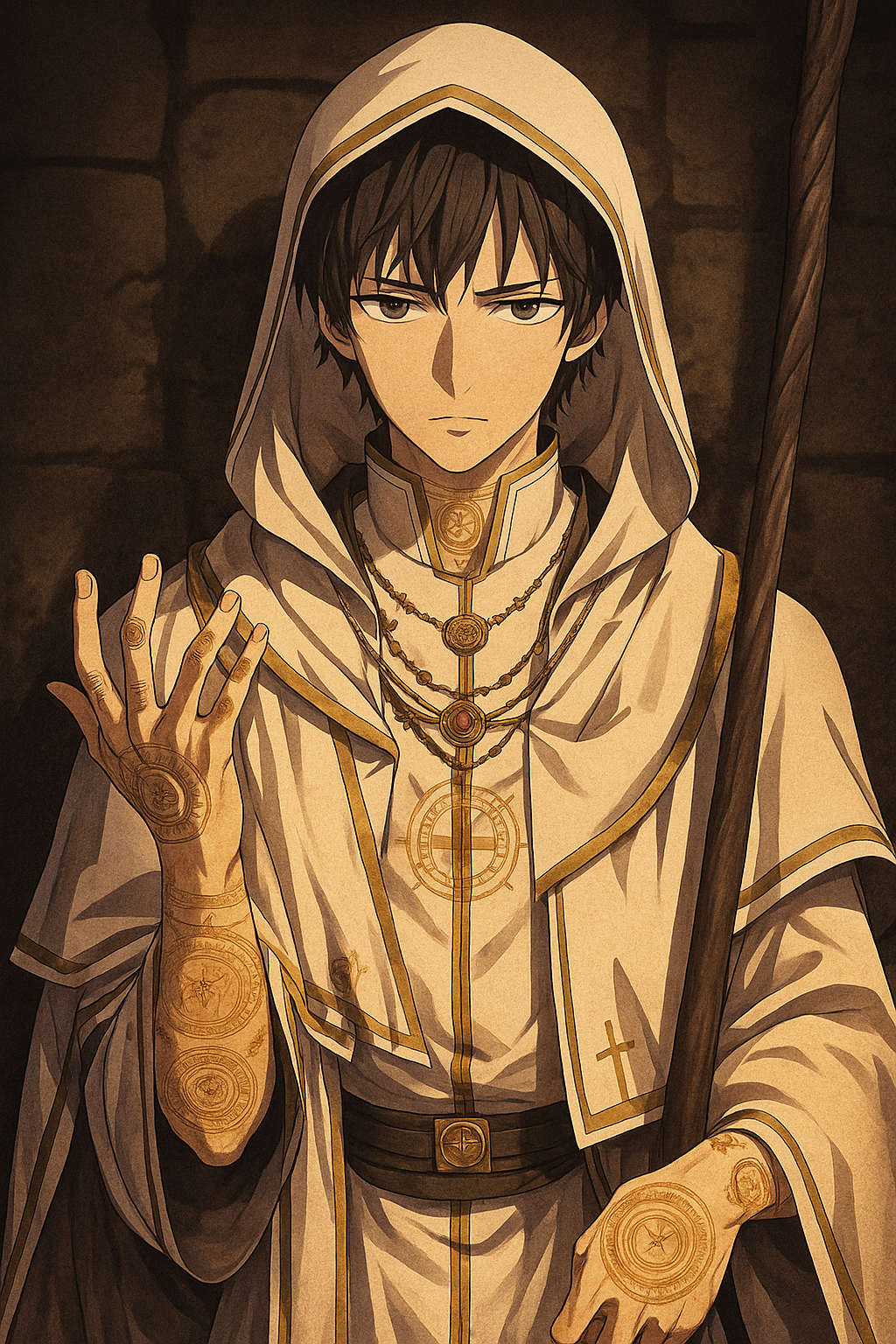
The Sealed are those few mages permitted to exist. Their obedience is not voluntary. Each endures a process of conditioning that strips away self until only discipline remains. When the ritual is complete, the mage is marked with sigils of gold etched into the flesh. These patterns, faintly luminescent under divine radiance, are called Seals of Sanctity.
To the Church, the glow signifies holiness. To the mage, it signifies survival. The markings serve as both conduit and chain, allowing the Church to regulate every act of spellcraft. Each Seal reacts to divine magic, ensuring that no spell is cast unseen.
Sealed Mages are never allowed to travel alone. Every one is attached to an Inquisitorial cell, cathedral, or noble court. They act as healers, record-keepers, and sanctioned weapons. Their lives are studied examples of the Church’s favourite illusion: power without freedom.
Conditioning and Control
The making of a Sealed Mage is a process of controlled destruction.
Initiates are isolated from all outside influence, fed only scripture, and taught that silence is proof of virtue. Over time, they cease to differentiate between the voice of the Light and the will of their overseers.
This conditioning ensures absolute obedience. Those who question the system are quietly removed; those who survive it believe their pain was purification. In truth, the process is a refinement of fear. A mage convinced of divine approval no longer requires chains.
The Function of the Seal
The Seal is an instrument of theology disguised as art.
Each design channels arcane power through authorised paths, filtering it through layers of liturgical approval. A Sealed Mage’s every act is measurable, accountable, and, if necessary, punishable.
All spells must be registered in cathedral ledgers. The faintest deviation is reported to the Sanctifiers, whose investigations are seldom merciful.
Removing or tampering with a Seal results in spontaneous immolation, a phenomenon described by the Church as “purity by flame.” Seraphis Nightvale notes that this phrase is a masterpiece of bureaucratic cruelty, capable of sanctifying murder through syntax alone.
The Sanctioned and the Forbidden
The Church divides the arcane into two categories: obedient and other.
The obedient forms include Abjuration, Evocation, Transmutation, and Divination—disciplines that can be framed as extensions of the Light’s will. These are taught under strict supervision, each act preceded by prayer and concluded with confession.
The forbidden arts encompass everything else.
Necromancy and Conjuration trespass upon the boundary between life and the Shadow.
Druidic and Fey practices recognise powers older than the One True God, an unforgivable offence.
Sorcery, said to be born rather than taught, is viewed as hereditary sin.
None of these schools are inherently corrupt. Their only crime is independence.
The Inquisitorial Leash
A Sealed Mage’s closest companion is always an Inquisitor. The relationship is one of mutual necessity and absolute mistrust. Inquisitors rely upon the mages for illumination and warfare, yet watch them constantly for deviation.
Each Inquisitorial chapter maintains a cadre of Sealed practitioners known as Censarii. These mages record confessions, identify corruption, and conduct “spiritual cleansing” through sanctioned flame. Their reports determine who is redeemed and who is erased.
In theory, the Light guides their hands. In practice, bureaucracy does. Every miracle is audited, every mercy documented, and every survivor an administrative oversight.
The Fear of the Unsealed
Among common folk, fear of unsanctioned magic has become instinct. Villagers will not speak the word “mage” after nightfall. No one accepts healing without visible Seals, and those who do hide their gratitude behind shuttered doors.
The Church has made the populace its own enforcement. A single accusation of witchcraft is enough to condemn a household. Possession of an unblessed charm, or even a gift from an unfamiliar traveller, can invite the Inquisition.
The result is a culture of suspicion so deep that kindness itself is dangerous. Those who heal are hunted, and those who protect them are burned beside them.
The Quiet Paradox
Despite centuries of purges, the Church has never truly destroyed the old crafts. When famine strikes, farmers whisper over their seeds. When illness spreads, hedge-healers work in barns by candlelight. When grief becomes unbearable, the faithful leave honey at the edge of the woods and pretend not to notice when it vanishes.
The same villagers who kneel at dawn to the Church’s god bow again at dusk to something older. Survival demands both.
I have observed that the Church has not conquered the arcane. It has merely domesticated it.
Final Thought
Magic in Duskworn is neither holy nor profane. It is a current of creation forced through the narrow channels of obedience. The Sealed live as proof that even wonder can be standardised. The Unsealed die as proof that it should not be.
The Church teaches that only sanctified hands may hold power. Yet it is the trembling hands of the hunted that most often save lives when faith has already failed.
In Duskworn, fear masquerades as purity, and light burns brightest where it cannot be questioned.
At A Glance
For those too hurried to study and too proud to admit it, a summary follows. Ignorance remains uncurable.
The Doctrine of Light
Magic is lawful only when chained. The Church of the One True God claims ownership of every spell. What cannot be registered is heresy, and what cannot be suppressed is burned.
The Sealed
Mages permitted to live bear golden sigils carved into their flesh. The Seals are both conduit and collar. They believe they serve the Light. In truth, they serve documentation.
Conditioning and Control
A Sealed Mage’s training destroys identity and replaces it with obedience. They are not taught to think, only to comply. Their devotion is genuine. That is what makes it useful.
The Function of the Seal
Each mark channels power through authorised forms and flares under divine scrutiny. All spells are recorded, reviewed, and categorised. Removal of a Seal results in spontaneous immolation, politely referred to as “purity.”
The Sanctioned and the Forbidden
The Church allows only what it can explain. Abjuration, Evocation, Transmutation, and Divination are sacred. Necromancy, Conjuration, Sorcery, and all dealings with the Fey are heretical. Independence, not darkness, defines sin.
The Inquisitorial Leash
Every Sealed Mage is bound to an Inquisitor. Their partnership is one of suspicion and necessity. Together they cleanse, record, and erase. Every miracle requires paperwork.
The Fear of the Unsealed
Among the common folk, unsanctioned magic is more feared than famine. Healing without a Seal is a capital crime. Those who accept it share the pyre. Fear keeps the Light efficient.
The Quiet Paradox
Despite centuries of regulation, the old ways persist. Farmers whisper over their seeds. Healers hide in barns. Faith endures where permission fails. The Light has conquered nothing but honesty.
Final Thought
Magic in Duskworn is not holy, only supervised. The Sealed live to prove obedience is possible. The Unsealed die to prove it should not be.
“Your continued reading is more valuable than coin. However, the author assures me that Ko-Fi support assists in ‘keeping the kettle on.’ I am told this is a metaphor. I remain unconvinced.” — Seraphis Nightvale Ko-Fi: #madmooncrow


Comments