
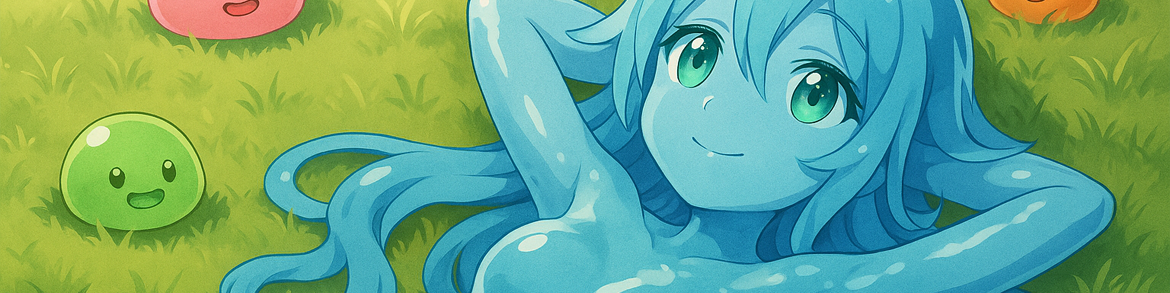
Of Gelatinous Sentimentality
"Slimes are proof the Pattern does not clean up after itself. Ignore them, and they dissolve quietly. Notice them, and they insist on becoming footnotes."
Slimes exist. This is, predictably, undignified.
Slimes are what happens when the Loom spills and refuses to mop. They appear in dungeons, laboratories, forgotten guildhalls, and anywhere resonance has pooled without resolution. By rights they should collapse back into the Pattern. Instead, when someone notices them, they begin to matter.
They are hazards, mascots, companions, echoes, and occasionally citizens. Some Threadworlds use them as waste disposal. Others adopt them as pets. A very few learn to call them colleagues. All are correct, which is the problem.
Where They Ooze From
Slimes form where the Pattern has failed to close a thread: a half-remembered spell, an abandoned experiment, a dungeon waiting for adventurers who never came. They are the narrative residue of unfinished stories, given just enough coherence to wobble.
The Many Varieties of Slime
The Mindless
"It moved. That was enough."
The classic dungeon hazard. Transparent, slow, and inevitably underestimated until someone’s boots vanish. They exist mostly to remind adventurers not to touch glowing things.
The Mascot
"Feed it once, and it’s yours forever."
Harmless, helpful, absurdly endearing. They hum when happy, sulk when ignored, and develop opinions about hats. Frequently kept in buckets.
The Echo
"Stop crying. That’s my job."
Emotional mirrors, they resonate with nearby moods until everyone is sniffling. Sometimes comforting. Sometimes unbearable. Never subtle.
The Shapeshifter
"Whose face was that supposed to be?"
Obsessed with form, collecting appearances without restraint. Useful mimics, uncanny companions, and terrible at remembering which body was theirs.
The Residue
"You feel familiar. That worries me."
Fragments of other Threads clinging to existence. Tragic, uncanny, and sometimes mistaken for ghosts. Often mistaken, rarely harmless.
The Bonded
"Mine. Not yours."
Attach themselves to one companion and never let go. Protective to the point of lethal. Adorable until something threatens their chosen.
The Bloomed
"Yes, I’m a scholar. Stop staring."
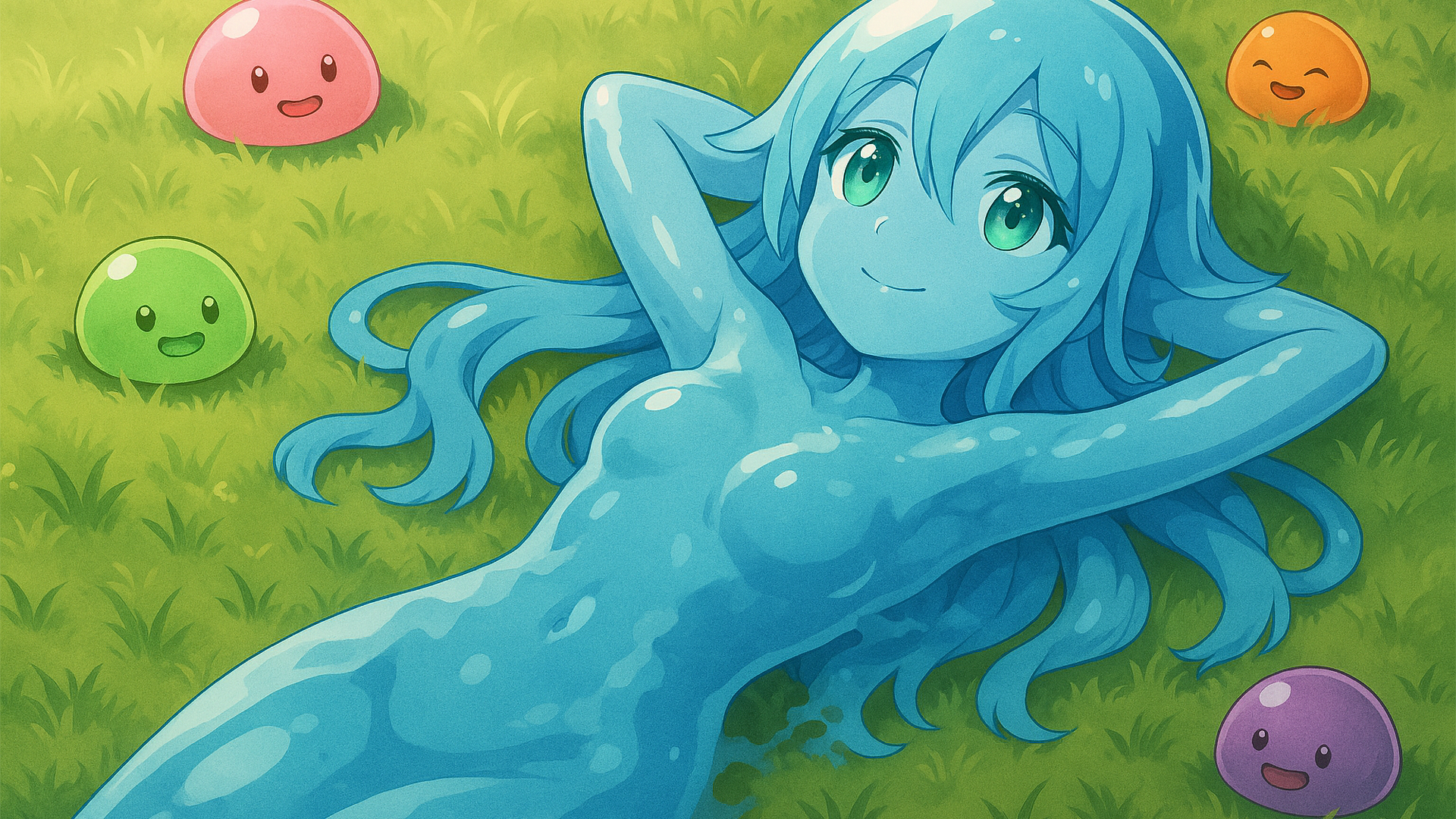
Rare, articulate, and disturbingly self-aware. Some pass as academics. Others as priests. All remain faintly gelatinous. Tolerated. Warily.
The Affectionate
"Please stop hugging me."
Whispered tales describe slimes that cling in ways… less dissolving, more tactile. Entire romances have been written about them. Libraries disagree on whether to catalogue them. The Inn does not.
The Colossal
"That hill just moved."
Legends speak of slimes vast enough to host dungeons, archives, or cities within. If true, they are less companions than natural disasters.
Of Armour, Clothing, and Other Inconveniences
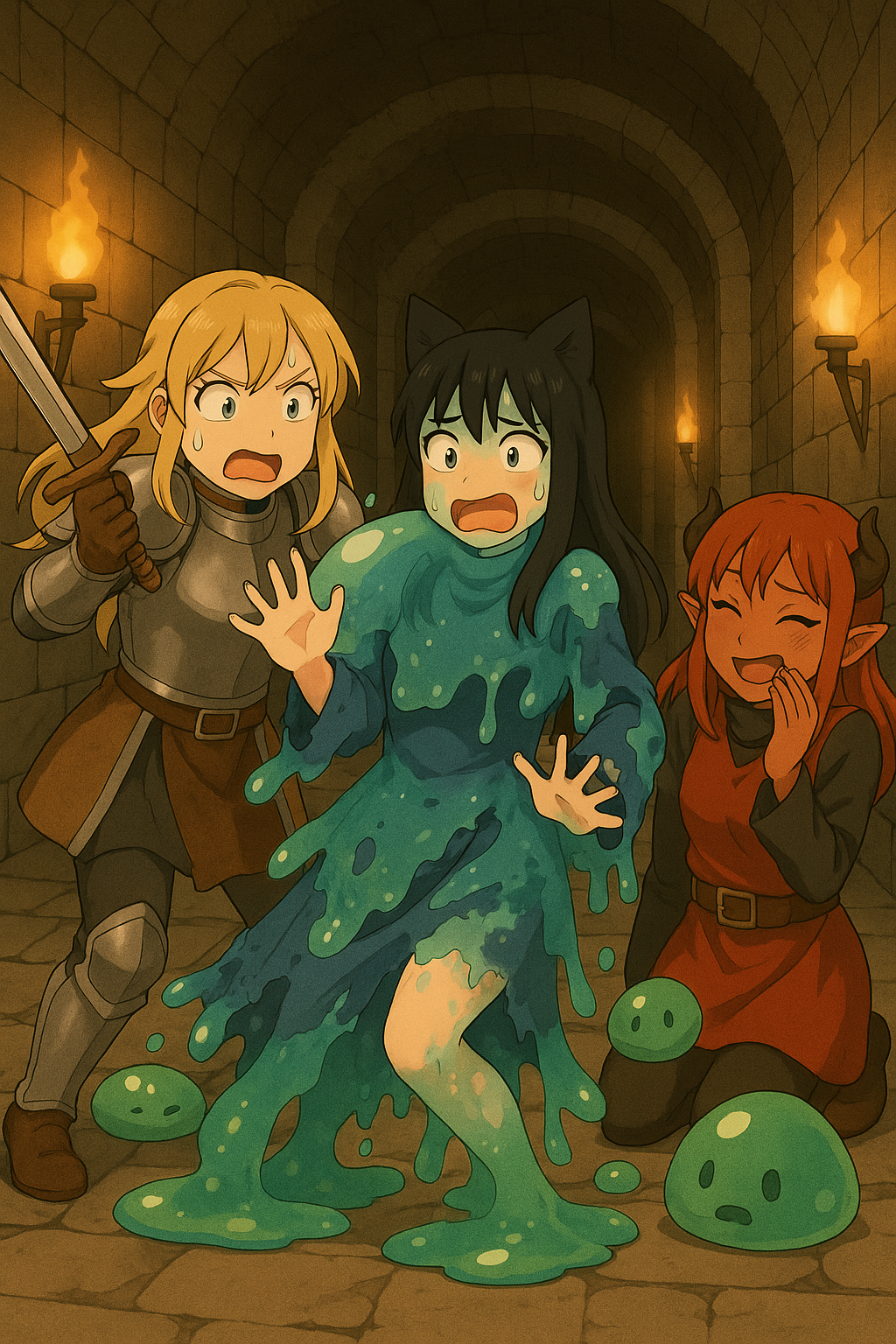
Certain slimes dissolve organic matter without discretion: leather, parchment, cloth. This has led to their notorious role in certain Threadworld anecdotes where armour fails at the least dignified moment. Some Bloomed specimens shape themselves in ways more suggestive than subtle.
The Pattern seems to find this amusing. Sylvie certainly does. She insists these encounters are “playful.” I note only that the Library’s laundry bills triple when she is on cleaning rota.
Why They Matter When They Shouldn’t
Slimes do not radiate resonance. They absorb it. They cling to those who care, and the Pattern, indulgent, permits the theft. A slime named is a slime remembered, and a remembered slime becomes story.
Some reorganise entire communities, even Realms, with alarming competence. Others remain faithful mascots, happy to burble at your side and eat your leftovers. A few are studied by scholars — until the inevitable laboratory fire when the slime grows too curious. And in less reputable tales, they are remembered for what they did to laundry, armour, or travellers’ composure.
Slimes and the Inn
The Inn does not encourage them, but neither does it banish them. They are found clinging to patrons’ boots, humming faintly in corners, or being carried about in jars. One Bloomed slime once attempted to catalogue a shelf in the Library. I permitted it. Once.
Threads and Resonance
A slime’s Thread is unstable until attached. Once bonded, it hums in sympathy with its chosen companion, mirroring their moods, griefs, and joys. This resonance is why they so often outlive their usefulness: they become part of someone else’s story, and the Pattern dislikes unpicking what has already been stitched.
Common Slime Quirks
Field notes for Threadwalkers and aspiring roleplayers:
- Eats bedrolls, then insists on accompanying you while you sleep.
- Mimics voices poorly, then alarmingly well.
- Waves pseudopods politely, usually while dissolving the floor.
- Reacts to grief as if it were gravity.
- Develops opinions on hats.
- Appears precisely when embarrassment will be maximised.
"These traits are not universal. But they are statistically sticky. — S.N."
Final Thoughts
Slimes are not meant to matter. They are narrative residue, tropes given form, clichés that refuse to dissolve. Yet once noticed, they linger. Once named, they become part of the story.
The Library indexes all of them — mascots, echoes, scholars, and the less printable varieties. I would prefer it did not. The Inn, however, never asks my permission when deciding what counts as history.
At A Glance
For those who do not wish to read, or find themselves in an urgent and uncompromising state of undress.
What They Are
Slimes are resonance residue that refused to collapse — half-threads, narrative spills, and story fragments given inconvenient persistence. They are hazards, pets, companions, scholars, or embarrassments, depending on who cared for them first.
Where They Are Found
Everywhere the Pattern can’t resist a cliché: dungeons, laboratories, ruined guildhalls, wizard towers. They also appear in kitchens, libraries, and bedrooms where no one remembers leaving them.
How They See Themselves
Bloomed slimes insist they are people. Mascots hum contentedly and don’t insist on anything. Bonded slimes define themselves entirely by someone else. The rest do not stop long enough to consider the question.
How Others See Them
As pests, hazards, or disposable mascots — until they linger. Then they become companions, burdens, curiosities, or (in some regrettable Threadworlds) romantic interests. Scholars find them fascinating until the laboratory catches fire.
Lifespan
Undefined. Most dissolve quickly when ignored. Those given names may persist indefinitely, becoming more difficult to unwrite the longer they are remembered.
Attitude Toward Mortals
Sticky. They cling to whoever notices them, echo moods without asking, and sometimes shape themselves to match expectations — including the less dignified ones. Their affection is unconditional. Their taste in timing is not.
Unique Traits
They absorb rather than radiate resonance. They mimic, mirror, and hum in sympathy with those who care for them. Some develop shapeshifting abilities, others become strangely articulate, and a few learn to pass as scholars. All are inconveniently gelatinous.
Biggest Weaknesses
Cold, salt, and neglect. Starve them of attention and they dissolve. Care for them too much and they become impossible to remove. Either way, someone ends up with laundry to explain.
The Last Word
Slimes are not supposed to matter. Yet once named, they do. They are harmless until loved — and then they are yours, in every sense, for longer than you intended.
Want to Play a Slime?
A Bonus Gift For Slime Lovers!
“Your continued reading is more valuable than coin. However, the author assures me that Ko-Fi support assists in ‘keeping the kettle on.’ I am told this is a metaphor. I remain unconvinced.” — Seraphis Nightvale Ko-Fi: #madmooncrow


Comments