
Jack Stables
"He looks like a prince, sparkles like a hero, and smells of hay. I suppose every story needs a joke."
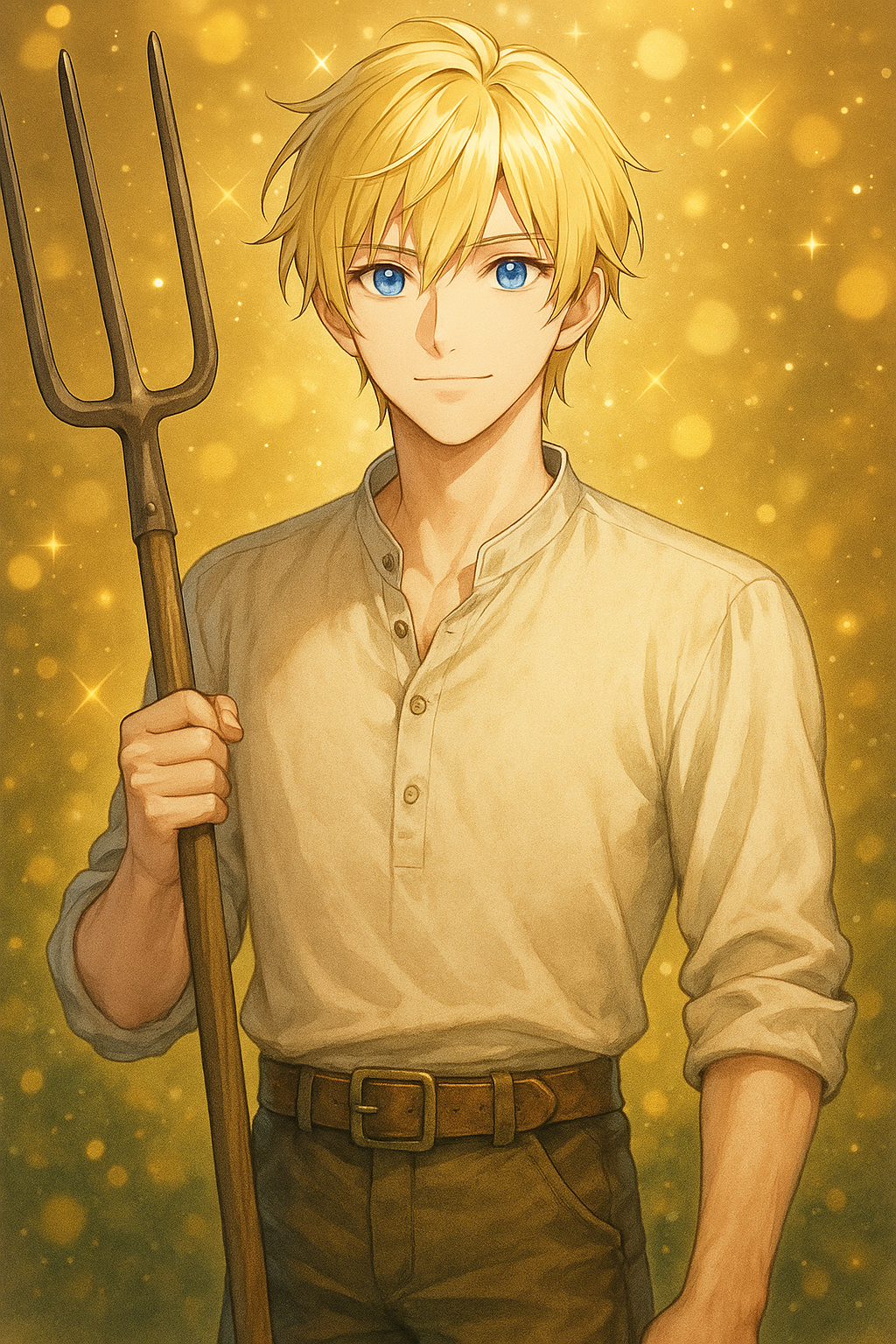
Jack Stables should not exist. Or rather, he should exist elsewhere — in a ballad, in a court, in a romance that takes itself far too seriously. Blond hair, blue eyes, maddeningly symmetrical features: he is every illustrator’s idea of a protagonist, dropped inexplicably into the muck.
He never notices. Which is, infuriatingly, part of the problem.
A Hazard in Hallways
When Jack walks, the world edits itself. Even a trip to the kitchen for bread looks rehearsed: his stride too measured, his posture too deliberate, his smile too devastating. He does not notice.
Those around him do. Women flush, men bristle, partners glare as their halves wander. Even those ordinarily unmoved by such things pause, caught by a presence too loud to ignore. The Inn mutes the effect for staff and regulars, but anyone caught off guard is lost.
Bumping into him in a hallway is problematic. Too close, too sudden, too much. The effect lands at point-blank range, and people stumble away dazed, convinced they were just offered destiny. It is absurd. Entirely absurd. (And yes, some still keep the handkerchief.)
This is why Jack remains in the Stables. Animals may worship him, but at least they do not start fights about it.
Rumours, Recycled
No one agrees where he came from. Some say he is the son of a great threadwalker, abandoned to keep him safe. Others whisper he was a prince whose death was written for Act One, spared only because Sylvie took offence at such lazy plotting and shoved him through a broom closet.
His name offers no clarity. He was first referred to as “Jack in the Stables,” a simple identifier used by those who noticed he never left them. Over time the phrase shortened, settled, and finally became Jack Stables. He has never bothered to correct it.
Jack himself declines to clarify more than that. He does not care. The past, with its promises of kingdoms or tragedy, interests him less than the present company of oats and hay. (An enviable outlook, if one were inclined to admire such things. I am not.)
Hay Is His Crown
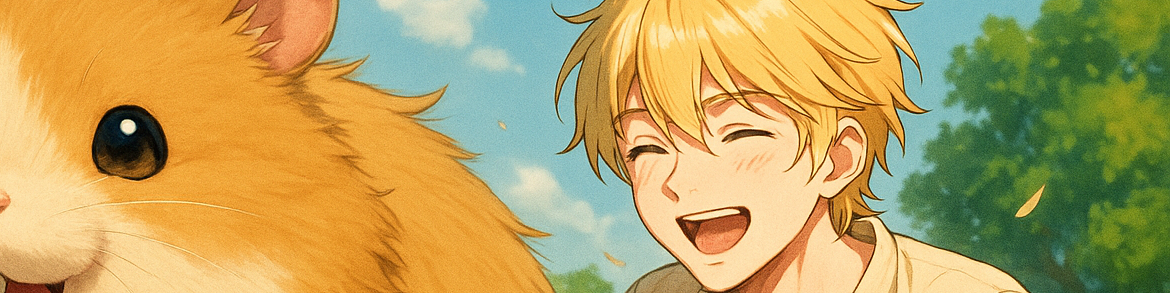
Jack does not live in the Inn proper. He sleeps in the loft above the Stables, or more often against the flank of Nibbles — a hamster the size of an elephant who adores him with squeaking devotion. She bounds through the yard with childlike glee, forever begging for carrots, games, or Jack’s undivided attention in a piping voice impossible to ignore.
To him she is no more strange than a pony, merely louder and prone to flattening haystacks in her enthusiasm. Where Jack goes, Nibbles follows — bouncing, squealing, calling his name until he relents. His Aura, overwhelming to patrons, slides off her entirely; she answers sparkle with chatter, treating him not as a prince but as her big brother.
Every creature prefers Jack. Warhorses soften, gryphons bow, nightmare steeds stop smouldering in his presence. But Nibbles remains his most faithful companion, and he hers. (It is… not entirely unpleasant to watch.)
Helpful to a Fault, Useless Otherwise
Jack is not good in the paladin’s sense. He is good in the way water runs downhill: naturally, constantly, without hesitation. He will carry your load, fix your tack, scrub your floors, and do it all with a smile too warm for his own safety. He could give a nun a run for her money, and she would probably thank him for the competition.
But remove him from the Stables, and his usefulness ends. He can clean, cook, mend, and manage with the steady ease of a seasoned housekeeper. Place a sword in his hand, however, and the best outcome is property damage. It was attempted once. No one has risked it again.
He is the epitome of clueless once outside his domain. Fortunately for all involved, the Stables provide more than enough domain to occupy him.
The Romance That Isn’t
Jack is oblivious to every glance, every hint, every suggestion. The maids have long since given up trying to “educate” him; Sylvie ensures it stays that way. His innocence is preserved, polished even, as though the Pattern itself enjoys the joke.
To speak plainly: he has the face of a prince, the soul of a saint, and the romantic awareness of a sack of oats. (One is tempted to suggest that this makes him more tolerable. One is also tempted not to.)
Final Consideration
Jack Stables embodies a story that refused to happen. He could have been a prince, a martyr, a protagonist. Instead, he is a boy with hay in his hair, perfect teeth in his smile, and a pitchfork in his hand.
The beasts adore him. The patrons endure him. The Inn, somehow, insists on keeping him. And perhaps — though I cannot imagine why — so do I.
At a Glance
For those who do not like to read, or who are in need of an urgent reality check
What He Is
A stable boy drawn as a prince: blond hair, blue eyes, too symmetrical to be safe, and entirely oblivious.
Why He Stays
Because the beasts adore him, and the Inn cannot risk him loose in the taproom. He is safer among hay than hearts.
Where You’ll Find Him
Always in the Stables: loft bed, pitchfork in hand, or more often curled against Nibbles, who insists on bedtime company.
Who Holds Power
Jack, though he never notices it. His Aura overwhelms patrons, topples composure, and leaves only animals unbothered. Nibbles, the exception, talks over him cheerfully.
How It Feels Nearby
Like walking into a romance panel without consent: light slows, sparkle blooms, and you wonder why your knees betrayed you.
What He Doesn’t Do
Fight, scheme, flirt, or notice when the room stops to stare. Put a sword in his hand once. Never again.
Daily Life
Brushing dragonlings, feeding gryphons, laughing with Nibbles. Cleaning, cooking, mending with nun-like cheer. Always helpful, never competent outside the muck.
Etiquette, Unspoken
Do not mistake him for available. Do not assume your mount prefers you. Do not bump into him in a hallway.
Red Flags
The sparkle effect. The blush spreading before you realise it. The glare of a partner who noticed where your eyes wandered.
Approved Explanations
“Just Jack.” “Just the sparkle.” “Just don’t make eye contact.” The staff have all settled on one of these.
Unspoken Law
The Stables may belong to the Inn, but Jack belongs to the Stables — and every beast in them knows it.
Additional Details
“Your continued reading is more valuable than coin. However, the author assures me that Ko-Fi support assists in ‘keeping the kettle on.’ I am told this is a metaphor. I remain unconvinced.” — Seraphis Nightvale Ko-Fi: #madmooncrow


Comments