
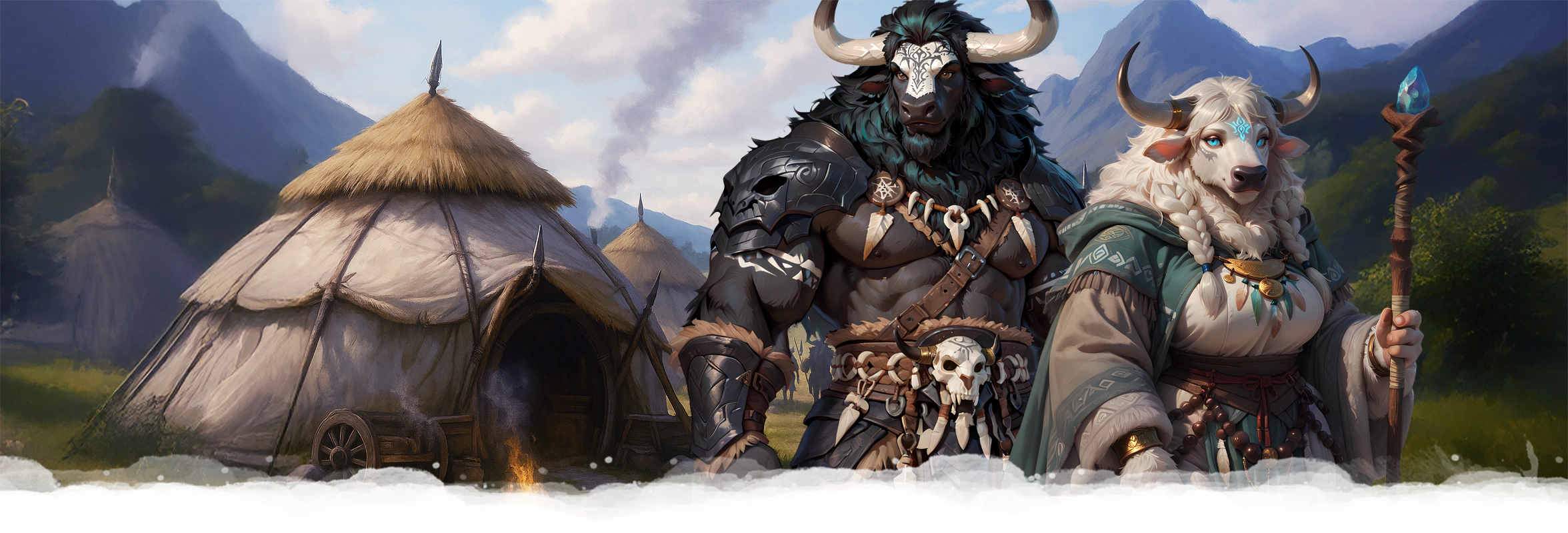
Minotaur
Minotaurs are a proud and ancient people, towering humanoids whose strength and endurance have shaped entire generations of wanderers, builders, and warriors. Born from the image of Orok, the Ox Spirit, they embody patience, discipline, and the quiet power of perseverance. Life for a Minotaur is a journey without end—a road of toil, duty, and tradition carried out beneath open skies and endless horizons. They live in great herds that follow the Wanderer’s Paths, forging communities that move as one body and think as one heart. To endure is sacred; to falter is to forget the lessons of those who came before.
Though their massive frames and imposing horns often strike fear in outsiders, Minotaurs are not creatures of rage but of reason. Their society values calm over chaos, restraint over impulse, and legacy over glory. They measure worth not by conquest, but by contribution—how steadfastly one stands beside the herd and how faithfully one honors the path of Father Ox. Every Minotaur carries the weight of tradition in their name, their work, and their stride, walking the long road of endurance that binds their people across generations.
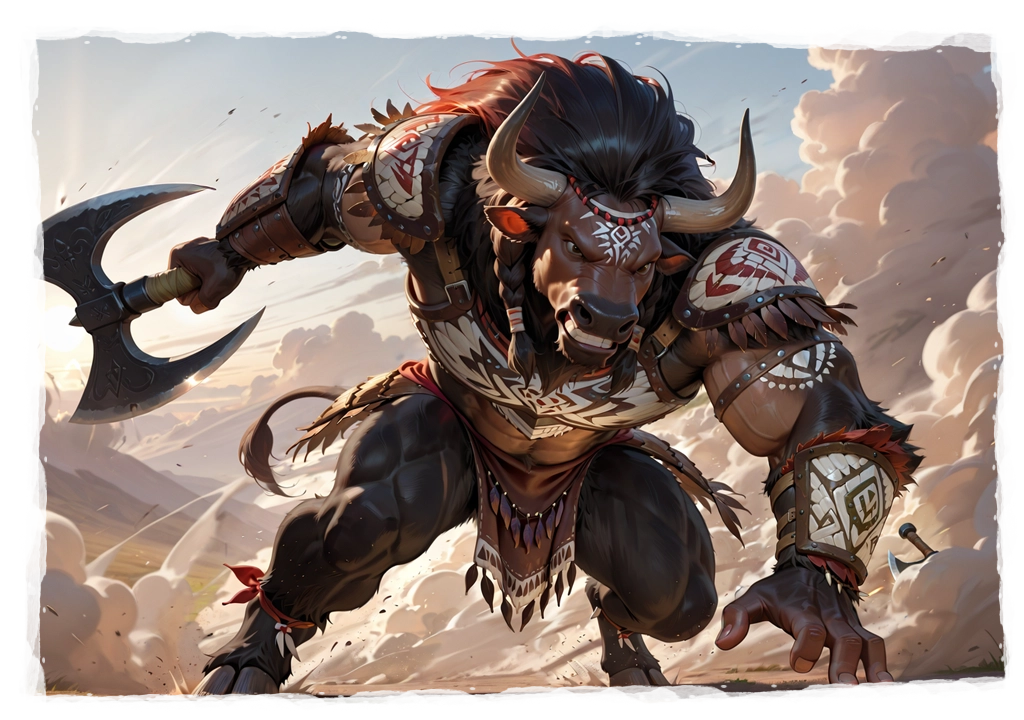 Minotaurs are omnivores, though their diet leans heavily toward grains, roots, and hardy plants. They can eat meat but do so sparingly, often as part of ritual hunts or celebrations. Their digestion is robust, able to draw sustenance from whatever the land provides during their long migrations. A Minotaur’s lungs and heart are powerful, built for endless travel alongside their kin in great tribal caravans called herds. Their immense reach and strength let them wield massive weapons or tools that would overwhelm others, while their sure footing and balance make them masters of movement even in heavy armor or rough terrain. Every part of their form—muscle, horn, and hoof—reflects a life shaped by endurance, community, and the long road ahead.
Family Structure & Child Rearing
Family is the foundation of Minotaur life, yet it extends far beyond blood. The herd raises its young collectively under the guidance of mothers, aunts, andelder mentors who instillpatience, discipline, and reverence for tradition. Fathers serve as examples of endurance and responsibility, teaching by demonstration rather than speech. From birth, calves are taught to observe, to think before acting, and to find purpose through work.
Children are seen as the herd’s living promise to Orok—the continuation of an ancient lineage. When a youth chooses their calling, whether craft, leadership, or guardianship, they undergo the Marking of the Horns. Their horns are carved or adorned for the first time, bearing symbols of ancestry and virtue. It is both a celebration and a vow: to carry the herd’s legacy forward with strength and dignity. Adoption and fostering are considered sacred acts; no calf is ever abandoned, and no elder left uncared for. The Minotaurs believe that as long as the herd endures, no soul truly walks alone.
Faith is not a solitary act. Minotaurs pray through movement, song, and work—through the steady rhythm of marching hooves, the rumble of drums, and the low chants that roll like thunder over the plains. Their worship takes form in labor and endurance, not spectacle. When a structure is raised, a burden shared, or a storm weathered, these are considered offerings to Father Ox.
Shrines to Orok stand along ancient travel routes and mountain ridges: cairns of stone topped with carved horns and etched spirals. They are built to endure the elements, weathered but never broken—symbols of the faith itself. Offerings are practical and humble: grains, bundles of hay, or simple carvings left as tokens of perseverance. Each represents gratitude for the strength to keep walking, rather than pleas for divine favor.
Among the herds, spiritual leaders known as Wildspeakers serve as mediators, philosophers, and keepers of tradition. They guide through reason, not command, reminding others that Orok’s strength lies in unity and composure. During times of hardship, a Wildspeaker may lead the Rite of the Standing Stone, where the herd gathers shoulder to shoulder through a night of wind and cold. No words are spoken; the act itself is the prayer—to endure, together, until dawn.
Life Within the Circle. Life in a Karuun is orderly but communal. Every dawn begins with labor—tending herds, repairing tools, and preparing food—followed by the day’s migration or work. Evenings are for gathering: music, storytelling, and silent reflection by the central Fire. Food is shared equally, and every Minotaur contributes to the upkeep of the camp. There are no walls or private dwellings; the open layout encourages honesty, cooperation, and awareness of one another’s wellbeing.
Construction and Movement. Karuun structures are built to endure but not to last forever. Tents of leather and woven grass, reinforced with wood and bone, can be raised or dismantled within hours. Stone circles or cairns mark former resting sites, each one left as a memory of the herd’s passing. When the time comes to move on, the Karuun leaves little trace beyond footprints and wind-worn stones—a reminder that endurance is not permanence, but continuity.
Gathering of Herds. On rare occasions, multiple herds meet to form a Grand Karuun, a vast encampment where trade, courtship, and ritual take place. These gatherings can last several weeks and are moments of great celebration and diplomacy. Elders exchange stories, Matrons settle disputes, and Patriarchs reaffirm bonds of kinship. When the herds depart, they do so in different directions—each carrying the strength of the others with them on the long road ahead.
Deed Names: Stonehand, Iron-Hoof, Calm-in-Storm, Brighthorn, Long Marcher, Unbent, Keeper-of-Flame, Silent Step
Herd Names: of the Iotian Plains, of M'gannu, of the Maggra Marches, of the Phang Mountains, of the Rai-Zhu Plains
Physiology
Minotaurs are towering humanoids who embody the strength and endurance of the great bovines from which they draw their likeness. Standing around 9½ feet tall and weighing around 1,300 pounds, they possess dense muscle, heavy bone, and immense stamina—creatures built to endure long journeys and harsh seasons. Their bodies are covered in coarse fur that ranges in color from deep black and russet to golden brown, pale cream, or snow-white, often patterned with stripes or patches that mark their lineage. Their horns vary greatly between individuals—curved like an auroch’s, spiraled like a ram’s, or sweeping wide like those of bison or Water buffalo—and are often decorated with carvings, metalwork, or painted sigils that tell of family, herd, and honor. The appearance of a Minotaur often reflects its bloodline. Those descended from highland herds resemble shaggy yaks or musk oxen, with thick fur and wide horns suited to the cold. Plains-dwellers take after bison and aurochs, while the river herds show the leaner forms and crescent horns of water buffalo. Each herd’s traits have adapted to its homeland, from mountain tundra to grassland steppe to marsh and forest. Though their shapes differ, all share the same deep resilience and quiet strength that define their kind.Culture & Society
Minotaur society is built upon the virtues of endurance, structure, and shared purpose. They live in herds—large, semi-nomadic tribes that travel ancient migration routes known as the Wanderer’s Paths, moving with the seasons between grazing lands, stone enclosures, and sacred meeting grounds. To the Minotaurs, the herd is more than a social unit; it is a living tradition, the embodiment of cooperation through hardship. Every member contributes—smiths forge, hunters provide, shamans guide, and builders labor—each role woven into the herd’s survival.Social Norms
Discipline, humility, and dependability form the bedrock of Minotaur conduct. A Minotaur’s word is considered sacred—once spoken, it binds as firmly as steel. Those who break their oaths or fail in their obligations are not punished with violence but with silence; to be ignored by the herd is a punishment far heavier than blows. Labor is seen as both service and devotion, and idleness without cause is a mark of shame. Pride is measured not through dominance, but through usefulness. A calm, steady worker is admired more than a loud warrior. When disputes arise, they are resolved through Trials of Endurance—structured tests of strength, skill, or patience overseen by the Patriarch or Matrons. Victory is not about defeating another, but proving commitment to one’s stance. Among outsiders, Minotaurs are respectful but guarded. They prefer action over rhetoric, hospitality over flattery, and see honesty as the highest form of diplomacy.Family Structure & Child Rearing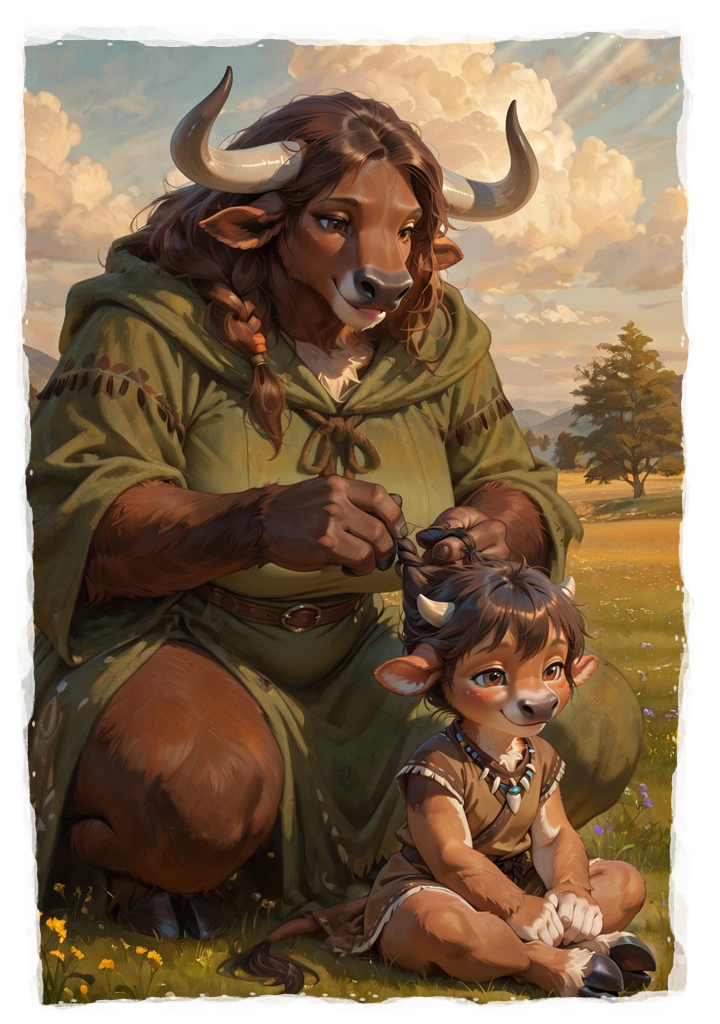
Family is the foundation of Minotaur life, yet it extends far beyond blood. The herd raises its young collectively under the guidance of mothers, aunts, andelder mentors who instillpatience, discipline, and reverence for tradition. Fathers serve as examples of endurance and responsibility, teaching by demonstration rather than speech. From birth, calves are taught to observe, to think before acting, and to find purpose through work.
Children are seen as the herd’s living promise to Orok—the continuation of an ancient lineage. When a youth chooses their calling, whether craft, leadership, or guardianship, they undergo the Marking of the Horns. Their horns are carved or adorned for the first time, bearing symbols of ancestry and virtue. It is both a celebration and a vow: to carry the herd’s legacy forward with strength and dignity. Adoption and fostering are considered sacred acts; no calf is ever abandoned, and no elder left uncared for. The Minotaurs believe that as long as the herd endures, no soul truly walks alone.
Spiritual Beliefs
At the heart of Minotaur faith stands Orok, the Ox Spirit—called by many names: Father Ox, The Enduring One, or The Stone That Moves. To the Minotaurs, he is not a distant god but the patient hand that shaped the world itself. It is said that Orok carved the rivers with his horns and pressed the mountains into being with the weight of his hooves. He embodies endurance, fortitude, and moral resolve. His lessons are simple but absolute: remain steadfast in adversity, measure your strength with restraint, and stand firm in your convictions no matter the storm. Orok is revered as both a teacher and a father. His followers believe that he guides the herds not through miracles or visions, but through the quiet rhythm of daily life—through the labor of hands, the discipline of thought, and the will to endure. Every hardship overcome, every long march completed, is an act of worship.The Way of Endurance
Minotaur faith teaches that strength without control is folly. Anger, fear, and unchecked passion are seen as storms that scatter the herd and cloud the path forward. To live well is to master these tempests, to let reason and patience lead where emotion would destroy. The faithful are taught to act with purpose, speak with weight, and plan before charging headlong into the unknown. Tradition is sacred. Minotaurs see the customs of their ancestors as anchors—proof that wisdom endures across generations. A herd that forgets its past, they say, walks blind into the wind. For this reason, songs, rituals, and symbols of the old ways are preserved with care, passed down by memory as much as by word. To uphold the teachings of Orok is to honor every hoofprint that came before one’s own.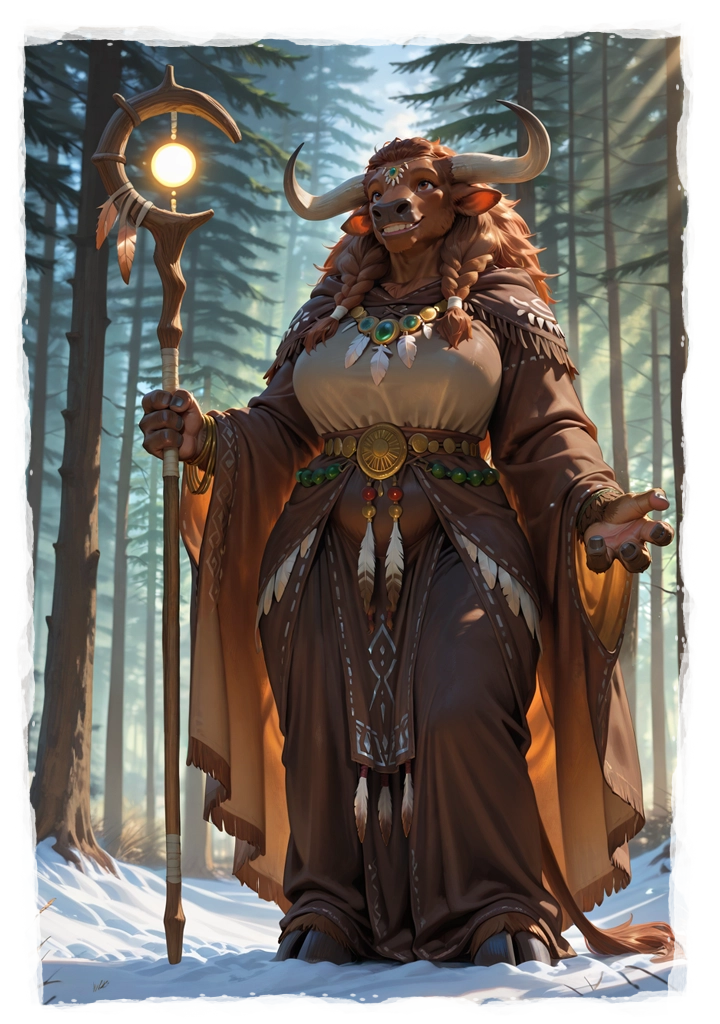 Communal Worship
Faith is not a solitary act. Minotaurs pray through movement, song, and work—through the steady rhythm of marching hooves, the rumble of drums, and the low chants that roll like thunder over the plains. Their worship takes form in labor and endurance, not spectacle. When a structure is raised, a burden shared, or a storm weathered, these are considered offerings to Father Ox.
Shrines to Orok stand along ancient travel routes and mountain ridges: cairns of stone topped with carved horns and etched spirals. They are built to endure the elements, weathered but never broken—symbols of the faith itself. Offerings are practical and humble: grains, bundles of hay, or simple carvings left as tokens of perseverance. Each represents gratitude for the strength to keep walking, rather than pleas for divine favor.
Among the herds, spiritual leaders known as Wildspeakers serve as mediators, philosophers, and keepers of tradition. They guide through reason, not command, reminding others that Orok’s strength lies in unity and composure. During times of hardship, a Wildspeaker may lead the Rite of the Standing Stone, where the herd gathers shoulder to shoulder through a night of wind and cold. No words are spoken; the act itself is the prayer—to endure, together, until dawn.
The Long March
Death, to the Minotaurs, is not an end but a continuation of the journey. When a Minotaur dies, their spirit is said to rise and join the Long March—an eternal pilgrimage beneath a golden twilight sky across the Eternal Hunting Grounds. There, the souls of the steadfast walk beside Father Ox across endless plains, carrying the weight of their deeds as stones in a great harness. Those who lived honorably walk unburdened; those who faltered must march longer, learning patience through trial. There is peace and paradise found in the act of perseverance. The road continues forever, guided by Orok’s steady tread. To live with discipline, humility, and resolve is to ensure that one day, your hoofprints will fall in rhythm with his.Regional Differences and Divergent Herds
Though united by faith in Orok and the shared principles of endurance and order, not all herds interpret these teachings the same way. Some are contemplative and reserved, devoted to craftsmanship, trade, or the quiet study of tradition. Others—especially those dwelling in harsh or contested regions—have grown warlike and severe, believing endurance is proven through conquest and domination rather than patience. These militant herds often clash with their more diplomatic kin, viewing restraint as weakness and the Circle’s guidance as complacency. Still, even among the most ruthless herds, the old laws of honor and hospitality endure; no Minotaur forgets that their strength, however applied, is meant to preserve the herd.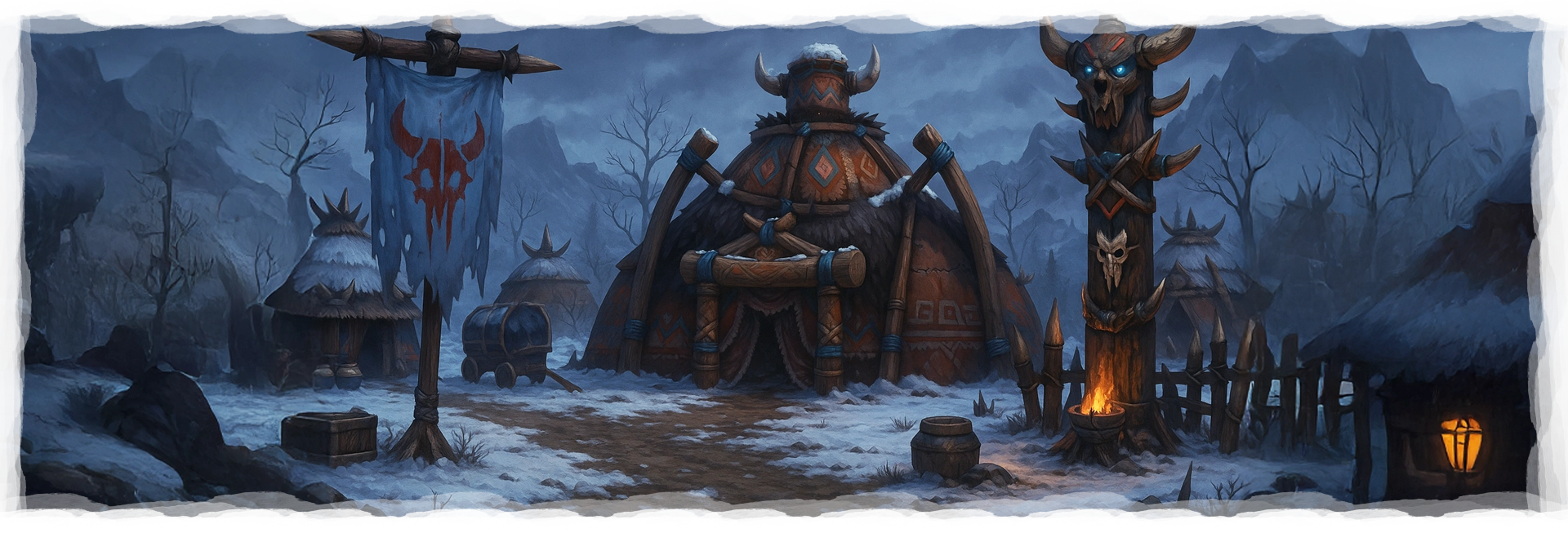
Political Structure
Minotaur governance is patriarchal and deeply traditional, built upon the authority of the Patriarch and the guiding wisdom of the Circle of Matrons. Together, they form the ruling body that steers the herd’s direction in all matters of survival, law, and faith. This dual model ensures that leadership remains both decisive and tempered—strength and order balanced by memory and empathy. The Herd Patriarch. The Patriarch serves as the herd’s highest authority, chosen by recognition of merit and endurance. He is expected to embody Orok’s virtues: calm in adversity, unwavering in judgment, and unbending in principle. His word is law in times of travel, conflict, or crisis. Yet his leadership is not absolute; his decisions must withstand the scrutiny of the Matrons’ counsel. A Patriarch who leads without their trust soon finds himself speaking to silence—a subtle but devastating form of rejection in Minotaur society. The Circle of Matrons. The Circle of Matrons consists of elder women who have proven their wisdom, devotion, and service to the herd. They oversee matters of kinship, lineage, tradition, and the passing of oral law. They are the keepers of memory, ensuring that no decision violates the herd’s inherited customs or Orok’s teachings. While the Patriarch embodies the will to endure, the Matrons preserve the reasons why endurance matters. Their influence is subtle yet profound; no major migration, alliance, or declaration of conflict is undertaken without their approval. Larger herds may include additional ranks beneath the Patriarch and his Circle of Matrons. Pathmasters oversee routes and seasonal movements; Stonekeepers maintain the herd’s records, tools, and sacred standing stones; Shamans tend to matters of faith and ritual. Each reports to the Patriarch but answers spiritually to the Matrons, ensuring that authority flows in both directions. The Patriarch commands the herd’s body; the Matrons guard its soul. When harmony exists between them, the herd moves as one.The Karuun
A Karuun—meaning Circle in the old Minotaur tongue—is both the physical and spiritual heart of a herd. It is a temporary settlement raised wherever the herd chooses to rest, its shape always circular to symbolize unity and protection. The Karuun’s outer ring is lined with tents or hide shelters for families, while its inner circle holds communal fires, shared stores, and the shrine of Father Ox. The arrangement reflects Minotaur philosophy: the herd surrounds its heart, and the heart endures for all.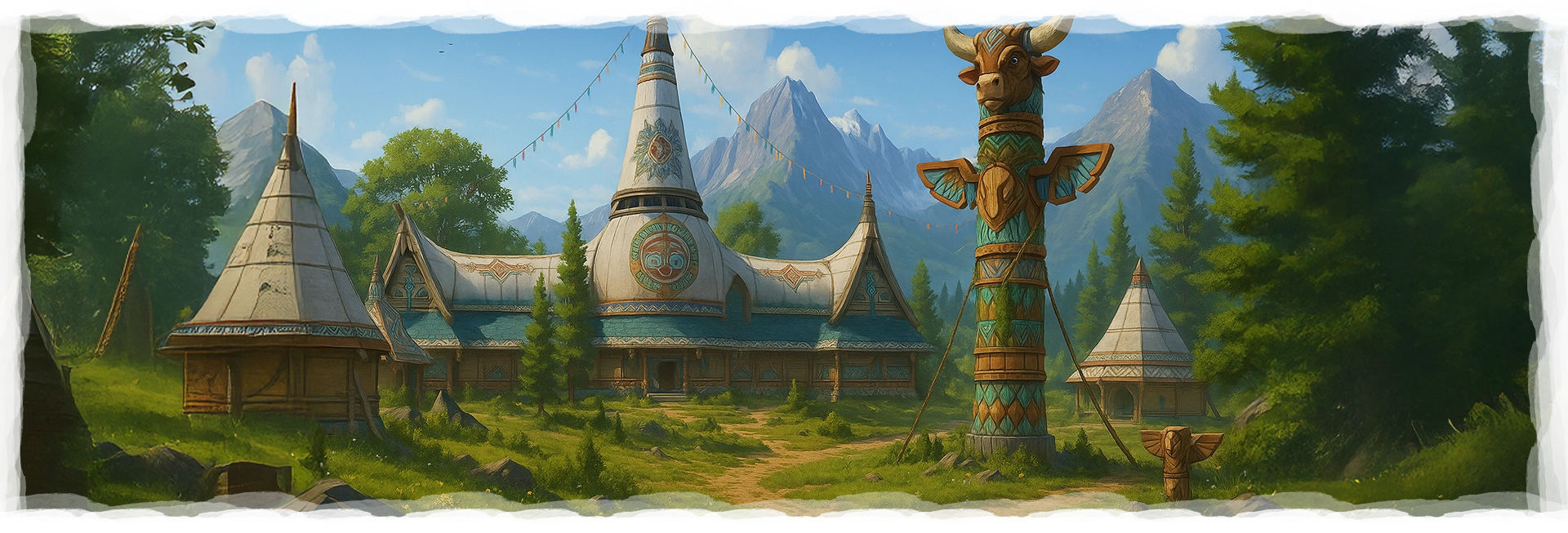
Minotaur Names
Minotaur names are heavy with purpose and meant to endure, just as their people do. A name is seen as a legacy, not a label—something to be earned, carried, and remembered long after death. Each Minotaur bears two or three names over the course of life: a Given Name chosen at birth by the elder Matrons, a Deed Name earned through an act of service or endurance, and, for those who have come of age, a Herd Name marking the community they belong to. Deed Names replace the given name once earned and are bestowed before the entire herd in a rite known as the Naming of Hooves, when the individual’s story becomes part of the herd’s living memory. Names are never frivolous. They are carved in stone, recorded in song, and spoken with respect. Each carries meaning drawn from personal deeds, virtues, or the natural world—Stonehand, Brighthorn, Calm-in-Storm, Keeper-of-Flame. To speak one’s full name aloud is to declare one’s place in history and one’s duty to Orok’s path. Names of the honored dead are rarely reused, for to do so would diminish the life that bore them. Instead, their essence is echoed in new names, reshaped by the next generation, ensuring that the deeds of the past continue to walk beside the living. Given Names: Orak, Tharn, Vessa, Droth, Kira, Harn, Mael, RokaDeed Names: Stonehand, Iron-Hoof, Calm-in-Storm, Brighthorn, Long Marcher, Unbent, Keeper-of-Flame, Silent Step
Herd Names: of the Iotian Plains, of M'gannu, of the Maggra Marches, of the Phang Mountains, of the Rai-Zhu Plains
Lifespan
250
Average Height
9'5"
Average Weight
1300 lb.
Geographic Distribution

Comments